

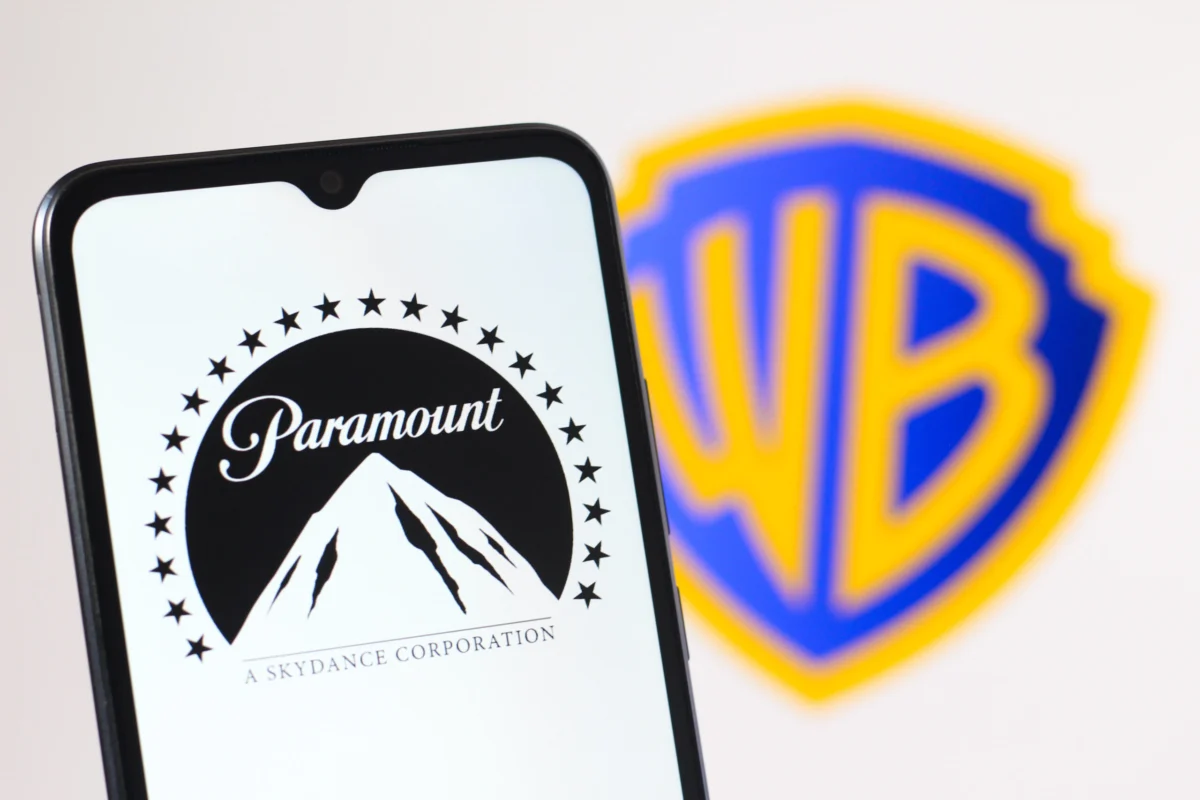
The once eagerly anticipated wave of media mergers and acquisitions (M&A) that promised to reshape the industry has hit an unexpected and significant roadblock, casting a pall of uncertainty over future consolidation efforts. At the heart of this disruption lies the proposed $110 billion acquisition of Warner Bros. Discovery (WBD) by Paramount Skydance, a deal that has been stalled indefinitely by an antitrust challenge spearheaded by a coalition of state attorneys general. This unprecedented state-level intervention, coming even after federal regulators had largely greenlit the transaction, is now being widely cited by industry insiders as a chilling factor, signaling a potential slowdown in large-scale corporate tie-ups across the media landscape.
The Paramount-WBD Conundrum: A Bellwether for Media M&A
For months, media executives and investors had watched with bated breath as the industry grappled with the profound shifts brought about by cord-cutting, the streaming wars, and the relentless pursuit of scale. The Paramount Skydance-Warner Bros. Discovery merger was viewed as a pivotal moment, a potential harbinger of a new era of consolidation aimed at achieving critical mass, streamlining operations, and competing more effectively with tech giants and global streamers. However, the deal’s trajectory took a dramatic turn last month when Paramount agreed to suspend the tie-up until at least June 2027, a full nine months beyond its initially projected closing date. This delay was necessitated by an antitrust lawsuit filed by a consortium of state attorneys general, led by California’s Rob Bonta, who argue that the merger would stifle competition and harm consumers.
The legal challenge has unfolded rapidly. Despite the Antitrust Division of the U.S. Department of Justice having closed its investigation without objection, the states pressed forward. Recent days saw a brief glimmer of hope for an expedited resolution when The New York Times reported that Paramount and the California Attorney General were poised to engage in preliminary settlement talks. However, these discussions were reportedly called off just as swiftly, indicating the entrenched positions of the parties involved and the formidable legal battle ahead. This development has effectively placed a multi-billion-dollar transaction, which had already secured approvals from global regulators, into an unforeseen legal quagmire at the state level.
Jonathan Miller, a seasoned media industry veteran and CEO of Integrated Media, whose portfolio spans various media and creator ventures, articulated the palpable shift in sentiment. "It feels like the landscape has shifted significantly in the last few weeks around larger deals and combinations," Miller observed, adding, "I think we’re going to see a lull in deals." This sentiment underscores a growing concern among corporate strategists that the regulatory environment for large-scale M&A is becoming increasingly unpredictable and fraught with new risks.
Shifting Sands: The Return of Regulatory Uncertainty
The current regulatory climate marks a distinct departure from what many in the corporate world perceived during President Donald Trump’s second term, an era largely characterized by a more laissez-faire approach to mergers. The current landscape, however, is increasingly defined by the active and often aggressive stance of state regulators, who are demonstrating a willingness to challenge major corporate consolidations even after federal agencies have concluded their reviews. This bifurcated regulatory oversight adds layers of complexity and risk to any large transaction.
Despite the prevailing narrative of a potential M&A slowdown, overall deal activity in the U.S. has shown resilience in some metrics. According to data provider Dealogic, U.S. companies inked just over 7,500 deals through August 20 of the current year, an increase from 7,015 during the same period last year. Furthermore, the collective deal value has risen considerably, propelled by a number of megadeals that have successfully crossed the finish line. However, this macro trend belies the specific challenges now facing the media sector, where the perceived "regulatory baton" has been passed to state attorneys general, introducing a new dimension of uncertainty for transactions of significant scale.
Media companies have been particularly eager for consolidation, driven by a confluence of powerful economic forces. The relentless bleed of pay-TV subscribers, the intense competition in the streaming market, and the need to achieve economies of scale to counter rising content costs and compete with tech behemoths like Apple, Amazon, and Google, have all fueled the push for mergers. These companies seek to cut costs, enhance their bargaining power with advertisers and distributors, and build more robust, diversified content libraries. Beyond Paramount’s proposed takeover of WBD—itself following David Ellison’s Skydance completing its acquisition of Paramount—the industry has witnessed a flurry of announcements involving combinations, spinoffs, and strategic partnerships, collectively accounting for tens of billions of dollars in media market capitalization. Yet, the Paramount-WBD saga now threatens to temper this ambition.
Ripple Effects: Other Deals Under the Microscope
The regulatory tremors emanating from the Paramount-WBD delay are already being felt across the industry, raising questions about other significant transactions awaiting closure. One such deal is Fox Corp.’s planned $22 billion acquisition of Roku. While this transaction is generally considered to have fewer horizontal or vertical concentration concerns than the Paramount-WBD merger, its future was nonetheless called into question in a recent analyst note from Bernstein.
The Fox-Roku deal, which aims to strategically pivot Fox further into streaming distribution, received a lukewarm reception from investors when announced in June. Bernstein analysts highlighted what they termed "regulatory timing risk," particularly in light of the ongoing PSKY-WBD process. "While we do not view [the] Roku transaction as creating meaningful horizontal or vertical concentration concerns, current regulatory developments for [the] PSKY-WBD process indicate that transaction timing can be unpredictable even when the underlying antitrust arguments appear relatively weak," the Bernstein note stated. This assessment underscores how the legal precedent and the sheer duration of the Paramount-WBD challenge could complicate even less controversial mergers. The Fox-Roku deal is currently expected to close in the first half of 2027, leaving ample time for regulatory shifts to impact its progression.
A similar dynamic is playing out in the broadcast television sector, where station owners have long been hungry for consolidation to achieve greater regional scale and leverage in negotiations with distributors and advertisers. CNBC previously reported on this trend, highlighting the challenges faced by Nexstar Media Group. Its $6.2 billion acquisition of Tegna, announced in August 2025 and formally closed in March of the following year, is now also facing an antitrust lawsuit from a group of state attorneys general seeking to unwind the agreement. A trial for this case is slated for next year, further illustrating the expanding reach and impact of state-level antitrust enforcement on completed or pending media deals. These examples collectively paint a picture of a media M&A landscape increasingly subject to prolonged scrutiny and unpredictable outcomes.

Comcast’s Calculated De-merger: A Path to Future Flexibility?
Amidst this evolving M&A landscape, Comcast’s strategic moves stand out as a potentially prescient recalibration. The company’s planned separation of NBCUniversal—expected to be completed next summer—swiftly ignited speculation about future M&A opportunities when announced in June. This complex maneuver involves spinning off Comcast’s portfolio of cable networks into a separate entity, Versant, and then further spinning off NBCUniversal into a standalone public company. The new NBCUniversal will encompass the Universal movie studio, the Peacock streaming business, the NBC broadcast network, and related assets, while Comcast will retain its Xfinity-branded services, including broadband and mobile.
Executives for both NBCUniversal and Comcast have publicly downplayed the notion that the separation was primarily for the purpose of dealmaking. However, the strategic flexibility gained by both entities is undeniable. As standalone companies, each will possess a clearer balance sheet and a more focused operational mandate, potentially opening more avenues for M&A once the spinoff is complete. Incoming Comcast CEO Michael Angelakis, renowned in the industry as a seasoned dealmaker, has stated his belief in Comcast’s scale but has not dismissed future M&A possibilities. While a much-speculated combination with cable peer Charter Communications doesn’t appear imminent, other opportunities in the broadband and tech industries could become attractive for the streamlined Comcast.
For NBCUniversal, internal discussions have reportedly revolved around partnerships, bundles, and other collaborative opportunities with media and tech companies, according to sources familiar with the matter. While outright M&A has not been a near-term topic of discussion, minority-stake opportunities could be on the table. Crucially, executives at both soon-to-be-separated companies are likely to defer any significant M&A decisions until the resolution of the Paramount-WBD process. The outcome of that high-stakes legal battle will serve as a critical indicator, shaping their understanding of what types of deals are feasible and what level of regulatory pressure to anticipate in this more scrutinizing environment. For years, NBCUniversal, much like Warner Bros. Discovery, has frequently been floated as a potential takeover target. Should Paramount’s merger with WBD ultimately be blocked by state attorneys general, it could make NBCUniversal appear a less appealing target for some would-be suitors, given the similar portfolios of linear TV, film production, and streaming assets.
Beyond Mergers: The Rise of Partnerships and Bundles
If the current regulatory chill on major media M&A persists, industry experts predict a significant uptick in alternative growth strategies, particularly partnerships and content bundles. Integrated Media’s Jonathan Miller suggests that the industry may pivot towards these collaborative models as a more viable path to scale and profitability in a challenging environment.
One prominent example of this trend is NBCUniversal’s innovative partnership with YouTube, which effectively integrates content from NBCU’s Peacock streaming service into YouTube for Premium subscribers. This model, where traditional media content is embedded into widely used tech platforms, could become increasingly commonplace. YouTube consistently tops Nielsen’s streaming viewership lists, offering traditional media companies an unparalleled reach to diverse audiences, especially younger demographics.
Furthermore, the concept of content bundles is gaining considerable traction. Many in the industry argue that creating curated bundles of various streaming services offers a more consumer-friendly and profit-driving alternative to the current fragmented, decentralized streaming ecosystem. Existing examples abound: Peacock and Apple TV offer bundled plans, Disney bundles its flagship Disney+ with ESPN and Hulu, and Fox One and ESPN have partnered to offer a separate sports-centric bundle. NBCUniversal has reportedly engaged in conversations with various media players about potential bundles and content partnerships similar to its recent YouTube deal, indicating a strategic shift towards collaboration over outright acquisition.
Beyond formal partnerships and bundles, media companies are also likely to intensify their focus on deals with content creators and for intellectual property (IP). This strategy aims to bulk up their platforms with unique, engaging programming that attracts and retains viewers, particularly younger audiences who are increasingly gravitating towards short-form content and creator-led platforms. Even Netflix, which famously vowed for years to "build rather than buy," has reportedly come to the negotiating table for M&A, signaling a broader industry recognition of the need for diverse content acquisition strategies. This pivot towards collaborative and content-focused growth strategies reflects an adaptive response to a regulatory landscape that is becoming less hospitable to traditional megamergers.
The Financial Stakes and Legal Precedents
The protracted delay of the Paramount-WBD merger is not without severe financial consequences, particularly for Paramount. Under the terms of its agreement, Paramount is obligated to pay WBD shareholders a substantial "ticking fee" for the duration of the delay, commencing on September 30. This fee is estimated to amount to roughly $650 million in cash value per quarter, a considerable financial burden that directly impacts Paramount’s bottom line.
In a significant legal maneuver, Paramount last week filed a motion to compel the suing states to post a $1.88 billion bond. Paramount argues that this bond would cover not only the mounting ticking fees but also other associated costs stemming from the delay, effectively seeking to mitigate the financial damage inflicted by the ongoing legal challenge. This legal tactic highlights the immense financial pressure being exerted by the delay and underscores the high stakes of the antitrust battle.
Regardless of the bond’s outcome, the economics of the deal are dramatically altered by the extended timeline. A merger completed in June of next year, with the added burden of hundreds of millions in ticking fees, presents a vastly different financial calculus than one finalized in September of the current year. Mike Proulx, vice president and research director at Forrester, succinctly captured this reality: "The market-definition fight just got a price tag. A March 2027 trial date turns what had been an abstract antitrust debate into a potential billion-dollar delay cost before the court even rules." He added, "The deal may still close, but the clean-close scenario is now gone. Paramount can still argue that the states are defining the market too narrowly, but proving that point just became much more expensive." This situation sets a potent precedent, suggesting that the threat of similar holdups and their associated costs could increasingly infiltrate deal discussions across the industry, potentially shifting financial terms and valuations for future transactions. The involvement of state attorneys general, even after federal review, also establishes a new, more complex legal landscape for corporate consolidations, where the definition of "market" and potential anti-competitive effects are subject to multiple layers of scrutiny.
The unfolding drama surrounding the Paramount-WBD merger underscores a pivotal moment for the media industry. What was once seen as an inevitable wave of consolidation now faces significant headwinds from an increasingly assertive regulatory environment, particularly at the state level. While the long-term drivers for scale and efficiency in media remain potent, the immediate future points to a period of heightened caution for large-scale M&A. The outcome of the Paramount-WBD legal challenge will undoubtedly serve as a critical bellwether, shaping not only the fate of that particular transaction but also influencing the strategic calculus for media companies across the board. In this evolving landscape, partnerships, content acquisition, and innovative bundling strategies may emerge as the preferred pathways for growth, offering resilience in the face of unpredictable regulatory pressures.
