

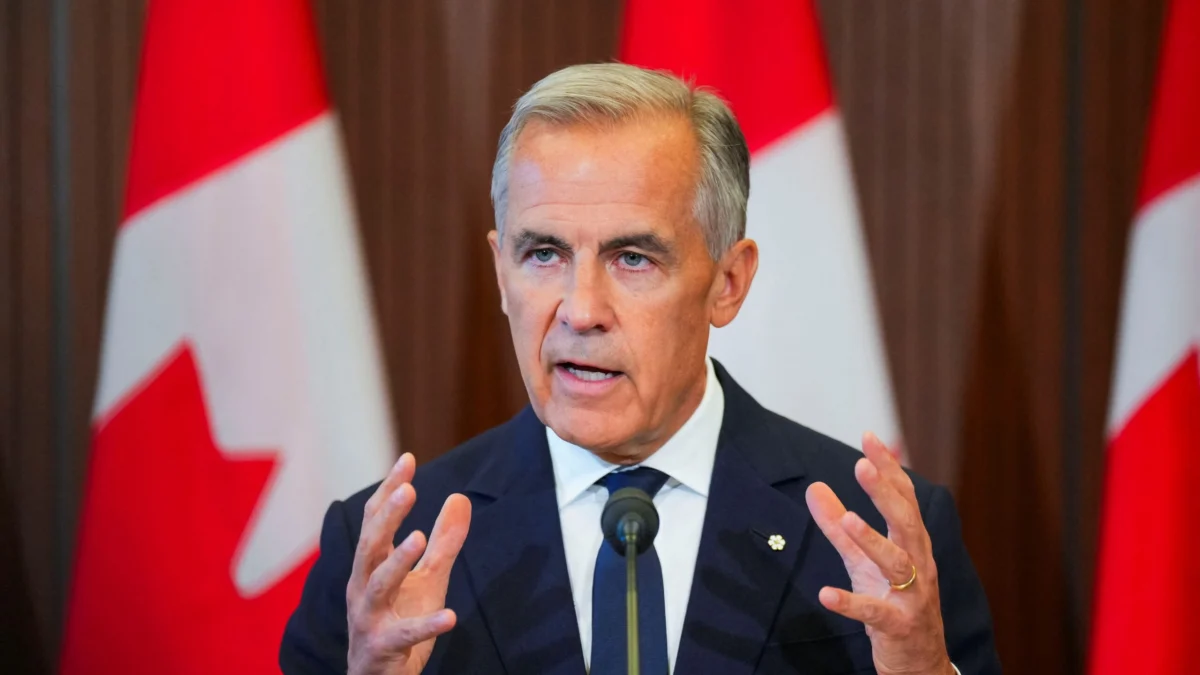
Toronto – Canada will impose retaliatory tariffs on a range of United States products starting September 8th, announced Prime Minister Mark Carney, following the collapse of trade negotiations with its southern neighbor. The measures will specifically target sectors including steel, dairy, agricultural equipment, and electronics. Carney stated, "This is a targeted response to protect and defend our industries and enable them to compete with U.S. products in the Canadian market."
The announcement comes after bilateral trade talks between Canada and the U.S. concluded without an agreement. This breakdown in negotiations has led the U.S. to implement a 50 percent tariff on a variety of Canadian goods valued at approximately $28 billion USD. These U.S. tariffs affect a wide array of products, including wine, hockey sticks, furniture, and dairy items, sparking immediate concern within Canadian export-oriented industries.
"Canada will dollar for dollar match the new tariffs from Washington to protect Canadian workers, farmers, families, and businesses," Carney declared during a press conference on Saturday. "We cannot accept what they have offered, and we will not give what they have asked for." This firm stance underscores Canada’s determination to safeguard its economic interests in the face of escalating trade tensions.
Background: A Strained Economic Relationship
The current trade dispute is a significant escalation in an already complex and often contentious economic relationship between Canada and the United States. For decades, the two nations have operated under various trade agreements, most notably the North American Free Trade Agreement (NAFTA), which was renegotiated and replaced by the United States-Mexico-Canada Agreement (USMCA) in 2020. However, underlying economic philosophies and specific industry interests have frequently led to friction.
The administration of U.S. President Donald Trump, known for its protectionist trade policies and a focus on bilateral deals, had previously imposed tariffs on Canadian steel and aluminum exports, citing national security concerns. Canada responded with its own retaliatory tariffs on a selection of American goods. These initial measures, while significant, did not reach the scale or scope of the current tariff threats.
The recent negotiations aimed to address ongoing trade imbalances and specific sectoral issues. However, according to sources familiar with the discussions, the U.S. delegation presented demands that Canada viewed as unacceptable, particularly concerning access to its protected dairy market and other sensitive sectors. The U.S. Trade Representative, Jamieson Greer, confirmed the breakdown, telling the platform "Politico" that Canada had refused to conclude the agreement under the proposed terms. Greer indicated that new Canadian demands had disrupted the delicate balance achieved in recent days.
Prime Minister Carney, who was elected in part on a promise to stand firm against U.S. President Donald Trump’s trade tactics, faces significant domestic pressure. Public opinion polls consistently show a majority of Canadians opposing concessions to the United States on trade matters. This domestic sentiment likely plays a crucial role in shaping the Canadian government’s negotiating stance and its willingness to engage in retaliatory measures.
Timeline of Escalation
The current round of tariff escalation can be traced back to recent weeks, with both sides engaging in intense, often public, negotiations.
- Early August: Reports emerge of ongoing trade discussions between Canadian and U.S. officials aimed at resolving outstanding trade issues and potentially updating aspects of the USMCA or establishing new bilateral understandings.
- Mid-August: Negotiations reportedly hit a significant roadblock, with disagreements over specific sectors, particularly agriculture and dairy, becoming prominent. U.S. demands for greater access to Canada’s protected dairy market are a major point of contention.
- Late August: The U.S. administration signals its intent to impose substantial tariffs on Canadian goods if an agreement is not reached, citing Canada’s perceived unwillingness to compromise.
- Early September: Trade talks officially collapse without resolution. The U.S. announces its intention to implement a 50% tariff on approximately $28 billion worth of Canadian imports.
- September 5th: Canadian Prime Minister Mark Carney announces Canada’s immediate plan to retaliate with its own tariffs on U.S. goods, to take effect on September 8th.
This rapid escalation highlights the volatile nature of the current trade environment and the challenges in finding common ground between two distinct economic systems.
Impacted Sectors and Economic Data
The proposed Canadian retaliatory tariffs are designed to exert pressure on specific U.S. industries that have a significant export presence in Canada. The sectors identified by Prime Minister Carney – steel, dairy, agricultural equipment, and electronics – represent key areas of bilateral trade where Canada believes it can effectively counter U.S. measures.
- Steel: The U.S. steel industry has been a beneficiary of previous protectionist measures. Canadian tariffs on imported steel could increase costs for U.S. manufacturers and potentially impact American steel producers who rely on the Canadian market. In 2023, Canada imported over $5 billion worth of steel products from the United States, according to Statistics Canada.
- Dairy: This has been a long-standing point of contention. Canada’s supply management system for dairy is designed to ensure stable prices and production for Canadian farmers but limits foreign market access. U.S. dairy producers have long sought greater access to this lucrative market. The U.S. tariffs on Canadian dairy products, such as cheese and butter, are already in effect. Canada’s retaliatory measures may target U.S. dairy-derived products or other agricultural goods to offset this. In 2023, U.S. dairy exports to Canada were valued at approximately $700 million.
- Agricultural Equipment: Canada is a significant importer of U.S.-made tractors, harvesters, and other farm machinery. Tariffs on these goods could increase costs for Canadian farmers, potentially impacting their competitiveness, but also directly affecting U.S. manufacturers. In 2023, Canadian imports of agricultural machinery from the U.S. exceeded $2 billion.
- Electronics: This broad category includes a vast range of goods, from consumer electronics to industrial components. Tariffs in this sector could affect a wide array of businesses and consumers in both countries. The United States is a primary supplier of electronic components and finished goods to Canada, with annual trade in this sector valued in the tens of billions of dollars.
The total value of goods subject to the U.S. tariffs is estimated at $28 billion, representing a significant portion of bilateral trade. Canada’s retaliatory measures will aim to match this value, demonstrating a commitment to reciprocity. The World Bank’s trade data indicates that in 2023, total bilateral trade in goods between Canada and the U.S. exceeded $700 billion, underscoring the immense economic interdependence of the two nations.
Official Responses and Perspectives
The U.S. Trade Representative’s office, through spokesperson Jamieson Greer, articulated the U.S. rationale for the tariffs. "Canada has unfortunately chosen a path of inflexibility, rejecting reasonable proposals that would have balanced our trade relationship. The new tariffs are a necessary measure to ensure fair competition and protect American industries and workers." This statement suggests a belief within the U.S. administration that Canada’s negotiating position was unreasonable and detrimental to American economic interests.
Canadian business associations have reacted with a mixture of concern and support for the government’s firm stance. The Canadian Chamber of Commerce issued a statement urging de-escalation. "While we understand the need for Canada to protect its industries, we are deeply concerned about the potential economic fallout from escalating trade disputes. We call on both governments to return to the negotiating table with a spirit of compromise to avoid further damage to our vital economic partnership."
Conversely, some agricultural groups, particularly those in the dairy sector who feel directly impacted by U.S. tariffs, have expressed support for the government’s retaliatory approach. "We appreciate the government’s commitment to defending our farmers," said a spokesperson for the Dairy Farmers of Canada. "These retaliatory measures are a necessary response to protect our livelihoods and the integrity of our supply management system."
The political landscape in both countries also plays a significant role. In the U.S., the Trump administration has consistently framed trade as a zero-sum game, often using tariffs as a primary tool to achieve its objectives. In Canada, Prime Minister Carney’s government faces the challenge of balancing domestic economic interests with the imperative of maintaining a stable and predictable relationship with its largest trading partner.
Broader Implications and Analysis
The imposition of tit-for-tat tariffs between Canada and the United States has several significant implications, extending beyond the immediate economic impact on specific industries.
- Erosion of Trust and Cooperation: Escalating trade disputes can damage the broader relationship between the two countries, making cooperation on other critical issues, such as border security, environmental policy, and continental defense, more challenging. The trust built over decades of close partnership can be eroded by persistent economic friction.
- Supply Chain Disruptions: Tariffs increase the cost of imported goods, leading to potential disruptions in supply chains. Businesses that rely on components or finished products from the other country may face higher operating costs, reduced profitability, or the need to find alternative, potentially more expensive, suppliers. This can lead to higher prices for consumers.
- Impact on Consumers: Ultimately, consumers in both Canada and the United States are likely to bear some of the cost of these tariffs. Higher prices for goods like dairy, electronics, and agricultural products can reduce purchasing power and negatively impact household budgets.
- Precedent for Future Negotiations: The current situation sets a precedent for how future trade disputes between the two nations will be handled. If a pattern of escalating tariffs becomes the norm, it could create an environment of perpetual uncertainty for businesses operating across the border.
- Geopolitical Considerations: The trade dispute also occurs within a broader global context of rising protectionism and trade tensions between major economic powers. The Canada-U.S. dynamic can influence global trade norms and potentially embolden other nations to adopt similar protectionist policies.
The Canadian government’s decision to impose retaliatory tariffs is a clear signal that it will not yield to U.S. pressure without a fight. However, the long-term consequences of this escalating trade war remain to be seen. The coming weeks and months will be critical in determining whether diplomacy can prevail over protectionism and whether the deeply integrated economic relationship between Canada and the United States can withstand these mounting challenges. The focus will now shift to whether either side is willing to make further concessions or if the tariffs will become a permanent fixture, reshaping bilateral trade for years to come.
