

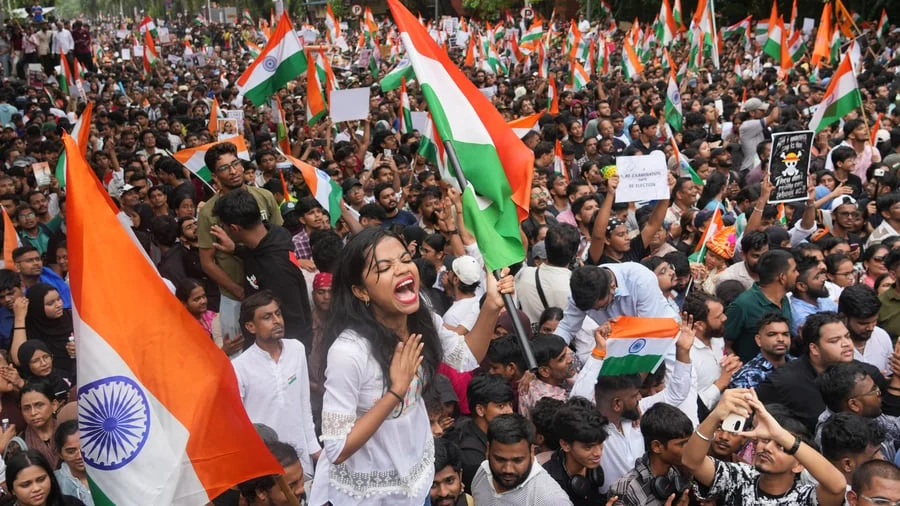
Bangkok – Prime Minister Narendra Modi is making a concerted effort to mend fences with India’s youth, a demographic that has recently become a significant source of domestic political challenge for his administration. This strategic pivot comes less than a month after authorities in the capital, New Delhi, employed batons and tear gas against frustrated young individuals and adults demanding improved opportunities for upward mobility. The stark contrast between the forceful response to recent protests and Modi’s current outreach underscores the growing recognition within the government of the critical importance of appeasing this large and vocal segment of the population.
The urgency of this reconciliation is amplified by India’s demographic landscape. As the world’s most populous nation, a substantial portion of its citizenry falls within the younger age brackets. Official statistics consistently highlight this demographic reality, with estimates indicating that nearly half of all Indians are under the age of 30. This youthful majority represents a powerful voting bloc and a significant force for social and economic change, making their contentment a paramount concern for any government aiming for long-term stability and continued electoral success. The protests, often characterized by online activism and street demonstrations, have highlighted a palpable sense of disillusionment among young Indians regarding their economic prospects and future in a rapidly developing nation.
In a significant public address on Saturday morning, the 75-year-old Prime Minister, adorned in a saffron turban, stepped up to the podium in front of the historic Red Fort in Delhi. His 75-minute speech, delivered on India’s Independence Day, was widely interpreted as a direct attempt to counter the mounting discontent with his government’s policies. The "revolting Gen Z," as some observers have termed them, have presented the Modi administration with its most significant domestic political challenge in years. During his address, Modi extended specific promises aimed at addressing the core grievances voiced by this generation, signaling a potential shift in governmental focus.
The Prime Minister announced a significant initiative to equip India’s youth with future-ready skills. He revealed that the government plans to train ten million young individuals in the coming year in the field of Artificial Intelligence (AI). This ambitious program reflects a keen awareness of the transformative power of AI and its potential to shape future employment landscapes. By investing in AI education, the government aims to ensure that Indian youth are not left behind in the global technological revolution and can capitalize on emerging opportunities in this rapidly evolving sector.
Furthermore, Modi pledged to introduce free supplementary tutoring services. This initiative is designed to assist high school graduates in preparing for India’s notoriously competitive entrance examinations for higher education. These exams are often described as a critical bottleneck, determining access to prestigious universities and, consequently, promising career paths. The high stakes associated with these tests create immense pressure on students, and the government’s commitment to providing free preparatory resources is intended to level the playing field and reduce the financial burden on families.
Background to the Discontent: The "Cockroach Movement" and Youth Aspirations
The recent protests in New Delhi, which prompted the government’s current conciliatory stance, were largely fueled by widespread frustration over unemployment and limited career advancement opportunities. The movement, reportedly dubbed the "Cockroach Movement" by some participants, gained traction through social media platforms, mobilizing thousands of young people. These demonstrations were a clear indication of a generation grappling with aspirations that appeared increasingly out of reach within the existing economic structure.
Data from the Centre for Monitoring Indian Economy (CMIE) has consistently painted a concerning picture of youth unemployment in India. While overall economic growth figures have often been presented positively by the government, the absorption of new entrants into the workforce has remained a persistent challenge. Reports from the past few years have indicated that youth unemployment rates, particularly among educated young adults, have remained stubbornly high, exacerbating feelings of disillusionment. This disconnect between the promise of economic progress and the reality of limited job prospects for many has become a significant source of public anger.
The protests in Delhi, which occurred just weeks before Modi’s Independence Day address, saw young people gathering to voice their demands for more jobs, better educational opportunities, and a greater say in policy decisions. The government’s response, involving the use of force by the Delhi Police, drew criticism from human rights organizations and amplified the narrative of an administration out of touch with the concerns of its younger citizens. Images of police confronting peaceful demonstrators resonated widely, creating a public relations challenge that Modi appears determined to address.
A Shifting Political Calculus: The Demographic Imperative
The demographic dividend India is often said to possess – a large, young, and potentially productive workforce – can quickly turn into a demographic liability if these young people feel disenfranchised or economically marginalized. The Modi government, now in its second term, is acutely aware that the upcoming electoral cycles will heavily depend on the sentiment of this youthful electorate. Alienating them would represent a significant political misstep.
The average age of the Indian population is considerably lower than in many developed nations. This youthful demographic means that a larger proportion of the population is either entering the workforce or is of voting age. Therefore, addressing the concerns of young Indians is not merely a matter of social welfare; it is a strategic imperative for maintaining political power. The perceived disconnect between the government’s development narrative and the ground realities faced by many young Indians has created a vulnerability that the opposition parties may seek to exploit.
Modi’s Outreach: Specific Promises and Their Implications
The two key promises made by Prime Minister Modi – AI training and free tutoring – represent a multi-pronged approach to addressing youth concerns.
1. AI Training for Ten Million Youth:
This initiative is forward-looking and aims to equip the next generation with skills relevant to the future economy. The global economy is increasingly driven by technology, and AI is at the forefront of this transformation. By investing in AI education, the Indian government is signaling its intention to foster innovation and ensure that India remains competitive in the global digital landscape.
- Supporting Data: Global investments in AI are projected to reach trillions of dollars in the coming decade. Countries that successfully train their workforces in AI will be better positioned to harness its economic benefits and create high-value jobs. India’s ambition to train ten million youth in AI positions it to be a significant player in this domain, potentially boosting its IT sector and creating new avenues for employment in fields like data science, machine learning, and AI development.
- Analysis of Implications: Successful implementation of this program could lead to a significant increase in skilled AI professionals in India, attracting foreign investment and fostering domestic technological advancements. However, challenges remain in ensuring the quality of training, accessibility across different regions, and the availability of qualified instructors. The government will need to partner with educational institutions and the private sector to achieve this ambitious goal.
2. Free Supplementary Tutoring for Entrance Exams:
This promise directly addresses the anxiety and financial strain associated with India’s highly competitive higher education system. The pressure to secure admission into premier institutions is immense, and many families struggle to afford private coaching classes, which are often considered essential for success.
- Supporting Data: The sheer volume of applicants for popular university courses in India often runs into lakhs (hundreds of thousands). For instance, the Joint Entrance Examination (JEE) for engineering programs receives over a million applications annually. The cost of private coaching for these exams can range from a few hundred to several thousand dollars per student, a significant burden for many households.
- Analysis of Implications: Providing free tutoring could significantly reduce the financial barrier to higher education for economically disadvantaged students, fostering greater equity and social mobility. It could also alleviate some of the pressure on parents and students, leading to improved mental well-being. The success of this program will depend on the quality of the tutors, the curriculum’s alignment with examination patterns, and its reach to students in remote areas.
Broader Political Context and Future Outlook
Prime Minister Modi’s speech on Independence Day is more than just a set of policy announcements; it is a carefully calibrated political maneuver. By directly addressing the youth and acknowledging their concerns, he seeks to reclaim the narrative and demonstrate that his government is responsive to their aspirations. This outreach is crucial for maintaining the strong electoral support that has characterized his tenure.
The government’s move can also be seen as a response to growing criticisms regarding the impact of some of its economic policies on employment. While the government has often highlighted macro-economic growth, the micro-level reality for many young job seekers has been a source of frustration. The AI training and tutoring initiatives are designed to show tangible actions being taken to improve prospects.
The "Cockroach Movement" and similar expressions of youth discontent serve as a wake-up call for policymakers. India’s demographic dividend is a double-edged sword; if the aspirations of its youth are not met, it could lead to widespread social unrest and political instability. Modi’s attempt to reconcile with this crucial demographic is a recognition of this reality.
Looking ahead, the effectiveness of these promises will hinge on their diligent implementation and measurable impact. The government will face scrutiny regarding the allocation of resources, the quality of educational programs, and the actual job creation that results from these initiatives. If successful, these programs could significantly bolster Modi’s standing among young voters. Conversely, failure to deliver on these promises could further deepen the sense of disillusionment, potentially empowering opposition narratives that highlight economic disparities and a lack of opportunity under the current leadership. The coming months and years will reveal whether this strategic outreach marks a genuine turning point in the government’s relationship with India’s future generation.
