

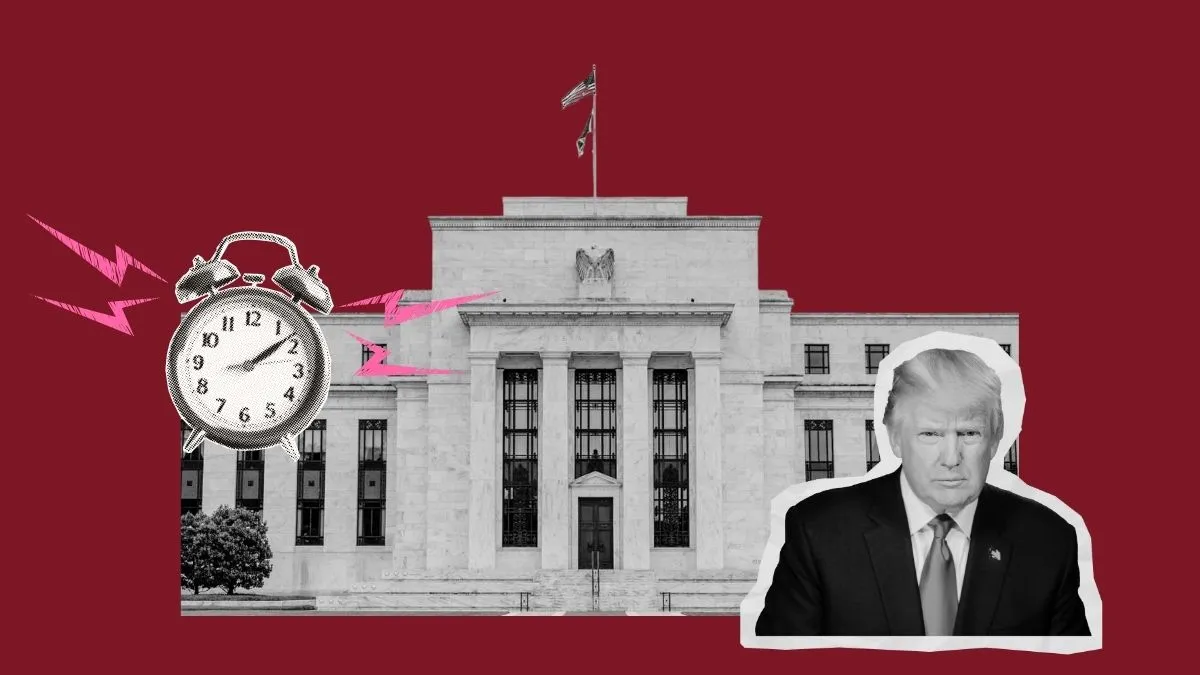
The White House has officially launched a renewed effort to remove Federal Reserve Governor Lisa Cook from her position on the central bank’s Board of Governors, signaling a high-stakes legal and political confrontation over the independence of the nation’s monetary authority. This week, the administration dispatched a formal letter to Governor Cook, signed by Deputy Chief of Staff Dan Scavino, informing her that President Donald Trump is "considering" her removal from office. The correspondence, which provides a three-week window for a formal response, marks the first significant executive action following a pivotal Supreme Court ruling regarding the President’s authority over the Federal Reserve.
The move centers on allegations of mortgage fraud and "gross negligence" that the White House argues render Cook unfit for her role. According to the letter, the administration contends that Cook’s alleged conduct undermines her trustworthiness as a senior official responsible for the stability of the U.S. economy, asserting that such behavior warrants dismissal even if it does not culminate in criminal charges. This procedural step is designed to meet the "for-cause" legal threshold required to terminate a Federal Reserve official, a standard that has historically protected the central bank from direct political interference.
The Legal Landscape: The Supreme Court and the "For-Cause" Standard
The current attempt to remove Governor Cook follows a consequential 5-4 decision by the Supreme Court in late June. The ruling addressed the President’s previous efforts to summarily dismiss Cook, which her legal team challenged as a violation of the Federal Reserve Act. Chief Justice John Roberts, writing for the majority, held that while the President does possess the authority to remove a Federal Reserve Governor, that authority is not absolute. The Court ruled that Cook was entitled to due process, including formal notice of the charges against her and a meaningful opportunity to respond before any termination could take effect.
The Supreme Court’s decision emphasized that Congress specifically designed the Federal Reserve to be structurally independent of the executive branch to ensure that monetary policy remains insulated from short-term political pressures. However, the Court left open a pathway for removal "for cause," a legal term that typically encompasses inefficiency, neglect of duty, or malfeasance in office. By sending the formal letter and providing a twenty-one-day response period, the White House is attempting to satisfy the procedural requirements laid out by the Chief Justice, setting the stage for a judicial test of what constitutes "valid cause" in the context of a Fed Governor.
Origins of the Allegations: The FHFA Referral and DOJ Investigation
The allegations against Governor Cook stem from a series of referrals made by Bill Pulte, the Director of the Federal Housing Finance Agency (FHFA). Pulte has alleged that prior to her appointment to the Federal Reserve, Cook engaged in mortgage fraud by falsifying bank documents to secure more favorable terms on a personal loan. These claims gained significant traction last year when the Department of Justice (DOJ) reportedly opened an investigation into the matter.
While the DOJ probe remains ongoing, no formal charges have been filed against Governor Cook. The White House, however, argues that the nature of the allegations is sufficiently grave to warrant removal. The Scavino letter suggests that the integrity of the Federal Reserve is compromised when a sitting governor is under a cloud of suspicion regarding financial impropriety. From the administration’s perspective, the "gross negligence" tied to these private financial dealings directly impacts her professional standing and the public’s confidence in the central bank’s leadership.
Governor Cook’s Defense and the Pretext Argument
Governor Lisa Cook, who made history as the first Black woman to serve on the Federal Reserve Board of Governors, has steadfastly denied any wrongdoing. Her legal team, led by prominent attorney Abbe Lowell, has characterized the administration’s actions as a "manufactured pretext" intended to punish her for her policy stances. Cook was confirmed by the Senate in a razor-thin 50-50 vote, which required a tie-breaking vote from then-Vice President Kamala Harris, reflecting the deeply partisan atmosphere surrounding her appointment from the outset.
In a statement released through her counsel, Cook argued that the focus on her past mortgage documents is a distraction from the real issue: her refusal to yield to political pressure regarding interest rate decisions. "This was never about mortgage documents signed years before I became a Federal Reserve governor," Cook stated following the Supreme Court’s June ruling. "It was an attempt to remove me on a manufactured pretext because I refused to bow to political pressure and continued to set interest rates based only on what would best serve the American people."
Abbe Lowell reiterated this sentiment in response to the latest White House letter, asserting that there is no valid legal cause for her removal. He signaled that Cook’s team is prepared to launch a fresh legal challenge to preserve her position and defend the historic independence of the Federal Reserve.
Timeline of the Conflict
The friction between the Trump administration and Governor Cook has developed over several months, evolving from social media criticism into a formal legal battle:
- May 2022: Lisa Cook is confirmed to the Federal Reserve Board of Governors after a contentious Senate process.
- Late 2023: FHFA Director Bill Pulte refers allegations of mortgage fraud to the Department of Justice, prompting an initial probe.
- Early 2024: President Trump publicly calls for Cook’s resignation or firing, citing the fraud allegations and her voting record on interest rates.
- June 2024: The Supreme Court issues a 5-4 ruling blocking a summary firing, establishing that Cook must receive notice and an opportunity to respond.
- July 2024: President Trump signals on social media that "appropriate action" will be taken immediately to remove Cook.
- August 2024: The White House sends a formal letter to Cook, signed by Dan Scavino, alleging "gross negligence" and providing a three-week deadline for a response.
Analysis of the "For-Cause" Implications
The outcome of this dispute could have far-reaching implications for the "Unitary Executive Theory" and the future of independent regulatory agencies. If the administration successfully removes Cook based on "gross negligence" related to personal financial history, it could broaden the definition of "for cause" removal, potentially making it easier for future presidents to dismiss members of independent boards like the Fed, the SEC, or the FTC.
Conversely, if the courts determine that the allegations do not meet the legal threshold for removal, it would significantly bolster the Fed’s "shield" against executive interference. Legal analysts note that the "for cause" standard is intended to be a high bar. Historically, the courts have been hesitant to allow the removal of economic regulators for anything short of clear criminal activity or a total failure to perform official duties. The White House’s argument—that personal conduct can "undermine trustworthiness" enough to constitute cause—represents an aggressive interpretation of executive power.
Market and Economic Context
The Federal Reserve is currently navigating a complex economic environment, balancing the need to curb inflation with the goal of maintaining a stable labor market. Governor Cook has been a consistent participant in the Federal Open Market Committee (FOMC) meetings, where critical decisions regarding the federal funds rate are made.
Market analysts suggest that any perceived instability within the Fed’s leadership could lead to volatility in the bond and equity markets. The Federal Reserve’s credibility relies heavily on the perception that its governors are technocrats making data-driven decisions rather than political appointees following the directives of the White House. A protracted legal battle over the removal of a governor could inject a degree of political risk into market expectations regarding future interest rate paths.
Broader Political Impact
The move to remove Cook is also seen through the lens of the broader relationship between the Trump administration and the Federal Reserve. President Trump has frequently criticized Fed Chair Jerome Powell and other board members for their decisions to raise or maintain high interest rates, arguing that such policies stifle economic growth. By targeting Cook, the administration may be attempting to send a signal to the rest of the board regarding the expectations of the executive branch.
Supporters of the President argue that he has a mandate to ensure that all high-level officials, especially those overseeing the economy, are beyond reproach. They contend that the FHFA’s referrals cannot be ignored and that the President is simply exercising his duty to ensure ethical governance. Critics, however, view the move as an erosion of the norms that have kept the U.S. central bank as one of the most respected and independent financial institutions in the world.
Next Steps in the Process
Governor Cook has until the end of the month to submit her formal response to the White House. Her legal team is expected to provide a detailed rebuttal of the mortgage fraud allegations, likely supported by documentation intended to prove the legitimacy of her past financial transactions.
Once the response is submitted, the President will review the materials before making a final determination on her removal. If the President proceeds with the dismissal, a new round of litigation is almost certain. This potential lawsuit would likely move through the D.C. Circuit Court of Appeals and could eventually return to the Supreme Court, providing the justices with an opportunity to further clarify the boundaries of presidential power over independent agencies.
As the three-week deadline approaches, the financial and legal communities remain focused on the White House’s next move. The resolution of this case will not only determine Lisa Cook’s future at the Federal Reserve but will also define the practical limits of the "for-cause" protections that have defined the central bank for over a century.
