

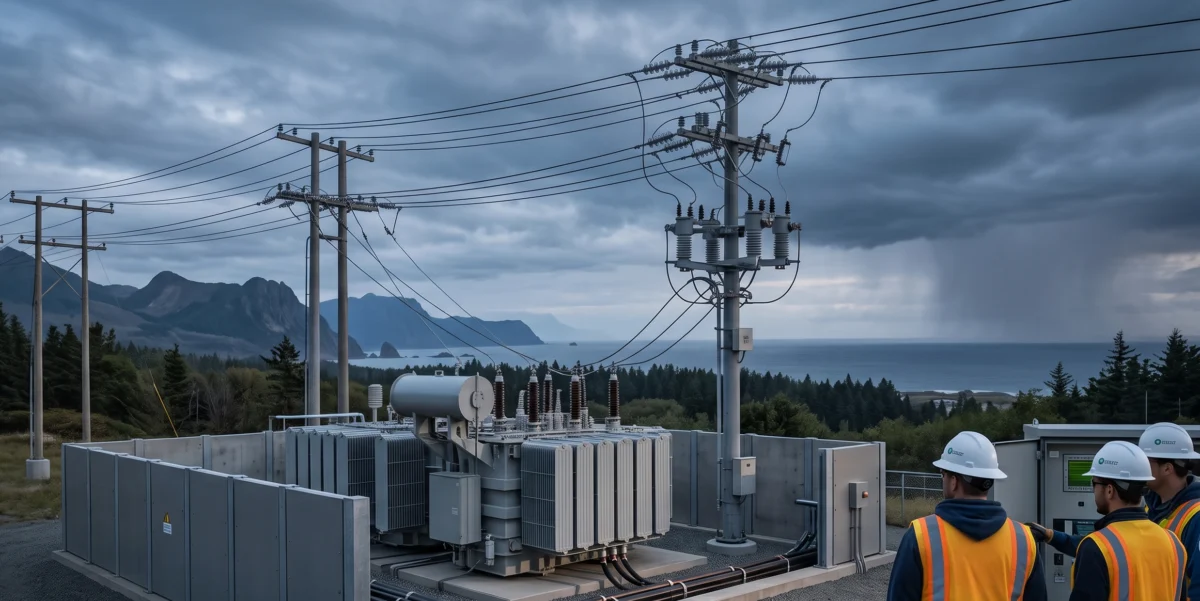
Safety remains the non-negotiable bedrock of every utility operation, and affordability has taken on renewed urgency as inflation and infrastructure investment costs rise. Yet, it is the definition of reliability—and its growing sibling, resiliency—that is currently undergoing the most profound evolution. In a world where electricity is no longer just a convenience but a critical lifeline for everything from transportation to home heating and data processing, the industry is moving beyond the simple goal of "keeping the lights on" toward a more complex, integrated, and proactive model of grid management.
The Historical Context of Grid Performance
To understand where the industry is heading, it is essential to look at where it began. For most of the 20th century, the electrical grid was designed as a one-way street. Power was generated at large, centralized plants—often coal, gas, or hydro—and transmitted over long distances to passive consumers. Reliability was measured by the frequency and duration of outages under normal operating conditions. If the lights stayed on 99.9% of the time, the utility was considered successful.
The metrics used to track this success, such as the System Average Interruption Duration Index (SAIDI) and the System Average Interruption Frequency Index (SAIFI), became the industry standards. These "regulatory scoreboards" provided a clear, if narrow, view of how well a utility was performing. However, these metrics were designed for a world where the primary threats to the grid were equipment failure or the occasional localized storm.
Today, that world no longer exists. The rise of extreme weather events, ranging from unprecedented wildfires in the West to catastrophic hurricanes in the East and deep freezes in the South, has exposed the limitations of traditional reliability. Utilities are now forced to consider not just how to prevent outages, but how to ensure the system can withstand and rapidly recover from major shocks—a concept known as resiliency.
Defining the Modern Reliability and Resiliency Gap
The distinction between reliability and resiliency is more than just semantic; it represents a shift in operational philosophy. Reliability focuses on the consistency of service under expected conditions, while resiliency focuses on the system’s ability to absorb, adapt to, and recover from low-probability, high-impact events.
Joe Zerdin, the Director of Distribution Large Customers, Sustainment, and Technical Services at Hydro One, has been at the forefront of this shift. Hydro One, Ontario’s largest electricity transmission and distribution service provider, serves a diverse range of customers, from residential homeowners to massive industrial facilities. For Zerdin, the evolution of these terms is a daily practical reality.
"The core of reliability is still there in terms of the indices such as SAIDI," Zerdin noted in a recent discussion regarding industry trends. "What has become more prevalent is that momentary outages are becoming as impactful, and it’s usually not on a regulatory scoreboard such as SAIDI."
This observation highlights a growing gap in how grid performance is measured. A momentary outage—often lasting only a few seconds or even milliseconds—might not significantly impact a residential customer, but for a high-tech manufacturing plant or a data center, it can result in millions of dollars in lost productivity and damaged equipment. Furthermore, Zerdin points out that customers often conflate reliability with "power quality," where voltage sags or surges can be just as disruptive as a total blackout.
The challenge is compounded by the fact that the industry lacks a standardized, universal measurement for resiliency. While SAIDI and SAIFI provide a historical record of reliability, there is no equivalent "scoreboard" for how well a grid can survive a Category 5 hurricane or a sustained cyberattack.
The Technological Transformation: From One-Way to Two-Way
As the definitions of reliability and resiliency expand, the physical and digital infrastructure of the grid must follow suit. The transition from a centralized, one-way delivery system to a dynamic, two-way ecosystem is perhaps the greatest engineering challenge of the modern era.
This transformation involves several key technological pillars:

- Advanced Distribution Management Systems (ADMS): These software platforms act as the "brain" of the modern utility, providing real-time visibility into grid operations. By integrating various data streams, an ADMS allows utilities to identify and isolate faults automatically, often restoring power to unaffected areas before a human operator can even react.
- Distributed Energy Resources (DERs): Rooftop solar, residential battery storage, and electric vehicles (EVs) are no longer just "add-ons" to the grid; they are becoming integral components of grid stability. When managed correctly, DERs can provide localized power during outages, reducing the strain on the central system.
- Grid Hardening: This involves physical upgrades to infrastructure, such as replacing wood poles with steel or composite materials, undergrounding vulnerable lines, and installing "smart" reclosers that can prevent temporary faults (like a tree branch touching a wire) from becoming permanent outages.
- Customer-Side Assets: Large industrial and commercial customers are increasingly deploying their own microgrids and backup systems. Integrating these assets into the utility’s operational plan requires a level of collaboration that was previously unnecessary.
Zerdin emphasizes that the biggest hurdle isn’t just the existence of these technologies, but their integration. "The biggest challenge is the integration of the multitude of systems in order to work seamlessly together to address capacity, reliability, and resiliency," he explained. This requires more than just new hardware; it requires a fundamental shift in how utilities plan and regulate their networks.
The Economic and Regulatory Balancing Act
Every upgrade to the grid comes with a price tag, and in a regulated industry, those costs are ultimately borne by the ratepayer. This brings the "affordability" leg of the stool back into sharp focus. Utilities must justify every capital investment to regulatory bodies, proving that the benefits in reliability and resiliency outweigh the costs to the consumer.
For Zerdin and his team at Hydro One, this means finding ways to utilize existing customer equipment to support the grid, rather than always building new, expensive utility-owned infrastructure. "It starts with more integrated planning, acceptance of utilizing customer equipment from an operational and regulatory perspective, and also the scale of the integration," Zerdin said. "All of these challenges fall under the umbrella of maintaining affordability for all customers."
This collaborative approach represents a significant departure from the traditional utility-customer relationship. In the past, the utility’s responsibility ended at the meter. Today, the meter is the gateway to a partnership. Large commercial and industrial (C&I) customers are no longer just consumers; they are active participants in grid management. By coordinating their energy use and leveraging their own generation assets, these customers can help the utility manage peak demand and maintain system stability, which in turn helps keep costs lower for everyone.
Chronology of a Changing Industry
The shift toward this new model of reliability has been accelerating over the past decade. A brief chronology of this evolution includes:
- 2010-2015: The Rise of the Smart Meter. Early grid modernization focused on "Smart Grid 1.0," which primarily involved the deployment of Advanced Metering Infrastructure (AMI). This allowed for automated billing and better outage detection but did little to change the two-way flow of energy.
- 2015-2020: The DER Explosion. As the cost of solar and lithium-ion batteries plummeted, utilities began to see a surge in customer-sited generation. This period was marked by regulatory battles over net metering and the first serious discussions about how to integrate "non-wires alternatives" into grid planning.
- 2020-Present: The Resiliency Era. Following a series of devastating climate-related events—such as the 2021 Texas freeze and record-breaking wildfire seasons in California and Canada—the industry focus shifted decisively toward resiliency. This era is characterized by massive investments in grid hardening and the deployment of ADMS.
- 2025 and Beyond: The Integrated Ecosystem. The industry is now entering a phase where the boundary between the utility and the customer is blurring. The focus is on "Total System Value," where reliability and resiliency are achieved through a combination of utility infrastructure and customer-owned assets, all managed through a highly integrated digital layer.
Industry Collaboration: The "DTECH Reliability & Resiliency" Event
The need for industry-wide collaboration is the driving force behind upcoming gatherings like the DTECH Reliability & Resiliency (R&R) conference. These events serve as a melting pot for utility executives, technology providers, and large energy consumers to share best practices and develop common standards.
One of the most anticipated sessions at the event is titled "We’re in This Together!", featuring Joe Zerdin. The session aims to move beyond theoretical discussions and dive into real-world case studies of how Hydro One is navigating these challenges. Zerdin plans to detail active initiatives that highlight the practical successes and lessons learned from building a modern distribution network.
"I’ll be discussing some of our plans as a utility in addressing capacity and DER integration, but also how we’re working with and understanding our customers to enable affordability on a whole new level," Zerdin noted. The underlying message is clear: the challenges of the modern grid are too large for any single entity to solve alone.
Broader Impact and Future Implications
The evolution of reliability and resiliency has implications that extend far beyond the utility sector. For the broader economy, a more resilient grid means reduced risk for businesses and a more attractive environment for industrial investment. For the average citizen, it means a more stable foundation for the "electrification of everything," from the cars they drive to the heat pumps that keep their homes warm.
However, the path forward is not without risks. The integration of millions of connected devices into the grid creates new cybersecurity vulnerabilities. The reliance on weather-dependent renewables requires a massive expansion of energy storage and long-distance transmission. And the need for rapid investment must be balanced against the risk of creating "energy poverty" for vulnerable populations.
As Zerdin points out, the key to navigating these hurdles lies in a deeper mutual understanding between all stakeholders. "The more we understand each other’s needs, the more we can get done to achieve these goals," he said. This sentiment reflects a growing consensus in the industry: the "three-legged stool" of safety, affordability, and reliability is not being replaced, but it is being reinforced with a new foundation of collaboration and technological integration.
As the energy sector moves toward 2030 and beyond, the success of this transition will be measured not just by the absence of blackouts, but by the flexibility and strength of a grid that is truly "in this together" with the people and businesses it serves. The dialogue beginning at events like DTECH R&R will likely set the stage for the regulatory and operational frameworks that will define the next century of power delivery.
