

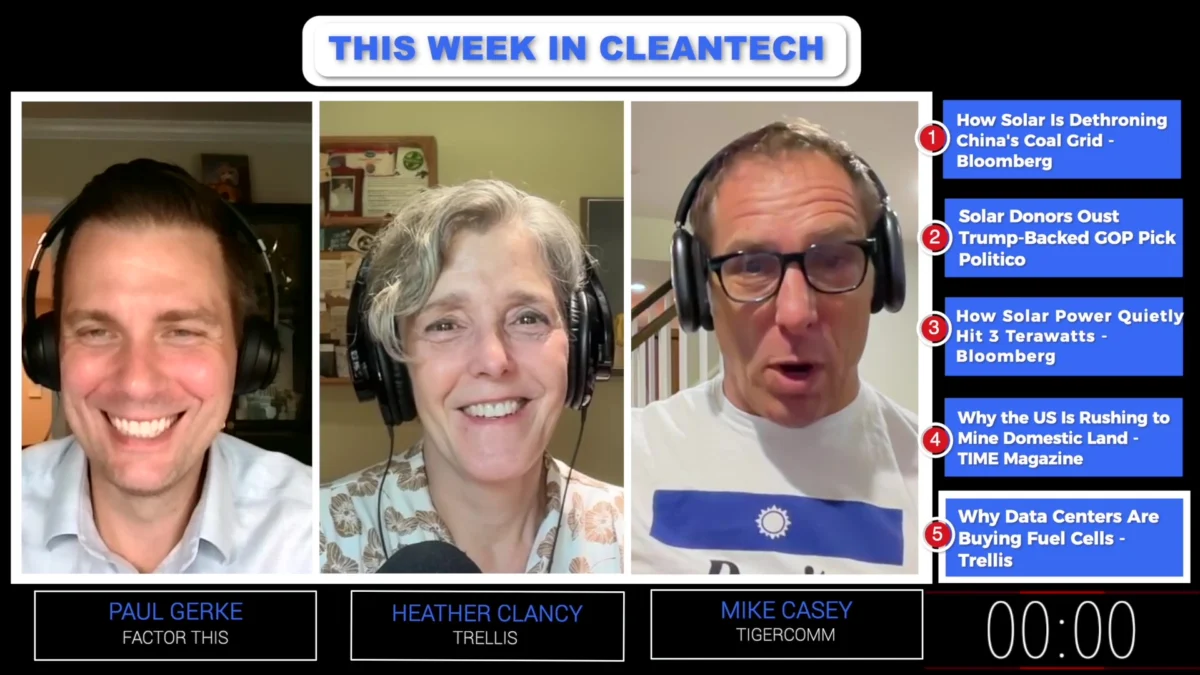
The global energy landscape is undergoing a transformation of unprecedented scale and velocity, characterized by historic milestones in renewable capacity, a fundamental shift in political lobbying strategies, and a frantic race to secure the raw materials necessary for a decarbonized future. As of mid-2026, the transition from fossil fuels to renewable energy has moved beyond the realm of climate policy into a dominant economic and geopolitical reality. This evolution is most visible in China, where solar power is on the verge of overtaking coal as the nation’s primary source of generation capacity, and in the United States, where the cleantech industry is increasingly exerting its influence in the political arena to protect and expand clean energy incentives.
China’s Energy Tipping Point: Solar Parity with Coal
For decades, coal has been the backbone of the Chinese industrial machine, providing the reliable, baseload power that fueled the nation’s meteoric economic rise. However, data from the China Electricity Council (CEC) indicates that a historic reversal is occurring. As of the end of June 2026, China’s installed solar capacity reached 1,274 gigawatts, trailing coal’s 1,275 gigawatts by a mere single gigawatt. Analysts suggest that this gap likely closed in the weeks following the report, marking the first time in the history of the modern Chinese grid that a renewable source has matched the capacity of the country’s traditional coal fleet.
This milestone arrives despite a significant shift in domestic policy. Earlier this year, the Chinese government implemented a comprehensive policy overhaul that ended guaranteed revenue for wind and solar projects, moving toward a more market-oriented system. This transition caused a temporary deceleration in new builds; the country added 72 gigawatts of solar in the first half of 2026, a notable contrast to the 93 gigawatts added in May 2025 alone—the final month before the new policy took effect.
Despite this slowdown, the second half of 2026 is expected to see a massive rebound. China plans to add approximately 240 gigawatts of new power capacity before the end of the year, a 50% increase over the first-half figures. By year-end, the CEC projects total installed capacity will reach 4,300 gigawatts, with wind and solar together accounting for nearly half of the nation’s total power mix. Meanwhile, thermal power’s share—which includes coal and gas—is projected to decline to roughly 31%.
However, the rapid deployment of solar has outpaced the physical infrastructure of the grid. Solar utilization rates fell from 94.3% in the previous year to 91.4% in 2026. This phenomenon, known as curtailment, occurs when the grid cannot absorb the total volume of electricity being generated, forcing operators to disconnect solar arrays to maintain stability. The challenge for China over the next decade will be transitioning from a capacity-building phase to a grid-integration phase, requiring massive investments in transmission lines and long-duration storage.
The Three Terawatt Milestone and the Rise of Emerging Markets
The rapid expansion in China is mirrored on a global scale. The world recently surpassed 3 terawatts (TW) of total installed solar capacity, a figure that underscores the exponential nature of the energy transition. To put this in perspective, it took the global energy industry several decades to install the first terawatt of solar power. The subsequent two terawatts were added in less than five years.
According to Bloomberg New Energy Finance (BNEF), this trajectory is set to continue, with global deployment expected to exceed 9 terawatts by 2036. While China has historically driven this growth, the next phase of the solar revolution is expected to take place in the developing world. Markets such as Pakistan, Nigeria, and the Philippines are beginning to see a surge in rooftop solar and battery adoption.
Unlike China or the United States, many developing nations are starting from a low baseline of existing grid infrastructure. This allows them to "leapfrog" traditional centralized power models in favor of decentralized, distributed energy resources. Because these countries are not yet facing the same grid congestion issues as China, they are positioned to absorb new solar capacity more efficiently. BNEF projects that by 2036, developing countries could account for more than 25% of all solar installations worldwide, often achieving this growth without the heavy subsidies or policy support seen in wealthier nations.
Political Realignments: Solar Executives as a Political Force
In the United States, the clean energy industry is beginning to wield its economic power to influence the legislative process. A recent primary election in Tennessee highlighted this shift, as Representative Andy Ogles, a Trump-backed Republican, lost his seat following a targeted campaign by the Invest in Tomorrow Coalition. The super PAC, launched by solar industry executives, spent approximately $2 million to oppose Ogles, who had been a vocal proponent of the "One Big Beautiful Bill Act"—a legislative effort aimed at phasing out clean energy incentives.
The coalition’s strategy represents a sophisticated evolution in climate lobbying. Rather than appealing to environmental concerns, which often fail to resonate with conservative voters, the PAC framed its opposition in terms of conservative values and legislative efficacy. The group’s advertisements focused on Ogles’ record of missing votes and pitched his opponent’s right-wing credentials. This "flanking from the right" tactic has proven effective; Ogles is the third Republican incumbent this year to lose a primary after being targeted by the group. Similar strategies were employed in Texas and South Carolina, signaling that the cleantech sector is no longer content to remain on the sidelines of political combat.
Breakthroughs in Long-Duration Storage: The Iron-Air Solution
As solar and wind capacity grows, the need for long-duration energy storage (LDES) has become the industry’s most pressing technical challenge. Most current battery technology relies on lithium-ion chemistry, which is optimized for short-duration discharge (typically four hours or less) and relies on expensive, supply-constrained materials like lithium and cobalt.
Aytaç Yılmaz, CEO of the Amsterdam-based startup Ore Energy, has emerged as a key figure in addressing this gap. Ore Energy recently closed a $43 million Series A funding round to scale its iron-air battery technology. Unlike lithium-ion, iron-air batteries store energy through the chemical process of "rusting" and "unrusting" iron electrodes. This process allows for the storage of renewable power for up to 100 hours at a fraction of the cost of traditional batteries.
The company’s commercial viability was recently validated by a 1 gigawatt-hour agreement with the Dutch utility Budget Thuis, representing the largest long-duration storage deal in continental Europe. By using abundant materials like iron, Ore Energy aims to decouple the energy transition from the volatile critical mineral supply chain, providing a blueprint for how utilities can maintain grid stability during multi-day periods of low wind or solar output.
The Domestic Mining Rush and Geopolitical Competition
While technological innovations like iron-air batteries offer a long-term alternative, the immediate demand for lithium remains intense. This has led to a renewed rush to mine critical minerals within the United States, often pitting federal energy goals against indigenous rights and environmental conservation.
Thacker Pass in northern Nevada, a site larger than the island of Manhattan, is currently the largest U.S. lithium mine under construction in decades. The project is a centerpiece of the Biden administration’s strategy to reduce reliance on China, which currently controls the vast majority of the global critical mineral supply chain. In a rare move, the Department of Energy (DOE) took a 5% equity stake in the project to ensure its completion.
The federal government has placed approximately 40 mining projects on a "fast-track" list to expedite permitting. This acceleration is driven by national security concerns; Beijing has previously threatened to restrict mineral exports in response to U.S. trade tariffs. However, the speed of these approvals has drawn sharp criticism. The Fort McDermitt Paiute and Shoshone Tribe have stated that the Thacker Pass mine will destroy sites they consider sacred. The tension between the need for domestic mineral security and the rights of local communities remains one of the most contentious aspects of the American energy transition.
Data Centers and the Pivot to Onsite Fuel Cells
The surge in energy demand is not only coming from the grid but also from the rapid expansion of artificial intelligence (AI) and cloud computing. Data center operators, facing years-long delays for new grid connections or gas turbine installations, are increasingly turning to onsite fuel cells for primary power.
Oracle recently signed a massive agreement for up to 2.8 gigawatts of fuel cells from Bloom Energy to power its cloud and AI operations. The appeal of fuel cells lies in their speed of deployment; some Oracle projects have been operational within 55 days of installation. Equinix, another major data center provider, has 73 megawatts of fuel cells online and another 35 megawatts under contract. In Silicon Valley, Equinix is operating sites where fuel cells serve as the primary power source, with the traditional utility grid serving only as a backup.
Goldman Sachs analysts project that fuel cells could account for 15% of all new data center power demand by 2030, representing at least 8 gigawatts of capacity. Beyond the speed of installation, fuel cells offer significant environmental advantages over traditional gas-fired backup generators. Because the technology relies on a chemical reaction rather than combustion, it produces fewer emissions and requires significantly less water. Equinix reports that its current fuel cell fleet has already helped the company avoid 285,000 metric tons of CO2 equivalent.
Implications for the Global Energy Future
The events of 2026 demonstrate that the cleantech sector has reached a level of maturity where it is now the primary driver of new energy capacity globally. From China’s coal-to-solar crossover to the emergence of iron-air batteries and the political mobilization of solar executives, the transition is accelerating across multiple fronts.
However, this growth brings new complexities. The industry must now navigate the "bottleneck era," characterized by grid curtailment, supply chain vulnerabilities, and the social costs of mining. As the world moves toward the 9-terawatt milestone, the focus will likely shift from merely adding capacity to building the sophisticated infrastructure and political consensus necessary to manage a truly renewable-led global economy. The success of this next phase will depend on whether the innovations in storage and onsite generation can keep pace with the insatiable demand for clean, reliable power.
