

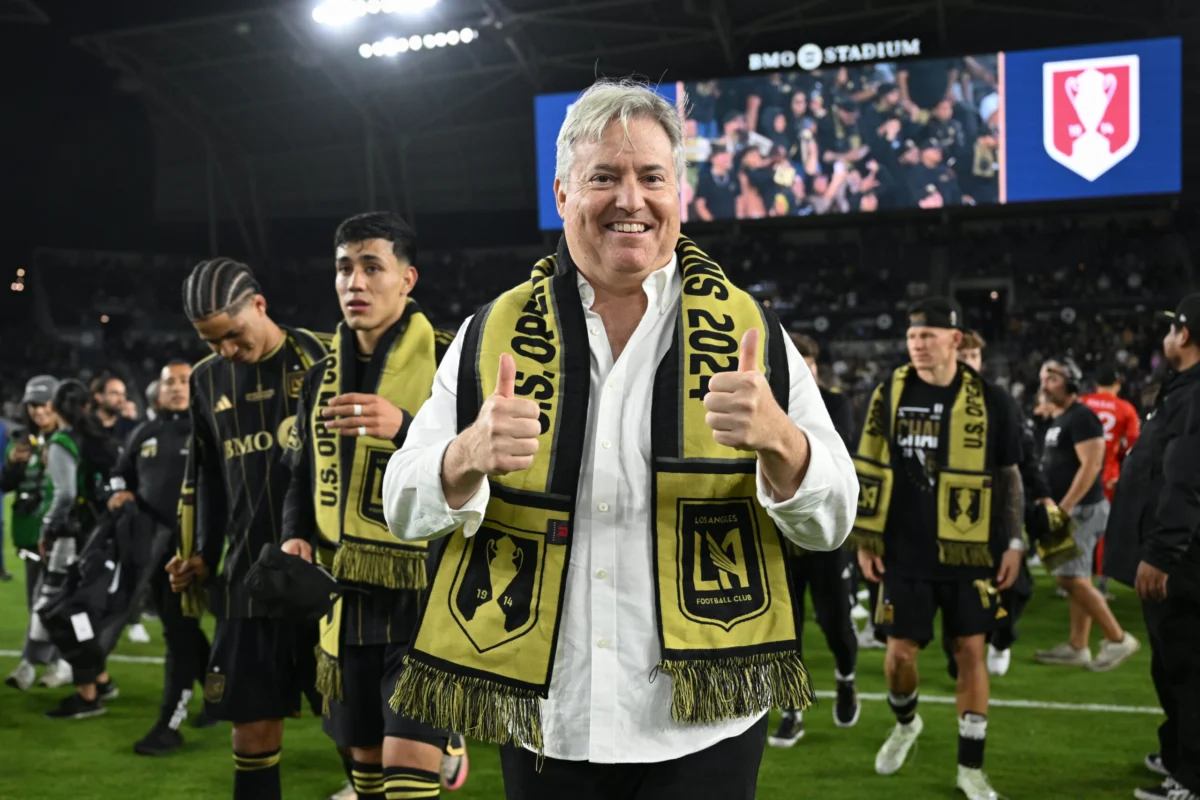
Major League Soccer (MLS) is set to undergo a significant leadership transition, with Larry Berg, co-managing owner of the Los Angeles Football Club (LAFC), named as the league’s next commissioner. Berg will assume the top executive role next year, taking the reins from Don Garber, who has presided over the league’s remarkable growth for more than a quarter-century. Garber, a pivotal figure in North American soccer, will not depart immediately but will transition into an emeritus role, providing strategic counsel through the end of his contract in late 2027, ensuring a smooth and deliberate handover. This appointment signals a new chapter for a league that has evolved from a nascent enterprise into a formidable player in the global sports arena, reflecting both continuity in its ambitious vision and a fresh perspective at its helm.
The Dawn of a New Era: Berg Takes the Helm
The announcement, conveyed by a source familiar with the matter who requested anonymity due to the sensitive nature of the information, confirms one of the most anticipated leadership changes in professional sports. Larry Berg’s ascent to the commissioner’s office will necessitate the sale of his ownership stake in LAFC, a standard requirement designed to prevent conflicts of interest and maintain the impartiality of the league’s highest executive. His background is notably diverse, combining a deep involvement in professional soccer ownership with a distinguished career in finance, having previously served as a senior partner at Apollo Global Management, a global alternative investment manager. This blend of operational experience within MLS and high-level strategic financial expertise positions Berg to navigate the complex landscape of professional sports in the 21st century. His recent celebration of LAFC’s triumph over Sporting Kansas City in the 2024 Lamar Hunt U.S. Open Cup final at BMO Stadium on September 25, 2024, vividly captures his direct engagement and success within the league he is now poised to lead.
Don Garber’s Enduring Legacy: A Quarter-Century of Growth
The departure of Don Garber, aged 68, from the commissioner’s active role marks the end of an era defined by extraordinary expansion and strategic innovation. Appointed commissioner in 1999, Garber inherited a league that, just three years after its inaugural season, was teetering on the brink of collapse. Born from the legacy of the 1994 FIFA World Cup hosted in the United States, MLS initially struggled with fan engagement, financial stability, and establishing a distinct identity in a crowded North American sports market. Under Garber’s leadership, MLS not only survived but thrived, transforming into a multibillion-dollar sports enterprise.
From Humble Beginnings to a Global Force
When Garber took office, MLS comprised just ten teams, down from the original twelve, and faced significant financial losses. Attendance figures were modest, and the league lacked substantial media presence. His tenure saw a relentless drive for expansion, strategically growing the league to over 30 teams by 2025, with new franchises in major markets across the U.S. and Canada. This expansion was meticulously planned, often prioritizing ownership groups committed to building soccer-specific stadiums and fostering local fan bases. The league’s growth trajectory is a testament to Garber’s vision, demonstrating a belief in the sport’s untapped potential in North America.
Strategic Expansion and Stadium Innovation
A cornerstone of Garber’s strategy was the push for soccer-specific stadiums. Recognizing that playing in oversized American football venues diluted the fan experience and created a disconnect, Garber championed the development of intimate, purpose-built arenas. The first such stadium, the Home Depot Center (now Dignity Health Sports Park) for the LA Galaxy, opened in 2003, marking a turning point. Since then, numerous clubs have followed suit, investing billions in state-of-the-art facilities that enhance atmosphere, generate revenue through premium seating and events, and solidify the clubs’ identities within their communities. This architectural shift significantly improved the in-person fan experience and provided clubs with dedicated revenue streams critical for long-term sustainability.
The Designated Player Era and Star Power
Perhaps one of Garber’s most impactful innovations was the introduction of the Designated Player Rule, colloquially known as the "Beckham Rule," in 2007. This rule allowed clubs to sign up to three players outside the salary cap, enabling them to attract global superstars. David Beckham’s arrival at the LA Galaxy was a watershed moment, dramatically elevating the league’s profile, attracting new fans, and drawing unprecedented media attention. Subsequent Designated Players like Thierry Henry, Kaká, Zlatan Ibrahimović, and most recently, Lionel Messi, have continued to inject star power, raise the quality of play, and boost viewership and merchandise sales, particularly with Messi’s seismic impact on Inter Miami’s valuation and global visibility.
Revolutionizing Media Reach
Garber also steered the league through multiple crucial media rights negotiations. Initially relying on smaller deals with traditional broadcasters, he recognized the evolving media landscape. The current landmark 10-year, $2.5 billion agreement with Apple, which commenced in 2023, is arguably his most audacious media play. This exclusive partnership for MLS Season Pass, broadcasting all league and Leagues Cup matches globally without blackouts, has fundamentally reshaped how fans access MLS content. It reflects a bold bet on streaming as the future of sports consumption and provides the league with unprecedented global reach and a stable, significant revenue stream, albeit with the challenge of migrating traditional TV viewers to a subscription service.
Financial Transformation and Valuations
The financial health of MLS under Garber’s stewardship has seen a dramatic turnaround. From a league struggling with red ink, it has transformed into a highly attractive investment. The league’s single-entity structure, where MLS owns all teams and player contracts, provides a unique framework for financial stability and competitive balance, albeit one that has been a point of contention in collective bargaining. According to CNBC’s Official Global Soccer Team Valuations 2026 report, MLS franchises have emerged as some of the most valuable sports assets globally, with seven MLS clubs ranking among the top 30 most valuable soccer franchises worldwide. Inter Miami, fueled by the "Messi effect," led the charge with a valuation of $1.6 billion, underscoring the league’s immense growth potential and market appeal. This financial robustnes is a stark contrast to the league Garber inherited, showcasing a masterful navigation of sports business complexities.
Larry Berg: A Profile in Leadership and Business Acumen
Larry Berg brings a distinctive blend of financial acumen and direct club ownership experience to the commissioner’s role. His appointment signals a continuation of the league’s strategic focus on growth, financial stability, and expanding its global footprint.
From LAFC’s Boardroom to MLS’s Helm
As a co-managing owner of LAFC, Berg has been intimately involved in one of MLS’s most successful expansion stories. LAFC, founded in 2014 and commencing play in 2018, quickly established itself as a premier franchise, both on and off the field. The club boasts a state-of-the-art, soccer-specific stadium (BMO Stadium), a passionate fan base, and a track record of on-field success, including multiple Supporters’ Shields and the 2022 MLS Cup. Their recent triumph in the 2024 Lamar Hunt U.S. Open Cup further solidifies LAFC’s standing as an elite club. Berg’s hands-on experience in building a successful franchise from the ground up, understanding the nuances of player acquisition, fan engagement, and commercial operations, provides him with invaluable insights into the daily realities and strategic needs of MLS clubs. This direct operational knowledge is a significant asset for a commissioner overseeing a diverse and rapidly expanding league.
A Background in Private Equity: What it Means for MLS
Prior to his involvement with LAFC, Berg had a distinguished career in the financial sector, most notably as a senior partner at Apollo Global Management. His tenure at a leading private equity firm equipped him with a profound understanding of strategic investments, capital allocation, risk management, and large-scale deal-making. In a league that continues to attract substantial investment from ownership groups and seeks to maximize its commercial potential, Berg’s financial expertise will be crucial. His background suggests a data-driven approach, a focus on maximizing enterprise value, and a keen eye for identifying growth opportunities and efficiencies. This experience is particularly relevant as MLS continues to solidify its financial foundation, explore new revenue streams, and manage its complex single-entity business model.
Navigating the Transition: Selling His Stake
The requirement for Berg to divest his ownership stake in LAFC upon assuming the commissioner’s role is a critical element ensuring ethical governance. This standard practice in professional sports leadership underscores the importance of impartiality, preventing any perception of favoritism or conflict of interest in league decisions, from expansion bids to media rights and player allocations. The process of selling a significant stake in a highly valuable club like LAFC will be a complex financial undertaking but one that is standard for incoming league commissioners.
The Road Ahead: Key Challenges for Commissioner Berg
Larry Berg will inherit a league on an upward trajectory, but also one facing significant strategic challenges that will define its next phase of growth. His initial years will be dominated by two critical, intertwined negotiations and the broader imperative of sustaining momentum.
Forging a New Collective Bargaining Agreement
One of Berg’s most immediate and critical tasks will be to negotiate a new Collective Bargaining Agreement (CBA) with the MLS Players Association. The current agreement is set to expire at the end of January 2028. Previous CBA negotiations in MLS have often been contentious, marked by debates over player salaries, free agency rules, travel standards, and the unique aspects of the league’s single-entity structure. Players have historically pushed for greater revenue sharing, increased salary cap flexibility, and more robust free agency rights, aligning with standards in other major sports leagues. Berg will need to balance the owners’ desire for financial stability and competitive balance with the players’ aspirations for improved compensation and working conditions. A successful and timely negotiation is paramount to avoiding labor disputes that could disrupt league play and damage its public image, particularly as it gains increasing international prominence.
Shaping the Future of Media Rights
The second monumental challenge facing Berg is overseeing the league’s next media rights negotiations. The current groundbreaking 10-year deal with Apple expires following the 2028-2029 season. This negotiation will be pivotal for the league’s future revenue streams and global visibility. Berg will need to evaluate the success of the Apple partnership, considering subscriber growth for MLS Season Pass, fan engagement, and overall reach. The media landscape is constantly evolving, with new streaming platforms emerging and traditional broadcasters adapting. Berg’s financial background and strategic vision will be tested in securing a deal that not only maximizes revenue but also expands the league’s audience, leverages new technologies, and potentially explores hybrid models that combine streaming with linear television exposure to cater to diverse viewer preferences.
Sustaining Expansion and Global Ambition
While MLS is set to reach 30 teams, the question of further expansion will inevitably arise. Berg will need to define the long-term vision for the league’s size, identify potential new markets, and establish clear criteria for future ownership groups. Beyond North America, maintaining and elevating MLS’s standing in the global football ecosystem will be crucial. This involves continued investment in player development through the MLS NEXT and MLS NEXT Pro systems, attracting top international talent, and improving the competitive quality of play to rival established European and South American leagues. The ongoing success of the Leagues Cup, an annual tournament between MLS and Liga MX clubs, will be vital in deepening ties with Mexican football and enhancing regional rivalries.
Maintaining Competitive Balance and Player Development
Ensuring competitive balance across the league, particularly with the influx of high-profile Designated Players, will be an ongoing challenge. Berg will need to continuously assess the effectiveness of the salary cap, allocation money, and other mechanisms designed to prevent a few wealthy clubs from dominating. Furthermore, the pipeline of homegrown talent is crucial for the league’s long-term health. Strengthening youth academies, providing clear pathways for young players to professional contracts, and ensuring that MLS continues to be a desirable destination for both established stars and emerging talent will be key priorities.
A Strategic Handover: Garber’s Emeritus Role
Don Garber’s transition to an emeritus role through 2027 is a strategic move designed to ensure institutional continuity and leverage his unparalleled experience during a critical period. His continued involvement will provide Berg with invaluable mentorship and allow for a gradual transfer of responsibilities and relationships. This period also aligns with key upcoming deadlines, including the CBA and media rights negotiations, where Garber’s historical context, relationships with owners and the Players Association, and understanding of complex deal structures will be highly beneficial. This measured approach to leadership succession is intended to minimize disruption and maximize the potential for sustained growth.
Industry Reactions and Future Outlook
The appointment of Larry Berg has been met with anticipation within the sports industry. Observers generally view his blend of successful club ownership and high-level financial expertise as a strong qualification for the commissioner’s role. His experience with LAFC demonstrates an understanding of the modern fan experience, the importance of community engagement, and the strategic deployment of capital for on-field and commercial success.
The future of MLS under Berg is expected to build upon the robust foundation laid by Garber. The league’s trajectory remains upward, buoyed by the upcoming 2026 FIFA World Cup in North America, which is expected to further ignite interest in soccer across the continent. Berg’s challenge will be to capitalize on this momentum, navigate complex labor and media landscapes, and continue to innovate in a rapidly changing sports and entertainment industry. His leadership will be crucial in defining whether MLS solidifies its position as a global top-tier soccer league, further increasing its economic impact, attracting more elite talent, and deepening its connection with a growing and diverse fan base. The transition marks not just a change in leadership, but a definitive step into the next ambitious era for Major League Soccer.
