

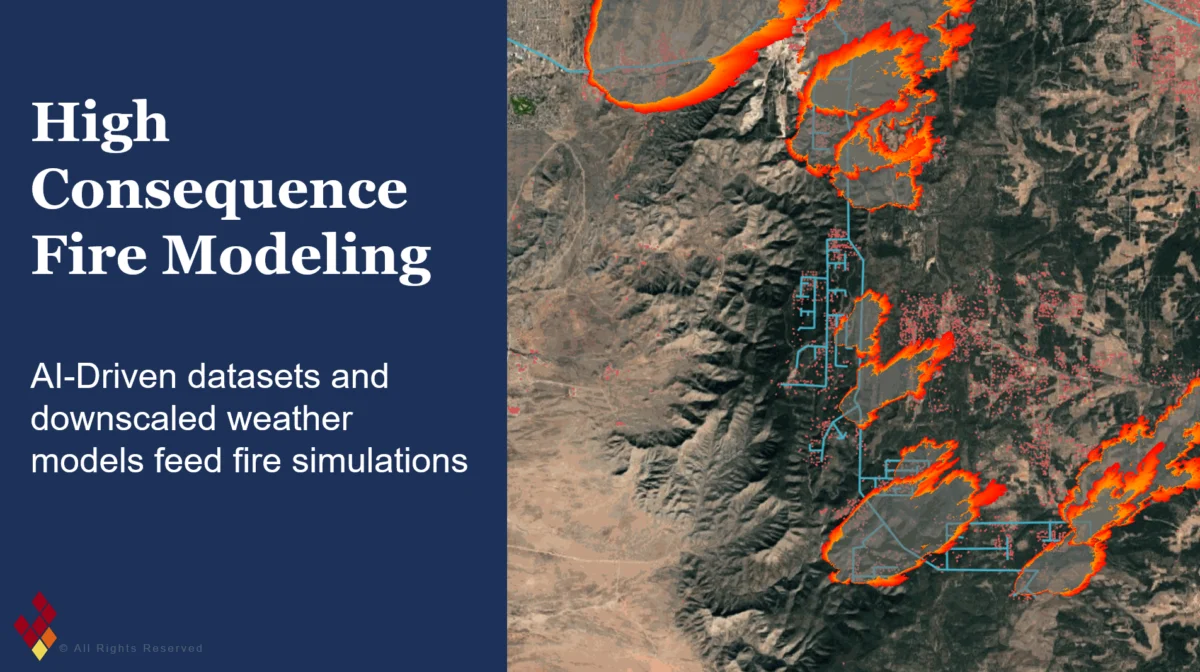
The paradigm of wildfire management for electric utilities is undergoing a fundamental transformation, shifting from a traditional model of reactive emergency response to a sophisticated framework of predictive mitigation and granular risk management. As climate change intensifies and the frequency of extreme weather events increases, the "one-size-fits-all" approach to grid safety is being rendered obsolete by the complexities of local geography, aging infrastructure, and the stringent demands of regulatory oversight. This evolution will be the focal point of the upcoming Wildfire & Weather Emergency Response Summit, scheduled for August 25th in Chicago, Illinois, as part of the broader DTECH Reliability & Resiliency conference. At the heart of this discussion is a critical realization: effective wildfire mitigation depends entirely on location-specific factors that require a level of data granularity previously unavailable to utility operators and field teams.
The Shift Toward Predictive Mitigation
For decades, electric utilities relied on broad regional weather forecasts and generalized risk assessments to manage the threat of wildfire. However, the limitations of these methods have become starkly apparent in the wake of catastrophic fires linked to utility infrastructure across the Western United States and beyond. Today, technology providers and consultants are emphasizing that there is no singular strategy capable of addressing the unique challenges faced by every utility. Instead, successful mitigation is driven by an intersection of local terrain, the specific condition of existing assets, and the realities of operational budgets.
This necessity has catalyzed a move toward "predictive mitigation," a strategy that utilizes high-resolution data to anticipate risks before they manifest into ignitions. At the Wildfire & Weather Emergency Response Summit, industry leaders will examine how this transition is being implemented in real-world scenarios. A featured session, titled “From Risk Maps to Capital Plans: Optimizing Grid Hardening Investments for Wildfire Resilience,” will showcase the collaboration between Public Service Company of New Mexico (PNM) and advanced geospatial platforms like Firescape. This partnership illustrates how localized asset analytics can be translated into targeted protocols that enhance system reliability without compromising safety.
Granularity vs. Regionality: A New Operational Standard
One of the most significant hurdles in modern utility management is the reliance on regional weather alerts, such as the National Weather Service’s Red Flag Warnings. While these alerts are vital for public awareness, they often cover massive geographic zones—sometimes spanning entire counties or multiple fire weather zones. For a utility, applying a blanket mitigation strategy across such a vast area can lead to widespread and often unnecessary customer disruptions. When a utility implements "Public Safety Power Shutoffs" (PSPS) or adjusts relay protection settings to be more sensitive across a whole county, it risks de-energizing critical infrastructure in areas where the actual fire risk may be low.
The approach adopted by PNM and Firescape seeks to solve this by providing subcircuit-level visibility. By utilizing advanced modeling, operators can identify specific segments of the grid that are at the highest risk based on real-time environmental factors and the physical state of the equipment. This granularity allows utilities to scale their response down from a county-sized area to a single neighborhood or even a specific circuit.
Holly Eagleston, CEO and Founder of Firescape, emphasizes that this technology enables utilities to be exceptionally precise. According to Eagleston, the ability to define specific times of day when risk peaks allows operators to narrow the window for adjusting protection settings. This "surgical" approach to grid management ensures that safety protocols are only active when and where they are most needed, thereby balancing the dual priorities of wildfire prevention and service reliability.
Integrating Geospatial Data with Grid Infrastructure
The practical application of high-resolution data extends into the very "nervous system" of the electric grid. Modern utilities are increasingly integrating granular risk analytics directly into their Advanced Distribution Management Systems (ADMS) via Supervisory Control and Data Acquisition (SCADA) systems. This integration allows for a level of automation that was previously impossible.
When dynamic weather threats, such as high-wind gusts or plummeting humidity levels, move across a utility’s territory, the SCADA system can receive real-time updates from geospatial models. This allows the utility to automate precise control actions, such as changing the "reclosing" settings on specific breakers. In normal conditions, if a tree branch touches a line, the system might attempt to automatically re-energize the line after a few seconds. However, in high-risk wildfire conditions, these "reclosers" are disabled to ensure that if a fault occurs, the line stays dead, preventing potential sparks from igniting dry vegetation. By applying these changes only to the specific circuits at risk, utilities can maintain power for the vast majority of their customers while still mitigating the threat of ignition in high-risk zones.

The Financial and Regulatory Dimension of Grid Hardening
Beyond the immediate operational benefits, the shift toward data-driven mitigation is fundamentally changing how utilities approach long-term capital expenditure (CapEx) planning. In an era of tightening budgets and increased scrutiny from public utility commissions (PUCs), every dollar spent on grid hardening must be justified with concrete evidence of risk reduction.
Grid hardening—which includes actions such as replacing traditional fuses with non-expulsion fuses, installing covered conductors (insulated lines), or undergrounding power lines—is an expensive endeavor. For many utilities, the cost of undergrounding can exceed several million dollars per mile. Consequently, utilities must be able to demonstrate a "risk buy-down per dollar" metric to regulators.
The granular analytics provided by platforms like Firescape allow teams to model every candidate mitigation action against the specific risks of a given location. This creates a defensible, regulator-ready business case. Instead of proposing a broad hardening plan, a utility can present a data-backed strategy that shows exactly how much risk is avoided by installing a covered conductor on Circuit A versus replacing fuses on Circuit B. This level of transparency is essential for securing the necessary funding to protect communities while keeping ratepayer costs manageable.
Contextualizing the Crisis: The Urgency of the Chicago Summit
The Wildfire & Weather Emergency Response Summit in Chicago arrives at a pivotal moment for the energy sector. According to data from the National Interagency Fire Center (NIFC), the United States has seen a marked increase in the acreage burned by wildfires over the last two decades, with utility-related ignitions often resulting in some of the most destructive and costly fires in history. The legal and financial liabilities associated with these events have pushed some major utilities to the brink of bankruptcy, making wildfire resilience a matter of corporate survival as much as public safety.
The Chicago event, hosted during DTECH Reliability & Resiliency, serves as a critical knowledge-sharing hub. It brings together a diverse array of stakeholders, including grid engineers, meteorologists, data scientists, and regulatory experts. The timeline for the summit reflects the urgency of the issue, as utilities prepare for the peak of the wildfire season in many parts of North America. The sessions are designed to move beyond theoretical discussions and provide field teams with actionable insights that can be implemented immediately.
Broader Implications for the Future of Energy
The transformation occurring in wildfire mitigation is a microcosm of the larger changes facing the global energy landscape. As the grid becomes more decentralized and weather patterns become more volatile, the reliance on "big data" and geospatial modeling will only grow. The lessons learned from wildfire mitigation are already being applied to other weather-related threats, such as hurricanes in the Southeast and ice storms in the Northeast.
Furthermore, the emphasis on granularity is driving a new standard for transparency between utilities and the communities they serve. When a utility can explain precisely why a certain neighborhood’s power was adjusted during a high-wind event—backed by localized data—it builds trust and reduces the friction often caused by broad, unexplained outages.
The shift from reactive to predictive, from regional to granular, and from speculative to data-driven is no longer a luxury for electric utilities; it is a necessity. As Holly Eagleston noted, the ultimate goal is to prevent ignitions from ever occurring by leveraging real-time and forecasted data alongside established operational workflows. By scaling responses from county-sized zones down to single neighborhoods, the industry is not just hardening the grid—it is redefining the relationship between infrastructure, environment, and public safety.
As the industry gathers in Chicago this August, the focus will remain on the practical, data-driven strategies that allow utilities to navigate an increasingly hazardous world. The success of these initiatives will be measured not just in the reliability of the lights staying on, but in the fires that never start and the communities that remain protected.
