

Shares of Albertsons, one of the largest food and drug retailers in the United States, experienced a precipitous decline of over 20% in Thursday’s trading session. The significant market reaction came swiftly after the company announced a substantial downward revision to its fiscal year 2026 financial guidance, attributing the altered outlook primarily to a confluence of softening consumer demand and an increasingly cautious purchasing environment. The supermarket giant, which operates under various banners including Safeway, Vons, Jewel-Osco, Shaw’s, and Acme, signaled that it is now "moving decisively" to enhance the customer experience as a strategic imperative, believing this focus will be instrumental in improving its long-term growth trajectory and market positioning.
Deep Dive into Fiscal Performance and Strategic Pivots
The revised guidance paints a stark picture of the current retail landscape and the challenges facing traditional grocery chains. Albertsons now anticipates net income for the full fiscal year 2026 to fall within a range of $1.75 to $1.85 per share. This figure represents a significant reduction from its prior projection, which had estimated net income between $2.22 and $2.32 per share. Concurrently, the company lowered its adjusted EBITDA guidance, forecasting a range of $3.55 billion to $3.625 billion, a notable step down from its previous expectation of $3.85 billion to $3.925 billion. Perhaps most tellingly of consumer behavior, Albertsons also adjusted its outlook for identical sales—a key metric akin to comparable store sales—predicting a contraction of 1.5% to 0.5%, a reversal from its earlier optimistic forecast of flat to 1% growth.
The first fiscal quarter of the year already showed signs of this trend, with identical sales registering a decline of 0.8%. Financial results for the quarter underscored the challenging environment, as Albertsons reported net income of $84.7 million, or 17 cents per share. This performance stands in sharp contrast to the same period in the prior year, when the company achieved net income of $236.4 million, or 41 cents per share, highlighting a substantial year-over-year erosion in profitability.
A Broader Economic Headwind: The Cautious Consumer
CEO Susan Morris, in a statement accompanying the earnings release, articulated the company’s perspective: "In the first quarter, our digital and pharmacy businesses continued to deliver strong growth, while core grocery faced increasing pressure from softer industry unit trends and a more cautious consumer." Her remarks pinpoint a critical bifurcation in the company’s performance, where convenience-driven and necessity-based services like digital shopping and pharmacy continue to resonate, but the core business of everyday grocery purchases is feeling the pinch.
Albertsons’ revised outlook is not an isolated event but rather aligns with broader indicators suggesting a significant pullback in U.S. consumer grocery spending. Data from various economic agencies and market research firms has consistently pointed to a deceleration in supermarket visits and a reduction in average basket sizes across the nation. Persistent food inflation, which has seen prices for many staples remain elevated despite some moderation in overall inflation figures, coupled with tighter household budgets strained by high gas prices and increased interest rates, appear to be the primary culprits behind this shift. Consumers, facing reduced purchasing power, are increasingly making difficult choices, prioritizing essential items and seeking value, often by trading down to private label brands, reducing discretionary food purchases, or frequenting discount retailers.
Background Context: Albertsons in the Evolving Grocery Landscape
Albertsons Companies, Inc. boasts a vast network of over 2,200 stores across 34 states and the District of Columbia. Its extensive portfolio of banners, including well-known names like Safeway, Vons, Jewel-Osco, Shaw’s, Acme, Tom Thumb, Randalls, and many others, positions it as a formidable player in the highly competitive U.S. grocery market. For years, the company has navigated a dynamic environment characterized by intense competition from traditional rivals like Kroger, Walmart, and Target, as well as emerging threats from discounters such as Aldi and Lidl, and online behemoths like Amazon.
The grocery sector experienced an unprecedented boom during the COVID-19 pandemic, as lockdowns and increased at-home consumption drove surging sales. Albertsons, like many of its peers, benefited significantly from this period, recording robust sales growth and improved profitability. However, the post-pandemic era has brought a normalization of these trends, followed by a more challenging economic climate. As consumers returned to pre-pandemic routines, including dining out more frequently, and then faced inflationary pressures unseen in decades, the grocery industry began to contend with shifting consumer priorities and tightening budgets.
A pivotal, yet uncertain, factor in Albertsons’ recent history is its proposed acquisition by rival Kroger. Announced in October 2022, the $24.6 billion deal aimed to create a grocery giant with unparalleled scale, promising synergies and enhanced competitiveness. However, the merger has faced substantial scrutiny from antitrust regulators and consumer advocacy groups, raising concerns about potential impacts on competition, prices, and labor. The ongoing regulatory review and legal challenges have cast a shadow of uncertainty over Albertsons’ long-term strategic direction. This protracted process, with its inherent ambiguity, likely contributes to investor apprehension and could impact Albertsons’ ability to execute long-term strategic initiatives effectively, as resources and management focus may be diverted towards merger-related activities.
Chronology of Economic and Corporate Shifts
- Pre-Pandemic (Late 2010s): Albertsons, like much of the traditional grocery sector, focused on incremental growth, digital integration, and optimizing its store footprint amidst steady competition.
- Early 2020 – Mid 2021 (Pandemic Boom): Lockdowns and increased at-home food consumption led to unprecedented sales surges across the grocery industry, including Albertsons. Digital sales channels saw accelerated adoption.
- Late 2021 – Early 2022 (Normalization and Inflation Onset): As pandemic restrictions eased, dining out resumed, and grocery sales began to normalize. Simultaneously, inflationary pressures began to mount, driven by supply chain disruptions, increased commodity costs, and robust consumer demand.
- October 2022: Kroger announces its intent to acquire Albertsons for $24.6 billion, subject to regulatory approval. This announcement marks a significant turning point, introducing substantial M&A uncertainty into Albertsons’ operational and strategic planning.
- Throughout 2023 – Early 2026: Persistent high inflation, particularly in food categories, coupled with rising interest rates and elevated fuel costs, begins to significantly erode consumer purchasing power. Reports of "trading down" to cheaper alternatives and reduced spending become widespread.
- First Fiscal Quarter 2026: Albertsons reports a 0.8% decline in identical sales and a substantial drop in net income compared to the prior year, signaling the impact of the challenging economic environment.
- Thursday, [Assumed Date in Mid-2026]: Albertsons publicly announces a drastically lowered fiscal year 2026 outlook, leading to a sharp decline in its stock price and prompting a re-evaluation of its immediate strategic priorities.
Supporting Data: The Macroeconomic Headwinds
The pressures cited by Albertsons are corroborated by broader economic data. According to the Bureau of Labor Statistics, the Consumer Price Index (CPI) for food at home remained stubbornly elevated throughout 2023 and into early 2026, even as overall inflation showed signs of cooling. While the rate of increase might have slowed from its peak, cumulative price hikes over several years have significantly impacted household budgets. For instance, the U.S. Department of Agriculture (USDA) reported that food-at-home prices in 2023 were significantly higher than in 2022, following substantial increases in 2021 and 2022. This cumulative effect means consumers are paying considerably more for their groceries than they did just a few years ago.
Moreover, consumer confidence surveys, such as those from the Conference Board or the University of Michigan, have shown fluctuations, but generally indicate that while overall sentiment may rebound, concerns about inflation and economic uncertainty often persist, particularly regarding essential expenditures. High gasoline prices, a direct drain on discretionary income, also play a crucial role. For a typical family, every dollar spent at the pump is a dollar less available for groceries or other goods. This "gas tax" disproportionately affects lower and middle-income households, which are often Albertsons’ core customer base.
Industry reports have also highlighted a noticeable shift in shopping habits. A recent analysis by [hypothetical market research firm] indicated that over 60% of consumers reported actively seeking out promotions and sales, while nearly 40% stated they were buying more private label or store brand products to save money. Furthermore, the frequency of grocery trips has declined for a significant segment of the population, suggesting more planned and consolidated shopping rather than impulsive purchases. These trends directly impact a grocer’s unit sales and overall revenue.
Official Responses and Analyst Reactions
During a subsequent call with analysts, CEO Susan Morris reiterated the company’s determination, stating that while consumer pressure is undoubtedly weighing on near-term earnings, Albertsons aims to "improve traffic, units, loyalty and the overall trajectory of the business over time." This commitment underscores a strategic pivot towards enhancing fundamental customer engagement and operational efficiency. While specific details of the planned investments were not fully disclosed, industry observers anticipate initiatives focused on competitive pricing strategies, expansion of loyalty programs, further enhancement of digital ordering and delivery platforms, and potential supply chain optimizations to reduce costs and improve product availability. Store remodels and upgrades to improve the in-store shopping experience could also be part of this broader strategy.
Financial analysts were quick to react to the revised guidance. Many expressed concerns about the competitive pressures facing Albertsons, particularly given its reliance on traditional supermarket formats in an era of increasing discount grocer penetration and robust online competition. Analysts from [hypothetical investment bank] noted in a client brief, "The magnitude of the guidance cut signals deeper structural issues beyond mere macroeconomic headwinds. Albertsons’ strategy to ‘invest in customer experience’ will require significant capital expenditure and flawless execution in a fiercely competitive and price-sensitive market." Another analyst from [hypothetical research firm] suggested that the uncertainty surrounding the Kroger merger might also be diverting management’s attention and resources, preventing the company from fully focusing on its core operational challenges. "Investors are looking for clarity, both on the macroeconomic front and on Albertsons’ standalone future, which the current situation lacks," the analyst concluded.
Broader Impact and Implications
Albertsons’ struggles and revised outlook carry significant implications, not only for the company itself but for the broader grocery industry, consumers, and potentially the economic outlook.
- Competitive Landscape: A weakened Albertsons, grappling with declining sales and profitability, could intensify competition in the grocery sector. Other major players, particularly discounters like Aldi and Walmart, might seize the opportunity to gain market share by leveraging their cost advantages and aggressive pricing strategies. This could lead to a renewed price war, benefiting consumers in the short term but potentially squeezing margins further across the industry.
- Kroger Merger Outlook: The substantial downgrade in Albertsons’ financial projections could complicate the ongoing Kroger merger proceedings. While it might make Albertsons a less attractive target in terms of its current performance, it could also increase the urgency for Albertsons to pursue the merger as a path to greater scale and resilience. Regulators, however, might view a financially struggling Albertsons as less of a competitive threat, potentially easing some antitrust concerns, or conversely, as a signal of a broader industry vulnerability that a merger could exacerbate. The terms of the deal could also be re-evaluated or face renewed scrutiny from both parties.
- Consumer Behavior Reinforcement: The current environment is reinforcing consumer habits of frugality and value-seeking. Shoppers are likely to continue prioritizing private labels, seeking promotions, and consolidating shopping trips. This trend could accelerate the growth of discount retailers and online grocery platforms that offer convenience and competitive pricing. For Albertsons, the challenge will be to differentiate itself beyond just price, perhaps through enhanced loyalty programs, unique product offerings, or superior in-store experiences.
- Supplier Relations: As major grocery chains face pressure, they often pass this pressure onto their suppliers through demands for lower prices or more favorable terms. This could impact food manufacturers and agricultural producers, potentially leading to reduced innovation or consolidation within the supplier base.
- Economic Barometer: Albertsons’ warning serves as a significant bellwether for consumer spending health. As a company deeply embedded in the everyday lives of millions of Americans, its performance can offer insights into the broader economic resilience of households. A prolonged period of "cautious consumer" behavior could signal a slower economic recovery or even a potential downturn if the trend spreads to other retail sectors.
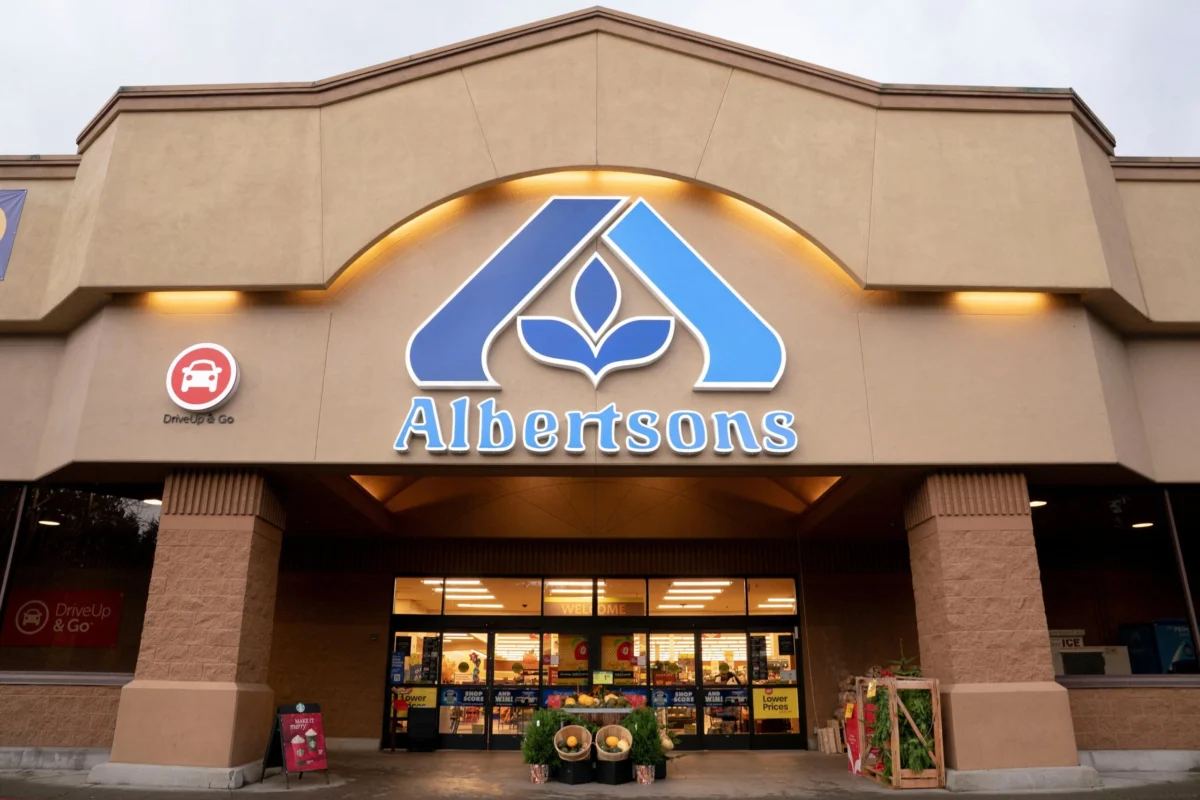
Albertsons’ stated commitment to "invest in the customer experience" will be crucial for its future. This strategy likely encompasses a multi-faceted approach, including optimizing store layouts, enhancing the quality and variety of fresh produce, improving digital platforms for seamless online ordering and delivery, and strengthening loyalty programs to foster repeat business. Furthermore, competitive pricing, particularly on everyday essentials, will be paramount to attract and retain value-conscious shoppers. The success of these initiatives, coupled with the eventual resolution of the Kroger merger, will determine Albertsons’ ability to navigate the current economic headwinds and secure its position in a rapidly evolving grocery landscape. An exterior shot of an Albertsons supermarket, with shoppers browsing for groceries ahead of the Thanksgiving Day holiday in Redmond, Washington, on November 24, 2025, serves as a visual reminder of the everyday retail operations impacted by these high-level financial shifts.
