

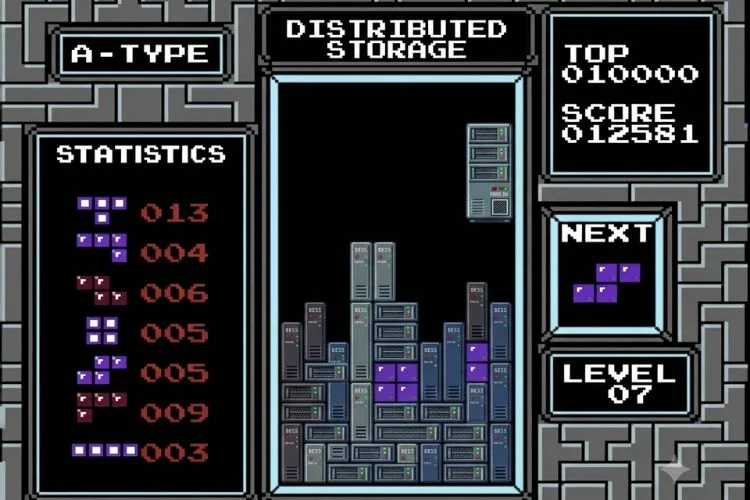
This seminal white paper, released through a collaborative effort between the Center for Renewables Integration (CRI) and Pure Power Engineering, serves as a strategic roadmap for navigating the multifaceted regulatory and operational landscape of battery energy storage systems (BESS). Authored by industry veterans Kerinia Cusick, Mrinmayee Kale, and Rao Konidena, the document addresses a critical paradox in the modern energy transition: while battery technology has achieved commercial maturity and cost-competitiveness, its deployment remains stymied by antiquated grid management protocols and inconsistent state-level policies. The authors argue that the primary barrier to a resilient, carbon-neutral grid is no longer the hardware itself, but the "friction" inherent in the regulatory frameworks governing distribution-level interconnection and compensation.
The Evolution of Distributed Energy Storage
The release of this white paper arrives at a pivotal moment for the U.S. power sector. Over the last decade, the surge in intermittent renewable energy sources, such as solar and wind, has necessitated a rapid expansion of storage capacity to maintain grid stability. According to data from the U.S. Energy Information Administration (EIA), battery storage capacity in the United States grew from negligible levels in 2010 to over 15 gigawatts (GW) by the end of 2023, with projections suggesting a tripling of that capacity by 2025. However, much of this growth has occurred at the utility-scale level, while distributed storage—assets located close to the point of consumption on the distribution grid—has lagged behind due to localized "roadblocks."
The chronology of this regulatory struggle began in earnest with the Federal Energy Regulatory Commission (FERC) Order 841, issued in 2018, which mandated that regional transmission organizations (RTOs) and independent system operators (ISOs) remove barriers to the participation of electric storage resources in wholesale markets. This was followed by FERC Order 2222 in 2020, which opened the door for distributed energy resource (DER) aggregations to compete alongside traditional power plants. Despite these federal mandates, the actual implementation falls to state utility commissions and electric distribution companies (EDCs), where progress has been uneven. The new white paper identifies this state-level "implementation gap" as the final frontier for the storage industry.
Strategic Roadblock 1: Modernizing Distribution Planning
A central thesis of the CRI and Pure Power Engineering report is that current EDC distribution planning processes are fundamentally flawed because they treat third-party BESS as invisible or unreliable. Historically, utilities have planned their infrastructure based on "worst-case" peak demand scenarios, often leading to expensive over-building of substations and feeders. By failing to include BESS as a peak reduction resource, EDCs ignore assets that are already physically present on the grid.
The authors propose the adoption of "operating envelopes"—predefined, seasonally variable windows during which a battery is guaranteed to charge or discharge. By establishing these envelopes, utilities gain the operational assurance needed to defer traditional infrastructure upgrades, potentially saving ratepayers billions of dollars. The paper highlights California’s "Limited Generation Profiles" and Massachusetts’ "Dispatch Limiting Schedules" as pioneering frameworks that allow developers to prove their systems will not exacerbate grid stress during peak times, thereby streamlining the interconnection process.
Strategic Roadblock 2: Reforming Tariff and Compensation Structures
The economic viability of distributed storage depends on a clear understanding of both the costs of charging and the compensation for discharging. While FERC has addressed wholesale market access, retail-level tariffs remain a patchwork of confusion. Many states currently lack a sophisticated "bi-directional" retail rate, leading to "double cost recovery" where storage developers are charged twice for the same infrastructure upgrades or are forced to pay retail rates for charging that ultimately serves the public grid.
To rectify this, the white paper suggests that state commissions must establish retail tariffs that accurately reflect the localized value BESS provides. This includes accounting for avoided transmission costs and the reduction of greenhouse gas emissions. Connecticut has emerged as a leader in this space through its "probability-of-peak" methodology for Wholesale Distribution Access Tariffs (WDAT), which provides a predictable cost structure for developers. Similarly, Rhode Island’s ongoing bi-directional retail rate proceedings are cited as a model for creating a fair economic environment that encourages private investment without unfairly burdening non-participating ratepayers.
Strategic Roadblock 3: Managing Grid Capacity and Load Growth
The rise of high-intensity energy consumers, particularly data centers driven by the artificial intelligence boom, has created a new era of "load growth" that is straining existing substation capacity. In many jurisdictions, BESS projects and large spot loads (like data centers or industrial facilities) are treated as competitors for the same limited grid real estate. The authors argue that this is a false dichotomy.
Drawing on FERC’s emerging "bring your own capacity" framework, the paper suggests that state commissions should mandate the co-location of storage with large loads. In this model, a data center developer would be required—or incentivized—to install BESS alongside their facility to mitigate their own peak demand. This integrated approach ensures that new load does not trigger massive, ratepayer-funded infrastructure projects, but instead contributes to a more flexible and self-balancing distribution network.
Strategic Roadblock 4: Standardizing Communication and Control
Technical interoperability remains a significant hurdle. Currently, many EDCs require bespoke Supervisory Control and Data Acquisition (SCADA) solutions for every new BESS project. These proprietary systems add significant costs to projects and create a "walled garden" effect, where a developer operating in multiple states must design different communication architectures for every utility territory.
The white paper advocates for a shift toward industry-standard protocols that are already built into modern inverters. Standards such as IEEE-1547 2018, IEEE-2030.5, and SunSpec CSIP provide the necessary cybersecurity and control capabilities required by utilities without the need for custom hardware. Mandating these standards at the state level would lower the barrier to entry for developers and ensure that grid operators can communicate with a diverse fleet of storage assets through a unified language.
Data and Industry Reactions
The implications of the white paper are underscored by recent industry data. Wood Mackenzie’s latest "US Energy Storage Monitor" indicates that while the residential and non-residential (distributed) storage sectors saw a slight downturn in growth in early 2024, the potential for recovery is high if regulatory hurdles are lowered. The authors of the white paper note that the Inflation Reduction Act (IRA), which provides a 30% Investment Tax Credit (ITC) for standalone energy storage, has created an unprecedented financial tailwind, but this capital cannot be deployed if projects are stuck in three-year interconnection queues.
Industry reactions to the paper have been positive, with clean energy advocates noting that it provides a "common language" for regulators who may not have deep technical backgrounds in battery chemistry or power electronics. "For too long, state commissions have been operating in a vacuum," said one industry consultant familiar with the report. "This white paper provides the specific, actionable policy levers that can turn a state from a storage laggard into a leader."
Broader Impact and Future Implications
The success of the clean energy transition hinges on the ability to move beyond "pilot programs" and into the "deployment at scale" phase. If state legislators and energy offices adopt the recommendations outlined by CRI and Pure Power Engineering, the result could be a more decentralized and resilient power grid. By treating batteries as active participants in grid planning rather than passive loads, states can improve reliability during extreme weather events, which are becoming increasingly frequent due to climate change.
Furthermore, the paper’s emphasis on avoiding "bespoke" solutions points toward a future of national market harmonization. As more states adopt standardized communication protocols and tariff structures, the "soft costs" of solar-plus-storage projects—which currently account for a significant portion of total project costs—are expected to decline.
In conclusion, "Making Distributed Storage Work in Your State" is more than a technical manual; it is a call to action for policy modernization. It challenges the status quo of utility planning and offers a blueprint for a grid that is more efficient, more affordable, and more responsive to the needs of the 21st century. As the authors suggest, the technology is ready; the question is whether the regulatory environment is prepared to let it work.
