

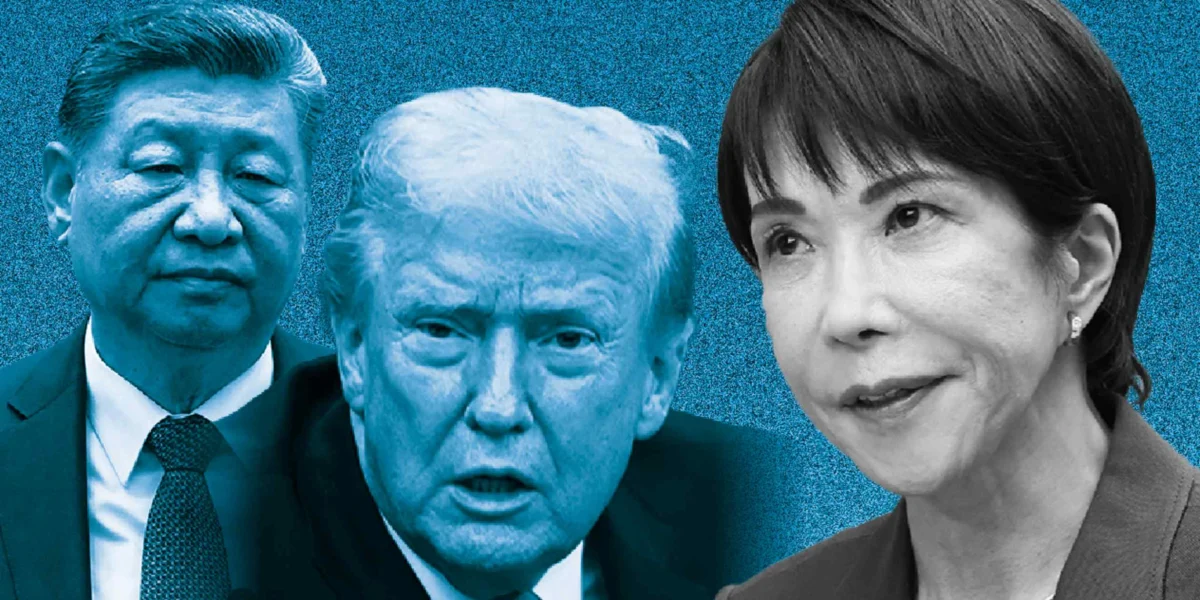
The United States administration of President Donald Trump has formally requested that the People’s Republic of China reinstate its exports of rare-earth elements to Japan. This diplomatic intervention underscores a deepening U.S. concern over the cascading impact of Beijing’s export restrictions on the global supply chain for critical high-tech components, a situation that Nikkei has learned is prompting significant apprehension within Washington’s policy circles. The ban, which has been in place for an unspecified but significant duration prior to this U.S. diplomatic overture, is directly impacting Japan’s sophisticated manufacturing sector, which relies heavily on these vital minerals for the production of advanced electronics, defense systems, and renewable energy technologies.
Background: The Geopolitics of Rare Earths
Rare earth elements (REEs) are a group of 17 chemically similar metallic elements that possess unique magnetic, luminescent, and catalytic properties. Despite their name, they are not exceptionally rare in the Earth’s crust, but their extraction and processing are complex and environmentally challenging. For decades, China has dominated the global rare earth market, controlling an overwhelming majority of mining and refining capacity. This dominance grants Beijing considerable leverage in international trade and has been a recurring point of geopolitical tension.
The current situation is reminiscent of a similar crisis in 2010, when China imposed export quotas on rare earths to Japan following a maritime dispute. That event sent shockwaves through global industries, leading to a surge in prices and prompting a global scramble to diversify supply chains. Japan, in particular, was severely affected, as it depended almost entirely on Chinese rare earth imports for its advanced manufacturing. This led to significant efforts by Japanese companies and the government to secure alternative sources, invest in recycling technologies, and develop domestic stockpiles. However, the sheer scale of China’s production capacity has made complete decoupling exceedingly difficult.
The Current Export Restrictions: A Growing Threat
While the exact date of the current Chinese ban on rare-earth exports to Japan remains undisclosed in the initial reporting, its continuation has evidently reached a critical juncture for U.S. policymakers. The United States itself is heavily reliant on China for its own rare earth supply, making any disruption to a major trading partner like Japan a matter of national security interest. The implications extend beyond economic stability; the ability to produce advanced military hardware, cutting-edge telecommunications equipment, and essential components for the green energy transition are all directly tied to the availability of these minerals.
The strategic importance of rare earths cannot be overstated. For instance, neodymium and praseodymium are crucial for high-strength permanent magnets used in electric vehicle motors and wind turbines. Dysprosium and terbium are vital for magnets that can withstand high temperatures, essential for aerospace and defense applications. Lanthanum is used in high-performance batteries and catalytic converters. Without a stable and reliable supply of these elements, the ambitious technological advancements and climate goals pursued by the U.S., Japan, and other allied nations are put at risk.
U.S. Diplomatic Push: A Multifaceted Strategy
The Trump administration’s request to China signifies a diplomatic effort to de-escalate the situation and ensure the flow of critical materials. This approach likely involves high-level discussions within the U.S. State Department and potentially direct communication from the White House to Beijing. The U.S. is likely framing its concern not just as a bilateral issue between China and Japan, but as a global supply chain vulnerability that affects international economic stability and technological progress.
Beyond direct appeals, the U.S. is also likely exploring other avenues to mitigate the impact of such restrictions. This could include:
- Encouraging diversification of rare earth sources: The U.S. has been actively working to develop its own domestic rare earth mining and processing capabilities, as well as partnering with other countries like Australia and Canada. The current situation would likely accelerate these efforts.
- Promoting rare earth recycling: Technological advancements in extracting rare earths from electronic waste offer a promising avenue to reduce reliance on primary mining. Increased investment in and implementation of these technologies could create a more circular economy for these critical minerals.
- Strategic stockpiling: Governments and industries can build strategic reserves of rare earths to buffer against short-term supply disruptions.
- Collaborating with allies: The U.S. and Japan, along with other like-minded nations, are likely to strengthen their cooperation on rare earth security, sharing intelligence, coordinating investment, and developing joint strategies to ensure supply chain resilience.
Japanese Response and Industry Impact
While not explicitly stated in the initial report, it can be inferred that Japan’s government and its industrial sector are actively engaged in addressing the rare earth export ban. Prime Minister Sanae Takaichi’s government would be under immense pressure to secure a stable supply of these critical materials. Japanese companies, such as those in the automotive, electronics, and defense sectors, are undoubtedly assessing their current inventory levels, exploring alternative suppliers, and potentially re-evaluating production schedules.
The dependency of Japan’s high-tech prowess on rare earths makes this issue a significant national economic and security concern. Japanese manufacturers are renowned for their precision engineering and advanced product development, often incorporating sophisticated components that rely on these minerals. A prolonged or worsening supply crunch could lead to:
- Production slowdowns and delays: Shortages of key components could force manufacturers to reduce output, leading to longer waiting times for consumers and businesses.
- Increased production costs: If alternative, more expensive sources must be utilized, or if prices are driven up due to scarcity, the cost of finished goods will rise.
- Erosion of competitive advantage: Inability to access necessary materials could hinder the development of next-generation technologies, potentially ceding market share to competitors.
- National security implications: Defense contractors reliant on rare earths for advanced weaponry and surveillance systems could face significant operational challenges.
Broader Implications and Future Outlook
The U.S. intervention in this Sino-Japanese trade dispute highlights the increasingly weaponized nature of global supply chains, particularly for critical raw materials. As geopolitical rivalries intensify, nations are increasingly viewing control over essential resources as a strategic imperative. China’s past actions have demonstrated its willingness to leverage its dominance in rare earth production for political gain.
The U.S. request to China is a signal that Washington views the current situation as unsustainable and detrimental to its own interests and those of its allies. The success of this diplomatic effort will depend on various factors, including the broader state of U.S.-China relations, China’s own economic considerations, and the effectiveness of allied diplomatic coordination.
Looking ahead, this incident is likely to further catalyze global efforts to de-risk supply chains and reduce dependence on any single source for critical materials. The era of unquestioned access to globally sourced components is rapidly evolving into one where supply chain resilience and national security considerations are paramount. The rare earth market, already a focal point of geopolitical competition, will likely remain a critical battleground for technological and economic influence in the years to come. The actions taken by the U.S. and Japan in response to this ban will undoubtedly shape the future landscape of global rare earth trade and the broader strategy for securing critical mineral supplies for the 21st century.
