

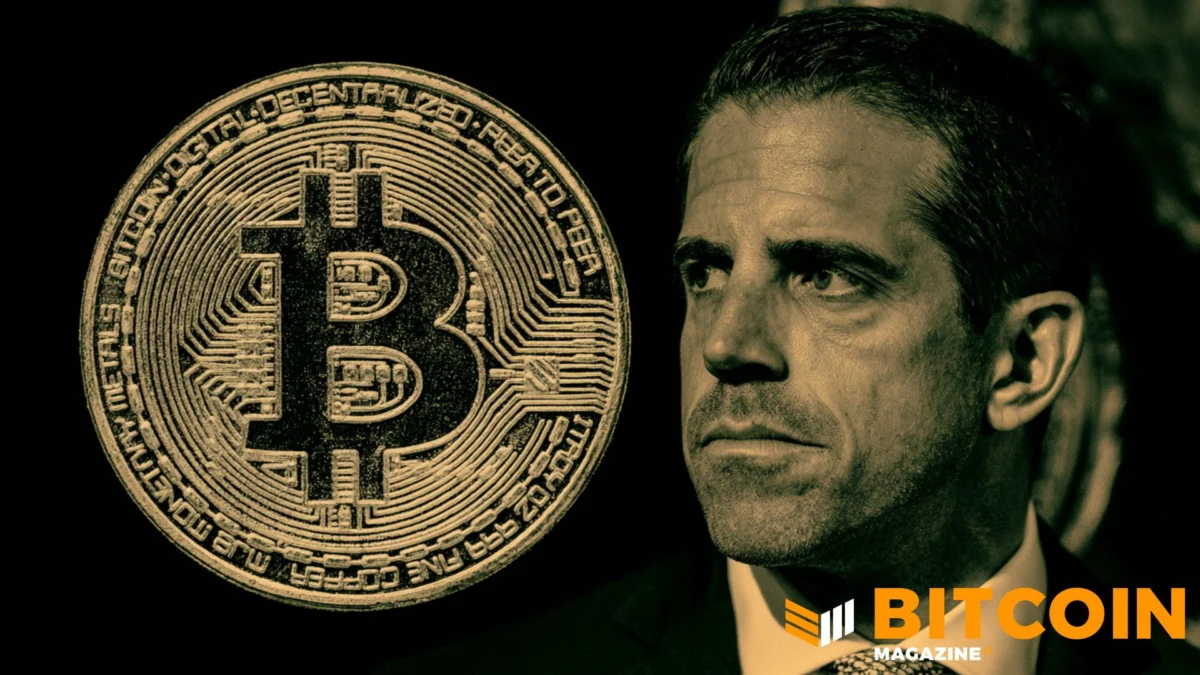
Hunter Biden, the son of former President Joe Biden, has introduced Bitcoin as a payment option for his artwork on his official website, hunterbiden.com. This development comes as Biden faces significant financial challenges and ongoing legal scrutiny, casting a new light on his artistic endeavors and their financial implications. The move into cryptocurrency payments signals a potential pivot in how his art is marketed and sold, particularly in the context of his declared financial difficulties.
A New Frontier in Art Sales: Bitcoin Integration
The homepage of hunterbiden.com prominently features Biden’s signature large-scale floral paintings. A subtle but significant addition to the website’s footer now announces, "BITCOIN ACCEPTED," positioned alongside links to the site’s privacy policy, terms of use, and "Verisart Authentication." Verisart, a platform that utilizes blockchain technology to provide tamper-proof certificates of authenticity, aims to permanently record the provenance and ownership of both physical and digital artworks. This integration with blockchain technology suggests a deliberate effort to enhance transparency and security in his art transactions, aligning with the inherent principles of cryptocurrency and distributed ledgers.
The adoption of Bitcoin as a payment method for art is not entirely novel in the broader art market. In recent years, several prominent artists and galleries have begun accepting cryptocurrency, citing its global reach, potential for faster transactions, and appeal to a younger, tech-savvy demographic of collectors. For Biden, this decision could be influenced by a desire to tap into a new pool of potential buyers or to streamline transactions in a way that bypasses traditional financial intermediaries. However, given the volatile nature of Bitcoin and its association with speculative markets, its adoption by a figure as publicly scrutinized as Hunter Biden is likely to draw considerable attention and analysis.
A Politically Charged Artistic Journey
Hunter Biden’s foray into the art world has been marked by controversy from its inception. His initial exhibitions in New York and Los Angeles featured his artwork with price tags ranging from approximately $75,000 to $500,000, a substantial valuation for an artist considered a novice. This pricing strategy, coupled with the political profile of his father, immediately raised questions about potential conflicts of interest and the influence of his family name on the art market.
Further scrutiny arose when subsequent reports revealed that one notable buyer, Elizabeth Hirsh Naftali, a Democratic donor and real estate investor, received a presidential appointment from Joe Biden shortly after her art purchase. This sequence of events triggered congressional oversight hearings and fueled accusations of influence peddling, with critics questioning whether art sales were being used as a conduit for political favors. The narrative surrounding Biden’s art sales has consistently been intertwined with his family’s political standing, making each transaction subject to intense public and political examination.
Financial Straits and Declining Art Sales
In stark contrast to the initial high valuations and reported sales, court filings from March 2025 present a significantly different financial picture for Hunter Biden. He informed a federal judge that he is burdened by "significant debt in the millions of dollars." The filings also revealed a dramatic downturn in his art sales, with only one painting sold for $36,000 since late 2023. This is a steep decline from earlier periods, during which he had reportedly sold 27 works at an average price of nearly $55,000 each.
Biden cited the crashing art sales as a primary reason for his inability to afford the legal costs associated with pursuing some of his lawsuits concerning the publication of materials allegedly from his laptop. This financial hardship underscores the precariousness of his current economic situation and adds a layer of urgency to any new revenue streams, including the acceptance of Bitcoin. The stark contrast between the initial high-profile sales and the current financial realities highlights the challenges and volatilities inherent in the art market, especially when intertwined with public scrutiny.
A Life Shaped by Trauma and Scrutiny
Hunter Biden’s life has been marked by profound personal tragedy and persistent public controversy. He was a survivor of the 1972 car crash that claimed the lives of his mother and infant sister, an event that deeply impacted him and his brother, Beau. This early trauma is often cited as a formative experience that has shaped the family’s narrative and resilience.
As an adult, Hunter Biden has been candid about his struggles with alcohol and crack cocaine addiction. These battles intensified following the death of his brother, Beau, from brain cancer in 2015, leading to multiple periods of rehabilitation. His personal challenges have frequently spilled into the public domain, detailed in his divorce proceedings and his highly scrutinized relationship with Beau’s widow, Hallie Biden.
Further complicating his public image, Biden fathered a child with Lunden Roberts, an Arkansas woman. Initial claims of not knowing Roberts were later disproven by a DNA test confirming paternity, leading to a protracted child support dispute that has been frequently highlighted by Republican critics.
Business Dealings and Political Fallout
Biden’s international business dealings have also generated significant backlash and contributed to the political controversies surrounding his family. In 2014, he joined the board of the Ukrainian gas company Burisma, reportedly earning up to $1.2 million annually while his father, Joe Biden, was involved in U.S. policy towards Ukraine. Simultaneously, he pursued business ventures with Chinese investors. These arrangements led to allegations from Republicans that Hunter Biden was monetizing access to his father, then Vice President.
The controversy escalated with the surfacing of files from a laptop that Biden allegedly abandoned at a Delaware repair shop. These files reportedly contained evidence of drug use and communications related to foreign business deals, further intensifying the political firestorm.
In a separate legal context, federal prosecutors charged Hunter Biden with tax evasion, alleging he failed to pay over $1.4 million in taxes, and with lying about drug use on a 2018 gun purchase form. He was convicted on three felony gun charges in 2024. However, he subsequently received a presidential pardon from his father for these federal gun charges. The legal proceedings and his conviction have added another layer of complexity to his public persona and have been a focal point for political opposition.
Broader Implications of Bitcoin Adoption
The decision to accept Bitcoin for art sales can be analyzed from several perspectives. From a business standpoint, it could be an attempt to diversify payment options and reach a global audience of collectors who are comfortable with cryptocurrency. The integration with Verisart’s blockchain authentication further suggests a desire to bolster the perceived legitimacy and security of his art sales, potentially appealing to collectors who value provenance and transparency.
However, the timing of this announcement, amidst his significant financial difficulties and ongoing legal battles, is particularly noteworthy. It could be interpreted as a strategic move to generate immediate liquidity or to tap into an asset class that may offer greater anonymity or faster transaction speeds compared to traditional banking.
The broader implications extend to the ongoing debate surrounding cryptocurrency regulation and its role in the mainstream economy. By accepting Bitcoin, Hunter Biden is, in a way, participating in this evolving financial landscape. The public and media attention this move garners will inevitably contribute to discussions about the legitimacy and practicality of cryptocurrency as a form of payment, especially when linked to high-profile individuals.
Furthermore, the political ramifications are undeniable. His critics are likely to scrutinize this decision closely, potentially drawing parallels to past controversies and questioning the ethical implications of his financial decisions. The intersection of cryptocurrency, art sales, and the Biden family name is poised to remain a subject of intense interest and commentary.
The integration of Bitcoin into his art sales strategy represents a significant development in Hunter Biden’s public life, reflecting both his artistic pursuits and his ongoing financial and legal challenges. As the cryptocurrency market continues to evolve, its adoption by individuals in the public eye, particularly those with complex personal and political histories, will undoubtedly continue to be a subject of considerable discussion and analysis. The success and implications of this new payment method will be closely watched, offering insights into the intersection of art, finance, technology, and politics in the modern era.
