

The financial technology (FinTech) sector has experienced a meteoric rise over the past decade, fundamentally reshaping how individuals and businesses interact with financial services. Once cumbersome processes, such as loan applications requiring in-person meetings and stacks of physical paperwork, have been digitized, now often completed within minutes on a smartphone screen. Account verification, once a multi-day ordeal, can now be almost instantaneous. Decisions that previously stretched across days are delivered with unprecedented speed. This relentless acceleration has not merely introduced new tools; it has fundamentally reshaped consumer expectations, where convenience is no longer a luxury but an assumed standard. Yet, amid this drive for speed and seamless experience, another crucial element has emerged as the ultimate determinant of long-term success: safety.
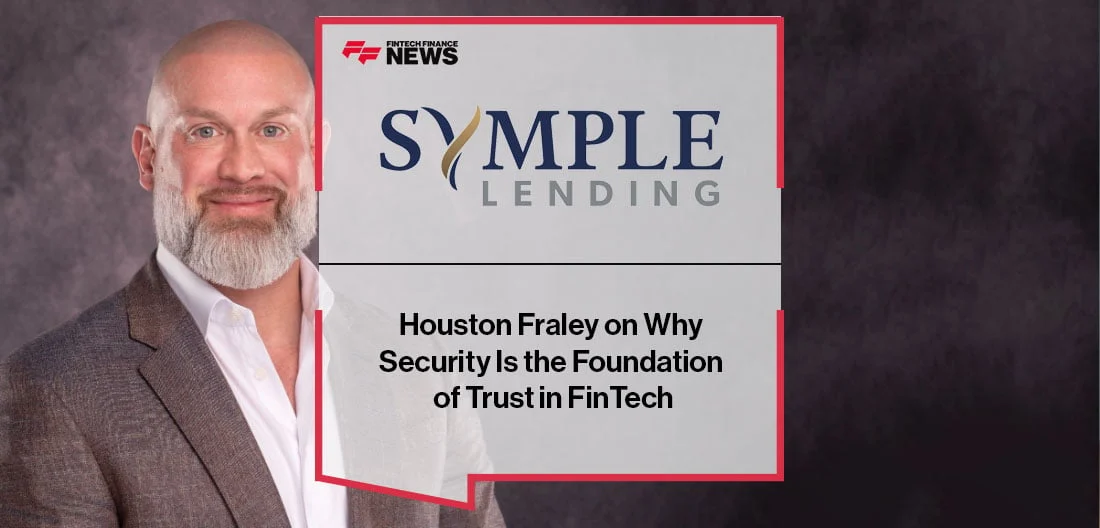
Houston Fraley, CEO of Symple Lending, a prominent figure in the FinTech space, posits that the enduring viability of FinTech companies will increasingly hinge less on their ability to deliver speed and more on their capacity to instill a profound sense of security and protection among their clientele. "In financial technology, security is not a feature," Fraley asserts, emphasizing a foundational truth that is gaining widespread recognition across the industry. "It is the foundation. If consumers are unsure about how their data is protected, nothing else matters." This statement underscores a pivotal shift in the FinTech paradigm, moving beyond mere functionality to prioritize the bedrock of trust.
The Rapid Evolution of Financial Technology and Its Unforeseen Vulnerabilities
The journey of FinTech from its nascent stages to its current ubiquitous presence has been marked by continuous innovation. Early iterations focused on digitizing existing financial services, offering online banking portals and basic payment solutions. The subsequent wave brought mobile banking, peer-to-peer payment platforms, and algorithmic trading, making financial management more accessible and efficient than ever before. Today, the FinTech landscape encompasses a vast array of services, including digital lending, robo-advisors, blockchain-based finance, and embedded finance solutions that integrate financial services directly into non-financial platforms. The global FinTech market, valued at approximately $200 billion in 2023, is projected to surge to nearly $700 billion by 2030, reflecting its profound and growing impact on the global economy. This rapid expansion has undeniably democratized access to financial tools and streamlined complex transactions, yet it has also inadvertently broadened the attack surface for cyber threats.
The very attributes that make FinTech attractive—its interconnectedness, reliance on data, and speed—also introduce inherent vulnerabilities. Each digital interaction generates data, each integration point presents a potential entry for malicious actors, and the speed of transactions can sometimes outpace the detection of fraudulent activities. This backdrop has led to a crucial re-evaluation of priorities within the sector.
A More Cautious Consumer Emerges from the Digital Trenches
In the nascent stages of digital finance, early adopters were primarily drawn by the allure of usability, speed, and simplicity. The novelty of mobile access, faster approvals, and intuitive interfaces often outweighed nascent concerns about data security. This initial enthusiasm, however, has been significantly tempered by real-world experiences, particularly a series of high-profile data breaches that have profoundly impacted public perception.
Perhaps one of the most significant catalysts for this shift was the Equifax data breach in 2017, which exposed the personal information of approximately 147 million people in the United States. This incident served as a stark, undeniable reminder of how intimately financial records are intertwined with identity security and how long the repercussions of such a breach can reverberate through an individual’s life. Victims faced years of vigilance against identity theft, credit fraud, and phishing attempts, illustrating that the consequences extend far beyond a single compromised password. The breach underscored a critical vulnerability in the digital ecosystem: even data held by trusted financial intermediaries is not immune to sophisticated cyberattacks.
The broader financial ramifications of such incidents are equally significant and escalating. IBM’s 2023 Cost of a Data Breach Report highlighted that the global average cost of a data breach reached an unprecedented $4.45 million, the highest level recorded to date. Crucially, the financial services sector consistently faces sustained targeting due to the immense value and sensitivity of the data it holds—ranging from bank account details and credit scores to investment portfolios and personal identifiers. This sustained threat landscape has transformed the average consumer from a passive recipient of digital services into an active, discerning participant in the discussion surrounding data security.
"Consumers are paying attention now," Fraley explains, articulating the palpable shift in public sentiment. "They understand that digital access requires responsibility on both sides. If a platform cannot clearly explain how it protects data, people hesitate." This hesitation, though it may not always generate immediate headlines, has a profound and quiet impact, slowing adoption rates and gradually eroding confidence in platforms perceived as opaque or insecure. The modern consumer is no longer content with promises of convenience alone; they demand tangible assurances of protection.
Building a Secure Foundation: Automation with Intelligent Guardrails
Automation serves as the engine driving much of the efficiency and scalability within FinTech. Algorithms are deployed to verify identities, assess credit risk, underwrite loans, detect fraud patterns, and process vast volumes of documentation. When implemented meticulously and with robust oversight, automation can dramatically reduce human error, enhance consistency, and accelerate decision-making processes. However, the concentration of sensitive financial data within these highly automated systems necessitates an even more rigorous approach to oversight and security.
Fraley cautions against complacency: "Automation should make systems stronger. It should not introduce shortcuts that weaken oversight." This principle is critical, as the very speed and interconnectedness of automated systems can amplify the impact of a security flaw if not properly managed. A single vulnerability in an automated process could potentially expose millions of records or facilitate large-scale fraudulent transactions with unprecedented speed.
To counteract these risks, the industry relies on a robust ecosystem of security frameworks and best practices. Standards such as SOC 2 (Service Organization Control 2), ISO 27001 (International Organization for Standardization), and the NIST Cybersecurity Framework (National Institute of Standards and Technology) serve as widely used benchmarks for structuring internal controls and managing information security risks. These frameworks provide comprehensive guidelines addressing critical areas such as data encryption, stringent access management protocols, continuous monitoring procedures, and proactive evaluation of potential vulnerabilities. Adhering to these standards is not merely a compliance exercise but a strategic imperative for building resilient digital infrastructures.
Cybersecurity professionals consistently emphasize that protection is not a static state but a dynamic, ongoing endeavor. As noted by renowned security technologist Bruce Schneier, "Security is a process, not a product." His argument underscores that organizations cannot rely on one-time solutions or assume a system is perpetually secure after initial implementation. Instead, they must continuously reassess risks, adapt to evolving threat landscapes, and regularly update their defenses. Fraley echoes this sentiment from an operational perspective, stating, "The technology changes quickly. Our responsibility is to make sure protections evolve just as quickly." This commitment to continuous adaptation is non-negotiable in the rapidly shifting digital world.
The Imperative of Transparent Communication in Building Trust
Beyond implementing robust security practices, FinTech companies face the equally critical challenge of effectively communicating these measures to their users. In an age where data breaches are common news, consumers are increasingly wary and seek reassurance. However, the traditional approach of burying vital information in lengthy privacy disclosures filled with arcane legal and technical jargon rarely inspires genuine confidence. Clarity, conversely, is a powerful trust-builder. Customers, regardless of their technical proficiency, want to understand fundamental aspects: who has access to their information, how it is encrypted, and what specific steps are taken if a security incident or breach occurs.
"People do not need every technical detail," Fraley clarifies, acknowledging the complexity of modern cybersecurity. "But they deserve clarity. They should know who has access to their information and how it is safeguarded." This highlights the need for a balance: sufficient detail to demonstrate competence without overwhelming the user with unnecessary technical minutiae.
Prominent advocates like Katie Moussouris, founder of Luta Security, have championed the importance of structured vulnerability disclosure and responsible reporting practices. She has consistently argued in public forums that clear, accessible channels for identifying, reporting, and addressing security weaknesses not only enhance a company’s immediate security posture but also strengthen institutional accountability and foster long-term trust. When companies openly engage with the security research community and demonstrate a proactive approach to fixing flaws, it signals a commitment to security that resonates deeply with informed consumers.
Transparency in FinTech can manifest in several tangible forms. This includes prominently displaying visible certifications from independent security audits (like SOC 2 reports), providing clear and simple explanations of authentication standards (such as the implementation of multi-factor authentication, MFA), establishing well-defined and accessible breach notification procedures, and offering readily available support channels for customers to voice concerns or seek assistance. Each of these elements, when consistently applied, reinforces a sense of stability, reliability, and trustworthiness, transforming security from a backend function into a front-facing differentiator.
Security by Design: Integrating Protection from Inception
In the earlier stages of digital product development, security was often treated as an additive layer, bolted onto platforms only after core features and functionalities had been fully developed. This reactive approach, known as "security by afterthought," has proven to be inherently risky and ultimately unsustainable in the face of sophisticated cyber threats. Attempting to retrofit security into an existing architecture can be costly, complex, and often leaves critical vulnerabilities unaddressed.
"Security cannot be an afterthought," Fraley emphatically states. "If it is bolted on at the end, you are already behind." This perspective aligns with the industry’s evolving understanding that security must be an intrinsic part of the development lifecycle from its very inception. The principle of "security by design" advocates for integrating authentication controls, anomaly detection systems, robust data encryption, and layered access permissions at the earliest stages of architectural planning and software development.
This proactive approach necessitates close coordination across various departments, including engineering, compliance, product management, and executive leadership. It moves away from siloed oversight, ensuring that security considerations are embedded in every decision, from initial concept to deployment and ongoing maintenance. By baking security into the very DNA of a platform, companies can prevent vulnerabilities rather than reacting to them, ultimately building more resilient and trustworthy systems.
Regulatory agencies play a crucial role in establishing baseline standards for consumer data protection and responsible governance. Bodies such as the Consumer Financial Protection Bureau (CFPB) in the United States, along with federal banking regulators, issue guidelines and mandates designed to safeguard sensitive financial information and ensure that FinTech operations adhere to principles of fairness and security. Fraley, however, views regulatory compliance as a necessary but not entirely sufficient condition for building trust. "Meeting regulatory requirements is expected," he observes. "Going beyond them is what builds trust." This perspective highlights a strategic understanding that while compliance ensures minimum standards are met, true market leadership and consumer loyalty are forged by exceeding these baselines.
To achieve this elevated level of protection, many FinTech firms engage in practices that extend beyond mere compliance. These include regular independent penetration testing, where ethical hackers attempt to exploit vulnerabilities to identify weaknesses; third-party security audits that provide an objective assessment of controls; and continuous employee training programs to keep staff abreast of the latest security threats and best practices. These measures collectively demonstrate a proactive commitment to security that resonates with an increasingly discerning consumer base.
Trust as a Strategic Differentiator in a Hyper-Competitive Landscape
The FinTech sector is characterized by intense competition. While user experience, innovative features, and competitive pricing remain central to differentiation, the perception of security and the ability to inspire trust are increasingly emerging as decisive factors. In a market where many offerings appear functionally similar, a company’s reputation for safeguarding customer data can be its most powerful competitive advantage.
"When people feel confident that their information is protected, they engage more freely," Fraley notes, drawing a direct link between security and customer behavior. "That confidence leads to stronger relationships." This insight is supported by broader market research. Edelman’s annual Trust Barometer consistently demonstrates that trust profoundly influences purchasing decisions, customer loyalty, and brand advocacy across industries. In financial services, where the implications of personal data exposure carry long-term consequences, these factors are even more critical in determining whether customers remain engaged with a platform over time. A single breach or even a perceived lapse in security can trigger a rapid exodus of users, severely damaging a company’s brand and market share. Conversely, a reputation for impeccable security can attract and retain a loyal customer base, leading to sustainable growth and market leadership. Confidence, in essence, compounds, just as skepticism does.
Navigating Emerging Threats and Technologies in a Dynamic Future
The cybersecurity landscape is in a perpetual state of flux, driven by the rapid evolution of technology and the escalating sophistication of cyber threats. FinTech companies must remain vigilant, constantly adapting their defenses to new challenges. Artificial intelligence (AI) tools, for instance, are rapidly improving fraud detection capabilities, enabling platforms to identify irregular behavioral patterns and anomalous transactions far more quickly and accurately than traditional rule-based review processes. Similarly, biometric authentication methods, such as fingerprint and facial recognition, are becoming increasingly common across financial platforms, offering enhanced security and convenience compared to password-based systems.
These technological advancements hold immense promise for strengthening FinTech defenses. However, their deployment must be approached with careful consideration. The use of AI in security raises new questions about algorithmic bias, data privacy (especially regarding the vast datasets needed to train AI models), and the potential for new types of attacks targeting AI systems themselves. Biometric data, while highly secure, is also immutable, meaning if compromised, it cannot be reset like a password, necessitating extremely robust storage and protection protocols.
"The landscape changes constantly," Fraley emphasizes, capturing the relentless pace of innovation and threat evolution. "We have to stay vigilant. Security is not something you solve once." This statement encapsulates the ongoing commitment required to maintain a secure FinTech ecosystem. It’s an endless process of adaptation, innovation, and unwavering attention to detail.
Digital finance will undoubtedly continue to expand access to financial services and streamline decision-making for billions globally. Its continued growth and societal benefit, however, are inextricably linked to its credibility. For Houston Fraley and others in the industry, the principle is pragmatic and clear: innovation can accelerate progress, but it is trust, earned through consistent and robust security, that ultimately determines sustainability. Security, implemented diligently, continuously, and communicated with transparent clarity, is the essential bedrock upon which that trust can be built and, critically, endured.
