

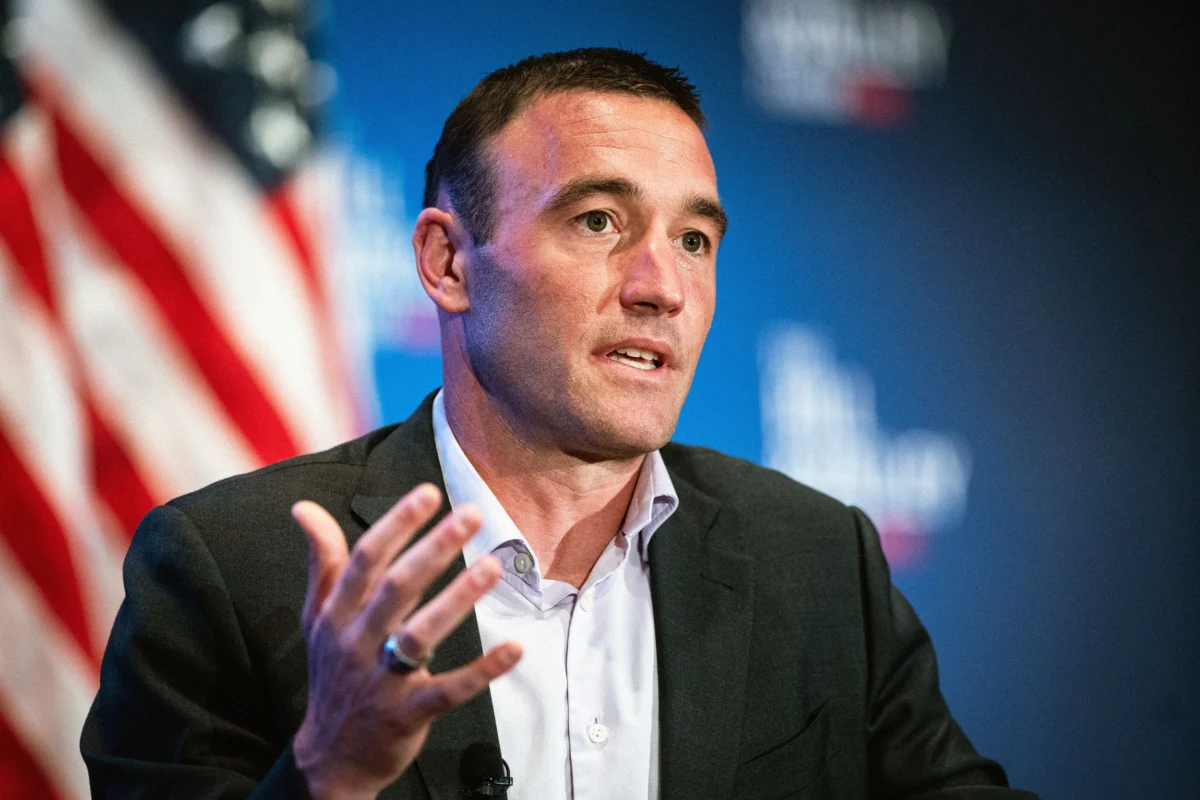
The departure of Kevin Weil, OpenAI’s former Chief Product Officer and a pivotal figure in the development of the AI workspace Prism, marks a significant shift in the company’s organizational structure and strategic direction. Weil’s exit, confirmed by WIRED, comes as OpenAI undertakes a broader restructuring effort, decentralizing its "OpenAI for Science" initiative and consolidating its product strategy. This move follows a period of intense activity and pressure for the artificial intelligence leader, including the recent sunsetting of Prism and the introduction of new AI models.
Weil’s Role and Departure
Kevin Weil, who previously played a key executive role in product development at Instagram, joined OpenAI in June 2024. His tenure saw him transition from Chief Product Officer to leading the "OpenAI for Science" initiative, a project aimed at providing scientists with advanced AI tools to accelerate research. In a social media post on Friday, Weil stated, "Today is my last day at OpenAI, as OpenAI for Science is being decentralized into other research teams. It’s been a mind-expanding two years, from Chief Product Officer to joining the research team and starting OpenAI for Science." His departure signals the dissolution of this dedicated initiative, with its team members being integrated into existing product, research, and infrastructure groups within OpenAI.
The sunsetting of Prism, a web application launched in January to enhance scientific collaboration with AI, is directly linked to Weil’s departure and the broader strategic realignment. Prism’s capabilities are slated to be absorbed into OpenAI’s desktop Codex application, an AI coding tool that the company aims to evolve into an "everything app." This consolidation reflects OpenAI’s commitment to unifying its business and product strategy, a move that has been underscored by leadership in recent months.
A Strategic Pivot: Consolidation and Focus
OpenAI’s decision to decentralize "OpenAI for Science" and integrate Prism into Codex is emblematic of a larger strategic pivot. The company is increasingly focusing its resources on core areas such as enterprise offerings and coding tools, a shift driven by escalating competition from rivals like Anthropic and preparations for an initial public offering (IPO) later this year. This renewed emphasis on streamlining operations and product lines was articulated by Fidji Simo, OpenAI’s CEO of AGI deployment, who informed staff in March that the company needed to simplify its offerings.
The discontinuation of projects like the Sora video-generation app, announced earlier this year, further illustrates this drive towards strategic consolidation. By focusing on its most promising and scalable products, OpenAI aims to optimize its operational efficiency and market positioning in a rapidly evolving AI landscape. The integration of Prism’s scientific AI functionalities into Codex suggests a vision where a single, comprehensive platform can serve a diverse range of professional needs, from coding to scientific research.
Broader Executive Departures and Reorganization
Weil’s departure is not an isolated event. Friday also saw the announcement of exits from two other key executives: Srinivas Narayanan, Chief Technology Officer of Enterprise Applications, and Bill Peebles, Head of Sora. Narayanan is leaving to spend time with his family, having initially joined OpenAI as VP of Engineering. Peebles announced his departure via a social media post. These exits add to a recent series of significant executive shake-ups at OpenAI.
These changes follow a major reorganization of the executive team announced earlier, which coincided with Fidji Simo taking a medical leave of absence. During her leave, Greg Brockman, co-founder and president, assumed oversight of the company’s products. Concurrently, Chief Marketing Officer Kate Rouch also began a medical leave, and Chief Operating Officer Brad Lightcap transitioned to a "special projects" role. This period of executive flux highlights the intense operational pressures and the significant transformation OpenAI is undergoing as it matures from a research-focused startup to a major industry player.
Commitment to Scientific Advancement Amidst Restructuring
Despite the decentralization of "OpenAI for Science," the company has reiterated its commitment to accelerating scientific discovery. An OpenAI spokesperson emphasized that scientific advancement remains a core mission and a clear pathway for AI to benefit humanity. This commitment was further underscored by the announcement on Friday of a new series of AI models, GPT-Rosalind, specifically designed to aid life sciences researchers. This suggests that while the dedicated initiative is being integrated, the underlying goal of empowering scientific research with AI continues to be a priority.
The integration of Prism’s team and technology into Codex also implies that the advanced AI tools developed for scientific workflows will not be lost but rather repurposed within a broader, more established product. This approach could potentially democratize access to these powerful tools, making them available to a wider audience through the more accessible Codex platform.
The Evolving Landscape of AI Competition
OpenAI’s strategic adjustments are occurring against a backdrop of intense competition and increasing market scrutiny. Rivals such as Anthropic are rapidly advancing their own AI models and enterprise solutions, challenging OpenAI’s dominance. The pressure to demonstrate profitability and sustained growth is particularly acute as OpenAI prepares for its IPO. In this environment, a streamlined product portfolio and a clear focus on revenue-generating opportunities are crucial for investor confidence and long-term viability.
Sam Altman, OpenAI’s CEO, has acknowledged the company’s evolving status in a recent blog post. He stated, "I am also very aware that OpenAI is now a major platform, not a scrappy startup, and we need to operate in a more predictable way now. It has been an extremely intense, chaotic, and high-pressure few years." This admission underscores the challenging transition OpenAI is navigating as it scales its operations and aims to solidify its position as a leader in the global AI industry.
Implications of the Restructuring
The departure of Weil and the restructuring of the "OpenAI for Science" initiative have several potential implications. Firstly, it signals a prioritization of commercial viability and product integration over specialized, standalone research units. The move to fold Prism into Codex suggests a belief that scientific AI tools can be more effectively deployed and monetized within a broader, more established platform. This could lead to a more integrated and potentially more powerful suite of AI tools for professionals across various disciplines.
Secondly, the departures of multiple senior executives, including Weil, Narayanan, and Peebles, raise questions about internal stability and the long-term retention of talent at OpenAI. While the company attributes these moves to strategic realignment and personal reasons, a pattern of executive turnover can sometimes indicate underlying organizational challenges or a misalignment of strategic vision. However, it can also be a natural consequence of rapid growth and evolving business priorities.
The company’s stated ambition to transform Codex into an "everything app" is a bold one. If successful, it could create a formidable competitor to other integrated productivity suites and specialized AI platforms. The integration of scientific AI capabilities into such a platform could significantly lower the barrier to entry for researchers, enabling them to leverage advanced AI without requiring specialized infrastructure or deep technical expertise.
Furthermore, the timing of these changes, with an IPO on the horizon, suggests a deliberate effort to present a more cohesive and financially sound company to potential investors. A simplified product roadmap and a clear path to profitability are likely to be viewed favorably by the market.
The broader impact of these decisions will unfold over the coming months and years. OpenAI’s ability to successfully integrate its diverse AI capabilities, retain key talent, and navigate the competitive AI landscape will determine its continued leadership in the field. The focus on enterprise solutions and coding, coupled with the ongoing development of powerful AI models like GPT-Rosalind, indicates a clear strategy to translate AI research into tangible products and services with significant market potential. The integration of scientific AI into this broader strategy represents a significant bet on the universal applicability of advanced AI tools across different professional domains.
