

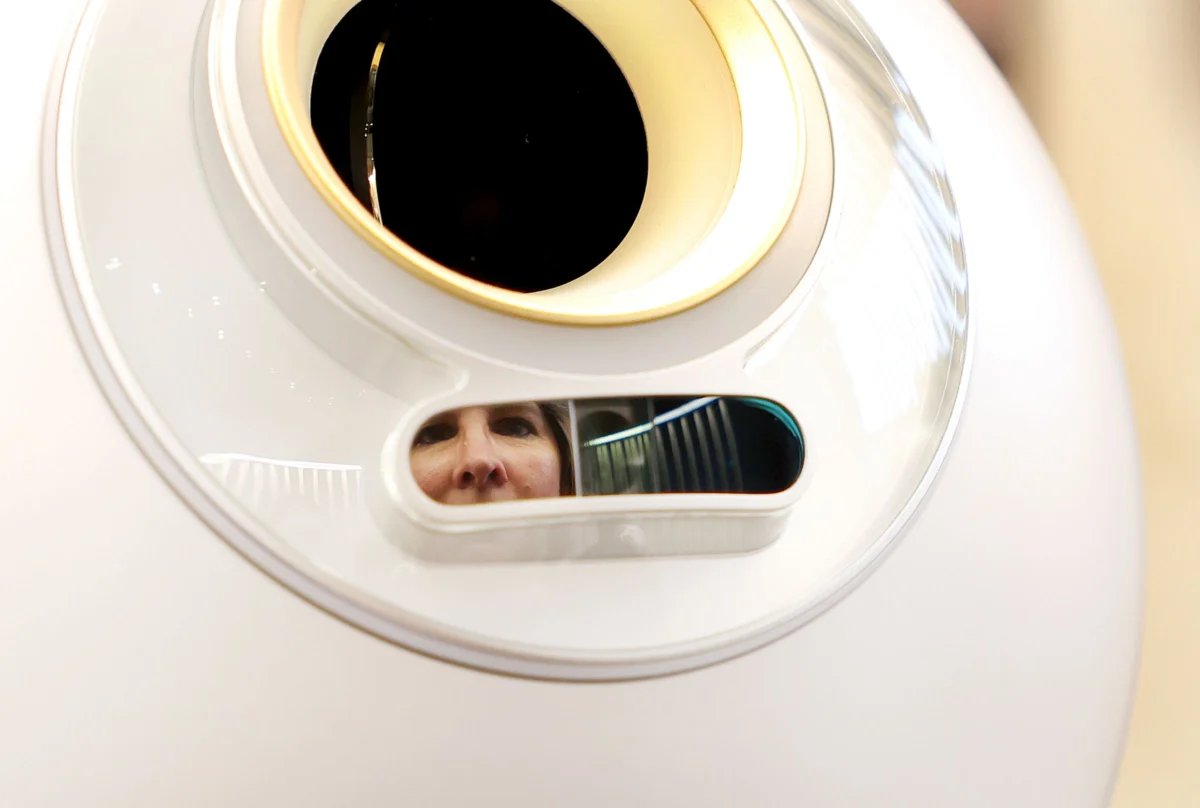
San Francisco – Sam Altman’s ambitious World project, centered on iris-scanning technology for human verification, has announced a significant global expansion through a partnership with the popular dating application Tinder. This collaboration allows Tinder users worldwide to display a digital badge on their profiles, signifying they have undergone World’s biometric verification process by scanning their irises using the company’s distinctive "Orbs." The announcement, made at an event in San Francisco, marks a pivotal moment for World as it seeks to establish its identity-verification system as a mainstream solution in an increasingly AI-dominated digital landscape.
The move follows a successful pilot program conducted by World in Japan, indicating a strategic approach to phased global rollout. This expansion represents one of the most substantial tests to date for World’s core proposition: that everyday consumers will embrace biometric verification in exchange for enhanced security and authenticity across various internet applications.
Founded in 2019 by Sam Altman, the CEO of OpenAI, and Alex Blania, the World project was conceived with a prescient vision of a future internet saturated with highly sophisticated AI agents. In such an environment, distinguishing between genuine human interaction and artificial intelligence is predicted to become an insurmountable challenge. As leading AI development companies, including OpenAI and Anthropic, continue to propel AI agents into widespread public use, the urgency of World’s mission to establish a verifiable digital identity for humans becomes increasingly pronounced.
Despite the growing relevance of its mission, World has faced hurdles in achieving widespread adoption. The company has also encountered significant scrutiny from governments globally, with probes into suspected violations of data protection laws. Nevertheless, World reports a substantial increase in verified users, with 18 million individuals now having undergone the Orb scan, up from 12 million in the previous year. This growth, while considerable, underscores the ongoing challenge of convincing a global populace to adopt a novel biometric verification system.
Strategic Partnerships Fueling Mainstream Adoption
The global Tinder expansion is just one facet of a broader strategy unveiled at World’s “Lift Off” event in San Francisco. Tools for Humanity, the parent company behind World, also announced several other consumer and enterprise partnerships aimed at embedding its verification technology into everyday digital interactions.
For Tinder users, the benefits extend beyond simply a badge of authenticity. Those who verify their identity with a World ID will receive five complimentary "boosts," a premium feature typically available for purchase, which can amplify profile visibility by up to ten times for a 30-minute period. This incentive is designed to drive user engagement with the verification system.
Beyond dating platforms, World is extending its reach into professional communication and enterprise solutions. The videoconferencing giant Zoom has introduced an option for users to require participants to verify their identity with World before joining a call. Similarly, Docusign, a leading platform for digital contract signing, will integrate World’s identity verification technology, allowing users to mandate World verification for document recipients.
Tiago Sada, Chief Product Officer at Tools for Humanity, emphasized the critical role of these major platform partnerships in propelling World towards becoming a ubiquitous identity verification standard. "We see major platform partnerships as key to helping World become a mainstream identity-verification technology," Sada stated. He also expressed particular interest in future collaborations with social media companies, noting with encouragement that Reddit has begun testing World as a tool to help its users differentiate between bots and real human contributors. This sentiment was further illustrated by a recent Reddit post from its CEO, Steve Huffman, titled "Humans Welcome, Bots Must Wear Name Tags," signaling a growing industry-wide concern about bot proliferation.
Addressing Bot Scalping and Enhancing Digital Trust
World is also tackling other significant digital challenges. The company is launching “Concert Kit,” a tool designed to enable artists to reserve concert tickets exclusively for verified humans. This initiative directly targets the persistent problem of bot-driven ticket scalping, which has plagued major ticketing platforms like Ticketmaster and significantly impacted consumer access to live events. The effectiveness of Concert Kit will be tested with an upcoming Bruno Mars World Tour event, featuring Anderson .Paak under his alias DJ Pee .Wee, which is scheduled to be a verified-humans-only show in San Francisco. This move signifies World’s intent to leverage its verification capabilities to restore fairness and accessibility in the digital marketplace.
Technological Foundation and Evolution
The Orbs, World’s distinctive iris-scanning hardware, were first introduced in 2023 alongside a mobile application featuring "mini apps" for various verification and blockchain-related functions. The process involves a user scanning their eyeball with an Orb, after which World generates a unique cryptographic key, establishing their "World ID." This system aims to provide a private and decentralized method for online identity verification, circumventing the need for users to upload sensitive government identification documents across multiple platforms.
The project, initially launched as Worldcoin, offered early adopters free cryptocurrency in exchange for iris scans. While World continues to offer a cryptocurrency token and a digital currency wallet, the "coin" was strategically dropped from its name in 2024, reflecting a pronounced shift in focus towards identity verification solutions for the burgeoning AI era. Jess Montejano, a spokesperson for Tools for Humanity, clarified that while cryptocurrency remains an incentive for new users, the company has broadened its offerings to include enticing trials for popular subscription services like Netflix and Apple TV, aiming to broaden appeal beyond purely crypto-focused incentives.
Navigating the AI Agent Landscape
While World’s primary objective is to combat the proliferation of malicious bots, the company does not aim to restrict AI agents from participating in the internet entirely. Earlier this year, Tools for Humanity introduced "AgentKit," a suite of tools designed to link AI agents to human digital identities. This framework allows for a controlled deployment of a limited number of bots operating on behalf of their human controllers online. Discussions are reportedly underway with major e-commerce and web development platforms like Shopify and Vercel to ensure that "human-backed agents" can seamlessly utilize these services, fostering a more regulated and transparent interaction between humans and AI agents.
Regulatory Hurdles and the Path Forward
Despite forging numerous corporate alliances, Tools for Humanity has encountered significant resistance from governments worldwide regarding its technology. Shortly after its 2023 launch, several countries, including Kenya, Spain, and Portugal, temporarily suspended World’s operations. These governments initiated investigations into the startup, citing concerns related to security, privacy, and financial practices. While restrictions in some of these nations have since been lifted, allowing World to resume operations, others, such as Brazil, have imposed long-term bans, precluding the company from expanding its technology within their borders.
World has consistently maintained that many of these regulatory actions were temporary pauses rather than outright prohibitions. Sada asserts that the challenges encountered with regulators largely stem from a fundamental misunderstanding of how World’s technology functions.
“The idea that World ID is not just private, but it’s one of the most private things you’ve ever used, that’s not obvious,” Sada explained. “We’re just not used to this kind of technology. Many people used to tape their [iPhone’s sensor used to enable] Face ID when it came out, then we got used to it.” This analogy highlights the company’s belief that public perception and understanding will evolve as the technology becomes more integrated into daily digital life.
A persistent question surrounding Tools for Humanity involves potential future collaborations with Sam Altman’s other venture, OpenAI, particularly as the latter explores AI-powered hardware products. Sada, however, stated he was unaware of OpenAI’s specific hardware initiatives and reiterated that while Altman is involved with World, OpenAI and Tools for Humanity operate as distinct entities. The development of AI hardware by OpenAI could present future synergistic opportunities, but for now, the focus remains on establishing World’s identity verification infrastructure as a crucial component of a human-centric internet.
The expansion of World’s verification system through partnerships like the one with Tinder signifies a bold attempt to address the growing challenges of digital identity and authenticity in the age of advanced AI. While regulatory and public perception hurdles remain, the company’s strategic alliances and its evolving product offerings indicate a determined push towards realizing its vision of a verifiable human digital presence.
