

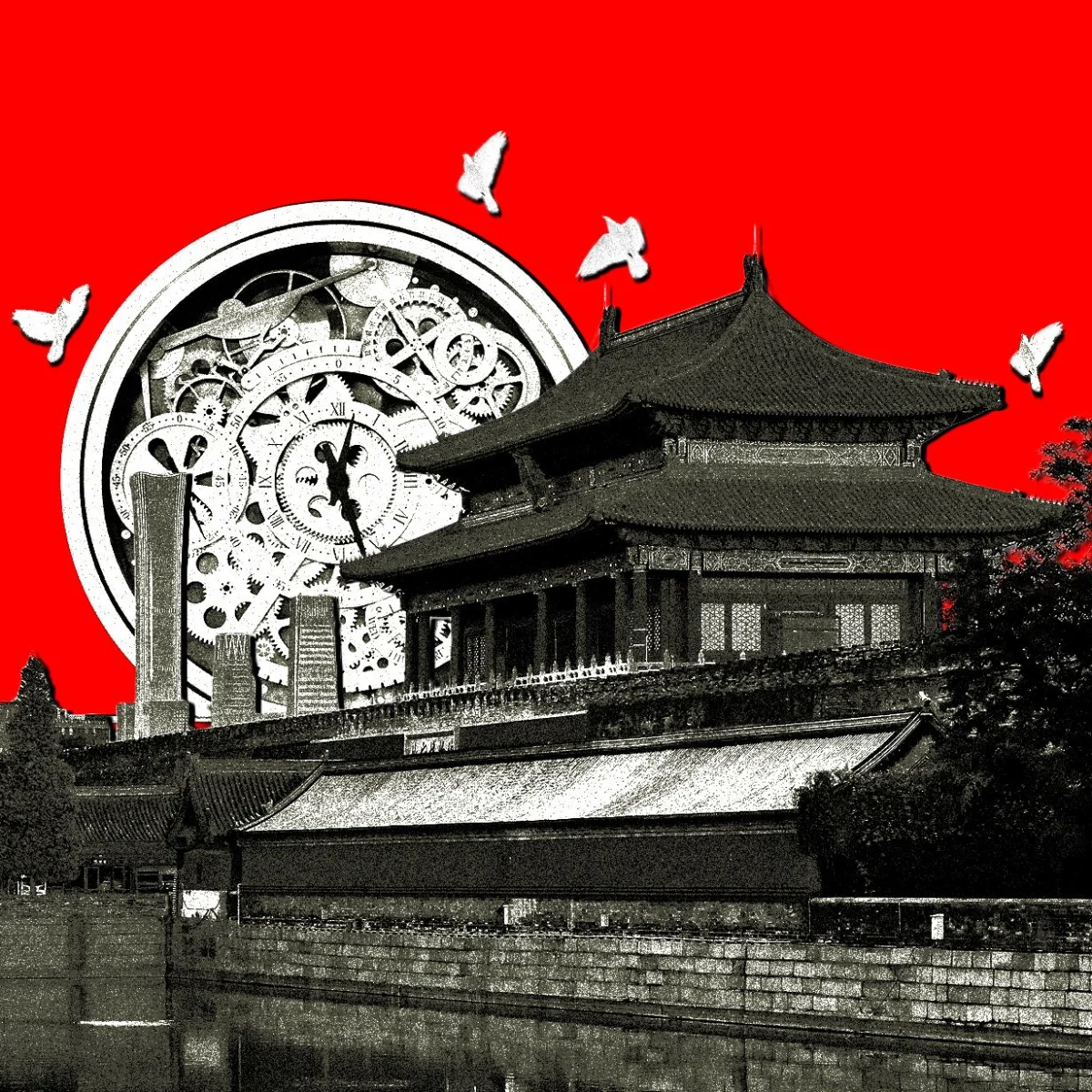
A burgeoning genre of Chinese online fiction sees protagonists journeying through time, armed with modern knowledge to rewrite national history. These narratives, deeply embedded within the vast landscape of China’s digital literary scene, offer a fascinating lens through which to understand popular sentiment, national identity, and the subtle interplay between creative expression and state ideology. Rongbin Han, a professor of Chinese politics at the University of Georgia, meticulously examines this phenomenon in his new book, Make China Great Again: Online Alt-History Fiction and Popular Authoritarianism. His research, which analyzed over 2,100 of the most popular titles on a leading web novel review platform, identified 238 stories where characters transport advanced technological, political, and economic ideas to pivotal moments in China’s past. This trend suggests a collective yearning to rectify historical perceived shortcomings and elevate China’s standing on the global stage.
Han’s deep dive into this genre was a personal undertaking, fueled by his own early engagement with online novels during his college years. He personally read more than 70 of these alternative history works, alongside dozens of other web novels for comparative analysis. The sheer scale of these narratives is striking; the alternative history fiction he studied boasts an average word count of 2.88 million characters, a length comparable to the entire Harry Potter series translated into Chinese. This extensive engagement allowed Han to not only appreciate the storytelling but also to uncover the underlying cultural and political currents shaping these popular narratives.
The popularity of web novels in China is a significant cultural and economic force. These serialized stories, published in daily installments, cultivate highly engaged fan bases willing to pay for daily access to new chapters. This model has fostered a massive and profitable industry, leading to numerous adaptations into successful films and television series. Han’s work taps into this rich ecosystem, exploring not just the narratives themselves but also the social and political context that informs their creation and reception. His analysis extends to the online comments sections of these novels, providing insights into reader reactions, and also considers how the Chinese government has navigated this space through censorship, co-option, and promotion.
Rewriting the Past to Glorify the Present
At their core, these alternative history novels are not focused on imagining speculative futures, as is common in much of Western science fiction. Instead, they are intensely preoccupied with China’s historical moments of perceived weakness and humiliation. Han characterizes the dominant narrative structure as a literal pursuit to "Make China Great Again," where protagonists actively work to "glorify China" by intervening in its past. This endeavor, he argues, ultimately serves to legitimize the Chinese Communist Party (CCP) and its authority by resonating with nationalist propaganda and adapting to the stringent censorship environment.
Gendered Narratives and Dynastic Fixations
An intriguing gendered dynamic emerges within the genre. Han noted a prevalence of female protagonists who travel back in time, but he largely excluded these narratives from his study because their primary focus often diverges from the explicit goal of "saving China from all sorts of crises." The core mission of remaking Chinese history, as identified by Han, is predominantly undertaken by male writers for a predominantly male readership.
The choice of historical period for these time-traveling escapades is also revealing. The Ming dynasty (1368-1644) emerges as a particularly favored setting, appearing in approximately a quarter of the studied titles. This preference is rooted in a widespread perception within China that the subsequent Manchu-led Qing dynasty (1644-1912), which overthrew the Ming, bears responsibility for China’s lagging industrialization compared to the West. Consequently, many of these stories aim to "save the Ming" and prevent this historical trajectory. Other dynasties, as well as periods of modern Chinese history both before and after the establishment of the People’s Republic of China (PRC) in 1949, also feature prominently as destinations for these historical revisers.
A prime example that Han highlights is The Morning Star of Lingao, a novel previously featured in WIRED. This work depicts 500 individuals transported back to the Ming dynasty with the ambitious goal of initiating an industrial revolution centuries ahead of its actual occurrence.

Han’s personal favorite, however, is a novel titled Red Dawn (èŒµæµŽæœ è½®æœˆ), which transports its protagonist to 1905. In this narrative, the character embarks on initiating a Communist revolution earlier than its historical counterpart. Red Dawn is emblematic of the genre’s tendency to avoid challenging the current political system. The protagonist meticulously replicates the actions of the CCP as they unfolded historically, eventually transferring power peacefully through what is presented as a democratic election to figures analogous to Mao Zedong and Zhou Enlai. This narrative arc, while fictional, subtly reinforces the established historical narrative and the legitimacy of the CCP’s rise to power.
Navigating the Labyrinth of Censorship
The pervasive influence of government censorship is an undeniable reality for China’s web novel industry. This oversight extends from the initial conception of a story to the online interactions between authors and readers. Even works like Red Dawn, which could be interpreted as nationalistic propaganda, have faced removal from web novel platforms due to the sensitive nature of political discourse. Despite such restrictions, these novels often find their way to pirated websites, maintaining their popularity among dedicated readers.
Han illustrates the impact of censorship with a wry observation from writers who refer to the censorship apparatus as a "Time and Space Administration." This metaphor highlights the limitations placed on narratives, particularly those venturing into the early decades of the PRC’s rule, suggesting that the government actively curtails explorations of certain historical periods.
The "Make China Great Again" Phenomenon: A Comparative Analysis
Han’s deliberate comparison of these online narratives to the "Make China Great Again" (MAGA) political movement in the West is intentional. Both phenomena share a foundation in nationalist sentiments, often amplified by state-sanctioned messaging. Since Xi Jinping assumed leadership, his political discourse has been heavily centered on the "great rejuvenation of the Chinese nation," a concept that resonates deeply within these fictional explorations of China’s past.
Han observes that these alternative history novels consistently echo dominant political narratives, making them "inherently not subversive." A significant subgenre focuses on protagonists aiding the CCP during its formative years. Even when stories introduce concepts like democratic parliamentary systems and elections into ancient China, these are framed as hypothetical thought experiments rather than critiques of contemporary political structures. By aligning with the state’s historical messaging, both authors and readers, according to Han, actively uphold officially sanctioned national values.
However, a crucial distinction exists between the "Make China Great Again" fiction (MCGA) and the MAGA movement. Adherents of MAGA and similar Western populist narratives often look backward due to dissatisfaction with current conditions, particularly the perceived negative impacts of globalization. They fantasize about a return to a more idealized, glorious past.
In contrast, proponents of MCGA narratives generally perceive China as having achieved greatness and anticipate its continued prominence. Having emerged as a significant beneficiary of globalization, these narratives aim to revisit history and imbue it with the "correct" lessons in politics, trade, and science to further enhance China’s past achievements. Han emphasizes that there are "very few people who think ancient China was great and we want to make today’s China more like that. Rare, if not nonexistent." His research has not encountered any such narratives, underscoring the forward-looking, yet historically contextualized, ambition that defines this Chinese literary trend.
