

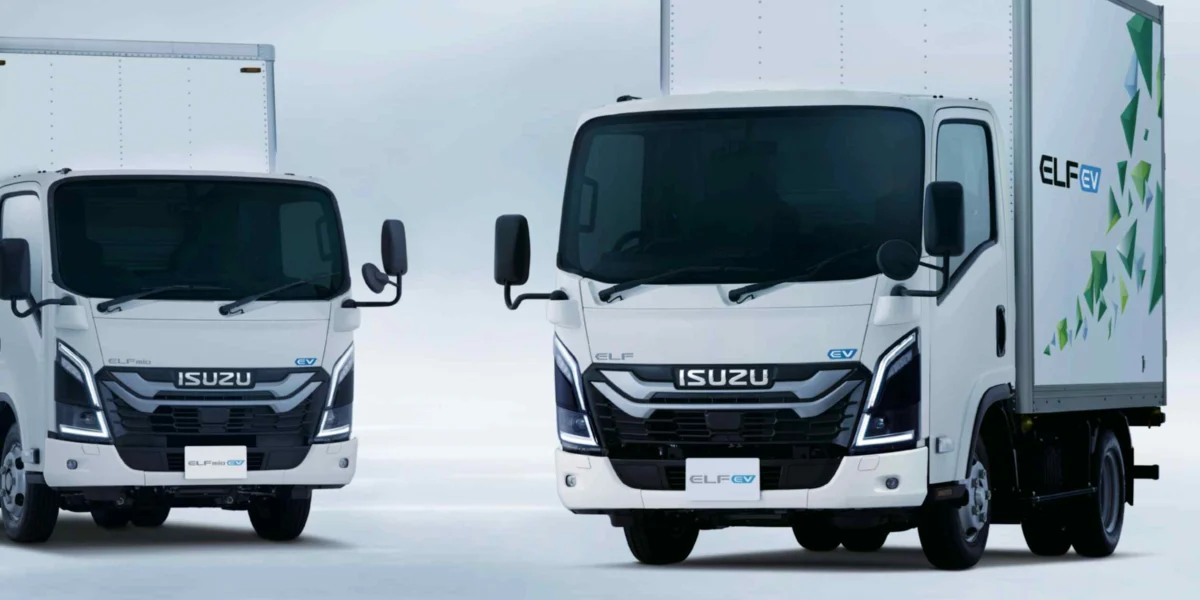
TOKYO/NAGOYA, Japan – Isuzu Motors is charting a significant course in the evolution of commercial transport, announcing its ambitious plan to develop a light-duty fuel cell electric vehicle (FCEV) truck in collaboration with fellow Japanese automotive giant, Toyota Motor. This strategic partnership aims to leverage the strengths of both companies to accelerate the adoption of hydrogen-powered mobility within the crucial segment of smaller commercial vehicles, with a targeted commencement of mass production in fiscal year 2027. The initiative represents a concerted effort to expand the accessibility and practicality of hydrogen refueling infrastructure, a key bottleneck for widespread FCEV deployment.
The forthcoming fuel cell truck will build upon Isuzu’s established platform, specifically drawing from the design and engineering of its Elf EV, a light-duty electric truck. This foundational approach signifies a pragmatic strategy, allowing Isuzu to integrate its extensive experience in commercial vehicle manufacturing with Toyota’s pioneering expertise in fuel cell technology. The decision to focus on light-duty vehicles is a calculated move, acknowledging the current limitations and future potential of hydrogen refueling networks. Smaller trucks, often operating within urban and suburban environments with more concentrated refueling options, are considered a more immediate and viable entry point for FCEV technology compared to heavy-duty long-haul trucks which require more extensive and robust hydrogen infrastructure.
Strategic Rationale and Market Positioning
The alliance between Isuzu and Toyota is rooted in a shared vision for a decarbonized future for the automotive industry. While both companies have independently invested heavily in various green technologies, this collaboration underscores a pragmatic approach to addressing specific market needs and technological challenges. Toyota, as a global leader in FCEV development with its Mirai passenger car, brings invaluable experience in hydrogen stack technology, storage systems, and overall powertrain integration. Isuzu, renowned for its robust and reliable commercial vehicles, contributes its deep understanding of the operational demands, durability requirements, and payload capacities essential for trucks used in diverse logistical operations.
The focus on light-duty trucks is particularly pertinent. This segment of the commercial vehicle market is characterized by frequent stops and starts, a need for agile maneuverability in urban settings, and relatively lower daily mileage compared to heavy-duty haulers. These operational profiles align well with the current capabilities and refueling patterns that can be supported by existing and planned hydrogen infrastructure. By concentrating efforts here, Isuzu and Toyota aim to demonstrate the viability of FCEVs for a broader range of commercial applications, thereby stimulating demand and encouraging further investment in hydrogen refueling stations.
The fiscal year 2027 target for mass production suggests a well-defined development roadmap. This timeline indicates that significant foundational work has likely already been undertaken, with the companies now moving towards scaling up production and refining the technology for commercial viability. The success of this venture could have far-reaching implications for the broader logistics industry, offering a cleaner alternative to traditional diesel-powered vehicles and contributing to air quality improvements in urban centers.
Background: The Hydrogen Mobility Landscape
The development of fuel cell vehicles, particularly for commercial applications, has been a gradual but persistent pursuit within the automotive industry. Hydrogen offers several advantages as an energy carrier: it produces only water vapor as an emission, it can be produced from renewable sources (green hydrogen), and refueling is significantly faster than recharging battery electric vehicles. However, the widespread adoption of FCEVs has been hampered by several factors, most notably the high cost of the technology, the limited availability of hydrogen refueling stations, and challenges in the production and distribution of hydrogen itself.
Toyota has been a pioneer in this space, launching the first-generation Mirai in 2014 and the second-generation in 2020. These passenger vehicles have served as crucial testbeds for refining fuel cell technology. Isuzu, on the other hand, has been actively exploring electrification for its commercial vehicle range, including battery electric versions of its Elf truck. The move into fuel cells for light-duty commercial trucks represents an expansion of its zero-emission strategy, acknowledging that battery electric technology may not be the sole or optimal solution for all commercial vehicle applications.
The Japanese government has been a strong proponent of hydrogen as a key component of its energy strategy, aiming to become a "hydrogen society." This national backing has provided significant impetus for research and development, as well as for the rollout of hydrogen infrastructure. Initiatives such as subsidies for FCEV purchases and investments in hydrogen production and distribution facilities are designed to create a supportive ecosystem for hydrogen mobility. This partnership between Isuzu and Toyota aligns perfectly with these national objectives.
Chronology of Developments and Future Outlook
While the announcement of the FCEV truck development is recent, the collaboration between Isuzu and Toyota in the commercial vehicle sector is not entirely new. The two companies have a long-standing relationship, including a capital alliance that began in 2019, aimed at accelerating the development and deployment of commercial vehicle technologies. This broader partnership has laid the groundwork for more specific joint ventures, such as the one now focused on fuel cell trucks.
The journey towards mass production in fiscal 2027 implies a phased development approach. This would likely involve:
- Phase 1: Technology Integration and Prototyping (Current to ~2025): Adapting Toyota’s fuel cell components and systems to Isuzu’s Elf EV platform. This stage involves rigorous testing and validation of the powertrain in a commercial vehicle chassis. Early prototypes would be crucial for real-world testing and data collection.
- Phase 2: Pilot Programs and Infrastructure Testing (~2025-2026): Deploying pre-production models with select commercial fleet operators in regions with established or developing hydrogen refueling infrastructure. This phase would focus on understanding operational performance, driver acceptance, and the reliability of the refueling process. Discussions with hydrogen suppliers and station operators would be intensified.
- Phase 3: Manufacturing Scale-Up and Launch (~2026-2027): Establishing production lines at Isuzu’s manufacturing facilities, optimizing supply chains for fuel cell components, and preparing for market launch. This would involve training manufacturing staff and developing comprehensive after-sales support services.
- Phase 4: Mass Production and Market Expansion (Fiscal 2027 onwards): Commencing large-scale production to meet anticipated market demand. This phase would also involve expanding the geographical reach of the FCEV trucks and potentially exploring variations for different applications.
The success of this endeavor will hinge not only on the technological advancements but also on the parallel development of a robust hydrogen refueling network. Industry analysts have noted that without a sufficient number of accessible and affordable refueling stations, even the most advanced FCEV trucks will struggle to gain widespread adoption. Therefore, the collaborative efforts of automakers, energy companies, and governments will be critical.
Supporting Data and Industry Trends
The global commercial vehicle market is undergoing a significant transformation driven by environmental regulations, technological advancements, and evolving customer demands. According to recent market research reports, the commercial vehicle sector is witnessing a surge in interest for alternative powertrains, with both battery electric and hydrogen fuel cell technologies vying for dominance.
For light-duty trucks, the total cost of ownership (TCO) is a critical factor. While the initial purchase price of FCEVs is often higher than that of conventional diesel trucks, lower fuel costs (depending on hydrogen prices) and reduced maintenance requirements (due to fewer moving parts in the powertrain) can contribute to a competitive TCO over the vehicle’s lifecycle. For example, projections suggest that by the mid-2030s, the TCO for FCEVs could become comparable to, or even more favorable than, diesel counterparts in certain regions.
The payload capacity and range of the Isuzu Elf EV-based FCEV will be crucial selling points. While specific figures are yet to be released, it is anticipated that the fuel cell system will offer a competitive range suitable for daily delivery routes, with refueling times measured in minutes rather than hours. This is a significant advantage over battery electric trucks, which can require longer charging durations, potentially impacting operational efficiency for businesses with tight delivery schedules.
Data from the International Energy Agency (IEA) highlights the growing investment in hydrogen infrastructure. While still nascent, the number of hydrogen refueling stations globally has been steadily increasing, with significant expansion plans in key markets like Japan, Europe, and parts of North America. This growth is directly linked to the anticipated increase in FCEV deployment.
Official Responses and Industry Reactions (Inferred)
While direct quotes from Isuzu and Toyota officials regarding this specific development were limited to the initial announcement, the strategic intent behind this collaboration can be inferred from their broader corporate statements and actions.
Isuzu Motors has consistently emphasized its commitment to reducing the environmental impact of commercial transportation. Its focus on the Elf EV platform for the fuel cell truck underscores a pragmatic approach to electrification, seeking to maximize synergies with existing product lines and manufacturing capabilities. This suggests a belief that fuel cell technology, particularly for light-duty applications, can complement battery electric solutions.
Toyota Motor’s long-standing dedication to hydrogen technology is well-documented. The company has repeatedly articulated its vision of a hydrogen-based society, viewing fuel cells as a key enabler of zero-emission mobility across a wide spectrum of vehicles, from passenger cars to heavy-duty trucks. Their willingness to partner with Isuzu on this project signals a strategic move to accelerate the commercialization of their fuel cell technology in a segment where it holds significant promise.
Industry observers and fleet operators are likely to view this development with cautious optimism. The prospect of a reliable, zero-emission light-duty truck from established manufacturers like Isuzu and Toyota is highly appealing. However, concerns regarding the cost of the vehicle, the availability and price of hydrogen, and the long-term reliability of fuel cell systems in demanding commercial applications will remain key considerations. A successful rollout would likely be met with strong interest from logistics companies looking to meet sustainability targets and comply with increasingly stringent emissions regulations.
Broader Impact and Implications for the Logistics Sector
The Isuzu-Toyota partnership on light-duty fuel cell trucks has the potential to catalyze significant shifts within the broader logistics and transportation industries.
Firstly, it could accelerate the adoption of hydrogen as a viable fuel for urban and regional logistics. By demonstrating the practicality and efficiency of FCEVs in a high-volume segment, the initiative may encourage further investment in hydrogen production, distribution, and refueling infrastructure, creating a virtuous cycle of demand and supply.
Secondly, it offers a tangible pathway for businesses to decarbonize their fleets without compromising operational flexibility. For companies with complex delivery networks, the rapid refueling capability of FCEVs presents a compelling alternative to battery electric vehicles that may require significant downtime for charging. This could be particularly impactful for last-mile delivery services, which are critical for e-commerce and urban supply chains.
Thirdly, the collaboration between two Japanese automotive powerhouses signifies a unified front in the global race for sustainable mobility solutions. This combined expertise and market presence could set new benchmarks for FCEV development and deployment, potentially influencing the strategies of other automotive manufacturers and technology providers.
However, challenges remain. The cost of fuel cell systems, while decreasing, is still a significant barrier. The price of hydrogen itself will also be a critical determinant of economic viability for fleet operators. Furthermore, the longevity and maintenance requirements of fuel cell stacks in demanding commercial environments will need to be thoroughly proven through extensive real-world operation.
Despite these hurdles, the commitment from Isuzu and Toyota to pursue mass production by fiscal 2027 signals a strong belief in the future of hydrogen mobility for commercial transport. This ambitious undertaking represents a crucial step towards a cleaner, more sustainable future for the logistics industry and a significant advancement in the global transition to zero-emission transportation. The success of this venture could pave the way for broader FCEV adoption across various commercial vehicle segments, fundamentally reshaping how goods are transported in the decades to come.
