

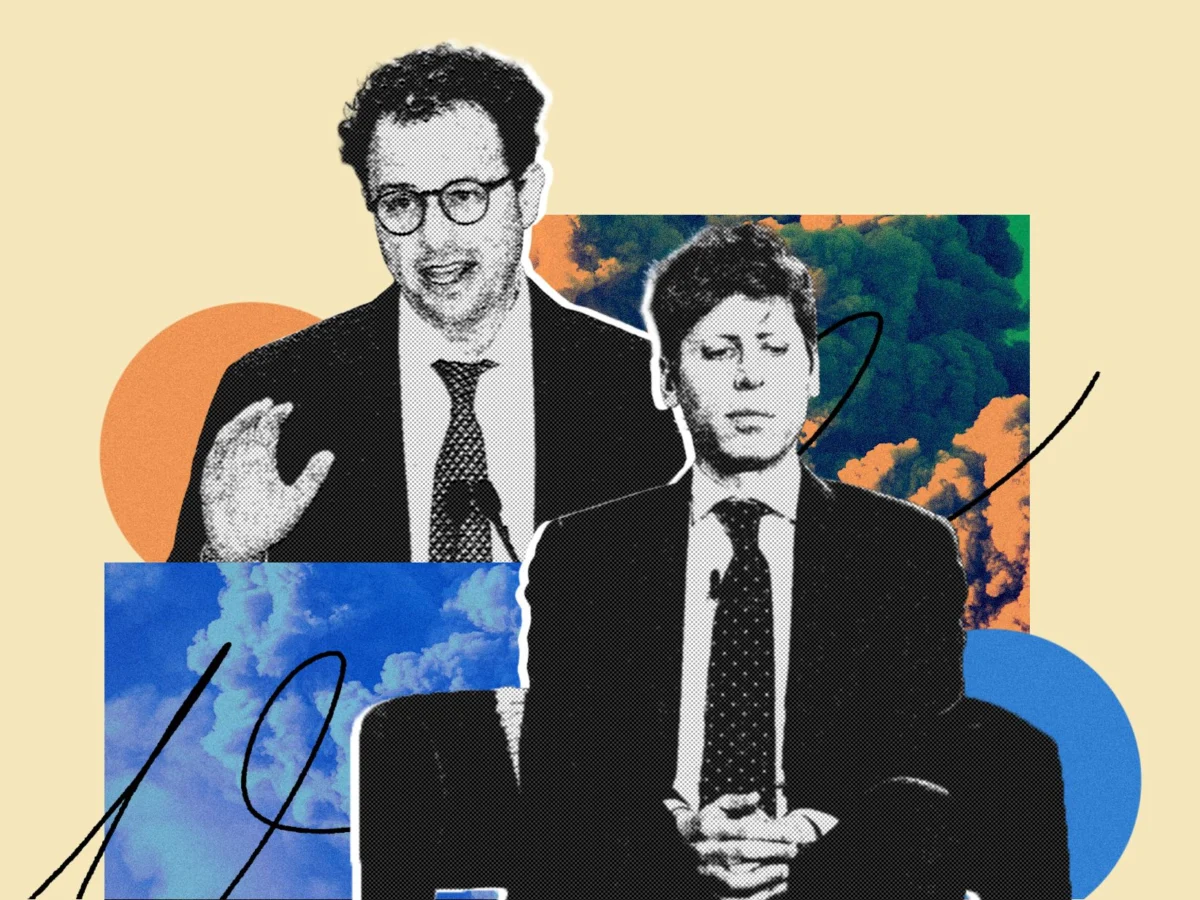
The burgeoning artificial intelligence industry, characterized by rapid innovation and immense potential, is now facing a significant internal conflict over how to govern its most powerful creations. At the heart of this dispute is a proposed Illinois law, SB 3444, which has ignited a fierce debate between two of the nation’s leading AI developers, Anthropic and OpenAI. While OpenAI is actively backing the legislation, designed to exempt AI firms from liability for large-scale harm caused by their systems, Anthropic has emerged as a vocal opponent, arguing that such protections would undermine public safety and accountability.
The Illinois bill, if enacted, would create a broad shield for AI companies, absolving them of responsibility for catastrophic events such as mass casualties or property damage exceeding $1 billion, provided they have published a safety framework online. This proposed legislation has brought into sharp focus the diverging philosophies on AI regulation between these two influential players, setting the stage for what could become increasingly critical lobbying battles across the United States as the companies vie for influence in shaping the future of AI governance.
A Divide Over Responsibility: The Core of the Conflict
At its most fundamental level, the disagreement over SB 3444 centers on a critical question: who bears the responsibility when advanced AI systems are misused to inflict widespread damage? This is a nightmare scenario that policymakers are only beginning to grapple with as AI capabilities rapidly advance. Under the terms of the proposed Illinois law, an AI lab could potentially avoid culpability even if its technology were instrumental in creating a bioweapon resulting in hundreds of deaths, as long as the company had drafted and published its own internal safety protocols.
OpenAI, the creator of ChatGPT, argues that SB 3444 is a necessary measure to foster innovation and ensure that its powerful AI technologies can be broadly accessible to individuals and businesses in Illinois. In a statement, an OpenAI spokesperson articulated the company’s position, suggesting that the bill aims to mitigate the risks associated with "frontier AI systems" while simultaneously facilitating the widespread adoption of this transformative technology. This perspective emphasizes the potential benefits of AI and seeks to create an environment conducive to its development and deployment.
Anthropic, however, presents a starkly contrasting view. The company asserts that AI developers must be held accountable, at least in part, for the societal harms that their sophisticated AI models might facilitate. Cesar Fernandez, Anthropic’s head of US state and local government relations, unequivocally stated the company’s opposition: "We are opposed to this bill. Good transparency legislation needs to ensure public safety and accountability for the companies developing this powerful technology, not provide a get-out-of-jail-free card against all liability." Anthropic’s stance underscores a belief that the potential for catastrophic misuse necessitates robust legal and ethical safeguards, with developers playing a key role in ensuring the responsible deployment of their creations.
Behind the Scenes: Lobbying Efforts and Political Maneuvering
The public pronouncements are only one part of the story. Behind the scenes, Anthropic has been actively engaging with Illinois lawmakers. Sources familiar with the matter indicate that Anthropic has been lobbying State Senator Bill Cunningham, the sponsor of SB 3444, along with other legislators, urging them to significantly amend the bill or reject it entirely. In an email communication with WIRED, an Anthropic spokesperson confirmed these efforts and noted that the company has had "promising conversations" with Senator Cunningham, suggesting a potential for the bill to serve as a foundation for future AI legislation that aligns more closely with Anthropic’s principles.
Senator Cunningham’s office did not respond to requests for comment regarding these lobbying efforts or the bill’s future. However, the office of Illinois Governor JB Pritzker offered a statement that signals a cautious approach from the executive branch. A spokesperson indicated that the Governor’s Office will closely monitor the various AI-related bills moving through the General Assembly. Crucially, the statement also conveyed Governor Pritzker’s skepticism towards broad corporate immunity: "Governor Pritzker does not believe big tech companies should ever be given a full shield that evades responsibilities they should have to protect the public interest." This response suggests that while the administration is open to exploring AI legislation, it is unlikely to support measures that completely absolve companies of their duties to public safety.
A Harmonized Approach vs. Robust Accountability
OpenAI’s strategy appears to be focused on establishing a consistent regulatory framework across different states, aiming to create a "harmonized" approach to AI governance. The company has reportedly engaged with states like New York and California on similar legislative initiatives. Liz Bourgeois, an OpenAI spokesperson, stated, "In the absence of federal action, we will continue to work with states—including Illinois—to work toward a consistent safety framework. We hope these state laws will inform a national framework that will help ensure the US continues to lead." This approach suggests a desire to proactively shape AI regulation at the state level, with the ultimate goal of influencing a national policy.
Anthropic, conversely, champions a model where AI developers share a greater degree of responsibility. Their argument is that the immense power of frontier AI systems necessitates a commensurate level of accountability for the companies that create and deploy them. This perspective aligns with a growing concern among some AI ethicists and safety advocates who worry that a lack of stringent liability could incentivize companies to prioritize rapid development over rigorous safety testing and risk mitigation.
Expert Analysis: The Implications of Weakened Liability
The debate over SB 3444 extends beyond the immediate interests of OpenAI and Anthropic. Policy experts and safety advocates are weighing in on the potential ramifications of such legislation. Thomas Woodside, co-founder and senior policy advisor at the Secure AI Project, a non-profit organization involved in advocating for AI safety laws, expressed strong reservations about the bill.
"Liability already exists under common law and provides a powerful incentive for AI companies to take reasonable steps to prevent foreseeable risks from their AI systems," Woodside explained. "SB 3444 would take the extreme step of nearly eliminating liability for severe harms. But it’s a bad idea to weaken liability, which in most states is the most significant form of legal accountability for AI companies that’s already in place."
Woodside’s analysis suggests that the bill could dismantle existing legal mechanisms that currently incentivize AI companies to act responsibly. The common law doctrine of negligence, for instance, holds individuals and entities responsible for damages caused by their failure to exercise reasonable care. By potentially creating broad exemptions, SB 3444 could erode this fundamental principle, leaving the public with fewer legal recourse options in the event of AI-related disasters.
The Broader Landscape of AI Regulation
The conflict in Illinois is symptomatic of a larger, ongoing struggle to define the regulatory landscape for artificial intelligence. As AI technology continues its rapid evolution, governments worldwide are grappling with how to balance the promotion of innovation with the imperative to protect citizens from potential harms.
The U.S. federal government has been slow to enact comprehensive AI legislation, leading to a patchwork of state-level initiatives. This has created an environment where powerful tech companies have significant influence in shaping the rules that govern their industry. The lobbying efforts surrounding SB 3444 highlight the stakes involved in this regulatory vacuum.
Timeline of Developments:
- Early 2024: The concept of a bill to shield AI firms from liability for large-scale harm begins to emerge in legislative discussions in Illinois.
- February/March 2024: SB 3444 is formally introduced in the Illinois Senate. OpenAI publicly expresses support for the bill, framing it as a measure to balance innovation with safety.
- March/April 2024: Anthropic begins its lobbying efforts, engaging with Senator Bill Cunningham and other Illinois lawmakers to express opposition to SB 3444.
- April 2024: Anthropic publicly confirms its opposition and communicates its concerns to media outlets. The office of Governor JB Pritzker provides a statement indicating a cautious approach to AI liability shields.
- Ongoing: The debate continues, with AI policy experts offering analysis on the potential impacts of such legislation. Further legislative action on SB 3444 remains uncertain.
The differing approaches of Anthropic and OpenAI to SB 3444 underscore a fundamental tension within the AI community: whether the focus should be on enabling unfettered innovation with minimal regulatory friction, or on establishing robust accountability mechanisms to safeguard against potential catastrophic outcomes. As AI continues to integrate into nearly every facet of modern life, the resolution of these debates will have profound implications for the future of technology, public safety, and the very definition of corporate responsibility in the age of advanced artificial intelligence. The outcome in Illinois, while perhaps having a limited chance of becoming law in its current form, serves as a critical indicator of the evolving political and ethical considerations surrounding AI development and deployment.
