

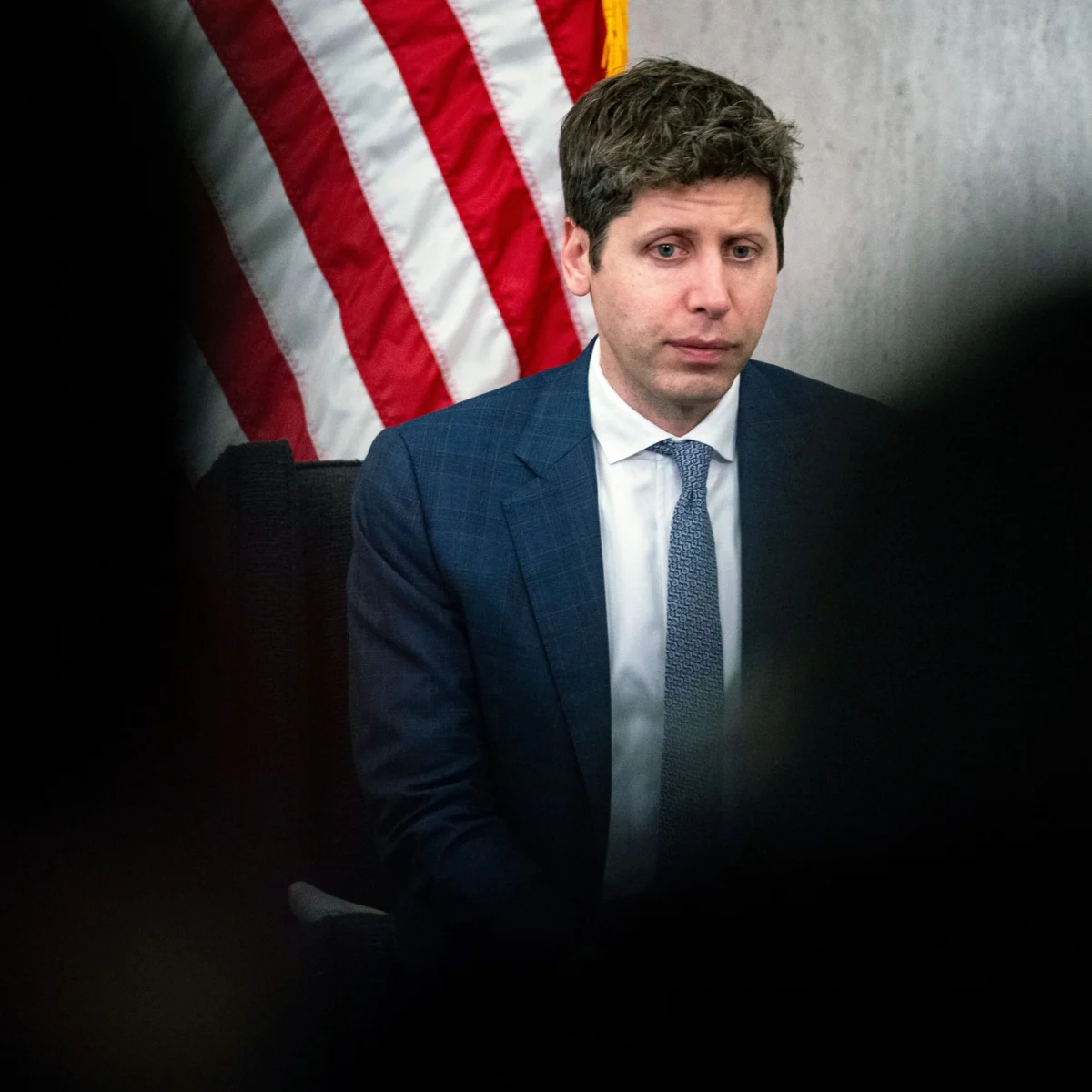
San Francisco, CA – Early Friday morning, a coordinated series of alarming incidents unfolded in San Francisco, culminating in the arrest of a 20-year-old male suspect. The individual is accused of attacking the home of OpenAI CEO Sam Altman with an incendiary device and subsequently making threats at the company’s Mission Bay headquarters. The San Francisco Police Department (SFPD) confirmed the arrest, which occurred after a rapid response to two distinct but linked events. OpenAI’s corporate security team promptly alerted employees to the situation, emphasizing the swift actions of law enforcement and assuring them of ongoing safety measures.
The events began shortly before dawn. According to a communication from OpenAI’s corporate security to its employees, at approximately 3:45 a.m. Pacific Time, an unidentified individual approached Sam Altman’s residence. This individual allegedly threw an incendiary device toward the property. Fortunately, the device landed nearby and extinguished without causing significant harm. The message to staff explicitly stated, "There were no injuries and only minimal damage was reported." This initial act of aggression, though seemingly contained, set in motion a chain of events that would soon involve OpenAI’s corporate infrastructure.
The narrative swiftly shifted to OpenAI’s headquarters, located in the bustling Mission Bay neighborhood. The internal memo to employees detailed that "Shortly afterward, an individual matching the suspect’s description was contacted by security outside MB1," referencing the company’s primary office building. It was at this location that the suspect allegedly escalated his actions, making "threatening statements about the building." This direct confrontation with OpenAI’s security personnel outside the company’s primary operational hub underscored the apparent intent behind the earlier act at Altman’s residence.
OpenAI’s corporate security team conveyed to its workforce that it was fully cooperating with the San Francisco Police Department in their ongoing investigation. To ensure employee safety and deter any further incidents, staff were informed that they might observe an increased presence of both police officers and private security personnel around the office on Friday. While the company’s offices remained operational, employees were issued a directive to remain vigilant, with a specific instruction to "not let anyone tailgate into the building," a measure designed to reinforce access control and prevent unauthorized entry.
The San Francisco Police Department later released a statement on social media, providing a more detailed account of their involvement. The SFPD confirmed that at approximately 4:12 a.m., officers were dispatched to the North Beach neighborhood in response to a fire investigation. Their report indicated that an "incendiary device" had indeed been thrown at a residential property, igniting an exterior gate. The suspect, at that point, had fled the scene on foot.
Crucially, the police statement linked this North Beach incident to the subsequent events at OpenAI. Less than an hour after the North Beach fire, officers encountered a person matching the description of the suspect outside of OpenAI’s offices. This individual was reportedly making threats to "burn down the building." Law enforcement officials were able to detain the suspect, identified as a 20-year-old male, and subsequently arrested him at the scene. The SFPD stated that no injuries were reported in connection with either incident and that charges were pending at the time of their announcement.
Kayla Wood, a spokesperson for OpenAI, provided a concise yet impactful summary of the morning’s events in an email to WIRED. "Early this morning, someone threw a Molotov cocktail at Sam Altman’s home and also made threats at our San Francisco headquarters," Wood stated. She reiterated the positive outcome regarding casualties: "Thankfully, no one was hurt." Wood also expressed gratitude for the swift response from the SFPD and the city’s support in ensuring employee safety, confirming that the individual was in custody and that OpenAI was fully assisting law enforcement with their investigation.
Chronology of Events
The series of incidents unfolded rapidly in the pre-dawn hours of Friday, demonstrating a clear escalation and a potential pattern of targeted aggression. A precise timeline, pieced together from official statements and internal communications, highlights the swiftness with which events transpired:
- Approximately 3:45 a.m. PT: An individual approaches Sam Altman’s residence and throws an incendiary device toward the property. The device lands nearby and extinguishes, causing minimal damage and no injuries.
- Shortly after 3:45 a.m. PT: An individual matching the suspect’s description is observed by OpenAI’s corporate security outside the company’s Mission Bay headquarters (MB1).
- Around 4:12 a.m. PT: San Francisco Police Department officers respond to a fire investigation in the North Beach neighborhood, where an incendiary device had ignited an exterior gate. The suspect flees the scene.
- Less than an hour after the North Beach incident: Officers encounter the same suspect outside OpenAI’s offices, where he makes threats to burn down the building.
- Following the encounter at OpenAI: The 20-year-old male suspect is detained and arrested by SFPD.
This tight chronology suggests a premeditated plan involving two distinct but connected locations, underscoring the seriousness of the alleged offenses.
Background Context: A History of Threats and Scrutiny
This recent incident is not an isolated event for OpenAI. The artificial intelligence research lab, a frontrunner in the rapidly evolving AI landscape, has increasingly found itself the subject of public scrutiny and, at times, outright hostility. The company’s groundbreaking work, particularly with models like ChatGPT, has ignited both widespread excitement and significant apprehension regarding its societal implications, ethical considerations, and potential for misuse.
In November of the previous year, OpenAI was forced to implement a lockdown of its San Francisco office following an alleged threat from an activist. While the specifics of that threat were not fully disclosed, the measure indicated a heightened state of alert within the company, responding to concerns about the safety of its employees and operations.
More recently, in February 2025, protesters were arrested for engaging in disruptive actions that involved locking the front doors of OpenAI’s offices. These protests, often stemming from concerns about AI’s impact on jobs, misinformation, and ethical development, highlight the broader societal tensions that surround cutting-edge technology companies. The cumulative effect of these past incidents likely contributed to the heightened security protocols and rapid response witnessed on Friday.
Supporting Data and Analysis
The nature of the attacks—an incendiary device at a private residence and direct threats at a corporate headquarters—points towards a potentially motivated individual with a clear target. While the SFPD has not yet released details regarding the suspect’s specific motivations or any potential affiliations, the choice of targets—the CEO of a leading AI company and the company itself—suggests a connection to OpenAI’s work.
The use of an "incendiary device," often referred to colloquially as a Molotov cocktail in such contexts, is a serious criminal act indicative of intent to cause significant damage or harm. The fact that it was deployed at the home of Sam Altman escalates the personal nature of the threat, moving beyond corporate security to direct endangerment of an individual and their private property.
The subsequent threats made at OpenAI’s headquarters, especially the explicit statement about "burning down the building," suggest a potential desire to disrupt the company’s operations or to send a strong message of opposition. The proximity in time and the matching description of the suspect strongly indicate that the two events were orchestrated by the same individual.
The swift response from both OpenAI’s security team and the SFPD is crucial in this context. The ability to quickly identify, locate, and apprehend the suspect significantly mitigates the risk of further escalation. The presence of increased security and police presence around OpenAI’s offices serves as a deterrent and a visible reassurance to employees, a critical step in maintaining operational continuity in the face of such threats.
Official Responses and Broader Implications
The statements from OpenAI’s spokesperson and the SFPD reflect a commitment to transparency and public safety. OpenAI’s acknowledgment of the incident and its appreciation for law enforcement’s swift action underscores the collaborative effort required to address such security challenges. The company’s focus on employee well-being, evident in their internal communications and security advisories, is paramount.
The SFPD’s public statement confirms the facts of the arrest and assures the public that an investigation is underway. The pending charges indicate that the legal process will now take its course.
The implications of this event extend beyond the immediate security concerns. It highlights the growing vulnerability of prominent figures and institutions in the technology sector, particularly those at the forefront of rapidly advancing and often controversial fields like artificial intelligence. As AI continues to integrate into society, the public discourse surrounding its development and deployment will likely remain charged, potentially leading to heightened tensions and, in extreme cases, acts of aggression.
This incident serves as a stark reminder of the need for robust security measures, effective communication channels between private entities and law enforcement, and a broader societal dialogue about the ethical and societal implications of technological innovation. The San Francisco Bay Area, a hub for technological advancement, is also a focal point for the associated public discourse and potential fallout. The ability of law enforcement and private security to work in concert to de-escalate and apprehend individuals posing threats will be increasingly vital in safeguarding both individuals and the institutions driving technological change.
The investigation will likely seek to uncover the suspect’s motivations, any potential accomplices, and the specific rationale behind targeting both Altman and OpenAI’s headquarters. The outcome of this investigation will not only determine the legal consequences for the individual but may also shed light on the underlying sentiments driving such actions within the broader context of AI development and public perception.
