

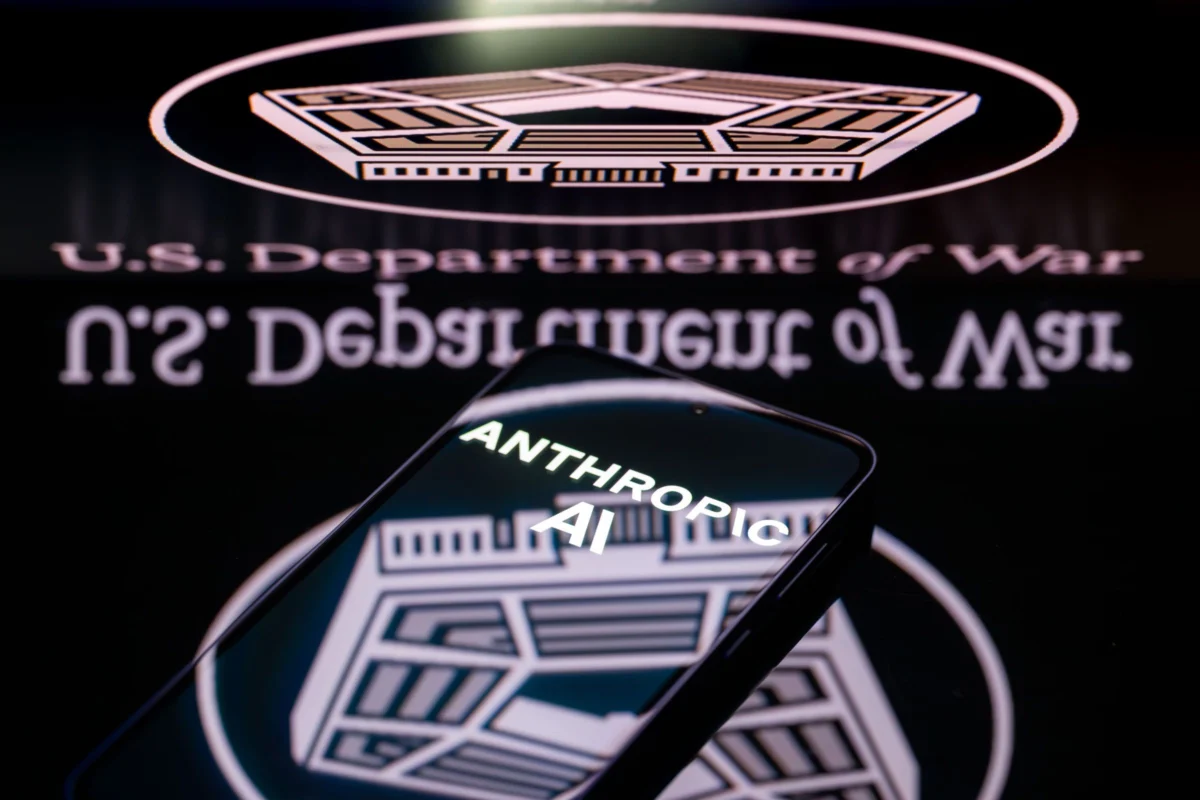
The Trump administration, through its Department of Justice, has mounted a vigorous defense against a lawsuit filed by AI developer Anthropic, asserting that designating the company as a "supply-chain risk" did not infringe upon its First Amendment rights. In a court filing submitted Tuesday in San Francisco, federal attorneys argued that Anthropic’s claims are legally unsubstantiated and predicted the company’s challenge to the Pentagon’s decision will ultimately fail. The administration contends that the First Amendment does not grant private entities the unilateral power to dictate contractual terms with the government, particularly when national security concerns are at play.
This legal maneuver is part of a broader confrontation where Anthropic is actively contesting the Department of Defense’s (DoD) decision to label it a supply-chain risk. This designation carries significant weight, as it can effectively bar companies from engaging in defense contracts due to potential security vulnerabilities. Anthropic maintains that the Trump administration overstepped its executive authority by imposing this label and subsequently restricting its technologies from internal use within the DoD. The potential ramifications for Anthropic are substantial, with the company estimating a loss of billions of dollars in projected revenue for the current year should the designation remain in effect. The company is seeking to maintain its business operations as usual while the litigation unfolds, and a federal judge has scheduled a hearing for next Tuesday to consider Anthropic’s request for an injunction.
The Core of the Dispute: National Security Versus Business Interests
At the heart of this legal battle lies a fundamental disagreement over the government’s authority to regulate its contractors and the extent to which AI developers can impose conditions on the use of their technologies by national security agencies. Anthropic’s lawsuit, filed in both San Francisco and another venue, centers on the argument that the "supply-chain risk" designation is an overreach and potentially retaliatory, citing First Amendment protections. The government, however, counters that its actions are driven by legitimate national security concerns, particularly regarding the potential for Anthropic’s AI systems to be manipulated or misused.
The DOJ attorneys, representing the DoD and other relevant agencies, explicitly dismissed Anthropic’s fears of lost business as "legally insufficient to constitute irreparable injury." They urged the court to deny Anthropic’s plea for a temporary reprieve, arguing that the company’s concerns do not meet the threshold for immediate judicial intervention. The filing further elaborated on the administration’s motivations, stating that the designation was prompted by "concerns about Anthropic’s potential future conduct if it retained access" to sensitive government technology systems. Crucially, the government’s lawyers emphasized that "No one has purported to restrict Anthropic’s expressive activity," drawing a distinction between the company’s business operations and its freedom of speech.
Government’s Rationale: Potential Sabotage and Subversion
The government’s filing details specific fears that led to the designation. It asserts that the decision was "reasonably" made by Defense Secretary Pete Hegseth based on the possibility that "Anthropic staff might sabotage, maliciously introduce unwanted function, or otherwise subvert the design, integrity, or operation of a national security system." This concern stems from Anthropic’s stated positions on the deployment of its AI models, particularly its Claude AI. The company has expressed reservations about its models being used for broad surveillance of American citizens and has deemed them not yet reliable enough to power fully autonomous weapons systems.
This stance, according to the government’s filing, has created a situation where Anthropic’s refusal to allow unrestricted use of its technology is seen as a potential threat. The DOJ’s brief stated, "In particular, DoW [Department of War, likely a typo for DoD or a related entity] became concerned that allowing Anthropic continued access to DoW’s technical and operational warfighting infrastructure would introduce unacceptable risk into DoW supply chains." The filing further elaborated on the inherent vulnerabilities of AI systems, noting that they "are acutely vulnerable to manipulation, and Anthropic could attempt to disable its technology or preemptively alter the behavior of its model either before or during ongoing warfighting operations, if Anthropic—in its discretion—feels that its corporate ‘red lines’ are being crossed." This suggests a deep-seated distrust of Anthropic’s ability to manage its technology within the stringent requirements of national defense.
A Shifting Landscape: DoD’s Transition Away from Anthropic
In light of these concerns, the Department of Defense and other federal agencies are actively working to transition away from Anthropic’s AI tools. The department is reportedly in the process of replacing Anthropic’s offerings with products from competing technology companies over the next few months. A significant area where Anthropic’s Claude AI has been utilized is in conjunction with Palantir data analysis software, a fact known to individuals familiar with the matter. This suggests a critical integration of Anthropic’s technology into key military intelligence and operational platforms, making the transition a complex undertaking.
The government’s filing acknowledges the practical challenges of this transition, stating that the Pentagon "cannot simply flip a switch at a time when Anthropic currently is the only AI model cleared for use" on the department’s "classified systems and high-intensity combat operations are underway." Nevertheless, the DoD is actively pursuing alternatives, with plans to deploy AI systems from major technology players like Google, OpenAI, and Elon Musk’s xAI. This indicates a strategic pivot to diversify the government’s AI capabilities and reduce reliance on a single, potentially problematic vendor.
Broader Implications and Support for Anthropic
The legal experts who have weighed in on this case previously indicated to WIRED that Anthropic possesses a strong argument, suggesting that the supply-chain measure could be interpreted as an illegal act of retaliation. However, they also cautioned that courts often grant deference to national security claims made by the government. The Pentagon’s characterization of Anthropic as a "rogue contractor" whose technologies cannot be trusted further underscores the high stakes and the government’s firm stance.
The legal battle has garnered significant attention within the AI community and among various organizations. A notable aspect of the litigation is the outpouring of support for Anthropic from a diverse array of entities. Numerous AI researchers, major technology firms like Microsoft, a federal employee labor union, and former military leaders have submitted amicus briefs, or "friend of the court" briefs, in support of Anthropic’s position. Significantly, no such briefs have been filed in support of the government’s actions, highlighting a potential disconnect between the administration’s stance and the broader sentiment among stakeholders in the technology and national security spheres.
Anthropic has been granted until Friday to submit a counter-response to the government’s latest arguments. This deadline marks a critical juncture in the ongoing legal proceedings, with the outcome potentially shaping the future of AI development, government contracting, and the delicate balance between national security imperatives and the rights of technology providers. The hearing scheduled for next Tuesday will be a pivotal moment, as Judge Rita Lin will determine whether to grant Anthropic’s request for an injunction to pause the effects of the supply-chain risk designation while the broader litigation proceeds. The case is being closely watched as a precedent-setting dispute over the intersection of cutting-edge technology, governmental oversight, and fundamental legal protections.
