
A significant strategic investment has been made by a decarbonization agency, crucially backed by the Japanese government, into the U.S. startup Sun Metalon. This pivotal funding aims to accelerate Sun Metalon’s journey towards the mass production of advanced equipment designed for metal recycling, a development that could profoundly impact the global steel industry’s environmental footprint. The initiative underscores Japan’s commitment to fostering innovative solutions in the fight against climate change, particularly within the resource-intensive manufacturing sector.
The core of Sun Metalon’s technological innovation lies in its proprietary machinery, engineered to process metal scrap generated by factories. This process involves heating the scrap to meticulously remove impurities. The end product is a refined briquette, a compressed form of metal, which is then suitable for direct use in the production of new steel. This circumvents the need for virgin raw materials, thereby significantly reducing energy consumption and greenhouse gas emissions associated with traditional steelmaking. The implications for a sector responsible for approximately 7-9% of global carbon emissions are substantial.
Background and the Urgency for Metal Recycling Innovation
The global steel industry has long been a cornerstone of industrial development, but its environmental toll is undeniable. Traditional blast furnace steelmaking relies heavily on iron ore and coking coal, both of which are extracted through environmentally damaging mining processes and generate vast amounts of carbon dioxide during smelting. As the world grapples with the escalating climate crisis, there is an urgent imperative to find more sustainable alternatives.
Metal recycling, particularly for steel, offers a compelling solution. Producing steel from scrap requires significantly less energy – up to 75% less – compared to producing it from virgin iron ore. Furthermore, it reduces reliance on mining, thereby conserving natural resources and minimizing habitat destruction. However, the effectiveness and efficiency of current recycling methods are often hampered by challenges in impurity removal and the inconsistent quality of recycled materials. This is where Sun Metalon’s technology presents a potential breakthrough.
The company’s patented approach focuses on a more efficient and effective way to purify metal scrap. By precisely controlling the heating process, Sun Metalon’s machines can target and eliminate contaminants that would otherwise degrade the quality of the final steel product or necessitate more energy-intensive refining processes. This leads to higher-quality recycled steel, making it a more attractive and viable alternative for steel manufacturers, and ultimately enabling a more circular economy for metals.
The Investment: A Catalyst for Scalability
The investment from the Japanese government-backed decarbonization agency is not merely financial; it represents a strategic endorsement of Sun Metalon’s potential. This funding is specifically earmarked to enable the U.S. startup to transition from its current pilot or early-stage production to full-scale mass manufacturing of its recycling equipment. This scaling up is critical for widespread adoption and for Sun Metalon to make a tangible impact on the global metal recycling landscape.
While the exact financial figures of the investment have not been disclosed, the nature of the backing suggests a long-term vision. Decarbonization agencies, particularly those supported by national governments, typically focus on technologies with the potential for significant and measurable reductions in greenhouse gas emissions. This investment signals a strong belief in Sun Metalon’s ability to deliver on that promise.
The collaboration is also likely to involve knowledge transfer and technological exchange. Japan, with its advanced manufacturing capabilities and a strong focus on industrial efficiency and environmental responsibility, can provide invaluable expertise to Sun Metalon. This could include insights into optimizing production processes, enhancing material science applications, and navigating the complex regulatory environments associated with heavy industry.
Sun Metalon’s Technology: A Closer Look
At the heart of Sun Metalon’s innovation is a sophisticated thermal treatment process. Unlike conventional methods that may involve extensive chemical treatments or multiple stages of melting and refining, Sun Metalon’s machinery employs a highly controlled thermal environment. This environment is designed to selectively vaporize or chemically react with common impurities found in metal scrap, such as oils, plastics, coatings, and certain non-ferrous metals, without significantly degrading the ferrous content of the scrap.
The output of this process is a dense, homogenous briquette. These briquettes possess consistent metallurgical properties, making them predictable and reliable feedstocks for electric arc furnaces (EAFs) and other steelmaking processes. EAFs are already a more environmentally friendly alternative to blast furnaces, as they can utilize a higher proportion of recycled steel. Sun Metalon’s technology enhances the quality of the scrap fed into these furnaces, further amplifying their sustainability benefits.
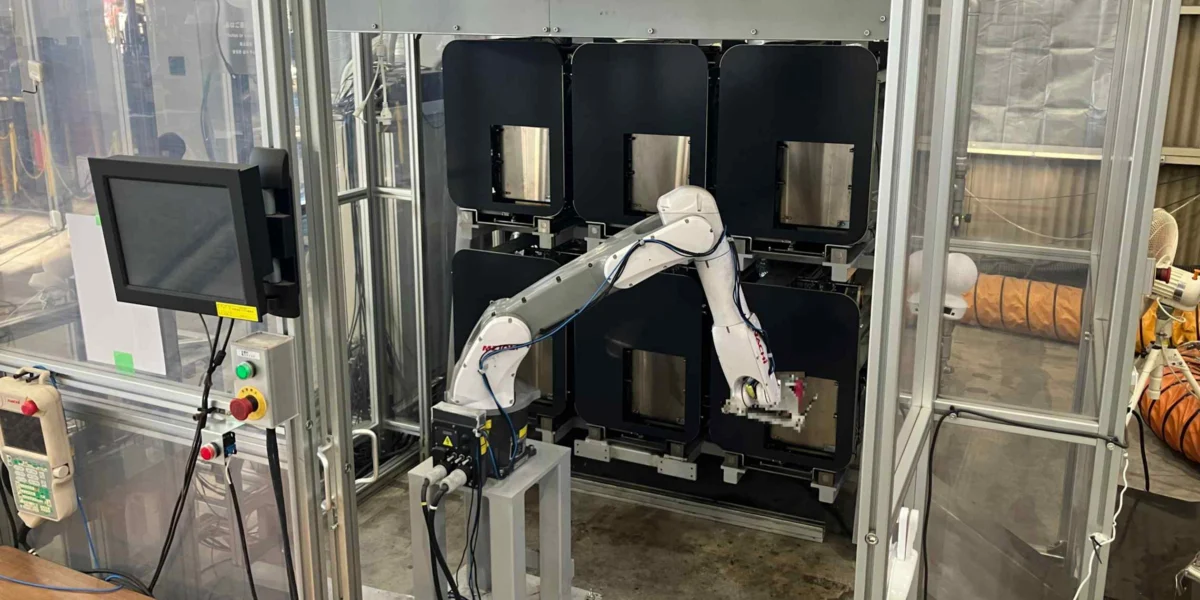
The image accompanying this report, depicting Sun Metalon’s machine in operation, illustrates a key component of this process: the heating of metal scrap. The machine appears robust and designed for industrial application, suggesting it is already moving beyond laboratory-scale prototypes. The caption indicates the machine’s function – heating scrap to remove impurities and produce briquettes – directly aligns with the company’s stated mission.
Timeline and Future Prospects
The journey from concept to mass production is a complex one for any technology, especially one destined for industrial-scale deployment. Sun Metalon, as a U.S. startup, has likely been engaged in research and development, pilot testing, and securing initial intellectual property. This investment marks a crucial inflection point, enabling the transition to commercialization.
The timeline for mass production will depend on several factors, including the finalization of engineering designs for larger-scale units, securing manufacturing partners, and establishing robust supply chains for components. However, with the backing of a government-supported agency, the development process is likely to be expedited. Industry analysts suggest that if Sun Metalon can achieve its mass production goals within the next three to five years, its technology could begin to significantly influence the global steel market’s decarbonization trajectory.
The broader implications of this investment extend beyond just steel. The principles of advanced scrap purification could potentially be adapted for recycling other critical metals, such as aluminum and copper, which are also vital for a green economy but have their own significant environmental challenges in primary extraction.
Potential Reactions and Industry Impact
The news of this investment is likely to be met with keen interest from various stakeholders:
- Steel Manufacturers: Companies worldwide are under increasing pressure to reduce their carbon footprint. The availability of high-quality, reliably purified recycled steel feedstock could be a game-changer, enabling them to increase their use of scrap and meet sustainability targets more effectively. This could also lead to cost efficiencies if the purified briquettes are more economical than virgin materials in the long run.
- Environmental Organizations: This development offers a tangible solution to a major industrial polluter. Environmental groups will likely view this investment as a positive step towards a more circular economy and a significant reduction in industrial carbon emissions.
- Competitors: Other companies involved in metal recycling technologies or equipment manufacturing will be closely watching Sun Metalon’s progress. This investment could spur further innovation and competition in the sector.
- Governments: The Japanese government’s backing highlights a strategic approach to industrial policy, focusing on enabling critical green technologies. Other nations with significant industrial bases may seek to emulate this model, fostering domestic innovation in decarbonization.
The investment by the Japanese decarbonization agency is more than just a financial transaction; it’s a strategic commitment to a greener future for heavy industry. By enabling Sun Metalon to scale its innovative metal recycling technology, Japan is positioning itself as a leader in driving the global transition towards a more sustainable and circular economy, with profound implications for climate change mitigation and resource management. The success of this venture could pave the way for similar investments in other critical decarbonization technologies, accelerating the pace of global environmental progress.
