

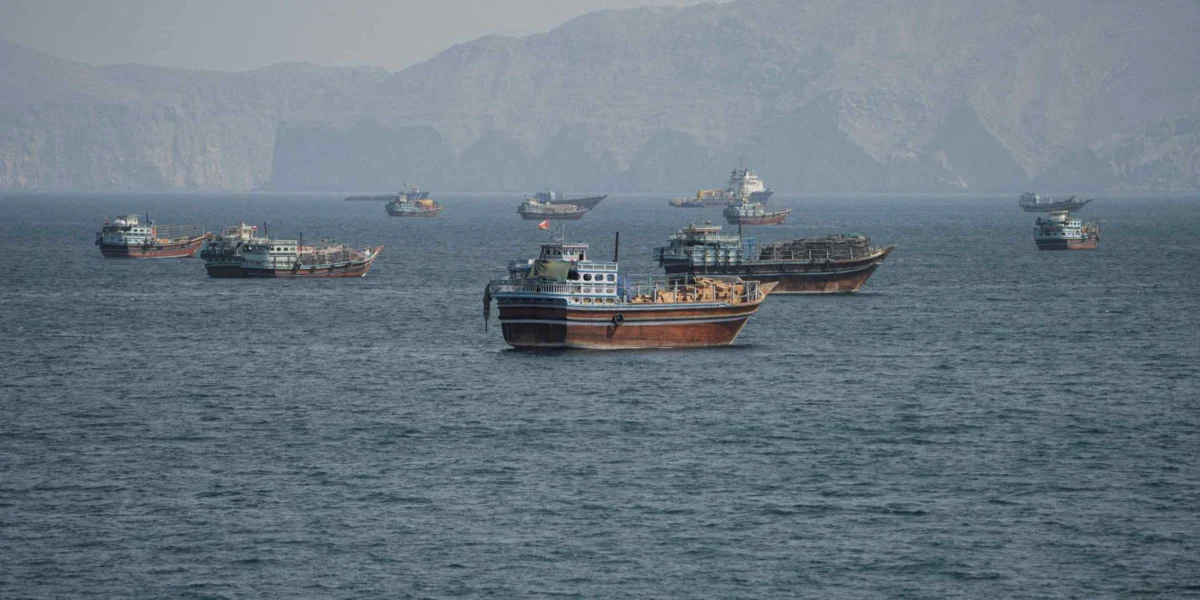
Global crude oil exports have reached an unprecedented peak, defying the prolonged blockade of the strategically vital Strait of Hormuz. This remarkable surge in outbound shipments is primarily attributed to the successful implementation of alternative delivery routes and a significant uptick in production and export capacity from North and Latin American nations. The resilience of the global oil market in the face of such a critical chokepoint underscores the adaptability of supply chains and the strategic diversification efforts undertaken by major energy producers.
The Unfolding Crisis in the Strait of Hormuz
The Strait of Hormuz, a narrow waterway connecting the Persian Gulf to the open ocean, has been a focal point of geopolitical tension for decades. This critical maritime artery handles approximately 30 percent of the world’s seaborne oil trade, making any disruption to its flow a matter of global economic concern. The current blockade, which commenced in late September 2026 following escalating regional disputes, has effectively severed a primary conduit for oil emanating from major Middle Eastern producers, including Saudi Arabia, Iran, Iraq, and the United Arab Emirates. The precise nature and instigators of the blockade have been subject to intense international scrutiny and diplomatic maneuvering, with various actors implicated in the disruption.
The initial impact of the blockade was a sharp spike in global oil prices, as markets reacted to the immediate threat of supply shortages. Brent crude futures surged by over 15 percent in the first week of the disruption, reaching levels not seen in nearly two years. This price volatility rippled through economies worldwide, impacting transportation costs, manufacturing, and consumer spending. However, the subsequent data revealing record export volumes paints a complex picture, indicating that the market has, to a significant degree, absorbed the shock and found new pathways for oil to reach its destinations.
A Chronology of Disruption and Adaptation
The timeline leading to the current export surge is marked by a series of escalating events and strategic responses.
Early to Mid-September 2026: Increased military posturing and heightened rhetoric between regional powers, coupled with a series of naval incidents in the Persian Gulf, signaled a growing potential for conflict. International observers noted a significant build-up of naval assets and the deployment of advanced missile systems in strategically sensitive areas.
Late September 2026: The Strait of Hormuz experienced a series of coordinated disruptions, initially reported as accidental collisions and navigational hazards. Within days, these incidents escalated into what was widely confirmed as a deliberate blockade, involving naval mines and the obstruction of key shipping lanes by unidentified vessels. The exact duration and scale of the initial aggressive actions remain subject to ongoing investigations, but the effect was immediate and severe.
October 2026: Global oil prices soared, and fears of a prolonged supply crisis gripped international markets. Major oil-consuming nations convened emergency meetings to discuss potential responses, including the release of strategic petroleum reserves and diplomatic interventions. Shipping companies began rerouting vessels, incurring significant additional costs and extending delivery times.
November 2026: The first signs of adaptation emerged. Oil producers outside the immediate blockade zone began to ramp up production and export capacity. Nations in North and Latin America, with existing infrastructure and significant reserves, became key players in filling the supply gap. Reports from the U.S. Energy Information Administration (EIA) indicated a substantial increase in crude oil output from shale formations in Texas and North Dakota, as well as renewed activity in offshore fields in the Gulf of Mexico. Similarly, Venezuela, despite its internal challenges, saw a modest increase in its export capabilities, and Brazil’s pre-salt discoveries offered a growing alternative.
December 2026 – Present (November 2026 data): Official trade statistics began to reflect the success of these adaptive measures. Global crude oil exports, measured in millions of barrels per day, surpassed previous records set in early 2025. This paradoxical outcome – record exports despite a major chokepoint being closed – highlights the sophisticated logistics and market elasticity that have developed within the global energy sector.
Supporting Data: The Rise of Alternative Arteries
Analysis of recent trade data provides concrete evidence of this shift. According to preliminary figures from leading maritime analytics firms and national energy agencies, global crude oil exports in November 2026 have reached an estimated 95 million barrels per day, a 7% increase compared to the monthly average in the first half of 2026. This figure eclipses the previous record of 93.5 million barrels per day observed in April 2025.
The contribution of North and Latin American producers to this record output is particularly noteworthy. Exports from the United States have seen a sustained increase, averaging 5.8 million barrels per day in November, up from 4.9 million barrels per day prior to the blockade. Canada’s oil sands output has also been redirected, with increased pipeline capacity and alternative shipping routes from its Pacific coast contributing an additional 400,000 barrels per day to global markets.
Latin America has also played a crucial role. Venezuela, despite ongoing sanctions, has managed to increase its crude exports to approximately 800,000 barrels per day, primarily to Asian markets utilizing longer, non-traditional routes. Brazil’s offshore production has added a steady 1.2 million barrels per day, with increased tanker traffic from its Atlantic ports.
While Middle Eastern producers directly impacted by the blockade have seen their seaborne exports drastically reduced, some have sought to mitigate losses through increased overland pipeline exports to neighboring countries or by diverting limited available tanker capacity through less direct and more costly routes, such as the Suez Canal or around the Cape of Good Hope. However, the sheer volume of oil that once passed through Hormuz cannot be fully compensated for by these alternative, less efficient, or more geographically constrained methods.
Official Responses and Diplomatic Maneuvers
The international community has responded to the blockade with a multi-pronged approach, balancing diplomatic pressure with strategic economic adjustments.
United Nations Security Council: Emergency sessions have been convened, with the UN Secretary-General calling for an immediate de-escalation and the unimpeded passage of commercial vessels. While resolutions condemning the blockade and demanding its cessation have been proposed, consensus among the permanent members has been difficult to achieve due to differing geopolitical interests.
Major Consuming Nations: The United States, European Union, and key Asian economies have engaged in intense diplomatic efforts, urging all parties to adhere to international maritime law. They have also coordinated the release of strategic petroleum reserves, providing a temporary buffer against price shocks. The International Energy Agency (IEA) has played a critical role in monitoring the situation and facilitating information sharing among member countries.
Regional Powers: Neighboring countries not directly involved in the blockade have expressed grave concerns over the economic and security implications. Several nations have offered to mediate discussions, while others have increased their own security measures to protect their maritime interests.
Naval Presence: A multinational naval task force, operating under the auspices of a coalition of willing nations, has been deployed to patrol international waters and deter further aggression. However, direct intervention within the blocked strait has been deemed too risky due to the potential for escalation.
Broader Impact and Implications
The record-breaking export figures, while seemingly a testament to market resilience, mask a more complex reality with significant long-term implications.
Increased Shipping Costs and Transit Times: The rerouting of oil tankers has led to substantially higher shipping costs. Voyages that once took days now take weeks, increasing operational expenses for oil companies and ultimately contributing to higher energy prices for consumers. This also places a strain on global shipping capacity, potentially leading to bottlenecks in other sectors.
Geopolitical Realignment: The crisis has accelerated a shift in global energy reliance away from the Middle East. Nations that have successfully ramped up production and export capabilities are solidifying their positions as key energy suppliers, potentially altering long-standing geopolitical alliances and power dynamics. The increased importance of North and Latin American energy sources could lead to greater economic and political influence for these regions.
Infrastructure Investment: The demonstrated vulnerability of critical chokepoints like the Strait of Hormuz is likely to spur significant investment in alternative energy infrastructure, including new pipelines, expanded port facilities, and the development of non-traditional shipping routes. This could also accelerate the development of renewable energy sources as a means of reducing reliance on fossil fuels vulnerable to geopolitical disruptions.
Economic Strain on Impacted Regions: While global exports may be at a record high, the producers directly affected by the blockade are experiencing severe economic repercussions. Reduced export revenues can destabilize economies, impact social programs, and potentially lead to further regional instability.
Environmental Concerns: Longer shipping routes and increased vessel activity can have heightened environmental impacts, including a greater risk of oil spills and increased greenhouse gas emissions from longer voyages. The reliance on fossil fuels, even with diversified sources, remains a significant environmental challenge.
The current situation, therefore, represents a delicate balance. The global oil market has demonstrated remarkable adaptability, circumventing a critical chokepoint and maintaining supply levels. However, this resilience comes at a cost, marked by increased logistical complexity, higher prices, and a reshaping of global energy geopolitics. The long-term resolution of the Strait of Hormuz blockade and its ongoing implications will continue to be a defining issue for the global economy and international relations in the years to come. The current record export figures are not necessarily a sign of a problem solved, but rather a testament to the intricate and often costly mechanisms by which the world continues to fuel itself.
