

Better Home & Finance, the digital-first mortgage lender that recently transitioned to a public entity, has released its sixth weekly management scorecard, signaling a continued push toward profitability under its "Better 2.0" strategic framework. The report, released Tuesday, highlights a significant increase in annualized cost savings, reaching $38.2 million, and a strategic expansion of its wholesale mortgage platform. As the company navigates a challenging high-interest-rate environment, these metrics serve as a bellwether for its broader effort to achieve adjusted EBITDA breakeven.
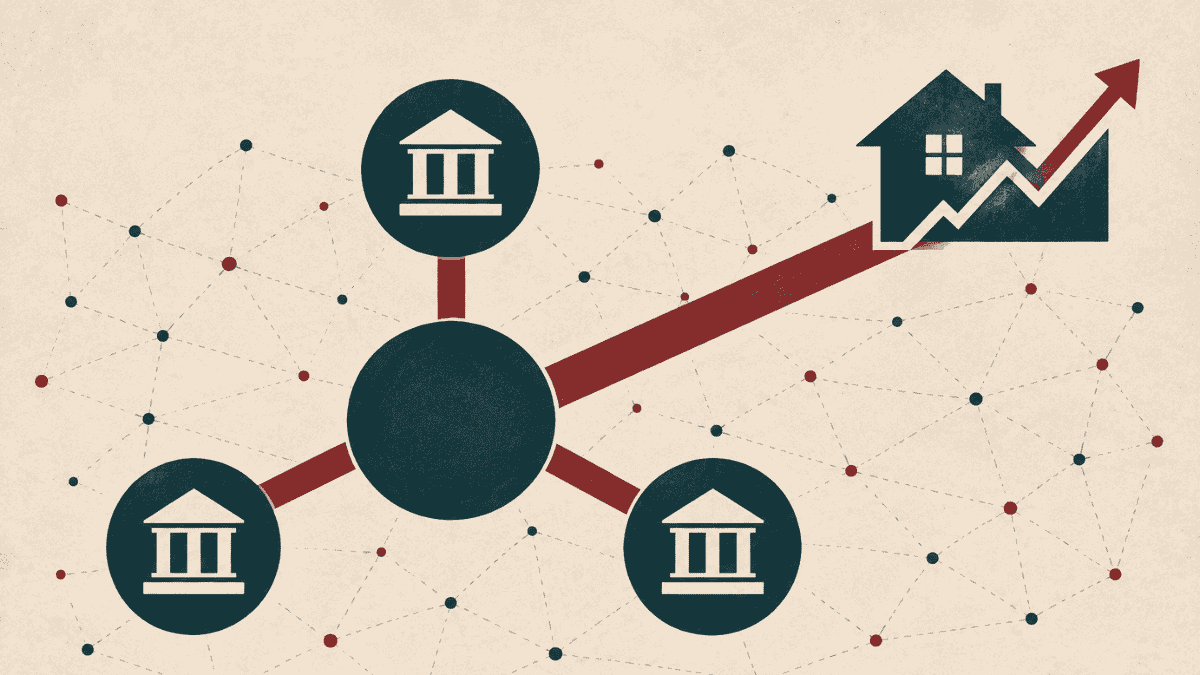
The latest update reveals that Better has successfully integrated three additional mortgage brokerages into its wholesale ecosystem, bringing the total to 46 brokerages and 1,801 individual brokers. This network currently represents approximately $517 million in trailing 12-month origination volume. By shifting its focus toward a wholesale model, the company aims to leverage its proprietary technology, known as "Tinman," to provide third-party brokers with the same automated underwriting speed that previously powered its direct-to-consumer business.
Strategic Cost Realignment and Efficiency Gains
A cornerstone of the Better 2.0 plan is a rigorous reduction in operating expenses. In the most recent weekly cycle, the company identified and implemented an additional $4.1 million in annualized savings. This brings the total captured savings to $38.2 million, representing roughly 60% of the company’s ultimate target of $64.2 million in annual cost reductions.
The composition of these savings reflects a dual-track approach: operational refinement and marketing optimization. Approximately $1.1 million of the new savings were derived from mortgage operations efficiencies—largely through the automation of manual tasks and the streamlining of the loan processing pipeline. The remaining $3.0 million came from a reduction in marketing expenditures. This shift is particularly notable as Better moves away from the high-cost customer acquisition models typical of direct-to-consumer lending, opting instead for the relationship-based volume of the wholesale channel.
Management indicated that the momentum is expected to continue in the short term. Between November 17 and November 24, the company anticipates generating another $940,000 in annualized savings through ongoing efficiency initiatives. These incremental gains are part of a broader mandate to lean out the organization following several years of volatility and workforce fluctuations.
The Pivot to Wholesale and AI-Driven HELOCs
As traditional mortgage refinancing volume remains muted due to elevated Federal Reserve interest rates, Better Home & Finance has pivoted its product strategy toward home equity. The company reported significant progress in its wholesale Home Equity Line of Credit (HELOC) business, a product category that has seen increased demand as homeowners look to tap into record levels of home equity without touching their low-rate primary mortgages.
Better’s AI-powered HELOC platform recently completed customer testing with a major existing partner. Vishal Garg, the company’s founder and head of product, platform, and innovation, noted that the results have been immediate. Within the first 16 days of November, brokerage locks for the HELOC product had already doubled the total volume recorded in the entire month of October.
"Brokers are looking for a faster, simpler way to help their clients tap home equity, and they’re finding it on our platform," Garg stated in the report. The appeal of the platform lies in its "one-day" capability, where the company utilizes automated valuation models (AVMs) and instant data verification to slash the traditional multi-week HELOC approval process down to a matter of hours or days.
Expansion of the Partnership Ecosystem
Beyond its core lending products, Better is aggressively pursuing a "platform-as-a-service" strategy by embedding its technology into various real estate and financial niches. The company confirmed it is currently developing products tied to previously announced partnerships with a rental credit management platform and a home inspection company. These integrations are designed to create a "sticky" ecosystem where Better’s financing tools are present at every stage of the homeownership lifecycle.
Furthermore, the company is in advanced discussions with a prospective lead generation partner. Terms for this agreement are expected to be finalized within the coming weeks. Management also disclosed that it is pursuing three other "major" partnerships, which could significantly expand the company’s reach into new borrower demographics without requiring a corresponding increase in internal marketing spend.
Capital Markets and the Birmingham Bank Divestiture
The scorecard also provided updates on the company’s balance sheet management and capital allocation strategies. Better has launched an options strategy within its existing share repurchase program, allowing the company to purchase call options and sell put options on its Class A stock. This sophisticated financial maneuver is often used by companies to signal confidence in their underlying value while managing the costs associated with buying back shares.
Simultaneously, the company is moving forward with the sale of Birmingham Bank, its subsidiary in the United Kingdom. This divestiture is a key component of Better’s plan to simplify its corporate structure and focus exclusively on the North American mortgage market. The company reported that it has received five term sheets for approximately $50 million in debt financing tied to the planned sale. These funds are expected to provide a liquidity bridge as the company works toward its profitability targets.
Chronology of the Better 2.0 Transformation
To understand the significance of the current scorecard, it is essential to view it within the context of the company’s recent history. Better Home & Finance has undergone a tumultuous transition over the last three years:
- 2021-2022: The company experienced rapid growth during the pandemic-era refinancing boom but faced significant public relations challenges and multiple rounds of layoffs as interest rates began to rise and the "refi" market evaporated.
- August 2023: Better went public via a merger with Aurora Acquisition Corp, a Special Purpose Acquisition Company (SPAC). The merger provided a much-needed infusion of capital but also subjected the company to the rigors of public market scrutiny during a period of historic mortgage industry contraction.
- Late 2023: The "Better 2.0" plan was launched. This strategy focused on shifting from a direct lender to a technology platform, emphasizing wholesale channels, HELOCs, and third-party partnerships.
- October 2024: The company began publishing weekly scorecards to provide transparency to shareholders and demonstrate a consistent cadence of cost-cutting and revenue growth.
Industry Context and Market Analysis
The mortgage industry at large is currently grappling with a "higher-for-longer" interest rate environment that has pushed many traditional lenders to the brink. According to the Mortgage Bankers Association (MBA), loan application volume remains near multi-decade lows. In this climate, the survival of non-bank lenders depends on their ability to diversify income streams and reduce the "cost to originate" a loan.
Better’s focus on the wholesale channel places it in direct competition with industry giants like United Wholesale Mortgage (UWM) and Rocket Pro TPO. While Better’s current volume of $517 million is a fraction of the tens of billions handled by market leaders, its "Better 2.0" strategy bets on the idea that a superior, AI-driven user experience can capture market share from brokers who are tired of legacy systems.
The shift toward HELOCs is also a calculated response to current market realities. With the majority of American homeowners locked into primary mortgage rates below 4%, the traditional "rate-and-term" refinance market is virtually non-existent. However, home equity has surged to an aggregate of nearly $30 trillion in the U.S. By automating the HELOC process, Better is positioning itself to capitalize on the only segment of the mortgage market that remains highly active.
Implications for Shareholders and the Path Ahead
The commitment to publishing weekly scorecards until the company reaches adjusted EBITDA breakeven is an unusual level of transparency for a public company. It suggests that management recognizes the need to rebuild investor trust following a volatile post-SPAC performance.
The implications of the latest data are twofold. First, the steady march toward the $64.2 million savings target indicates that the company is successfully trimming the "bloat" that characterized many fintech firms during the era of easy money. Second, the doubling of HELOC volume suggests that the company’s technology-first approach is finding a "product-market fit" in the wholesale space.
However, challenges remain. The company must still navigate the complexities of the Birmingham Bank sale and ensure that the $50 million in debt financing does not become a burden if the sale timeline shifts. Furthermore, as a wholesale lender, Better is now reliant on the loyalty of independent brokers, a group known for shifting their business to whichever lender offers the best combination of price, speed, and ease of use.
As Better Home & Finance moves into the final weeks of the year, the focus will remain on maintaining the trajectory of the Better 2.0 plan. For an industry watching closely, the weekly scorecards offer a rare, real-time look at a fintech company attempting to re-engineer itself in the midst of a generational market downturn. Whether these incremental gains will be enough to reach the elusive goal of profitability remains the central question for the company’s leadership and its stakeholders.
