

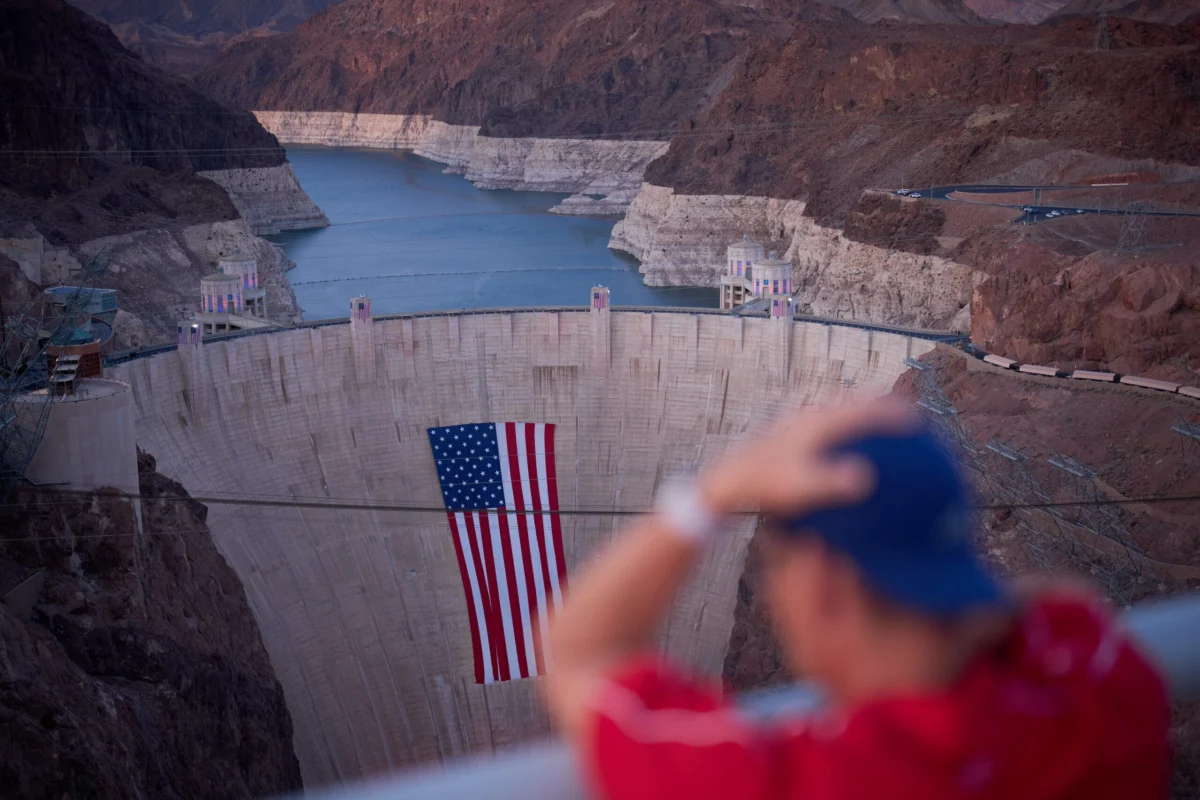
The Southwestern United States has reached a critical turning point in its energy landscape as prolonged drought conditions throughout the Colorado River Basin have driven hydropower production to record lows. According to the latest data released by the U.S. Energy Information Administration (EIA), the region’s ability to generate electricity from its massive hydroelectric infrastructure has been severely compromised by a multi-year trend of declining water levels. This downturn affects a broad geographic area, including Arizona, New Mexico, and significant portions of Nevada and California, raising urgent questions about grid reliability and the long-term viability of water-dependent energy sources in an increasingly arid West.
The EIA’s recent analysis, based on the Form EIA-923 survey, highlights a precipitous drop in generation between April and August 2026. During this five-month window, hydropower output was 19% lower than the same period in 2025 and a staggering 28% lower than the 10-year historical average. This decline is not merely a seasonal fluctuation but a reflection of the systemic "aridification" of the Colorado River system, which serves as the lifeblood for seven Western states. As reservoir elevations at the nation’s two largest man-made lakes—Lake Powell and Lake Mead—hover near historic minimums, the mechanical reality of generating power is becoming increasingly difficult.
The Crisis at Glen Canyon and Hoover Dams
The operational integrity of the Southwestern power grid is heavily dependent on the Glen Canyon Dam, which forms Lake Powell, and the Hoover Dam, which forms Lake Mead. Both facilities are currently facing unprecedented hydrological challenges. Hydropower generation relies on "head," or the vertical distance the water falls to spin the turbines. As water levels drop, the pressure exerted on the turbines decreases, leading to a loss of efficiency and, eventually, a total cessation of power production.
At Lake Powell, the "minimum power pool"—the elevation below which the Glen Canyon Dam can no longer generate electricity—is approximately 3,490 feet above sea level. By the end of September 2026, the water elevation had dropped to 3,518 feet. While this remains above the cutoff, it represents a precarious margin of less than 1% above the minimum power pool. The situation at the Hoover Dam is similarly dire. Lake Mead requires a minimum elevation of 950 feet to maintain power generation; at the close of September, it sat at 1,038 feet, roughly 9% above its functional limit.
The proximity to these "dead pool" or "minimum power pool" levels has forced federal and state regulators into a defensive posture. For decades, these dams provided a steady, carbon-free "baseload" of electricity that anchored the regional grid. Today, they are increasingly viewed as vulnerable assets.
Historical Context and the Colorado River Compact
To understand the current crisis, one must look back at the century-old framework governing the river. The 1922 Colorado River Compact divided the river’s water among the Upper Basin states (Colorado, New Mexico, Utah, and Wyoming) and the Lower Basin states (Arizona, California, and Nevada). However, the compact was drafted during an unusually wet period in the river’s history, leading to an over-allocation of water rights that the river can no longer sustain under modern climatic conditions.
For the past 24 years, the Southwest has been gripped by what scientists call a "megadrought," the driest period in the region in over 1,200 years. This has resulted in a steady depletion of the "savings accounts" provided by Lakes Mead and Powell. In 2011, hydropower accounted for approximately 8% of the Southwest’s total energy generation mix. By 2026, that share has dwindled to just 4%. This 50% reduction in the relative contribution of hydropower underscores the shifting reality for utilities that once relied on the Colorado River as a cheap and reliable source of "spinning reserve" and peaking power.
Mitigation Efforts and Federal Intervention
The U.S. Bureau of Reclamation, which oversees the management of these dams, has been forced to take drastic measures to prevent a total collapse of the hydropower system. One such measure involved the strategic release of water from the Flaming Gorge reservoir, located in the Upper Colorado River Basin. This emergency release was designed to bolster Lake Powell’s elevation, ensuring it stayed above the 3,490-foot threshold necessary to keep the Glen Canyon turbines turning.

Furthermore, the Department of the Interior has mandated significant reductions in water consumption. Over the next two years, California, Arizona, and Nevada are required to collectively reduce their water usage by 1.25 million acre-feet annually. While these cuts are primarily aimed at ensuring municipal and agricultural water security, they have a direct and complicating impact on energy.
Reduced water releases from Lake Powell are necessary to preserve its elevation, but these smaller releases mean less water flows downstream into Lake Mead. This creates a zero-sum game: saving the power generation capabilities of the Glen Canyon Dam directly threatens the generation capacity of the Hoover Dam. This interdependency highlights the fragility of the "cascade" system of dams along the Colorado River.
Economic and Grid Implications
The decline in hydropower is not just an environmental or hydrological issue; it is an economic one. Hydropower is traditionally one of the most cost-effective forms of electricity. As its availability wanes, utilities in the Southwest must turn to more expensive alternatives to meet demand, particularly during the blistering summer heatwaves when air conditioning use peaks.
When hydropower production drops, the gap is often filled by natural gas-fired power plants or by purchasing electricity from the wholesale market. This transition often leads to higher electricity bills for consumers and can increase the carbon intensity of the regional grid, complicating the clean energy goals of states like California and New Mexico. Furthermore, hydropower is prized for its "black start" capability—the ability to start generating power without an outside supply of electricity—and its ability to ramp up or down almost instantly. This flexibility is crucial for balancing the intermittency of solar and wind power. As the "battery" of the Southwest (the dams) loses its charge, grid operators must find new ways to maintain frequency and voltage stability.
A Chronology of Declining Generation
The trajectory of this decline has been documented through successive federal reports and survey data:
- 2011: Southwestern hydropower reaches a modern peak, providing 8% of the region’s total electricity.
- 2020-2022: Successive years of below-average snowpack in the Rocky Mountains lead to a rapid drawdown of Lake Powell and Lake Mead.
- 2025: Hydropower generation shows signs of stabilization but remains well below the 10-year average.
- April–August 2026: Generation hits a record low, dropping 19% year-over-year.
- September 2026: Lake Powell reaches just 1% above its minimum power pool, triggering emergency federal water management protocols.
- November 2026: The EIA’s Short-Term Energy Outlook (STEO) projects a total annual generation of 6.13 billion kilowatthours (BkWh) for the year, a 24% drop from the 10-year average.
Projections and the Role of El Niño
Looking ahead to 2027, the EIA’s STEO provides a somber forecast. Hydropower generation in the Southwest is expected to total 6.1 BkWh, a further 0.5% decrease from the record lows of 2026. While meteorologists have noted the presence of an El Niño weather pattern, which typically brings increased precipitation to the southern tier of the U.S., experts caution against over-optimism.
"One good water year likely won’t eliminate the effects of multiple years of water scarcity," the EIA noted in its report. The "soil moisture deficit" in the Colorado River Basin is so severe that much of the initial snowmelt is absorbed by the parched earth before it ever reaches the river’s tributaries. Consequently, even a winter with average or slightly above-average snowfall may result in below-average runoff into the reservoirs.
Conclusion: The New Normal for Western Energy
The record-low hydropower production of 2026 serves as a stark warning for the future of the American West. The era of abundant, reliable, and cheap hydroelectricity from the Colorado River appears to be sunsetting, replaced by an era of scarcity and hard choices. As states navigate this transition, the focus is shifting toward diversifying the energy portfolio with increased battery storage, geothermal energy, and enhanced demand-response programs to compensate for the loss of the "mighty Colorado" as a power source.
The administrative decisions made by the Department of the Interior and the Bureau of Reclamation in the coming months will be pivotal. Balancing the needs of agriculture, municipal drinking water, and grid stability is a delicate act that leaves little room for error. For the millions of residents in the Southwest, the record lows of 2026 are not just a statistic in an EIA report; they represent a fundamental shift in how the region must power its future in the face of a changing climate.
