

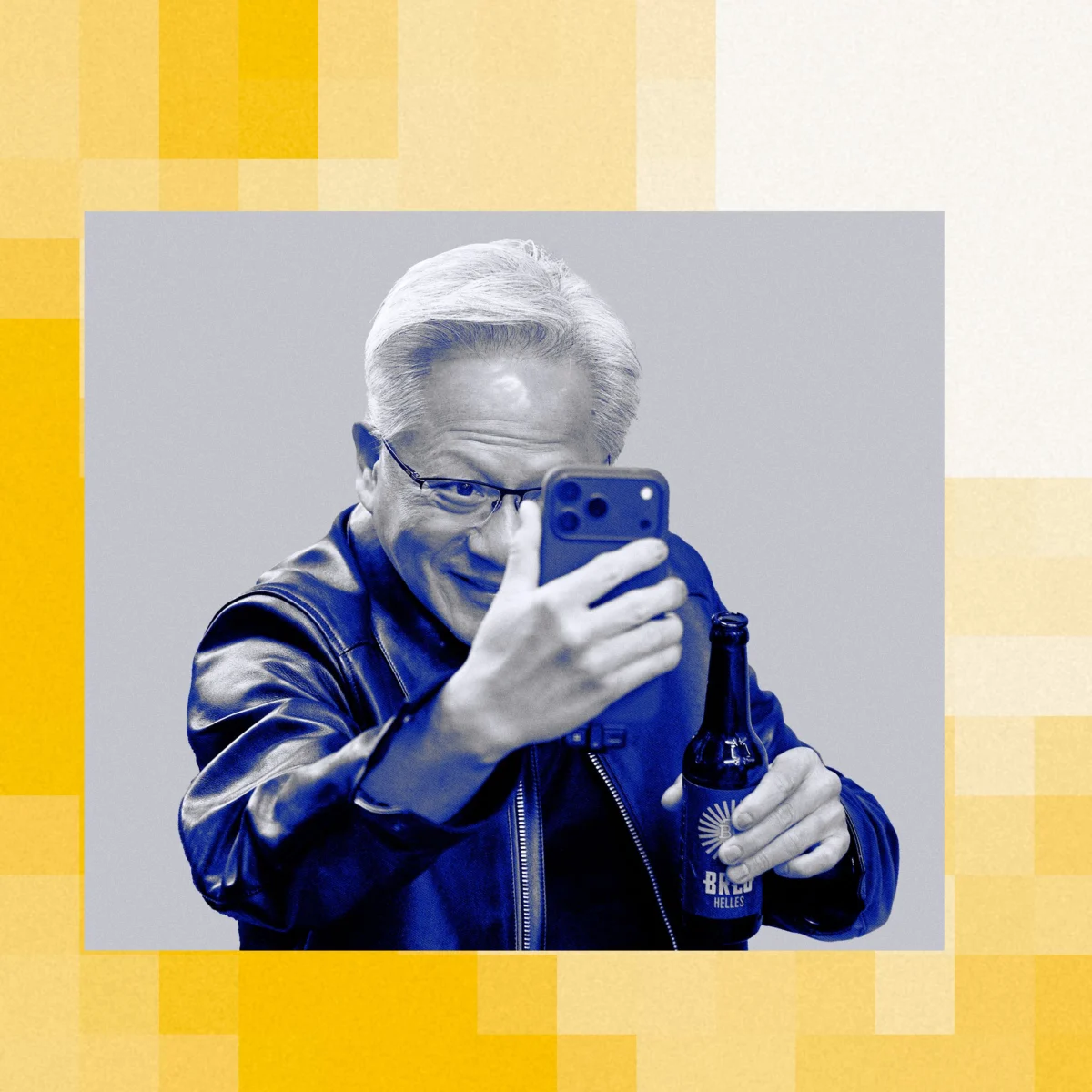
July 2024 arrived with a palpable energy surrounding Jensen Huang, the charismatic CEO of Nvidia. His presence at SIGGRAPH, the premier annual conference for computer graphics professionals and academics, was anticipated with considerable interest. This was not the first encounter for this journalist with Huang; an extensive interview earlier that year for WIRED magazine had apparently yielded a productive dialogue, leading to an invitation for a follow-up at the prestigious event. The prospect of once again engaging with the leader of the company that has become a cornerstone of the modern technological landscape was an opportunity eagerly embraced.
However, the preparation for this subsequent interview took an unexpected and, in retrospect, peculiar turn. The initial call, typically a forum for PR representatives to subtly guide journalists toward pre-approved topics and away from potentially uncomfortable inquiries, was led by a young woman who introduced herself as Madison Huang, Jensen Huang’s daughter. Her command of the discussion was evident, and her intelligence undeniable. She outlined the specific slides Jensen Huang intended to present during his on-stage appearance and suggested strategic moments for the interviewer to prompt him to elaborate on these visual aids.
This approach immediately raised a significant question: what kind of interview was this intended to be? The notion of "slides" and "teeing up" the CEO suggested a departure from a standard journalistic Q&A, leaning more towards a carefully orchestrated presentation. Concerns were voiced to both editorial superiors and Nvidia representatives. The consensus was to proceed with the planned interview, which would include questions on pressing issues such as the environmental impact of data centers, while acknowledging Huang’s intention to reference his slides. The subsequent interview, which is publicly available on YouTube, did not unfold with seamless predictability. The experience left a lasting impression, with former and current Nvidia employees occasionally remarking on the interviewer’s handling of the situation, a testament to the challenging dynamics of the exchange. Huang, by many accounts, maintained a dominant posture, parrying some questions and then, immediately after the session concluded, engaging in an impromptu Q&A with a visibly more receptive audience. The transition was swift, with Mark Zuckerberg, CEO of Meta, taking the stage shortly thereafter for a seemingly congenial fireside chat.
While adversarial interactions are not uncommon in the course of long-term journalistic careers, this encounter in Denver served as a stark illustration of Jensen Huang’s profound desire to meticulously control the narrative surrounding Nvidia. It was not merely a preference; it was an expectation. And for a significant period, this control was largely maintained. The events of the past week, however, suggest a potential unraveling of this carefully constructed narrative.
The art of storytelling has long been identified as a fundamental element of Jensen Huang’s success. He has cultivated an image far beyond that of a typical engineer who stumbled upon a market-fitting innovation. Huang himself has frequently recounted a narrative of an immigrant founder, an underdog who pursued and married his college sweetheart, a tenacious startup leader who once subsisted on meals at Denny’s, and a visionary driven by relentless work ethic and the constant awareness of competitive pressures. He has also presented himself as a devoted parent, even bringing his children into the corporate fold, and a man so deeply connected to Nvidia that he bears a tattoo of its abstract logo.
The ascent of Nvidia to become the most valuable publicly traded company in history is an undeniable factual achievement, a testament to its technological prowess and market dominance. Yet, as recent developments indicate, this remarkable success story is beginning to acquire the undertones of a modern Greek tragedy.
The importance of narrative was explicitly articulated by Huang himself during an in-person meeting in January 2024. "Strategy setting is storytelling. Culture building is storytelling," he stated, drawing a parallel to his admiration for Shantanu Narayen, the CEO of Adobe, who had expressed a desire to be a journalist for his love of storytelling. Huang emphasized that Nvidia’s initial traction was not secured through a conventional pitch deck but through the compelling narrative he presented.
Even at that juncture, however, the company was navigating the complexities of geopolitical tensions, particularly the US-China AI rivalry, and the scrutiny of regulatory bodies. Following Donald Trump’s re-election in 2024, Huang actively engaged in lobbying efforts, advocating for the relaxation of export controls to facilitate chip sales to China, a move that underscored the delicate balance between technological advancement and international policy.
A recurring theme in the "Huang lore" is Nvidia’s purportedly "flat" organizational structure, characterized by a small cadre of top executives reporting directly to him. While specific numbers have varied, with some reports citing dozens and insiders suggesting a core group closer to thirty-five, the stated advantage of this structure was its ability to foster rapid adaptation in a fast-moving technological landscape. Huang was also known for his deep, almost granular, involvement in all facets of the business. He reportedly participated in every significant meeting, possessed an awareness of every operational detail, and remained intimately involved in decisions concerning sourcing, supply chains, and chip allocation.
It is precisely this intensely centralized model of leadership and the carefully crafted Nvidia narrative that may now be contributing to a profoundly disappointing denouement. As articulated by a former employee, the assertion of Huang’s comprehensive knowledge of every business element appears to conflict with any potential claims of ignorance regarding the ultimate destination or application of the company’s chips. These apparent lapses in judgment have precipitated his resignation from the very company he was instrumental in building, casting a shadow over the mythos of its prescient founder. This is undoubtedly a narrative conclusion that Jensen Huang, if still in command of the story, would not have chosen.
The SIGGRAPH Incident: A Microcosm of Controlled Messaging
The SIGGRAPH event in July 2024, while not the sole catalyst, served as a vivid early indicator of the tightening grip Jensen Huang sought to exert over public perception. The shift from a traditional interview format to one incorporating pre-determined slides and guided questioning by his daughter signaled a strategic move to manage the narrative flow. This approach, while not entirely unprecedented in corporate communications, raised eyebrows among seasoned journalists accustomed to more open-ended exchanges. The subsequent interview’s reported difficulties, with Huang evading questions and a swift pivot to a more controlled Q&A, highlighted the tension between journalistic inquiry and corporate messaging objectives. The contrast with Mark Zuckerberg’s subsequent "lovey-dovey fireside chat" further underscored the perceived attempt to curate a specific image and message at a prominent industry gathering.
A Foundation Built on Storytelling and Centralized Control
Jensen Huang’s rise to prominence is inextricably linked to his adeptness at crafting and disseminating a compelling corporate narrative. From his early days as an immigrant entrepreneur facing immense odds to his current status as the leader of a global technology behemoth, Huang has consistently leveraged storytelling to shape perceptions. He has articulated a vision of Nvidia not merely as a hardware manufacturer but as an enabler of transformative technologies, from gaming to artificial intelligence. This narrative has been crucial in attracting talent, securing investment, and fostering a dedicated employee base.
Complementing this narrative prowess is a deeply centralized leadership style. Huang’s reported hands-on approach, involving himself in myriad operational details, has been presented as a key factor in Nvidia’s agility and success. This level of control, while potentially driving efficiency and alignment, also concentrates decision-making power and creates a singular point of accountability. The very structure that enabled rapid innovation and market responsiveness may also have created blind spots or fostered an environment where potential issues were not adequately surfaced or addressed at the highest levels.
Geopolitical Undercurrents and Regulatory Pressures
Nvidia’s position at the forefront of AI development has placed it squarely in the crosshairs of international geopolitical rivalries, particularly the escalating competition between the United States and China. The company’s advanced semiconductor technology is considered a critical national security asset, leading to stringent export controls and intense regulatory scrutiny. Huang’s previous lobbying efforts to ease these restrictions demonstrate the delicate balancing act required to navigate these complex international dynamics. The company’s reliance on global markets and supply chains, coupled with its pivotal role in AI advancement, subjects it to constant pressure from governments and international bodies seeking to manage the implications of this powerful technology.
The Unraveling Narrative: Implications and Future Outlook
The recent events, culminating in Jensen Huang’s resignation, signal a significant inflection point for Nvidia and its leadership. The meticulously crafted narrative of an infallible, prescient founder is now being re-examined in light of the company’s current challenges. The implications are far-reaching:
- Investor Confidence: Shareholders will be scrutinizing the company’s leadership transition and its ability to maintain its trajectory of innovation and profitability under new guidance. Any perceived instability or lack of clear strategic direction could impact stock valuation.
- Talent Retention and Acquisition: The cult of personality surrounding Huang may have been a powerful magnet for top talent. A leadership transition, especially one triggered by controversial circumstances, could affect the company’s ability to attract and retain the brightest minds in the industry.
- Regulatory Scrutiny: The circumstances leading to Huang’s departure will likely intensify existing regulatory scrutiny. Investigations into past practices and compliance will be closely watched, potentially leading to further penalties or restrictions.
- Industry Perception: Nvidia’s brand and reputation within the tech industry and beyond are undergoing a critical reassessment. The company’s future success will depend on its ability to rebuild trust and demonstrate a renewed commitment to transparency and ethical governance.
The story of Jensen Huang and Nvidia has been one of extraordinary ambition, technological innovation, and masterful storytelling. However, as the narrative takes a turn towards unforeseen challenges, the company’s ability to adapt, rebuild trust, and forge a new path forward will be the ultimate test of its resilience and the enduring strength of its foundational principles, irrespective of the storyteller. The coming months will reveal whether Nvidia can successfully navigate this challenging chapter and redefine its narrative for a new era.
