

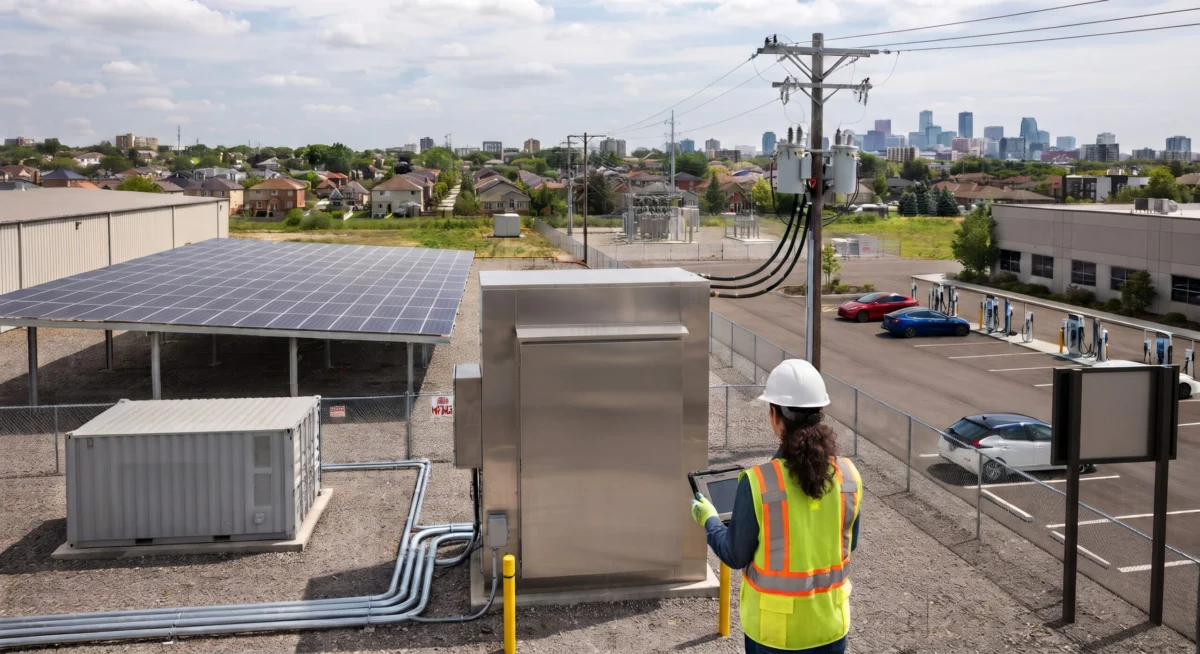
The reliability of the United States electric grid has historically been the cornerstone of the utility sector’s identity, providing a stable foundation for industrial growth and domestic life for over a century. However, this very stability has created a paradox: the success of the status quo often serves as the greatest barrier to necessary modernization. For decades, the mantra of "keeping the lights on" discouraged radical shifts in infrastructure management. Today, that paradigm is shifting under the weight of unprecedented energy demand, driven by the electrification of transport and the proliferation of data centers, alongside weather patterns that have become as unpredictable as they are destructive. This convergence of factors is forcing utilities to reconsider the role of distributed energy resources (DERs) not merely as supplemental tools, but as foundational pillars of a resilient, modern grid.
The transition from a centralized generation model to a decentralized, interactive network requires a fundamental reimagining of how power is managed at the "edge" of the grid. Central to this evolution is the concept of the Virtual Power Plant (VPP)—an aggregation of heterogeneous DERs, such as residential batteries, smart thermostats, and electric vehicle (EV) chargers, that can be dispatched in concert to provide services similar to a traditional power plant. While the potential for VPPs is vast, the journey from theoretical capability to operational reliability involves navigating a complex landscape of legacy hardware, regulatory hurdles, and market dynamics.
The Technical and Operational Shift in Grid Planning
The challenge of integrating DERs into the grid is often viewed through a technical lens, but for experts like Shikhar Pandey, founder and managing partner of GridCo Group, the hurdle is equally operational and behavioral. Pandey, who previously served as the senior manager of DER planning and engineering at Commonwealth Edison (ComEd), has been at the forefront of this transition. His work at ComEd was instrumental in developing a flexible interconnection framework, a system designed to integrate high volumes of renewable energy without necessitating the immediate, multi-million-dollar hardware upgrades traditionally required to maintain grid stability.
During his tenure at the Department of Energy (DOE), Pandey gained critical insights into the logistical constraints of battery engineering and the specific challenges of energy storage in cold climates. This technical background informed his perspective on the "virtuality" of VPPs. The distinction between a collection of individual devices and a true VPP lies in controllability. While traditional demand response programs relied on voluntary consumer behavior—asking customers to turn off air conditioners during peak heat—a VPP is designed to be a predictable, dispatchable asset.
According to Pandey, the "virtuality" of these systems is what allows utility planners to move beyond emergency thinking. In the past, DERs were often viewed as "emergency assets," called upon only during price spikes or extreme weather events to prevent grid collapse. To become foundational grid pillars, VPPs must be integrated into long-term resource adequacy calculations. This means utility planners must be able to rely on them with the same level of confidence they have in a natural gas peaker plant.
A Chronology of Distributed Energy Integration
The path toward the modern VPP has been marked by several distinct phases over the last two decades:
- The Early Adoption Phase (2000–2010): Initial efforts focused on simple demand response. Utilities provided incentives for customers to reduce usage during peak hours, primarily through manual interventions or basic programmable thermostats.
- The Prosumer Era (2010–2018): The rapid decline in the cost of solar photovoltaics (PV) led to a surge in "behind-the-meter" generation. Consumers began producing their own power, but these assets remained largely passive and uncoordinated from the utility’s perspective.
- The Regulatory Catalyst (2020): The Federal Energy Regulatory Commission (FERC) issued Order 2222, a landmark ruling that required regional transmission organizations and independent system operators to allow DER aggregations to participate in wholesale energy markets. This opened the door for VPPs to compete alongside traditional generators.
- The Modern Integration Phase (2021–Present): Utilities like ComEd, Xcel Energy, and Green Mountain Power began piloting sophisticated Distributed Energy Resource Management Systems (DERMS). These systems provide real-time visibility into edge assets, allowing for active grid management and "flexible interconnection."
Analyzing the Market Barriers and Economic Realities
Despite the technological readiness of many VPP components, a significant gap remains between potential and participation. Industry data suggests that roughly 80% of current behind-the-meter capacity—batteries and smart devices already installed in homes—is not enrolled in any active utility program. This "dormant capacity" represents a massive missed opportunity for grid stabilization.
The primary barrier to enrollment is often economic. Pandey notes that "a California problem is not an Illinois problem." The value of a VPP is highly localized; the capacity pricing in a congested urban circuit in San Francisco is vastly different from a rural circuit in the Midwest. For a VPP to be sustainable, the compensation offered to the consumer must be high enough to incentivize participation but lower than the cost of the utility procuring wholesale capacity or building new physical infrastructure.
Furthermore, scaling these programs presents a logistical nightmare. Transitioning from a 10-megawatt pilot program involving a few hundred enthusiasts to a 100-megawatt enterprise-level program requires a robust support infrastructure. This includes dedicated teams for customer onboarding, technical support for debugging communication threads between devices, and field technicians capable of managing anomalies across vast geographic regions.
Utility-Private Partnerships and the Control Dilemma
A recurring debate in the sector involves the "ownership" of the edge. Traditionally, utilities have preferred to own and control the assets on their system to ensure reliability. However, the decentralized nature of VPPs—comprising thousands of privately owned devices—falls outside the traditional utility business model.
Pandey suggests that the solution lies in utility-private partnerships. Utilities excel at maintaining the high-voltage "wires" and managing complex grid physics, but they are often less equipped for the "door-to-door" retail nature of installing and maintaining residential smart home equipment. Third-party aggregators, such as specialized VPP software providers and solar installers, have proven more adept at customer engagement and hardware maintenance.
Successful models, such as the capacity-connect programs deployed by Xcel Energy in Minnesota, demonstrate the value of utility-controlled edge devices at the substation level. By maintaining visibility into localized transformer deferral assets, the utility can leverage these devices for multiple operational needs while allowing third parties to handle the consumer-facing aspects of the technology.
Data-Driven Projections and Future Impact
The stakes for successful VPP integration are high. According to a report by the Department of Energy’s "Pathways to Commercial Liftoff," VPPs could provide between 10% and 20% of peak load capacity in the U.S. by 2030. This shift could save utilities and ratepayers billions of dollars in deferred transmission and distribution upgrades.
As hardware costs continue to fall and EV adoption increases, the "pool" of available DERs is expected to grow exponentially. An average EV battery holds enough energy to power a standard home for several days; if even a fraction of that energy can be bi-directionally shared with the grid (Vehicle-to-Grid or V2G), the reliability of the system could be transformed.
However, this future depends on the industry’s ability to solve the "market piece." States like Massachusetts, California, and New York are already moving toward requiring utilities to file formal VPP tariffs. These tariffs establish clear rules for how customers are paid and how the assets are used, providing the regulatory certainty needed for long-term investment.
Conclusion: Moving Beyond the "Perfect" to the "Good"
The evolution of the grid from a one-way street to a multi-directional network is no longer a theoretical exercise; it is a necessity driven by the dual pressures of climate change and surging demand. The path forward requires a shift in mindset from both regulators and utility executives.
Pandey emphasizes that stakeholders must not let the "perfect be the enemy of the good." While the industry often gets bogged down in the minutiae of tracking every meter to a square-inch level of accuracy, the immediate benefits of aggregate load suppression are already within reach. The transition requires a willingness to engage in difficult conversations about asset ownership, data privacy, and market valuation.
As the energy landscape continues to shift, the utilities that embrace VPPs as predictable, foundational resources will be the ones best positioned to navigate the complexities of the 21st-century grid. The transformation of the VPP from an emergency backup to a grid pillar represents not just a technical upgrade, but a fundamental redesign of the relationship between the utility, the consumer, and the power that sustains them.
