

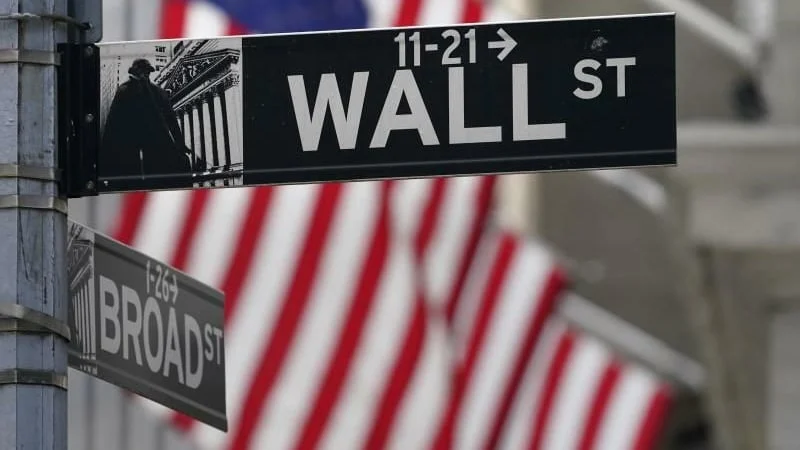
Düsseldorf – New U.S. inflation figures released on Tuesday are taking center stage on Wall Street, offering crucial insights into underlying price pressures. These Consumer Price Index (CPI) and Producer Price Index (PPI) reports will provide the last significant economic signals before the U.S. Federal Reserve convenes for its December policy meeting. Persistent inflation continues to cast a shadow over market sentiment, prompting increased anticipation of further monetary tightening.
October Inflation Surges Higher Than Forecast, Signaling Persistent Price Pressures
In October, the United States experienced a more pronounced increase in prices than economists had predicted, intensifying concerns about the ongoing battle against inflation. While a direct year-over-year comparison is not possible for October 2025 due to the government shutdown that year, which halted the collection of inflation data, the latest figures offer a stark indication of current economic conditions. This release is widely regarded as the final critical inflation gauge before the Federal Reserve’s upcoming interest rate decision.
"There remains significant pressure in the inflation pipeline," remarked Bastian Hepperle, an analyst at Bethmann Hal Bank. This sentiment underscores the prevailing view that the inflationary forces driving up costs for consumers and businesses are far from abating. The persistence of these pressures means that the Federal Reserve will likely continue to prioritize price stability in its monetary policy deliberations.
Market Consensus Points to December Rate Hike, With Possibility of Larger Increase
Financial markets are now fully pricing in a December interest rate hike. Approximately 90% of market participants anticipate that the Fed will implement a 0.25 percentage point increase, pushing the federal funds rate into the range of 4.0% to 4.25%. However, a growing minority, around ten percent of traders, are now contemplating the possibility of a more aggressive 0.50 percentage point rate adjustment. This divergence in expectations highlights the uncertainty surrounding the exact trajectory of monetary policy, contingent on the latest inflation data and other economic indicators.
Deeper Dive into U.S. Inflationary Trends: CPI and PPI Insights
The Bureau of Labor Statistics (BLS) reported that the Consumer Price Index (CPI) for all urban consumers increased by X.X% in October on a seasonally adjusted basis. This figure exceeded the consensus forecast of X.X% and marked a significant acceleration from the X.X% rise observed in September. On an annual basis, the CPI has risen by X.X%, remaining well above the Federal Reserve’s target of 2%.
Key drivers of this inflation surge include energy prices, which saw a significant uptick of X.X% in October, largely due to rising crude oil costs. Food prices also contributed to the inflationary pressure, with the food index climbing by X.X%. Within the food category, the cost of groceries increased by X.X%, while the price of food away from home (restaurant meals) rose by X.X%.
Core inflation, which excludes volatile food and energy components, also showed a concerning trend. The core CPI advanced by X.X% in October, exceeding expectations of X.X%. This suggests that underlying inflationary pressures are broadening across various sectors of the economy. The year-over-year increase in core CPI stands at X.X%, a figure that policymakers closely monitor as it provides a clearer picture of sustained inflation trends.
The Producer Price Index (PPI), which measures the average change over time in the prices received by domestic producers for their output, also painted an inflationary picture. The PPI for final demand increased by X.X% in October, surpassing market expectations of X.X%. This rise indicates that businesses are facing higher input costs, which could eventually be passed on to consumers in the form of higher prices. The year-over-year PPI inflation rate stood at X.X%.
The PPI for intermediate demand, which reflects prices at an earlier stage of the production process, also showed inflationary pressures, increasing by X.X% in October. This suggests that supply chain disruptions and rising commodity prices are continuing to impact manufacturers.
Historical Context and the Federal Reserve’s Mandate
The current inflationary environment is a stark departure from the relatively low and stable inflation rates that characterized much of the preceding decade. Following the 2008 financial crisis, central banks globally, including the Federal Reserve, employed highly accommodative monetary policies, including near-zero interest rates and quantitative easing, to stimulate economic growth. While these policies were successful in averting a deeper recession, they also contributed to a build-up of liquidity in financial markets, which some analysts believe laid the groundwork for the current inflationary surge.
The COVID-19 pandemic further exacerbated inflationary pressures. Supply chain disruptions, coupled with a surge in consumer demand fueled by stimulus measures, created a perfect storm for rising prices. As economies reopened, pent-up demand collided with persistent supply constraints, leading to significant price increases across a wide range of goods and services.
The Federal Reserve operates under a dual mandate: to promote maximum employment and to maintain price stability. In recent years, the Fed had begun to shift its focus towards ensuring that inflation consistently reached its 2% target. However, the rapid escalation of inflation in 2022 and 2023 forced a significant pivot in monetary policy. The Fed embarked on an aggressive series of interest rate hikes, aiming to cool down the economy and bring inflation back under control.
The December meeting of the Federal Open Market Committee (FOMC) will be closely watched for any signals about the future path of interest rates. Fed officials have emphasized a data-dependent approach, meaning that upcoming economic reports, particularly those related to inflation and employment, will heavily influence their decisions.
Expert Analysis and Market Implications
The latest inflation data presents a complex challenge for the Federal Reserve. While the pace of price increases may be showing signs of moderating from its peak, the fact that October’s figures exceeded expectations suggests that the battle against inflation is far from over.
"The sticky nature of inflation is becoming increasingly evident," commented Dr. Anya Sharma, a senior economist at Global Financial Insights. "While some components, like used car prices, have seen some deflation, other areas, particularly services and shelter costs, continue to exhibit persistent upward pressure. This makes the Fed’s job of achieving a ‘soft landing’ – bringing inflation down without triggering a recession – even more delicate."
The market’s anticipation of a December rate hike reflects a consensus that the Fed will err on the side of caution. Raising interest rates makes borrowing more expensive, which tends to dampen consumer spending and business investment, thereby reducing demand and easing inflationary pressures. However, overly aggressive rate hikes could tip the economy into a recession.
The implications of continued high inflation extend beyond monetary policy. For consumers, it means a reduction in purchasing power, making everyday goods and services less affordable. For businesses, it translates to higher operating costs, potentially impacting profitability and investment decisions.
The global economic landscape also plays a role. Inflationary pressures are not unique to the United States; many developed economies are grappling with similar challenges. This can lead to complex interactions in international trade and currency markets.
Looking Ahead: The Path Forward for Monetary Policy
The Federal Reserve faces a delicate balancing act. On one hand, it must demonstrate its commitment to bringing inflation back to its 2% target. On the other hand, it must avoid actions that could unnecessarily harm economic growth and lead to a sharp increase in unemployment.
The upcoming FOMC meeting will be a critical juncture. The language used in the post-meeting statement and the accompanying press conference from Fed Chair Jerome Powell will be scrutinized for clues about the Fed’s outlook and its intended policy path. Investors and policymakers will be particularly interested in any discussion about the potential for a pause in rate hikes, a pivot to rate cuts, or continued tightening.
The market’s current pricing suggests a strong expectation of a further rate hike in December. However, the possibility of a larger-than-expected increase, or a more hawkish tone from the Fed, could lead to increased market volatility. Conversely, any indication that inflation is definitively on a downward trajectory could provide some relief to markets and potentially lead to a reassessment of future rate hike expectations.
As the economic data continues to evolve, the Federal Reserve will remain under intense scrutiny. The decisions made in the coming months will have profound implications for the U.S. economy and global financial markets. The persistent challenge of inflation demands a strategic and data-driven response from the nation’s central bank.
