

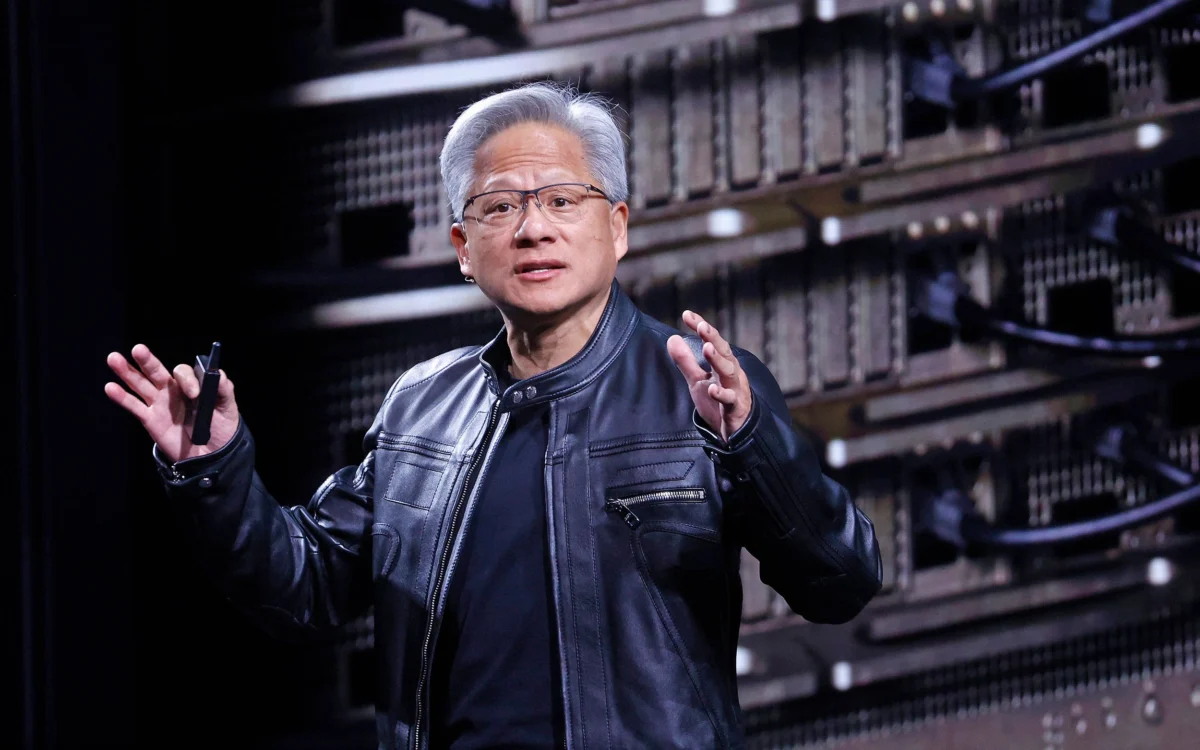
The meteoric rise of Nvidia CEO Jensen Huang, a figure who has profoundly shaped the artificial intelligence landscape, is now facing an unprecedented challenge. Huang, a titan of the tech industry whose influence extends to wealth accumulation, high-level political circles, and international relations, finds his leadership and legacy under intense scrutiny following revelations of a personal entanglement that could have far-reaching consequences for both him and the global AI ecosystem.
A Personal Affair Unravels Corporate and Geopolitical Ties
At the heart of the current storm is the admission by Huang that he engaged in an affair with Alice Huang, an executive at a Singapore-based firm. The gravity of this revelation is amplified by US intelligence services’ conclusion that Alice Huang is a Chinese intelligence asset. This disclosure has cast a long shadow over Jensen Huang’s decades-long leadership at Nvidia and has triggered a formal investigation by the company’s board of directors.
Nvidia, through a statement from its board, announced the initiation of a comprehensive review into the matter, emphasizing Huang’s full support and commitment to cooperating with the investigation. While the exact timeline of the affair and its discovery remains undisclosed, the implications for Huang’s position are significant. He is an "at-will" employee, meaning his tenure can be terminated without severance, a detail highlighted in recent corporate filings that also noted his substantial earnings of $36 million last year and his approximately 3.5 percent ownership stake in the company as of March.
The Unshakeable Pillar of the AI Revolution
Jensen Huang is not merely a CEO; he is widely regarded as the linchpin of the current AI revolution. Nvidia, co-founded by Huang in 1993, commands an astonishing 90 percent of the market for the specialized chips essential for training advanced AI models. This dominance grants Huang immense power in dictating the pace and direction of AI development. As David Yoffie, a professor at Harvard Business School who closely monitors the chip industry, stated, "He’s the person who decides who gets the chips and who doesn’t."
The scarcity of these high-demand chips means that Huang effectively holds the keys to which AI applications and research areas receive the necessary computational power to flourish. Beyond chip manufacturing, Nvidia has aggressively invested billions in the very companies that rely on its hardware, including prominent AI labs like OpenAI and Anthropic. This integrated approach has solidified Huang’s position as a central figure, with industry leaders such as Elon Musk reportedly needing to consult him for critical infrastructure decisions, such as building new data centers.
Internally, Huang is known for his hands-on management style, reportedly engaging with his approximately 60,000 employees and actively participating in public discourse. He has frequently appeared on media outlets and at tech conferences, aiming to temper concerns about a potential AI market bubble and to champion Nvidia’s strategic positioning.
The Void of Succession and Geopolitical Ramifications
A critical concern emerging from this situation is the apparent lack of a clear successor to Jensen Huang. Nvidia has grown into a company of immense scale and influence under his singular vision, and there is no readily apparent executive with comparable prominence or authority. "We have no idea who would replace him," Yoffie commented. "You put someone new into that position, if you’re a customer, who knows what that’s going to mean." This leadership vacuum could introduce significant uncertainty for Nvidia’s vast customer base and the broader technology sector.
Ryan Fedasiuk, a senior fellow at the Foundation for American Innovation, underscores Huang’s pivotal role, describing him as "load-bearing for the entire US AI industry." He acknowledges Huang’s irreplaceable contribution to building Nvidia into its current powerhouse status and his visionary role in developing the GPU, the foundational technology for the AI surge. However, Fedasiuk also stresses the paramount importance of the company’s stability: "He has to be replaceable as the CEO of the world’s largest company, at $4 trillion in capex."
The market has already registered concern, with Nvidia shares experiencing a notable decline of over 4 percent on a recent Monday, even as broader stock market indices saw gains.
The Scope of the Investigation: Corporate, Legal, and Political
The Nvidia board’s investigation is expected to scrutinize potential violations of company policies. However, the ramifications could extend beyond corporate governance. The FBI may launch its own inquiry to determine if any laws have been broken. Furthermore, Congressional committees could investigate whether Huang’s personal affair had any influence on US government policy, particularly concerning the sale of sensitive technology to China.
The scandal’s timing is particularly sensitive given Huang’s past outspokenness against stringent technology export controls on China. His public stance on this complex geopolitical issue may now be viewed through a different, more critical lens, potentially undermining his credibility on matters of national security and international trade.
China’s Access to AI Technology: A Growing Concern
The affair raises significant questions about the potential for China to have gained access to sensitive information regarding US AI companies and the American government’s strategic approach to China. This is especially concerning as both the Trump and Biden administrations have implemented export controls aimed at limiting China’s access to advanced Nvidia chips and related manufacturing technology. While the Trump administration’s second term saw a relaxation of some controls, ostensibly to foster reliance on US technology, the current situation could reignite calls for stricter measures.
Sam Bresnick, a research fellow at Georgetown University’s Center for Security and Emerging Technology, suggests that the Huang scandal is likely to act as a catalyst for intensified efforts to control chip exports to China. "There was going to be more of an impetus to control what chips are getting sent to China anyway," Bresnick stated. "I expect there to be more scrutiny on what’s going on, what’s getting sent to China. I think there’s also going to be more scrutiny from the Commerce Department."
A Timeline of Influence and Emerging Scrutiny
Jensen Huang’s journey with Nvidia began in 1993, transforming a graphics processing unit (GPU) company into the undisputed leader in AI hardware. Over the years, he cultivated a public persona that blended technological visionary with shrewd statesman.
- Early 2000s: Nvidia establishes itself as a key player in the gaming graphics market, laying the groundwork for its future in parallel computing.
- 2010s: The burgeoning field of deep learning identifies GPUs as ideal for the massive parallel processing required, propelling Nvidia’s relevance in AI research. Huang begins to engage more publicly on the broader implications of AI.
- Late 2010s – Early 2020s: Nvidia’s market dominance in AI training chips solidifies, making Huang a figure of immense influence. He engages with political leaders and speaks on the US-China technology relationship, often advocating for nuanced approaches to export controls.
- Recent Years: Huang’s close relationship with US policymakers, including then-President Donald Trump, is noted. He becomes a prominent voice in discussions surrounding AI development and its geopolitical implications.
- Present Day: The revelation of his affair with Alice Huang, identified as a potential Chinese intelligence asset, surfaces, triggering a corporate investigation and raising significant geopolitical concerns.
Nvidia’s stock performance, a key indicator of market sentiment, has been sensitive to the unfolding events. The company’s market capitalization, exceeding $3 trillion at its peak, underscores the immense economic stakes involved. The investigation’s findings, whether they lead to disciplinary action against Huang or a reassessment of corporate governance, will undoubtedly reverberate across the global technology sector and beyond.
The Broader Impact on the AI Ecosystem
The scandal’s implications extend far beyond Nvidia’s executive suite. It poses a direct threat to the stability and trajectory of the entire AI industry, which has become heavily reliant on Nvidia’s hardware and Huang’s leadership. The potential for geopolitical tensions to escalate due to concerns about technology transfer could lead to more restrictive policies, potentially hindering global AI collaboration and innovation.
Furthermore, the incident highlights the inherent risks associated with the concentration of power in the hands of a few individuals and companies within critical technological sectors. As AI continues to permeate every aspect of modern life, the need for robust governance, transparent practices, and diversified leadership becomes increasingly apparent. The coming weeks and months will be crucial in determining how Jensen Huang, Nvidia, and the global AI landscape navigate this unprecedented crisis. The world watches to see if the architect of the AI revolution can weather the storm and if the industry he helped build can remain resilient in its wake.
