

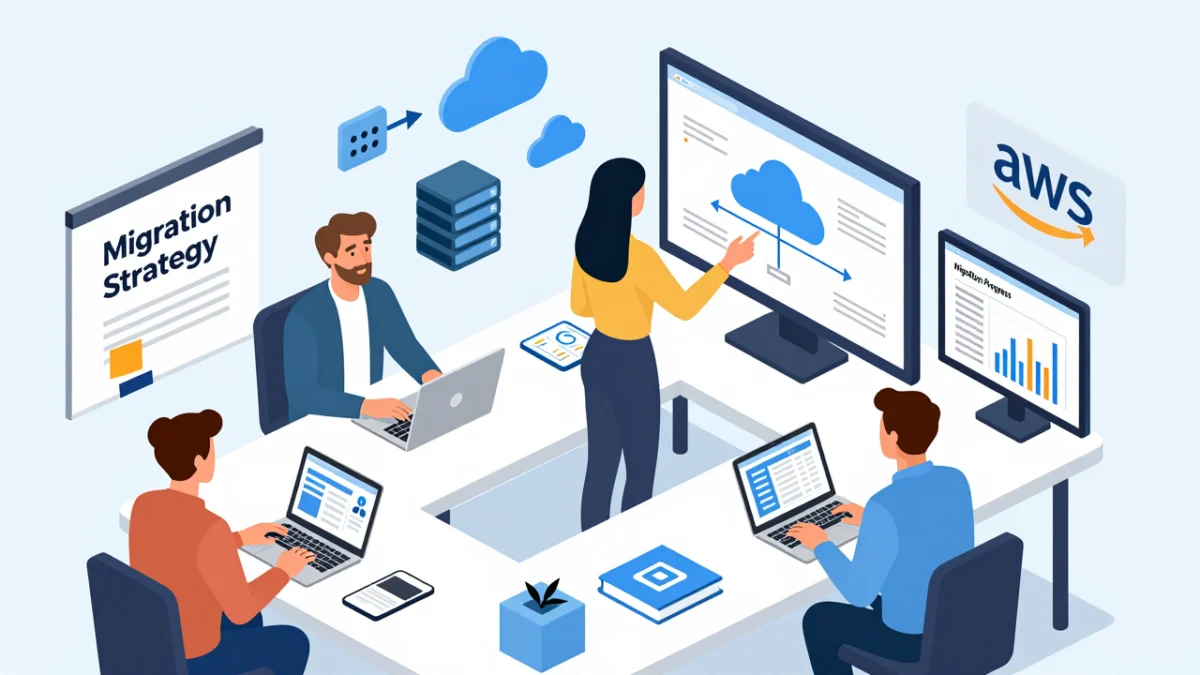
The global landscape of information technology is currently undergoing a seismic shift as organizations of all sizes move away from traditional on-premises data centers toward the flexibility and scalability of the cloud. Leading this transition is Amazon Web Services (AWS), which has developed a sophisticated ecosystem of migration tools designed to mitigate the risks, costs, and complexities associated with digital transformation. As enterprises face increasing pressure to modernize their operations, understanding the specific functions and strategic advantages of AWS Migration Services has become a critical requirement for IT leadership and stakeholders.

The Strategic Context of Cloud Migration
The impetus for cloud migration has evolved significantly over the last decade. While early adopters were primarily motivated by cost-cutting measures, contemporary enterprises are driven by the need for business agility, enhanced security, and the ability to leverage advanced technologies such as artificial intelligence and machine learning. According to data from Gartner, global end-user spending on public cloud services is forecasted to grow 20.4% in 2024, totaling approximately $678.8 billion.
AWS, which maintains roughly 31% of the global cloud infrastructure market share, has responded to this demand by creating a structured framework for migration. This framework is often categorized into the "6 Rs" of migration strategy: Rehosting (lift-and-shift), Replatforming (lift-tinker-and-shift), Refactoring (re-architecting), Repurchasing (moving to SaaS), Retiring, and Retaining. The suite of AWS Migration Services is specifically engineered to support these diverse strategies, ensuring that whether a company is moving a single database or a global fleet of applications, the process remains manageable and transparent.

Phase I: Assessment and Discovery with AWS Application Discovery Service
Before a single byte of data is moved, a successful migration requires a comprehensive inventory of the existing IT environment. Many organizations suffer from "shadow IT" or undocumented legacy systems that can create unforeseen dependencies. The AWS Application Discovery Service is the primary tool used to bridge this information gap.
This service automates the collection of configuration and usage data from on-premises servers. It operates in two modes: agentless and agent-based. The agentless discovery is ideal for VMware environments, providing a high-level overview of virtual machines without requiring software installation on every guest OS. Conversely, the agent-based approach involves installing a small piece of software on each server to gather more granular data, including system performance metrics and network connections between applications.

By feeding this data into the AWS Migration Hub, administrators gain a visualized map of their application dependencies. This visibility is crucial for determining the order of migration, as it identifies which applications must be moved together to prevent latency issues or service interruptions.
Phase II: Execution and Workload Transfer
Once the planning phase is complete, the focus shifts to the physical movement of workloads. AWS provides two flagship services for this stage: the AWS Application Migration Service (MGN) and the AWS Database Migration Service (DMS).

AWS Application Migration Service (MGN)
As the primary tool for lift-and-shift migrations, AWS MGN simplifies the process by automatically converting source servers from physical, virtual, or cloud infrastructure to run natively on AWS. It utilizes continuous, block-level data replication, which allows the migration to occur in the background without disrupting the source environment’s performance. This "non-disruptive" replication is a significant advancement over older migration methods that required long maintenance windows and high risks of data loss.
AWS Database Migration Service (DMS)
Databases are often the most sensitive components of an IT ecosystem. AWS DMS is designed to migrate databases to AWS quickly and securely, with the source database remaining fully operational during the transfer. This minimizes downtime for applications that rely on the data.

One of the most powerful features of DMS is its ability to handle both homogeneous migrations (e.g., Oracle to Oracle) and heterogeneous migrations (e.g., SQL Server to Amazon Aurora). For heterogeneous shifts, AWS provides the Schema Conversion Tool (SCT), which automates the conversion of the database schema and code objects, making it possible to move away from expensive, proprietary database engines toward more cost-effective, open-source alternatives.
Overcoming Connectivity Barriers: DataSync and the Snow Family
Not all migrations can rely on standard internet connections. Organizations dealing with petabytes of data or operating in regions with limited bandwidth face unique hurdles. To address this, AWS offers specialized data transfer services.

AWS DataSync is an online data transfer service that simplifies and accelerates moving data between on-premises storage and AWS storage services like Amazon S3 or Amazon Elastic File System (EFS). It can perform transfers at speeds up to 10 times faster than open-source tools by using a purpose-built network protocol and a multi-threaded architecture.
For environments where online transfer is impossible or impractical, the AWS Snow Family provides physical hardware. This includes:

- AWS Snowcone: A small, rugged, and secure device for edge computing and data transfer.
- AWS Snowball Edge: A suitcase-sized device capable of holding up to 80 terabytes of data, equipped with on-board computing power.
- AWS Snowmobile: An exabyte-scale data transfer service housed in a 45-foot long ruggedized shipping container, pulled by a semi-trailer truck.
The use of physical devices ensures that massive datasets can be moved securely and efficiently, bypassing the constraints of the public internet.
Governance and Visibility through AWS Migration Hub
A common challenge in large-scale migrations is the fragmentation of information. Different teams may be using different tools to move various parts of the infrastructure. The AWS Migration Hub acts as a central nervous system for the entire project. It provides a single location to track the progress of migrations across the entire AWS portfolio.

By integrating with MGN, DMS, and discovery tools, the Migration Hub offers a dashboard that displays the status of each application. This centralized view allows stakeholders to identify bottlenecks in real-time, provide accurate status updates to executive leadership, and ensure that the migration stays on schedule and within budget.
Economic Implications and Official Responses
The financial shift from a Capital Expenditure (CapEx) model to an Operating Expenditure (OpEx) model is a primary driver for AWS adoption. AWS utilizes a pay-as-you-go pricing structure, which removes the need for large upfront investments in hardware.

Industry analysts at IDC have noted that organizations migrating to AWS can see an average of 31% savings in infrastructure costs over five years. Furthermore, IT staff productivity often increases by more than 60% because the burden of hardware maintenance is shifted to AWS.
In statements regarding the evolution of these services, AWS leadership has emphasized the goal of "removing the friction from the cloud journey." By automating the most tedious parts of the migration—such as server conversion and schema mapping—AWS aims to lower the barrier to entry for small and medium-sized businesses (SMBs) that may not have the extensive IT resources of a Fortune 500 company.

Chronology of a Typical Enterprise Migration
The timeline for a migration varies based on complexity, but a standard enterprise-level transition generally follows a four-stage chronology:
- Preparation and Business Case (Months 1-2): Leadership defines the goals, identifies key stakeholders, and establishes the financial justification for the move.
- Discovery and Planning (Months 2-4): Using AWS Application Discovery Service, the IT team maps out the environment and selects the migration strategy for each application.
- Migration and Validation (Months 4-12+): Workloads are moved using MGN and DMS. Each application is tested in the cloud environment to ensure performance parity or improvement.
- Modernization and Optimization (Ongoing): Once in the cloud, the organization begins to refactor applications to take full advantage of cloud-native features like auto-scaling and serverless computing.
Broader Impact and Industry Analysis
The widespread availability of these migration tools has democratized access to high-performance computing. Small businesses can now utilize the same global infrastructure as multinational corporations, fostering a more competitive and innovative market.

However, experts warn that tools alone do not guarantee success. A "lift-and-shift" approach, while fast, may not immediately yield the cost savings an organization expects if the applications are not later optimized for the cloud. The most successful migrations are those that view the initial move as the first step in a continuous journey of optimization.
Security also remains a top priority. AWS operates under a "Shared Responsibility Model," where AWS manages the security of the cloud (the hardware and global infrastructure), while the customer remains responsible for security in the cloud (data encryption, access management, and firewall configurations). The use of AWS Transfer Family, which supports secure protocols like SFTP and FTPS, is a testament to the focus on maintaining data integrity during the transition.

Conclusion
The transition to AWS is a complex but increasingly necessary undertaking for modern businesses. By leveraging a suite of specialized services—from the initial discovery of assets to the physical transport of data and the centralized monitoring of the entire project—organizations can navigate the complexities of the cloud with confidence. As AWS continues to innovate and automate these processes, the "overwhelming" nature of migration is being replaced by a structured, data-driven methodology that empowers businesses to focus on their core mission rather than the maintenance of legacy hardware. The move to the cloud is no longer just a technical upgrade; it is a strategic repositioning for the digital age.
