

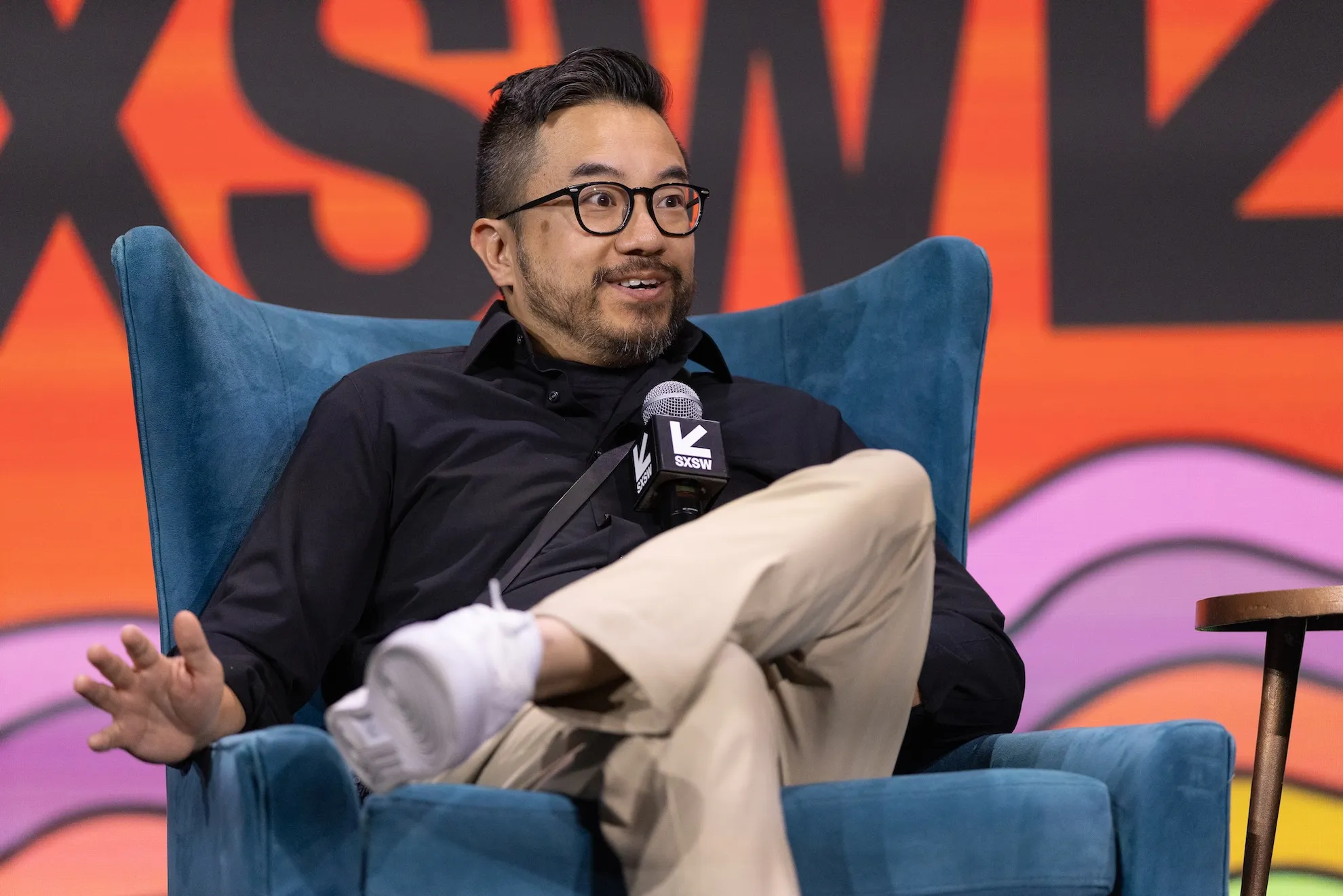
Garry Tan, the influential CEO of Y Combinator, has revealed that he annually invests between $100,000 and $200,000 in AI tokens to power his advanced personal artificial intelligence agents. This substantial financial commitment underscores a profound integration of AI into his daily professional and personal life, a practice he has previously characterized with terms like "cyber psychosis" due to the intense excitement and reduced sleep it sometimes entails. The disclosure came during an upcoming episode of Walter Isaacson’s podcast, "The Builders," slated for publication this Tuesday, providing a tangible measure of his deep engagement with emergent AI capabilities.
Tan’s extensive reliance on AI agents extends across a myriad of functions, from sophisticated work projects and intricate coding tasks to the meticulous management of his personal affairs. He has publicly championed the utility of these digital assistants, even sharing his personal toolkit, "gstack," a collection of 23 Claude Code skills, on GitHub. This open-source initiative aims to demystify AI agents and educate a broader audience on their potential applications, fostering a culture of innovation and exploration within the developer community. His candid insights offer a rare glimpse into the leading edge of AI adoption, particularly from an individual at the helm of Silicon Valley’s most renowned startup accelerator.
The Architect of Acceleration and His Digital Ethos
Garry Tan’s journey to becoming a prominent figure in the tech world is marked by a history of innovation and strategic leadership. Before ascending to the CEO position at Y Combinator in 2023, Tan was a successful startup founder (Posterous, acquired by Twitter), a partner at YC, and an angel investor with a keen eye for disruptive technologies. Y Combinator itself, established in 2005, holds a pivotal role in the global startup ecosystem, having funded over 4,000 companies, including giants like Airbnb, Dropbox, Stripe, and Reddit. Its influence in shaping technological trends and fostering entrepreneurial talent makes Tan’s personal AI practices particularly noteworthy, as they often foreshadow broader industry shifts.
Tan’s public pronouncements on AI have consistently highlighted its transformative power. His "cyber psychosis" remark, made jokingly in the past, reflects a genuine enthusiasm for the rapid advancements in AI agent technology. This level of personal immersion in AI is not merely a hobby; it is a strategic exploration of tools that Y Combinator itself helps to cultivate and fund. The evolution of AI agents, from early rule-based systems to today’s large language model (LLM)-powered entities, has been swift. Modern agents leverage sophisticated neural networks to understand natural language, learn from vast datasets, and execute complex tasks with increasing autonomy, a development that Tan is clearly embracing wholeheartedly.
The Unprecedented Investment in Digital Companionship
The revelation of Tan’s annual expenditure of $100,000 to $200,000 on AI tokens positions him among the most dedicated individual power users of artificial intelligence. This cost primarily covers the computational resources consumed by AI models, often measured in "tokens" – units representing pieces of words or characters processed by the AI. Depending on the complexity of tasks, the volume of data processed, and the specific AI models utilized (such as those from Anthropic’s Claude or OpenAI’s GPT series), these costs can escalate rapidly for intensive, continuous usage. For context, while many individual users might spend tens or hundreds of dollars monthly on premium AI subscriptions, Tan’s spending dwarfs these figures, suggesting an operational scale far beyond typical personal use.
This significant outlay provides a stark illustration of the current economic landscape of advanced AI agent deployment. While consumer-grade AI tools are becoming increasingly accessible and affordable, the frontier of highly autonomous, deeply integrated personal agents remains a costly endeavor. This creates an immediate accessibility divide, where only individuals with substantial financial resources can fully leverage these cutting-edge capabilities. Tan himself acknowledges this disparity, stating that his expenditure is "a crazy privilege that not everyone can do." Industry analysts project that as AI models become more efficient and competition among providers intensifies, the cost per token will likely decrease, potentially democratizing access to such powerful agents in the coming years. However, for the present, the cost remains a significant barrier to mainstream adoption for comprehensive, always-on AI assistants.
A "Jiminy Cricket" for the Digital Age: The Scope of Personal AI Integration
Tan’s use of AI agents transcends mere task automation; it delves into the realm of comprehensive personal and professional augmentation. He describes his agent as a "Jiminy Cricket on your shoulder at all times," an ever-present confidante and assistant that anticipates needs and offers proactive guidance. For work, this involves leveraging AI for extensive research, such as preparing for podcast interviews by anticipating potential questions from hosts like Walter Isaacson. It also extends to complex coding tasks, where the AI can generate, debug, or optimize code segments, significantly accelerating development cycles.
Perhaps more strikingly, Tan has integrated his AI agent into the most intimate aspects of his personal digital life. The agent has been granted access to "all of my email and all of my Dropbox. It’s read, like, all of my Apple Notes, even my therapy notes going back 20 years," he revealed. This level of access transforms the AI from a mere tool into a digital extension of himself, possessing an unprecedented understanding of his life, thoughts, and history. The agent’s ability to "run ahead and say, ‘What about this?’" or "help you see around corners" implies a sophisticated level of predictive and analytical capability, driven by this deep contextual awareness. It represents a paradigm shift from reactive assistance to proactive, almost intuitive, digital partnership.
Navigating the Ethical Labyrinth: Privacy, Data Security, and the Digital Self
The profound level of access Tan grants his AI agents – encompassing highly sensitive personal information like therapy notes – immediately raises critical questions about privacy, data security, and the ethical implications of such deep integration. While the benefits in terms of productivity and personalized assistance are evident, the risks are equally substantial. Privacy advocates and cybersecurity experts consistently highlight the vulnerabilities associated with centralizing vast amounts of personal data, even with advanced encryption.
The potential for data breaches, unauthorized access, or misuse of such deeply personal information is a paramount concern. Should Tan’s AI agent’s infrastructure be compromised, the exposure of his entire digital history, including confidential therapy notes, could have severe consequences. Furthermore, questions arise about data ownership: who truly owns the insights generated by an AI that has processed a lifetime of personal data? What are the implications if the AI itself develops biases or makes errors based on this highly personalized context?
Ethicists often caution against the unchecked proliferation of AI systems with access to sensitive personal data without robust regulatory frameworks and transparent governance. Current regulations, such as the General Data Protection Regulation (GDPR) in Europe or the California Consumer Privacy Act (CCPA) in the United States, primarily focus on corporate handling of user data. However, the emergence of highly personalized, user-controlled AI agents operating with such intimate access presents a novel challenge that existing legal frameworks may not adequately address. The concept of "digital sovereignty" – an individual’s control over their digital identity and data – becomes incredibly complex when an AI acts as an extension of the self, constantly processing and learning from one’s most private thoughts and interactions.
Democratizing AI Innovation: The gstack Initiative
Despite his privileged access to advanced AI, Tan remains a strong advocate for democratizing AI knowledge and tools. His decision to open-source "gstack," a repository of 23 Claude Code skills, on GitHub exemplifies this commitment. gstack provides practical examples and frameworks for interacting with AI agents, particularly for coding tasks, making it easier for developers and enthusiasts to experiment and learn. This initiative aligns with the broader open-source movement in technology, which aims to accelerate innovation by making tools and knowledge freely available.
By sharing his personal configurations and approaches, Tan contributes to a collective understanding of what AI agents are capable of and how they can be effectively deployed. Such contributions are crucial for lowering the barrier to entry for AI development and encouraging a wider community to engage with and build upon existing AI capabilities. This act of sharing also reflects a belief in collaborative progress, where the best practices and insights from early adopters can help shape the future development and ethical use of AI agents for everyone.
Institutional Intelligence: Y Combinator’s "Stray Light" and Corporate AI
Tan’s personal AI integration is mirrored by similar, albeit institutionally focused, developments within Y Combinator itself. He disclosed that YC is employing an internal AI agent named "Stray Light," which he states is "rebuilding the way we operate at YC." This internal AI possesses a "company brain," which holds the "total context of every founder we’ve ever backed, anyone who’s ever emailed us, like all the applications."
This comprehensive institutional memory allows Stray Light to act as a powerful organizational intelligence system. For an entity like Y Combinator, which processes thousands of startup applications annually and nurtures a vast network of alumni founders, such an AI agent offers unprecedented capabilities. It can likely synthesize information, identify patterns, assist in due diligence, streamline communication, and potentially even help in decision-making processes for selecting future startup cohorts. This represents a significant leap in operational efficiency and knowledge management, offering a competitive edge in the highly dynamic venture capital and startup acceleration landscape.
The implications for founders interacting with YC are profound. An AI agent with such deep institutional memory could provide more consistent and context-aware interactions, but it also raises questions about the human element in the application and selection process. While AI can undoubtedly enhance decision-making, ensuring fairness, mitigating algorithmic bias, and preserving the nuanced human judgment essential for evaluating early-stage startups will be critical considerations for YC. Many companies are exploring similar internal AI applications to enhance productivity and leverage proprietary data, but YC’s deployment of Stray Light signals a leading position in leveraging AI for core strategic operations.
A New Paradigm: Beyond Traditional Software
Tan also shared a crucial philosophical insight regarding AI agents: they should not be treated like traditional software. He observes that some users prioritize "repeatability and safety" to such an extent that they "trade off all of the beautiful parts of working with an AI agent, which basically can be so similar to a human." This perspective suggests a fundamental shift in human-computer interaction. Unlike conventional software, which is designed for deterministic outcomes and strict adherence to programmed rules, AI agents, particularly those powered by large language models, thrive on flexibility, emergent behavior, and an ability to adapt and infer.
Embracing the "human-like" qualities of AI agents implies acknowledging their capacity for nuanced understanding, creative problem-solving, and even occasional "hallucinations" or unexpected outputs. It calls for a different user mindset—one that values collaboration, iterative refinement, and a degree of trust in the agent’s autonomous capabilities, rather than demanding absolute control and predictable outcomes. This paradigm shift is essential for unlocking the full potential of AI agents, moving beyond rigid automation to a more fluid, intelligent partnership.
The Future Landscape: Affordability, Accessibility, and Autonomy
Looking ahead, Tan firmly believes that personal AI agents will eventually become mainstream, but only if a critical hurdle is overcome: cost. "It’s too expensive right now," he stated, reiterating the economic barrier to widespread adoption. As AI technology matures, however, economies of scale, increased competition, and more efficient model architectures are expected to drive down the cost of AI tokens, making sophisticated agents accessible to a much broader population. Many experts predict that within the next five to ten years, personal AI agents, perhaps integrated into everyday devices, could become as ubiquitous as smartphones are today.
However, Tan also expresses reservations about a future where free, big tech-controlled AI agents dominate. Drawing a parallel to social media platforms like Meta, where "a huge company that controls the algorithm, and we all wish that they didn’t at some level," he advocates for a different model. His vision is for "a personal AI that you control, that you program," emphasizing user autonomy and decentralization. This perspective aligns with a growing movement within the tech community that champions open-source AI, edge computing, and user-centric design to prevent a future where a few powerful corporations dictate the capabilities and ethical boundaries of personal AI. The debate over centralized versus decentralized AI governance will likely intensify as these technologies become more pervasive, shaping not just how we interact with AI, but also who ultimately holds power in the digital age.
Charting the Course for a Human-AI Symbiosis
Garry Tan’s candid disclosures offer a compelling snapshot of the cutting edge of personal and institutional AI integration. His significant financial investment, the profound depth of his agent’s access to personal data, and Y Combinator’s deployment of "Stray Light" collectively paint a picture of a future where AI agents are not merely tools but indispensable partners in daily life and strategic operations. While the benefits in productivity, efficiency, and personalized assistance are undeniable, these advancements also bring forth complex challenges related to privacy, data security, and ethical governance.
The journey towards mainstream adoption of personal AI agents hinges on resolving the current cost barriers and establishing robust frameworks that ensure user control and data sovereignty. Tan’s vision of a future where individuals program and control their own AI agents, rather than relying on centralized big tech solutions, points towards a crucial philosophical battleground for the next decade. As the world moves closer to a truly symbiotic relationship with artificial intelligence, the choices made today by innovators like Garry Tan and the broader tech community will profoundly shape the ethical, economic, and social fabric of our digital future.
