

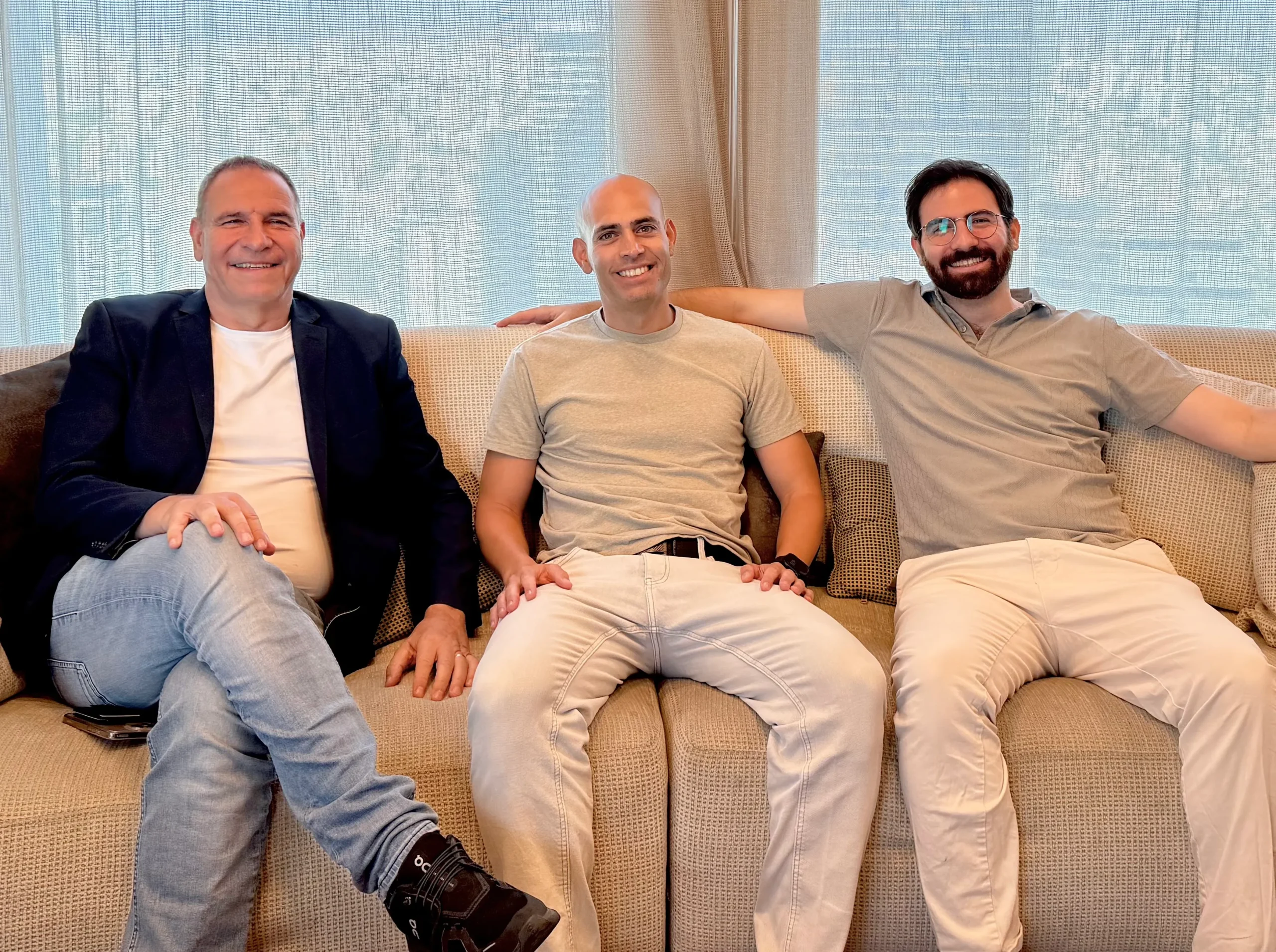
In a development that echoes the most intriguing concepts of science fiction, Israeli startup 42AI has officially emerged from stealth mode, announcing a substantial $62.5 million in seed funding. The company claims to be at the forefront of a paradigm shift in artificial intelligence, developing what it terms a "behavioral world model" designed to predict human actions and decisions even in novel and unprecedented situations. This ambitious endeavor moves beyond conventional predictive analytics, aiming to decipher the underlying psychological tendencies that drive individual behavior, irrespective of changing circumstances.
A New Frontier in Predictive AI: Understanding Human Tendencies
The core of 42AI’s innovation lies in its "behavioral world model," a sophisticated AI system that seeks to understand and anticipate how individuals will react to various stimuli and conditions. Unlike traditional AI models that primarily extrapolate patterns from past actions, 42AI’s technology delves deeper, attempting to model internal motivations and inherent psychological leanings. This approach is particularly potent in dynamic environments where historical data alone may not suffice to predict future behavior. The company’s initial focus illustrates this ambition: deploying its predictive system within a select group of financial brokerages to anticipate how individual traders will respond to highly volatile market conditions. This application highlights the high stakes and complex behavioral patterns that 42AI aims to decode.
Amit Gal-Or, CEO and co-founder of 42AI, articulated the foundational philosophy behind their audacious claim, stating, "Behavior is not deterministic; it’s constantly probabilistic." This perspective posits that while specific actions might vary, individuals possess enduring psychological tendencies that consistently influence their decision-making frameworks. These tendencies, according to Gal-Or, are what 42AI endeavors to quantify and convert into actionable data for its AI model. Ehud Ezra, CTO and co-founder, further elaborated on this, explaining, "A week from now, you might be a different person, but your tendencies will always play out in certain areas to a probability or distribution." This nuanced understanding forms the bedrock of their model, which doesn’t claim to predict a singular, inevitable action, but rather the probability of a person making a specific decision within a given context.
Interdisciplinary Roots and Rigorous Development
The journey to develop this groundbreaking model has been a three-year odyssey, marked by an intensely interdisciplinary approach. 42AI has meticulously integrated insights from psychological research, neuroscience, and genetics, creating a holistic framework for understanding human behavior. This rigorous scientific foundation was further strengthened by collaborations with esteemed experts in psychology and post-traumatic stress disorder (PTSD), as well as the invaluable counsel of Dan Shechtman, the distinguished recipient of the 2011 Nobel Prize in Chemistry. The involvement of such diverse and high-caliber expertise underscores the depth of scientific inquiry underpinning 42AI’s technological claims, distinguishing it from many purely data-driven AI ventures.
The initial phase of development involved extensive psychometric assessments and behavioral scenarios administered to thousands of individuals. This primary research was then significantly augmented by integrating vast government and biobank datasets, expanding the model’s training base to cover over 2 million people. As the company transitioned into commercial deployments, its customer datasets have further swelled, encompassing nearly 30 million individuals. This expansive and diverse data foundation is critical for training a model that aims to identify universal psychological tendencies rather than mere superficial patterns.
The Mechanics of Prediction: Beyond Superficial Data
42AI’s innovative methodology diverges sharply from conventional data analysis. Instead of merely analyzing a person’s direct past actions within a specific domain (e.g., trading history to predict future trades), the model strives to discern internal motivations by examining reactions to seemingly unrelated events. For an investor or trader, such events could span a wide range of interactions, including the completion of Know Your Customer (KYC) processes, onboarding experiences, interactions with support calls, money transfers, or even browsing patterns before executing trades.
Ezra detailed the granularity of data collection: "When the person is talking to support or sales in the initial process […] we’re looking at the sentiment, we’re looking at the voice, we’re looking at a lot of interactions that they’re doing, how many times do they call, and so forth." These seemingly peripheral data points are fed into the model alongside direct transactional data, such as buying and selling patterns and prevailing market conditions. This comprehensive data ingestion aims to construct a "world model" where, as Ezra puts it, "every individual is the world," implying a personalized and deeply contextual understanding of each person’s unique behavioral landscape.
These myriad observations are then transformed into mathematical representations of individual traits. These abstract representations are subsequently fed into a transformer-based world model, which computes and lays out probabilities for various potential decisions under different simulated circumstances. To ensure transparency and interpretability, the company employs a separate language model dedicated to generating explanations for its predictions, a critical feature in complex domains like finance.
A key aspect of the model’s training is its emphasis on preserving a person’s underlying tendencies during simulations. Ezra explained that if, for instance, a traditionally risk-averse individual is suddenly treated as a risk-taker by the model during a simulation, it signals that "the target is off." This self-correction mechanism, built into the model’s reward structure during training, ensures that the AI remains grounded in the probabilistic manifestation of consistent psychological traits rather than producing erratic or contradictory predictions.
Initial Traction and Performance in Financial Markets
With its emergence from stealth, 42AI has already secured significant traction within the financial sector. The company is currently collaborating with 10 large brokerages, where its behavioral world model is being leveraged for critical functions such as managing liquidity, optimizing margin requirements, and enhancing hedging exposure. These applications underscore the immediate value proposition of 42AI’s technology in a sector where accurate forecasting of customer behavior can translate directly into significant operational efficiencies and risk mitigation.
Gal-Or reported that the company is actively onboarding additional customers and is already generating "seven figures" in revenue, although a specific figure was not disclosed. The revenue model typically involves either a flat fee or a percentage of the value generated for the client platform. A notable success story shared by Gal-Or cited one brokerage that reportedly generated approximately $30 million in additional value through the implementation of dynamic hedging strategies powered by 42AI’s model. This real-world impact provides compelling evidence of the technology’s efficacy.
In terms of performance metrics, 42AI claims an impressive 98% accuracy in predicting market trades. However, Gal-Or clarified that this metric pertains to whether trading flows fall within a predicted range, rather than an exact prediction of every single trade. This distinction is crucial, as predicting a probabilistic range of outcomes is a more realistic and actionable goal in complex human systems. Furthermore, the model consistently achieves an F1 score of 0.8 to 0.85 for predicting trading direction and volume. The F1 score, a widely respected metric in machine learning, provides a balanced measure of a classification model’s ability to correctly identify positive cases while minimizing both false alarms and missed events, indicating a robust and reliable predictive capability.
Despite these strong performance claims, the founders acknowledge inherent limitations. Gal-Or highlighted a "natural ceiling" to the model’s accuracy, stemming from the fundamental reality that AI systems, confined to available data, cannot access the full spectrum of a person’s real-world experiences. Ezra elaborated, noting that the system’s accuracy can suffer when it misses crucial situational context, such as an individual altering their trading decisions based on advice from a friend or a colleague—information that would typically remain outside the scope of institutional data. These acknowledgments temper the ambitious claims with a dose of realism, framing the technology as a powerful, yet not omniscient, predictive tool.
Strategic Funding and Corporate Structure
The $62.5 million seed funding round is particularly noteworthy for its size, which is exceptionally large for a seed stage. This substantial investment was secured over three years and came from a combination of the founders’ own capital and Infinity Group. The involvement of Infinity Group carries a familial connection, as it was founded by Amir Gal-Or, who is not only 42AI’s chairman but also a co-founder and the father of CEO Amit Gal-Or. This structure, while not uncommon in the startup ecosystem, highlights a strong internal belief in the company’s vision and long-term potential. With this initial funding now secured, 42AI has expressed plans to raise additional capital to fuel its continued expansion and product development.
Expanding Horizons: Beyond Finance and Ethical Considerations
While finance serves as 42AI’s initial beachhead, the company envisions a much broader application for its behavioral world model. Future exploration includes industries such as gaming, where predicting player behavior could optimize engagement and monetization strategies; fraud prevention, by identifying anomalous patterns indicative of malicious activity; and cybersecurity, where understanding potential insider threats or user vulnerabilities could bolster defenses. The ultimate long-term aspiration, tying back to the initial sci-fi premise, is to enable robots and other AI agents to truly understand human intentions and behaviors, fostering more seamless and intuitive human-AI interaction. However, Ezra pragmatically noted that achieving this grand vision will require extensive training of the model on the specific rules and contextual nuances of each new domain, a significant undertaking.
The emergence of such a powerful predictive technology inevitably raises profound ethical questions, a concern the original reporter candidly presented to the founders. The ability of a brokerage to anticipate a customer’s actions creates a potential for asymmetry of information and, consequently, the risk of exploiting that knowledge for institutional gain over individual customers. Ezra acknowledged this as "a valid concern." In response, the founders pointed to existing regulations, internal monitoring protocols, and an ethics committee as safeguards.
However, the efficacy of these measures in preventing potential misuse remains a critical area for scrutiny. While regulations like GDPR and CCPA aim to protect data privacy, the application of predictive behavioral models introduces new complexities. The core ethical dilemma revolves around whether predictive insights, even if anonymized, could be used to subtly nudge or manipulate customer behavior in ways that primarily benefit the institution rather than the individual. The company’s assertion that "the model never knows who the person is," while technically true in terms of personally identifiable information, still allows for the creation of sophisticated individual behavioral profiles linked to specific customer activities. This distinction is important; while direct identity might be obscured, the profile itself could be used to target specific behavioral patterns.
In a broader context, the development of behavioral AI tools necessitates robust ethical frameworks that go beyond mere compliance. These frameworks typically advocate for principles such as fairness, transparency, accountability, and human oversight to prevent algorithmic bias, ensure equitable treatment, and maintain individual autonomy. While Gal-Or expressed confidence that 42AI’s technology could be "the solution" to such risks, concrete examples of how the model actively prevents its customers from gaining an unfair advantage over the very individuals it profiles were not extensively detailed. This remains a crucial area where the company will need to demonstrate not only technological prowess but also an unwavering commitment to ethical deployment as its influence expands. The future success and societal acceptance of 42AI’s groundbreaking behavioral world model will depend as much on its ethical governance as on its technical capabilities.
