

TOKYO — Toyota Motor’s sales in China for the first half of its fiscal year, spanning April to September 2026, have fallen to their lowest point in nine years, signaling a significant challenge for the Japanese auto titan and its global peers in the world’s largest automotive market. The stark figures, released on October 29, 2026, underscore the rapidly evolving landscape of the Chinese auto industry, characterized by aggressive domestic innovation, a fierce price war, and a growing consumer preference for electric and intelligent vehicles.
The grim sales report paints a picture of a company grappling with headwinds that have intensified over the past several fiscal periods. While specific sales figures for the April-September 2026 period were not immediately detailed in the initial report, the declaration of a nine-year low implies a substantial decline from previous years. To provide perspective, in the fiscal first half of 2025, Toyota sold approximately 750,000 vehicles in China. A nine-year low suggests a figure potentially below the 650,000 units recorded in the fiscal first half of 2017. This contraction is particularly concerning given China’s continued dominance as a global automotive sales hub.
The Shifting Sands of the Chinese Auto Market: A Historical Context
The Chinese automotive market has undergone a profound transformation in recent years. For decades, foreign automakers, including Toyota, enjoyed a dominant position, benefiting from growing consumer wealth and a burgeoning demand for reliable, well-engineered vehicles. Toyota, in particular, cultivated a strong reputation for its hybrid technology and robust build quality, making its Camry, Corolla, and RAV4 models popular choices among Chinese consumers. The company established joint ventures with local partners, a mandatory structure for foreign automakers operating in China, to navigate the market and leverage local manufacturing capabilities.
However, the advent of electrification and the rapid advancement of intelligent vehicle technologies, driven primarily by domestic players, have fundamentally reshaped consumer preferences and competitive dynamics. Chinese brands, such as BYD, Geely, and NIO, have not only embraced electric vehicle (EV) technology with remarkable speed but have also integrated sophisticated digital features, advanced driver-assistance systems (ADAS), and seamless connectivity into their offerings. This has led to a perception among a growing segment of Chinese consumers that domestic brands are now at the forefront of automotive innovation, often surpassing the offerings of established international manufacturers in terms of technology and user experience.
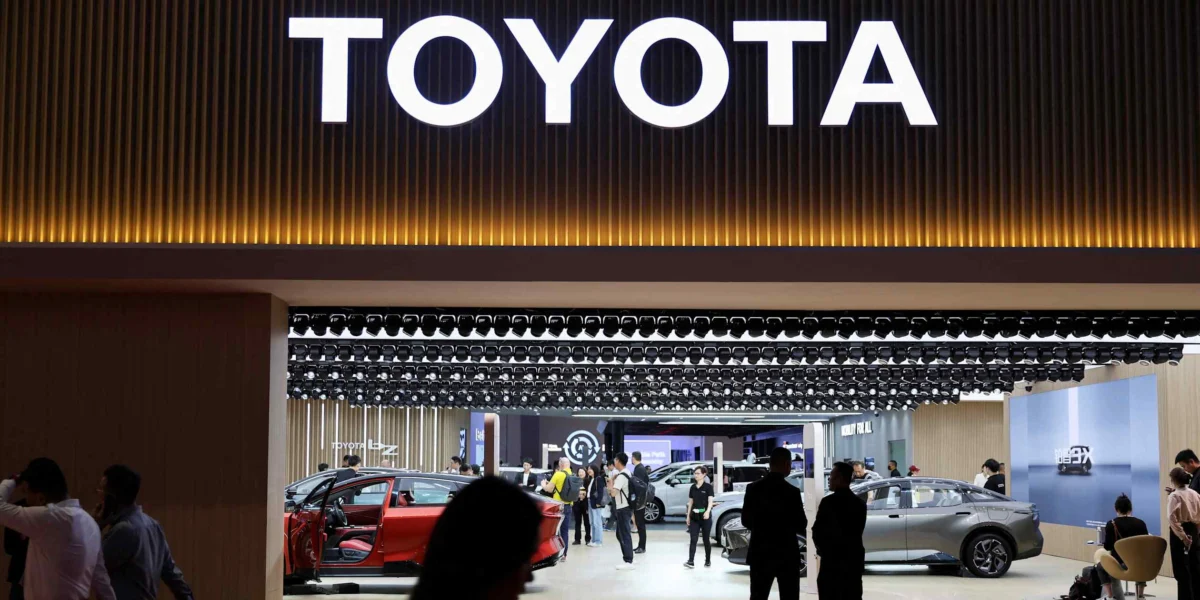
The "Auto Shanghai" show, as exemplified by the Reuters photograph taken on April 24, 2025, serves as a crucial barometer for these shifts. The image, depicting visitors at the Toyota booth, captures a moment of intense competition and a visible display of the global automotive industry converging in Shanghai, a city synonymous with China’s economic prowess and its pivotal role in the automotive world. The show typically highlights the latest innovations and future directions, and in recent iterations, has increasingly showcased the ascendancy of Chinese EV manufacturers and their cutting-edge technologies.
Intensifying Price Wars and the Impact on Profitability
Adding to the market challenges, a relentless price war has engulfed the Chinese auto market. Initiated by Tesla and quickly amplified by domestic manufacturers, this aggressive pricing strategy has put immense pressure on profit margins across the industry. While lower prices can stimulate sales volume, they also erode profitability, forcing manufacturers to reconsider their pricing strategies and production costs. For companies like Toyota, which have historically relied on a balance of volume and premium pricing for their internal combustion engine (ICE) vehicles and hybrids, the current environment poses a significant strategic dilemma.
The struggle to adapt to this new paradigm is evident in Toyota’s recent performance. The company’s reliance on its established strengths, such as hybrid technology, while still a significant factor, appears to be insufficient to counter the allure of fully electric vehicles and the rapid technological advancements offered by competitors. Furthermore, the pace of software development and integration in Chinese EVs, which often includes advanced infotainment systems and over-the-air (OTA) updates, has set a new benchmark that traditional automakers are finding challenging to match.
Toyota’s Strategic Response and Future Outlook
In response to these evolving market conditions, Toyota has been undertaking various strategic initiatives. The company has announced plans to accelerate its electrification strategy in China, including the introduction of more battery electric vehicles (BEVs) and plug-in hybrid electric vehicles (PHEVs). It has also been investing in local research and development, aiming to tailor its products more closely to the specific preferences of Chinese consumers, particularly in areas of intelligent technology and connectivity.
However, the gestation period for developing and launching new vehicle platforms and technologies is considerable. This means that while Toyota is actively pursuing a future-oriented strategy, its current product portfolio, which still heavily features ICE and traditional hybrid models, may be increasingly out of step with the dominant trends in the Chinese market. The company’s ability to quickly pivot and effectively compete in the rapidly expanding EV segment will be critical for its long-term success in China.
Industry analysts have cautiously observed Toyota’s situation. Ms. Akiko Tanaka, a senior automotive analyst at Tokyo-based Global Auto Insights, commented, "Toyota’s brand equity in China remains strong, particularly among consumers who value reliability and durability. However, the narrative has shifted. The younger generation of Chinese car buyers is increasingly prioritizing technology, performance, and environmental credentials, areas where domestic players have made significant strides. Toyota needs to demonstrate that it can not only offer competitive EVs but also integrate them with the sophisticated digital experiences that Chinese consumers have come to expect. The current sales figures are a clear warning signal."
Broader Implications for Toyota and the Global Auto Industry
The declining sales in China have significant implications not only for Toyota’s financial performance but also for its global standing. China represents a substantial portion of the global automotive market, and a sustained downturn in sales there could impact Toyota’s overall production volumes, profitability, and its ability to fund future research and development.
The challenges faced by Toyota are emblematic of a broader trend affecting established international automakers in China. Many are experiencing similar declines in market share as domestic brands gain traction. This situation is forcing a re-evaluation of strategies, with a greater emphasis on localization, faster product development cycles, and a more aggressive approach to electrification and intelligent vehicle technologies.
The Auto Shanghai show, scheduled for April 2025, will likely provide a clearer picture of how the industry is responding to these dynamics. While the Reuters photograph from the 2025 show captures a moment of engagement at the Toyota booth, the underlying competitive pressures will undoubtedly be a central theme. The ability of global automakers to adapt to the unique and rapidly evolving demands of the Chinese market will be a defining factor in their success in the coming years. Toyota’s nine-year low in sales is a stark reminder of the urgency required to navigate these transformative times. The company’s long-term vision and its execution in China will be closely watched by the entire global automotive sector, as it grapples with the dawn of a new era in mobility. The path forward will require not just incremental adjustments but potentially a fundamental reimagining of its product development, marketing, and sales strategies to regain momentum in one of the world’s most critical automotive markets.
