

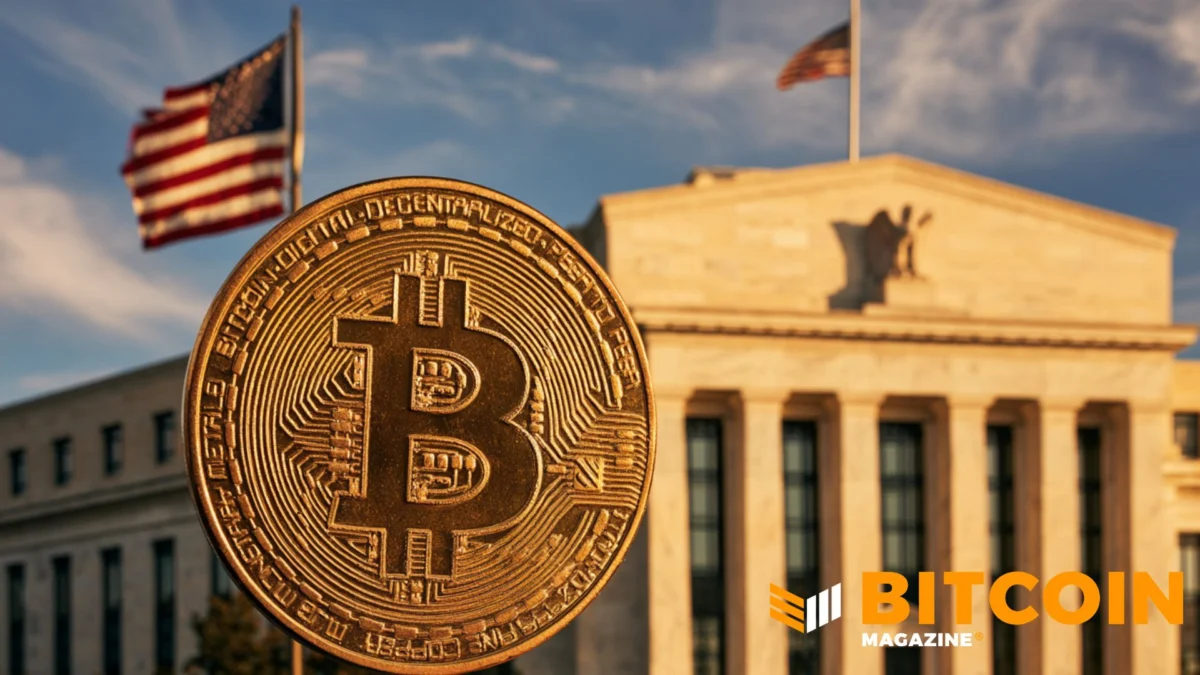
The Federal Reserve’s Federal Open Market Committee (FOMC) concluded its latest policy meeting on Wednesday, opting to maintain the target range for the federal funds rate at 3.75% to 4%. This decision, however, was not unanimous, with two members dissenting and advocating for a quarter-point rate hike, signaling a growing divergence within the central bank’s leadership regarding the urgency of combating persistent inflation. The bitcoin price experienced a brief period of volatility in the immediate aftermath of the announcement, oscillating around the $81,000 mark.
The 10-2 vote outcome marks a significant moment in the Fed’s recent monetary policy history. The dissents came from Governor Lisa Cook and Cleveland Fed President Beth Hammack, who argued for a more aggressive stance to curb inflationary pressures. This marks the first instance since 1992 that a sitting Fed governor and a regional Federal Reserve Bank president have jointly dissented on the same side of a policy decision, underscoring the gravity of their concerns and the internal debate within the committee.
Following the vote, Federal Reserve Chair Kevin Warsh addressed reporters, asserting that political considerations played no role in the committee’s decision, a statement made just days before crucial midterm elections. Warsh has previously articulated a preference against providing explicit forward guidance in the absence of an acute crisis, believing that market participants should independently interpret economic data to inform their investment strategies. This approach places a greater onus on investors to decipher the Fed’s future policy intentions based on the available economic indicators.
In its post-meeting statement, the FOMC removed language that previously indicated when a rate hike might be necessary to support a return to the 2% inflation target. This alteration was replaced with a more generalized statement indicating that future policy decisions would be guided by incoming data. The committee also updated its assessment of economic growth, describing it as "strong," an upgrade from the previous characterization of "solid." This subtle shift in language suggests a growing confidence in the underlying resilience of the U.S. economy.
Despite the pause in rate hikes, market indicators and the Fed’s own "dot plot" projections strongly suggest an increased likelihood of a rate increase by December. Fed funds futures are pricing in a significant probability of such a move, with some market participants estimating the odds at nearly three in four. This forward-looking sentiment is largely driven by the persistent "hot" inflation data, which has evidently galvanized the two dissenting members to call for immediate action. The officials who dissented are precisely those who have voiced the most concern about the current inflationary environment and the need for decisive policy intervention.
Bitcoin Price Reaction: A Muted Initial Response
Bitcoin’s immediate reaction to the Federal Reserve’s decision was relatively subdued, reflecting a market that largely anticipated the rate hold. The cryptocurrency saw a brief surge to approximately $81,700 in the minutes following the announcement. However, this upward momentum proved short-lived, as the price dipped below $80,500 before recouping some losses to hover around $81,000. The muted volatility suggests that most market participants had already factored in a pause, rendering the actual outcome less surprising and thus eliciting a less pronounced price movement.
Historically, Bitcoin’s initial response to Federal Reserve pronouncements tends to be modest, with the more significant price direction often emerging over the subsequent day or two. This pattern suggests that traders are taking time to digest the full implications of the Fed’s statement and the dissenting votes. In the broader crypto market context, there are signs of continued institutional interest. Spot Bitcoin Exchange-Traded Funds (ETFs) experienced net inflows of $110 million on October 26 and a further $176 million on October 27, indicating that some institutional investors are capitalizing on perceived buying opportunities. Conversely, other market observers have noted instances of large holders liquidating their positions amidst price strength, creating a tug-of-war in market sentiment.
This tension encapsulates the current precarious position of the cryptocurrency market. Bitcoin is currently trading approximately one-third below its all-time high of near $126,000 reached in October 2025. A sustained path of interest rate hikes by the Federal Reserve generally acts as a headwind for assets that have historically benefited from an environment of cheap money. The market has been actively adjusting to the prospect that the era of abundant, low-cost capital may be drawing to a close.
Market participants are divided in their interpretation of the Fed’s decision. Some traders interpret the hold as an indication that the central bank will adopt a more gradual approach to monetary tightening. Others view the upcoming December meeting as the true inflection point, where a rate hike is more probable. For the immediate future, the $80,000 level is being closely watched as a key support zone for Bitcoin. This price point has demonstrated resilience in recent trading sessions, and a decisive breach below it could signal further downside, exposing subsequent support levels.
Fed Chair Warsh and his colleagues have consistently emphasized their commitment to basing policy decisions on incoming economic data. This data-dependent approach means that investors, including those in the cryptocurrency space, will need to exercise patience as they await further signals from the economic landscape.
Midterm Elections Loom as a Political Backdrop
Beyond the immediate monetary policy implications, the upcoming midterm elections on November 3 present another significant political event that could influence market sentiment. While cryptocurrency has not been a dominant issue on the campaign trail, the industry has made substantial efforts to shape its legislative future.
The cryptocurrency industry reportedly invested approximately $176 million across more than 100 midterm races. This significant expenditure was aimed at fostering the development of a bipartisan bloc in Congress that could advocate for the sector’s interests, particularly in the post-President Donald Trump era. Fairshake, the largest super Political Action Committee (PAC) for the crypto industry, spearheaded these efforts, employing strategies similar to those utilized during the 2024 election cycle. The outcome of these elections could have long-term implications for regulatory frameworks governing digital assets.
At the time of this report, the price of Bitcoin stood at $81,478, reflecting the ongoing market dynamics influenced by both monetary policy signals and broader economic developments.
Context and Historical Precedent
The Federal Reserve’s decision to hold interest rates steady comes at a time of elevated inflation, which has been a persistent concern for policymakers and the public alike. Inflationary pressures have been building over the past several years, driven by a confluence of factors including supply chain disruptions, increased consumer demand fueled by pandemic-related stimulus, and geopolitical events impacting energy prices. The Fed’s primary mandate is to maintain price stability and maximize employment. In recent times, the focus has shifted heavily towards combating inflation, as it erodes purchasing power and can destabilize economic growth if left unchecked.
The Federal Reserve’s toolkit for managing the economy includes adjusting the federal funds rate, which is the target rate for overnight lending between banks. This rate influences borrowing costs throughout the economy, affecting everything from mortgages and car loans to business investment. When the Fed raises rates, it aims to cool down an overheating economy and curb inflation by making borrowing more expensive. Conversely, lowering rates is intended to stimulate economic activity during periods of slowdown.
The current target range of 3.75% to 4% represents a significant increase from the near-zero rates that prevailed for much of the preceding decade. The Fed embarked on a series of aggressive rate hikes starting in early 2022 in an attempt to rein in rapidly accelerating inflation. The pause in this hiking cycle, however, does not necessarily signal an end to monetary tightening. It could be a strategic pause to assess the impact of previous hikes and gather more data on the economy’s trajectory.
The dissents from Governor Cook and President Hammack are particularly noteworthy. Their call for a quarter-point increase suggests a belief that the current pace of inflation remains too high and that further immediate action is warranted. This perspective might be informed by specific economic indicators that they believe are being underweighted by the majority, or by a greater concern about inflation expectations becoming unanchomred. The historical precedent of a governor and a regional bank president dissenting together underscores the significant disagreement and the potential for future policy shifts to be more contentious.
The absence of explicit forward guidance, as favored by Chair Warsh, places a greater burden of interpretation on market participants. In a complex economic environment, clear communication from the central bank can help reduce uncertainty and guide market expectations. However, Warsh’s approach emphasizes the primacy of economic data, suggesting a willingness to adapt policy as new information becomes available rather than adhering to a predetermined path. This can lead to greater short-term volatility as markets react to each new data release.
Economic Growth Assessment: "Strong" vs. "Solid"
The subtle upgrade in the Fed’s description of economic growth from "solid" to "strong" is an important nuance. "Solid" typically implies steady and consistent growth, while "strong" suggests a more robust and dynamic expansion. This linguistic shift indicates that the committee perceives the economy as having a greater capacity to withstand further monetary tightening without tipping into a significant downturn. This assessment of underlying economic strength might also contribute to the hawkish leanings of some FOMC members, who believe the economy can absorb higher interest rates.
The interplay between inflation and economic growth is a delicate balancing act for central banks. If inflation remains stubbornly high, the Fed may be forced to continue raising rates, even if it risks slowing growth more significantly. Conversely, if growth shows signs of faltering, the Fed might be hesitant to tighten policy further, fearing a recession. The current situation presents a complex scenario where inflation is elevated, but the economy has shown resilience.
Implications for Bitcoin and Digital Assets
The relationship between interest rates and Bitcoin is complex and has evolved over time. Historically, Bitcoin has been seen by some as a potential hedge against inflation, similar to gold. However, its price action has also shown a correlation with risk assets, meaning it can be sensitive to changes in investor sentiment and broader market liquidity.
When interest rates are low, the cost of borrowing is reduced, and investors may be more inclined to seek higher returns in riskier assets like cryptocurrencies. Conversely, higher interest rates can make traditional, less risky investments like bonds more attractive, potentially drawing capital away from assets like Bitcoin. The "easy money" era, characterized by prolonged periods of low interest rates and quantitative easing, was a significant tailwind for Bitcoin’s ascent to its previous all-time highs.
The market’s adjustment to the potential end of this era is ongoing. Investors are recalibrating their strategies to account for a higher interest rate environment. The fact that Bitcoin is trading significantly below its previous peak suggests that this adjustment is already underway. The inflows into Bitcoin ETFs, however, indicate that there is still considerable demand, even amidst these shifting macroeconomic conditions. This suggests that institutional adoption continues to be a significant factor supporting Bitcoin’s long-term value proposition.
The observation of large holders selling into strength highlights a common market dynamic. As prices rise, some long-term investors may choose to de-risk and realize profits, creating selling pressure. This selling pressure can be absorbed by new buyers, or it can lead to a price retracement. The current market is characterized by this ongoing negotiation between buyers and sellers, with the broader macroeconomic environment playing a crucial role.
The upcoming December FOMC meeting is indeed a critical juncture. If the Fed proceeds with another rate hike, it would reinforce the narrative of continued tightening and could put further pressure on risk assets. Conversely, another pause, especially if accompanied by dovish commentary, could be interpreted as a sign that the Fed is nearing the end of its hiking cycle, potentially providing a boost to assets like Bitcoin.
The $80,000 level for Bitcoin serves as a crucial technical indicator. Its ability to hold as support suggests a floor to current selling pressure. A breakdown below this level would likely trigger further technical selling and could signal a deeper correction, opening up the possibility of testing lower price points. The market’s reaction to this level will be closely monitored by traders and analysts.
The cryptocurrency industry’s significant lobbying efforts underscore the importance of favorable regulatory and political landscapes for its continued growth. The substantial campaign spending indicates a proactive approach to shaping policy and ensuring that digital assets are recognized and accommodated within the existing financial and legal frameworks. The outcomes of the midterm elections will provide insight into the potential for such bipartisan support to materialize.
In conclusion, the Federal Reserve’s decision to hold rates steady, albeit with a divided committee, underscores the ongoing complexity of managing inflation while supporting economic growth. The muted reaction from Bitcoin suggests a market that is already pricing in a degree of uncertainty and is looking towards future data releases and policy signals. The interplay of monetary policy, economic data, and political developments will continue to shape the trajectory of both traditional financial markets and the burgeoning digital asset space.
