

The rapid expansion of solar generation and battery storage capacity is fundamentally reshaping the economics of the American power grid, according to a series of industry reports and project announcements that highlight a shift toward more affordable and resilient energy systems. In California and Texas, the two largest energy markets in the country, massive investments in clean energy have resulted in billions of dollars in savings for consumers during peak summer demand. This trend is being bolstered by a surge in large-scale transmission projects, the proliferation of virtual power plants, and a significant influx of capital into independent power producers transitioning from project development to long-term asset ownership.
The Economic Impact of Solar and Storage in California and Texas
Recent analysis from the Solar Energy Industries Association (SEIA) reveals that the strategic buildout of solar and storage assets has successfully decoupled high electricity demand from high wholesale prices. Between June and August of the most recent peak season, Texas saved an estimated $3.55 billion in energy costs, while California realized savings of $2.5 billion compared to the same period five years prior. These figures represent a significant milestone in the energy transition, demonstrating that renewable energy is no longer just a decarbonization tool but a primary driver of wholesale market stability.
The scale of this transformation is evident in the generation data. In Texas, solar generation increased by 421% between 2021 and 2026, while California saw a 90% increase. Even more dramatic was the growth of battery storage, which provides the flexibility needed to manage the intermittent nature of solar power. Texas expanded its battery capacity more than 26-fold during this period, while California’s capacity grew nearly sevenfold.

The impact on the Electric Reliability Council of Texas (ERCOT) and the California Independent System Operator (CAISO) was profound. Despite a 30.1% increase in power usage in Texas compared to 2021, average wholesale prices dropped by 42% after adjusting for inflation. In California, where power usage grew by a more modest 2.5%, wholesale prices fell by 40% on an inflation-adjusted basis. This phenomenon is largely attributed to the "merit order effect," where renewable energy, which has zero marginal fuel costs, displaces more expensive fossil fuel generation in the daily bidding process, effectively lowering the clearing price for all electricity on the grid.
Tim Pawlenty, CEO of SEIA, noted that the results transcend political boundaries, stating that delivering affordable and reliable power is a priority that both states have met through aggressive clean energy adoption. The data challenges long-standing criticisms that renewable energy increases costs for ratepayers, suggesting instead that the lack of fuel volatility and the declining costs of solar hardware are creating a new baseline for energy affordability.
Scaling Virtual Power Plants to Meet Data Center Demand
As traditional generation and storage assets grow, the industry is also seeing the rise of "software-defined" energy through Virtual Power Plants (VPPs). A landmark agreement between Google and Voltus has recently expanded to a 1-gigawatt (GW) VPP initiative within the PJM Interconnection territory, which serves much of the Mid-Atlantic and Midwest. This expansion follows an initial 100-megawatt pilot program launched earlier this year.
Under this "Bring Your Own Capacity" (BYOC) model, Voltus aggregates flexible energy loads from residential smart thermostats, commercial battery systems, and industrial process adjustments. These distributed resources are orchestrated to respond to grid stress. When demand spikes or supply falters, the VPP can shed load or discharge local batteries, providing the same reliability benefits as a traditional "peaker" power plant but without the emissions or the multi-year construction timelines.

The 1-GW scale of this partnership is particularly significant given the rapid growth of data centers in the PJM region. Data centers require massive amounts of firm, 24/7 power, often straining local distribution networks. By funding the VPP, Google is effectively creating the capacity it needs to support its data center expansions while simultaneously providing economic benefits to the local businesses and homeowners who participate in the program. Dana Guernsey, CEO of Voltus, emphasized that this model translates data center growth into direct grid support, facilitating interconnection in regions where the queue for new power is often years long.
Modernizing the Grid: MISO’s $1.23 Billion Transmission Backbone
The integration of these new energy resources requires a more robust physical infrastructure to move power from resource-rich rural areas to high-demand urban centers. To address this, the Midcontinent Independent System Operator (MISO) has authorized a consortium to develop the East Adair – Minnesota/Iowa State Line – Arbor Hill – York Avenue (EASL) project. This $1.23 billion initiative is designed to create a 765-kilovolt (kV) transmission backbone across Iowa and into Minnesota.
The project is a joint venture between Ameren Transmission Company of Illinois (ATXI), GridLiance Heartland (a subsidiary of NextEra Energy Transmission), and Dairyland Power Cooperative. The infrastructure will include a 187-mile 765-kV line, which acts as a "superhighway" for electricity, allowing for much higher efficiency and lower line losses than standard 345-kV lines.
Transmission remains one of the primary bottlenecks for renewable energy deployment in the United States. Without high-voltage lines like the EASL project, wind and solar farms in the Midwest are often forced to curtail production because the existing grid cannot handle the volume of power. Brent Ridge, President and CEO of Dairyland Power Cooperative, stated that the project is foundational for regional resiliency and will provide the flexibility needed to accommodate future economic growth and the transition to carbon-free resources.

The Financial Evolution of Independent Power Producers
The maturation of the solar industry is also reflected in the changing financial strategies of major developers. Pivot Energy, a leading developer of distributed-scale solar and storage, recently announced a $500 million corporate credit facility with Nuveen Energy Infrastructure Capital. This financing marks a transition for Pivot from a pure-play developer to an Independent Power Producer (IPP) that retains ownership of its assets.
The facility will fund late-stage project development and equipment procurement for a portfolio that Pivot expects to exceed 1 GW of solar and 700 megawatt-hours of storage by 2029. By owning and operating the assets long-term, companies like Pivot can capture more value from the federal tax credits provided by the Inflation Reduction Act (IRA) while providing steady, predictable returns to investors like Nuveen, which manages over $2.6 trillion in assets.
Similarly, CleanChoice Energy has secured an $85 million term loan from Aiga Capital Partners to fuel its expansion into solar generation. Historically known as a retail renewable energy supplier, CleanChoice is now moving "upstream" to build and own the solar farms that provide its power. CEO Tom Matzzie described this as a "farm-to-table" approach to energy, allowing the company to manage its supply chain more effectively and provide more direct access to clean energy for its customers.
Community Solar and the Integration of Agrivoltaics
On the local level, community solar continues to expand, providing clean energy access to renters and small businesses who cannot install rooftop panels. In Sandwich, Illinois, Generate Capital and TurningPoint Energy recently commissioned a 3.5-megawatt (MW) community solar project, part of a larger 34.5-MW portfolio in the state.

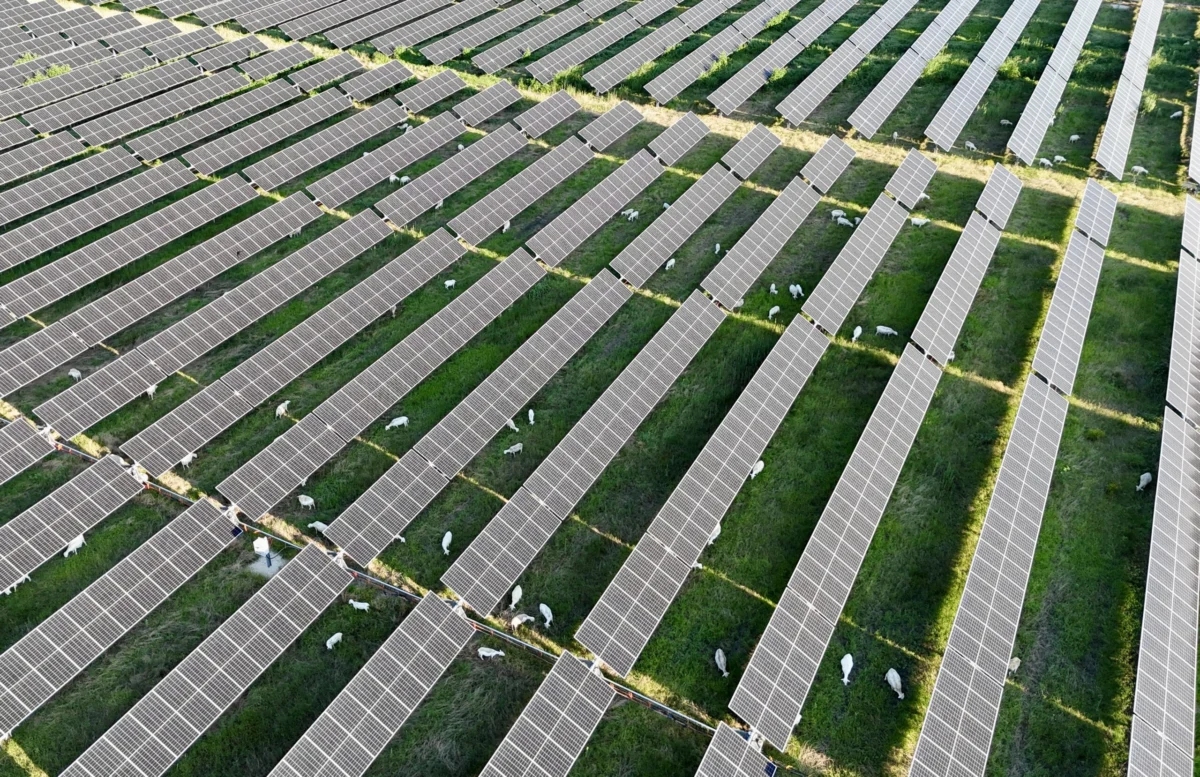
The Sandwich project is notable for its use of agrivoltaics—the dual-use of land for both solar energy and agriculture. The site employs sheep grazing for vegetation management, which reduces the need for mechanical mowing and chemical herbicides. Additionally, the project includes pollinator-friendly plantings to support local biodiversity. This approach addresses one of the primary concerns regarding solar development: the loss of agricultural land. By integrating farming practices, developers are finding greater community acceptance and improving the ecological profile of their projects.
Peggy Flannery, Managing Director of Investments at Generate Capital, highlighted that such projects deliver immediate tangible benefits, including lower energy costs for residents and the creation of local jobs. The Sandwich array is expected to generate 8 million kilowatt-hours annually, offsetting the emissions of over 1,600 gasoline-powered vehicles.
Broad Implications for the U.S. Energy Landscape
The convergence of these developments—record-breaking savings in major markets, the scaling of virtual power plants, massive transmission investments, and sophisticated new financing models—points toward a period of accelerated growth for the U.S. energy transition.
The economic data from California and Texas provides a powerful proof of concept for other states. As the cost of battery storage continues to decline, the ability of renewables to provide firm capacity will only improve, further insulating wholesale markets from the price shocks associated with natural gas and coal. Furthermore, the shift of companies from developers to long-term owners suggests a stabilizing industry that is maturing into a core component of the nation’s infrastructure.

However, challenges remain. The $1.23 billion MISO project underscores the massive capital requirements and regulatory hurdles involved in grid modernization. Similarly, the success of VPPs depends on complex regulatory changes at the state level to allow distributed resources to participate fully in wholesale markets. Despite these hurdles, the momentum established this summer suggests that the transition to a solar-and-storage-heavy grid is not only technically feasible but increasingly the most economically rational path forward for the American power sector.
