

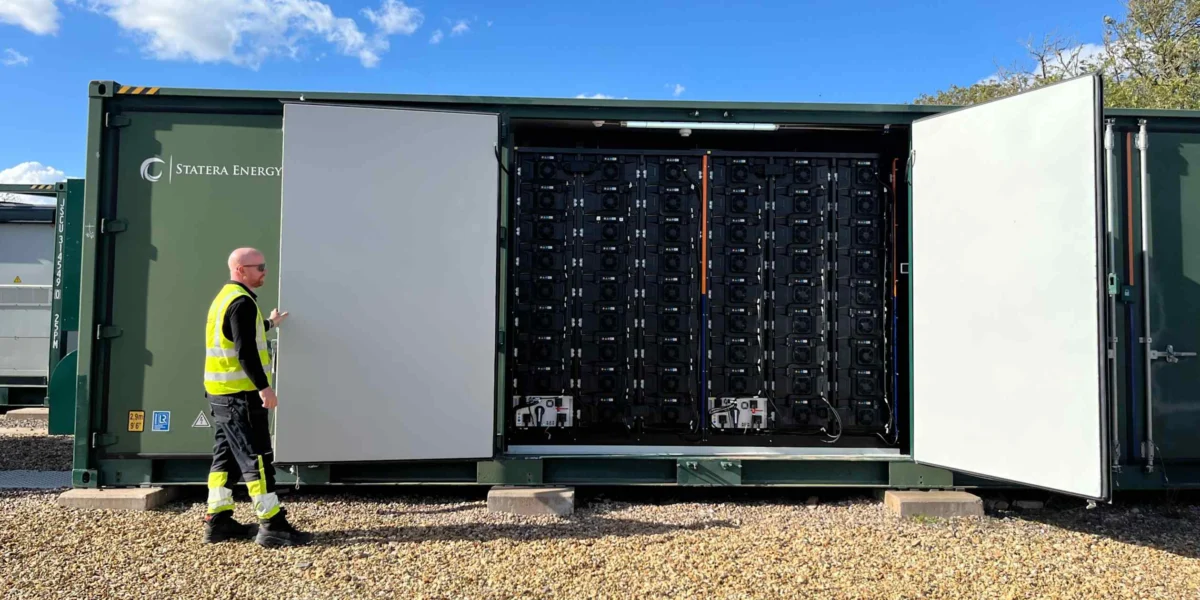
In the leafy outskirts of Leicester, a city nestled in England’s East Midlands, an unassuming plot of land is now the operational heart of a significant initiative in the global energy transition. Thirty repurposed shipping containers, meticulously arranged, house a sophisticated battery energy storage system (BESS) with the capacity to store enough electricity to power approximately 160,000 homes for two hours. This project, spearheaded by Japanese trading house Sumitomo Corporation, represents a crucial step in understanding the intricate relationship between large-scale energy storage and the dynamic world of electricity trading. The venture, which commenced its operational learning phase on October 26, 2026, is not merely about accumulating energy; it is a strategic exploration into optimizing grid stability, facilitating renewable energy integration, and unlocking new revenue streams within the United Kingdom’s evolving energy market.
The Leicester BESS facility, while visually represented by rows of utilitarian containers, is a testament to the increasingly vital role of energy storage in modern power grids. Its primary function is to absorb excess electricity generated during periods of low demand or high renewable output, and then discharge it when demand surges or renewable generation dips. This balancing act is fundamental to maintaining grid stability, preventing blackouts, and ensuring a reliable power supply for consumers. For Sumitomo Corporation, a conglomerate with a diverse portfolio spanning metals, transportation, infrastructure, and more, this project signifies a strategic deepening of its involvement in the clean energy sector, moving beyond project development and into the operational nuances of energy management and trading.
Background and Genesis of the Leicester Project
The development of the Leicester BESS project is rooted in the United Kingdom’s ambitious decarbonisation agenda and its commitment to achieving net-zero emissions by 2050. The country has seen a significant increase in renewable energy generation, particularly from wind and solar power. However, the inherent intermittency of these sources poses a considerable challenge to grid operators. Fluctuations in wind speed and sunlight can lead to unpredictable variations in electricity supply, creating the need for flexible solutions to balance the grid.
Battery energy storage systems have emerged as a leading solution to this challenge. Their ability to rapidly store and discharge electricity allows them to act as a shock absorber for the grid, smoothing out supply and demand imbalances. The UK government has actively encouraged the deployment of BESS through various policy mechanisms, including market incentives and planning support. Sumitomo Corporation, with its global experience in infrastructure and energy, recognized the immense potential of this burgeoning market.
The selection of Leicester as the site for this significant BESS installation is strategic. The East Midlands region is a key node in the UK’s national grid infrastructure, making it an ideal location for a facility that aims to provide grid services and participate in electricity markets. The project has likely undergone extensive feasibility studies, environmental impact assessments, and regulatory approvals, a process that typically spans several years for infrastructure of this scale. While specific timelines for its construction and commissioning are not detailed in the initial report, such projects generally involve stages of design, procurement, civil works, equipment installation, testing, and finally, operational deployment. The October 26, 2026 date marks a critical milestone: the commencement of its operational learning phase, suggesting that the physical construction and initial testing have been completed.
Operational Learning and Electricity Trading Dynamics
The core of Sumitomo Corporation’s current focus in Leicester lies in "learning about the operation of battery energy storage system and how that relates to electricity trading." This implies a hands-on approach to understanding the intricate mechanisms of the UK wholesale electricity market. BESS operators can participate in various market segments, each offering different revenue streams. These include:
- Ancillary Services: This is a crucial area where BESS plays a vital role. Grid operators require services to maintain system stability, such as frequency response (keeping the grid frequency within tight tolerances) and voltage control. BESS can provide these services almost instantaneously, making them highly valuable. Sumitomo’s team is likely engaged in bidding for and delivering these services, learning to optimize response times and contractual obligations.
- Wholesale Market Arbitrage: BESS can profit by buying electricity when prices are low (e.g., during off-peak hours or when there is an oversupply of renewables) and selling it when prices are high (e.g., during peak demand periods). This "buy low, sell high" strategy requires sophisticated forecasting of electricity prices and demand patterns.
- Capacity Market: The UK operates a capacity market designed to ensure sufficient generation and storage capacity is available to meet future demand. BESS can secure long-term contracts in this market, providing a stable revenue stream.
- Grid Balancing Services: Beyond scheduled ancillary services, BESS can be called upon by grid operators to address unforeseen imbalances or disruptions in real-time. Learning to respond effectively and efficiently to these dynamic requests is a key operational skill.
The "learning" aspect suggests a period of intensive data collection, analysis, and refinement of trading strategies. Sumitomo’s engineers and traders are likely working in tandem, using real-time data from the BESS and market information to fine-tune algorithms for charging and discharging, optimize bidding strategies, and manage the battery’s state of charge to maximize its lifespan and economic performance.
Supporting Data and Technological Underpinnings
While the initial report does not provide specific technical specifications for the Leicester BESS, a facility capable of powering 160,000 homes for two hours suggests a significant installed capacity. To put this into perspective, the average household electricity consumption in the UK is around 3,500-4,000 kWh per year. If we assume an average peak demand of approximately 1 kW per home (though peak demand is often higher), then powering 160,000 homes for two hours would require a discharge rate of roughly 160 MW for two hours, or a total energy storage capacity of approximately 320 MWh. This is a substantial BESS, placing it among the larger operational units in the UK.
The core components of such a system typically include:
- Lithium-ion Batteries: These are the most common battery chemistry for grid-scale storage due to their high energy density, relatively long lifespan, and established manufacturing base. However, other chemistries like flow batteries are also being explored for longer-duration storage.
- Inverters: These convert the direct current (DC) electricity stored in the batteries into alternating current (AC) electricity compatible with the grid.
- Battery Management System (BMS): This sophisticated electronic system monitors and controls the charging and discharging of individual battery cells, ensuring optimal performance, safety, and longevity.
- Energy Management System (EMS): This is the brain of the BESS operation, controlling the flow of energy to and from the grid, interacting with market platforms, and executing trading strategies.
The "30 shipping containers" likely house the battery modules, inverters, transformers, and associated control and safety equipment. Shipping containers are often used for modularity, ease of transportation, and cost-effectiveness in deploying BESS.
Statements and Reactions from Related Parties (Inferred)
While direct quotes are not available, the strategic nature of Sumitomo Corporation’s investment and the operational learning phase suggest potential reactions and interests from various stakeholders:
- Sumitomo Corporation Management: It is highly probable that senior executives at Sumitomo Corporation view this project as a critical learning ground and a strategic entry point into the rapidly expanding global energy storage market. Their statements would likely emphasize the company’s commitment to sustainable energy solutions and its ambition to become a key player in grid modernization. They would also highlight the importance of gaining practical operational experience to inform future investments and technological advancements.
- UK Grid Operators (e.g., National Grid ESO): National Grid ESO, the system operator for the electricity transmission network in Great Britain, would view this BESS as a valuable asset for grid stability and flexibility. They would likely be closely monitoring its performance, as such systems are crucial for managing the integration of renewables and ensuring the security of supply. Their reaction would be one of cautious optimism, recognizing the growing role of BESS in their operational toolkit.
- Energy Market Regulators (e.g., Ofgem): The Office of Gas and Electricity Markets (Ofgem) would be interested in how this BESS contributes to a competitive and efficient energy market. They would be observing its participation in various market mechanisms to ensure fair play and to assess the effectiveness of current regulations in incentivizing storage deployment.
- Local Authorities and Community Representatives in Leicester: While not directly involved in the trading aspect, local authorities and community groups would likely be interested in the project’s contribution to local economic development, job creation, and the UK’s broader environmental goals. They might also be concerned with the visual impact and any potential environmental considerations of the facility.
Broader Impact and Implications
The Sumitomo Corporation’s operational learning phase at the Leicester BESS has several significant implications for the energy sector:
- Accelerated Integration of Renewables: By providing grid stability services, BESS like the one in Leicester directly facilitates the increased penetration of intermittent renewable energy sources. This is a cornerstone of decarbonisation efforts.
- Enhanced Grid Resilience: The ability of BESS to quickly inject or absorb power strengthens the grid’s resilience against disruptions, whether caused by extreme weather events, equipment failures, or fluctuations in supply and demand.
- Evolution of Energy Trading Models: As BESS becomes more prevalent, it is transforming electricity trading. The focus is shifting from solely trading energy to trading flexibility, reliability, and grid services. Sumitomo’s learning process will contribute to developing more sophisticated and effective trading strategies in this evolving landscape.
- Global Market Expansion for Japanese Corporations: This project underscores the growing internationalisation of Japanese corporations in the clean energy infrastructure sector. Sumitomo’s experience in the UK can serve as a blueprint for similar deployments in other markets, showcasing Japan’s technological prowess and investment capabilities.
- Technological Advancement and Optimization: The continuous learning and optimization inherent in operating such a system will likely lead to advancements in battery management, energy trading algorithms, and overall BESS efficiency. This data-driven approach to innovation is crucial for the future of energy storage.
In conclusion, Sumitomo Corporation’s operational learning initiative with its large-scale battery energy storage system in Leicester represents a significant development in the UK’s energy landscape. It is a practical, on-the-ground exploration of the complex interplay between advanced energy storage technology and the dynamic intricacies of electricity trading. As the world continues its transition towards a low-carbon future, projects like this are not merely power facilities; they are crucial laboratories for innovation, paving the way for a more stable, resilient, and sustainable energy future. The lessons learned in Leicester will undoubtedly ripple outwards, influencing investment, policy, and operational practices in energy storage and trading globally.
