

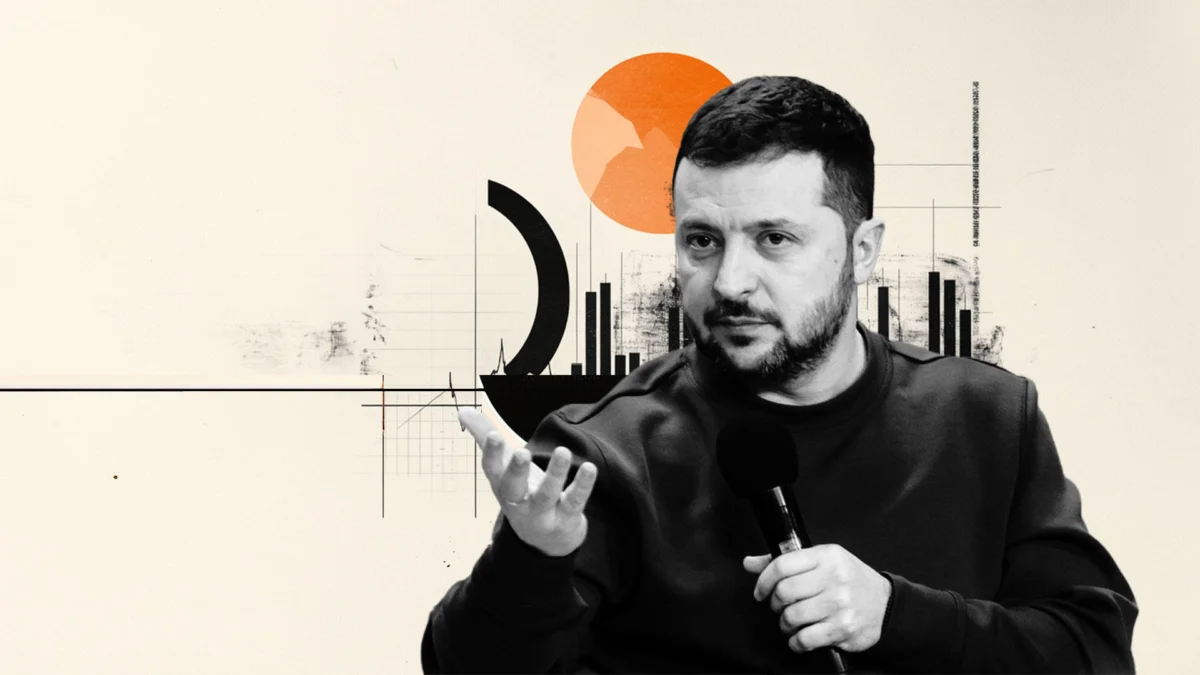
Ukrainian President Volodymyr Zelenskyy stated that a pivotal trilateral meeting involving Kyiv, Washington, and Moscow is anticipated to take place in November, a development that could signal a new phase in diplomatic efforts to address the ongoing conflict. The announcement, reported by Reuters on Sunday, immediately drew international attention, given the high stakes and the entrenched positions of the parties involved in the protracted conflict that began with Russia’s full-scale invasion of Ukraine in February 2022. While specific dates, venues, and the level of representation for the proposed talks remain undisclosed, the very prospect of direct engagement between these three key actors represents a significant potential shift in the diplomatic landscape.
Background to the Conflict and Diplomatic Standoff
The proposed trilateral meeting emerges against a backdrop of nearly two years of intense warfare, widespread devastation, and profound geopolitical realignments. Russia’s invasion, launched under the pretext of "demilitarization" and "denazification" of Ukraine, was met with staunch resistance from Ukrainian forces and a unified condemnation from much of the international community. The United States, along with its NATO allies and other partners, has been a principal supporter of Ukraine, providing extensive military, financial, and humanitarian aid. This support has been crucial in enabling Ukraine to defend its sovereignty and launch counter-offensives against Russian forces.
Since the initial days of the invasion, direct high-level negotiations between Kyiv and Moscow have been scarce and largely unproductive. Early talks, particularly those held in Belarus and Turkey in March and April 2022, failed to yield a lasting ceasefire or a comprehensive peace agreement. These early diplomatic efforts quickly stalled amid accusations of bad faith, escalating hostilities, and the discovery of atrocities in Ukrainian territories previously occupied by Russian forces. Ukraine subsequently declared that direct talks with Russia would only be possible once Russian forces had withdrawn from Ukrainian territory, and specifically ruled out negotiations with Russian President Vladimir Putin following Russia’s illegal annexation of four Ukrainian regions in September 2022.
The United States has consistently maintained that any peace settlement must be on Ukraine’s terms, adhering to the principle of "nothing about Ukraine without Ukraine." Washington has supported Kyiv’s efforts to regain its territory and has been wary of any diplomatic initiatives that could be perceived as pressuring Ukraine into concessions. The announcement of a trilateral meeting, therefore, suggests a potential nuanced shift or a new strategic approach, possibly aimed at exploring avenues for de-escalation or addressing specific aspects of the conflict that might not be amenable to purely bilateral or multilateral formats.
The Roles and Potential Objectives of the Three Parties
Each of the three proposed participants – Kyiv, Washington, and Moscow – would likely approach such a meeting with distinct objectives and red lines. Understanding these positions is crucial for assessing the potential for success.
Ukraine (Kyiv):
For Ukrainian President Volodymyr Zelenskyy, the primary goal remains the restoration of Ukraine’s territorial integrity within its internationally recognized borders, including Crimea, and ensuring long-term security guarantees. Zelenskyy has repeatedly articulated a "peace formula" consisting of ten points, including radiation and nuclear safety, food security, energy security, the release of all prisoners and deportees, implementation of the UN Charter, withdrawal of Russian troops and cessation of hostilities, restoration of justice, environmental protection, prevention of escalation, and confirmation of the war’s end. While announcing the trilateral meeting, Zelenskyy’s willingness to engage in a format that includes Moscow, even if indirectly via Washington, could indicate a strategic move to leverage American influence or to test Russia’s genuine interest in dialogue. It could also be an attempt to address specific issues like prisoner exchanges, humanitarian corridors, or the safety of critical infrastructure.
United States (Washington):
The United States, as Ukraine’s staunchest ally, plays a critical mediating and supporting role. Its participation in a trilateral format would likely be aimed at facilitating dialogue, ensuring Ukraine’s voice is heard, and exploring diplomatic off-ramps without compromising Ukraine’s sovereignty or territorial integrity. US President Joe Biden’s administration has consistently affirmed its commitment to supporting Ukraine "for as long as it takes" and has provided unprecedented levels of military aid, including advanced weaponry. Washington’s objectives in such a meeting could include:
- De-escalation: Reducing immediate tensions and preventing further escalation of the conflict.
- Security Guarantees: Discussing mechanisms for future security architecture in Europe that addresses both Ukrainian and broader regional concerns.
- Humanitarian Issues: Addressing prisoner exchanges, humanitarian access, and the return of deported Ukrainian children.
- Laying Groundwork: Exploring potential pathways for more comprehensive peace talks, even if a full resolution is not immediately achievable.
- Maintaining Alliance Cohesion: Demonstrating a united front with Ukraine and showing that diplomatic avenues are being pursued responsibly.
Russia (Moscow):
Russia’s motivations for engaging in a trilateral meeting are complex. While Moscow has repeatedly stated its readiness for negotiations, it has simultaneously insisted on its "new territorial realities" – the illegal annexation of Ukrainian territories – as non-negotiable. Russian President Vladimir Putin has also framed the conflict as a confrontation with the West, alleging NATO expansionism and a threat to Russia’s security interests. Russia’s objectives in a trilateral meeting could include:
- Legitimizing Gains: Seeking de facto recognition of its control over occupied Ukrainian territories.
- Security Demands: Pushing for security guarantees that would limit NATO’s presence in Eastern Europe and Ukraine’s potential for future alliance membership.
- Dividing the West: Attempting to exploit any perceived cracks in the united front between Ukraine and its Western allies.
- Sanctions Relief: Exploring avenues for easing international sanctions, which have significantly impacted the Russian economy.
- Propaganda: Using the meeting to project an image of diplomatic openness while maintaining its maximalist war aims.
A Chronology of Diplomatic Efforts and Missed Opportunities
The announcement of a November trilateral meeting is not the first attempt at diplomatic engagement since the full-scale invasion, but it comes at a critical juncture.
- February-April 2022: Initial rounds of talks between Ukrainian and Russian delegations took place in Belarus and then in Istanbul, Turkey. These discussions initially showed some promise, with a draft framework potentially involving Ukraine’s neutrality in exchange for security guarantees and a withdrawal of Russian troops. However, these talks ultimately collapsed, largely due to Russia’s continued aggression, the discovery of atrocities in Bucha, and Ukraine’s loss of trust in Moscow’s sincerity.
- September 2022: Following Russia’s illegal annexation of Donetsk, Luhansk, Zaporizhzhia, and Kherson regions, President Zelenskyy formally signed a decree ruling out any negotiations with Vladimir Putin, stating that talks would only be possible with a different Russian president.
- November 2022: President Zelenskyy unveiled his ten-point "peace formula" at the G20 summit in Bali, advocating for a comprehensive resolution based on international law.
- 2023: Throughout the year, various countries, including China, Brazil, Turkey, and African nations, proposed their own peace initiatives, none of which gained significant traction from both Kyiv and Moscow. The US and European allies consistently reiterated that Ukraine must lead any peace process.
- Summer 2023: Ukraine launched a counter-offensive, which, while making some gains, faced significant Russian fortifications, highlighting the arduous nature of liberating occupied territories through military means alone. This period saw renewed discussions in some circles about the potential for a diplomatic resolution, though both sides remained resolute in their military objectives.
The current announcement for a November meeting, therefore, arrives after a prolonged period of military stalemate and diplomatic inaction between the primary belligerents. Its timing suggests a recognition that neither side has achieved a decisive military victory, and that avenues for dialogue, however limited, may need to be explored.
Logistical and Format Considerations
Crucial details about the proposed meeting remain unconfirmed. The level of representation (e.g., foreign ministers, national security advisors, or even heads of state) will significantly impact its potential scope and effectiveness. A meeting at the foreign minister level, for instance, might focus on specific, actionable items, while a summit of heads of state would imply a more ambitious agenda aimed at broader political agreements.
The choice of venue is also critical. A neutral location, perhaps in Europe or the Middle East, would likely be preferred to avoid perceptions of bias. The involvement of the US suggests a high-level diplomatic engagement, potentially coordinated through established channels. The agenda would likely be multifaceted, potentially encompassing discussions on:
- Ceasefire arrangements: Conditions and monitoring mechanisms for a cessation of hostilities.
- Prisoner exchanges: Facilitating the return of POWs and illegally detained civilians.
- Humanitarian aid: Ensuring access for aid organizations and creating safe corridors.
- Nuclear safety: Addressing concerns related to the Zaporizhzhia Nuclear Power Plant.
- Black Sea Grain Initiative: Renewing or establishing a new agreement for safe passage of Ukrainian grain exports.
- Future security architecture: Preliminary discussions on long-term security arrangements for Ukraine and the broader region.
Reactions and Expert Analysis
While official confirmations from Washington and Moscow regarding the proposed November trilateral meeting were pending at the time of Zelenskyy’s announcement, the international community and expert analysts quickly weighed in on its potential significance and inherent challenges.
Ukrainian Officials and Public: Initial reactions from Ukrainian officials would likely echo Zelenskyy’s cautious optimism while reiterating Kyiv’s firm stance on territorial integrity. Any engagement would be framed as a step towards achieving a just and lasting peace, not as a capitulation. The Ukrainian public, having endured immense suffering, would likely view any diplomatic overture with a mix of hope and skepticism, mindful of past Russian broken promises.
US Officials and Allies: Washington would likely confirm its willingness to engage in any serious diplomatic effort that could lead to a just and durable peace, consistent with Ukraine’s sovereignty and territorial integrity. US officials would likely emphasize that their role is to support Ukraine, not to dictate terms. European allies, particularly those in NATO and the EU, would generally welcome any move towards de-escalation, provided it aligns with international law and respects Ukraine’s agency.
Russian Officials: Moscow’s reaction would be critical. If confirmed, Russia would likely frame its participation as evidence of its long-standing readiness for negotiations, while simultaneously reiterating its demands for security guarantees and recognition of its territorial claims. Any pre-conditions set by Russia would be carefully scrutinized by Kyiv and Washington.
International Analysts: Experts in international relations and security studies would likely highlight the immense hurdles facing such a meeting. Trust between the parties is at an all-time low. Russia’s stated war aims, which involve territorial conquest and a reordering of European security, fundamentally clash with Ukraine’s sovereign right to exist and choose its alliances. Analysts would point out that for any meaningful progress to occur, there would need to be a significant shift in either Russia’s maximalist demands or Ukraine’s firm commitment to reclaiming all its territory, or a willingness from all parties to compromise on specific, limited objectives. Some analysts might suggest that the meeting could be more about managing escalation or addressing specific humanitarian issues rather than achieving a grand peace settlement. Others might interpret it as a signal from Kyiv, possibly influenced by Western allies, to demonstrate openness to dialogue, especially if the military situation proves to be a protracted stalemate.
Broader Implications and Potential Hurdles
The prospect of a trilateral meeting in November carries profound implications for the trajectory of the conflict and broader international relations.
Potential for Breakthroughs:
Even limited agreements could be significant. A robust prisoner exchange, for example, would offer humanitarian relief. A renewed or expanded Black Sea Grain Initiative would bolster global food security. Any credible commitment to de-escalation around the Zaporizhzhia Nuclear Power Plant would avert a potential catastrophe. Such smaller, confidence-building measures could, in theory, lay the groundwork for more ambitious talks in the future.
Significant Hurdles:
The core disagreement over territory remains the most formidable obstacle. Ukraine demands the full withdrawal of Russian forces from all occupied territories, including Crimea. Russia, conversely, views the annexed regions as integral parts of its federation. Bridging this chasm seems almost impossible without a fundamental change in either party’s strategic calculus or a willingness to engage in highly creative diplomatic solutions, such as interim agreements or internationally supervised demilitarized zones, which are currently not on the table.
Another major hurdle is the deep mistrust. Ukraine has accused Russia of consistently violating agreements and engaging in deceit. Russia, in turn, views Ukraine as a proxy for Western interests. The involvement of the US could provide a measure of oversight and pressure, but it cannot unilaterally impose solutions.
The internal political dynamics in each country also play a role. Zelenskyy faces immense pressure from his populace to achieve victory and justice. Putin cannot easily back down from his stated objectives without potentially undermining his authority. The US administration must balance its support for Ukraine with its own domestic political considerations and the broader global implications of the conflict.
Impact on Allies and International Order:
Should such a meeting occur, its outcome will inevitably impact the unity of the Western alliance. Any perceived pressure on Ukraine to make concessions could strain relations, while a strong, unified diplomatic front could reinforce the international order based on sovereignty and territorial integrity. The meeting could also test the efficacy of sanctions regimes and the international community’s ability to enforce international law against an aggressor.
In conclusion, President Zelenskyy’s announcement of a trilateral meeting in November between Kyiv, Washington, and Moscow represents a potentially crucial, albeit highly challenging, diplomatic initiative. While the details are scant, and the historical context suggests immense difficulties, the very act of proposing such high-level engagement underscores the complex realities of the ongoing conflict. The world will be watching closely to see if this diplomatic overture can pave the way for de-escalation, address pressing humanitarian concerns, or even begin to chart a path toward a more comprehensive and just peace in Ukraine. The road ahead remains fraught with obstacles, but the prospect of direct dialogue, even with deep mistrust, offers a glimmer of hope in a conflict that has exacted an immeasurable human cost.
