

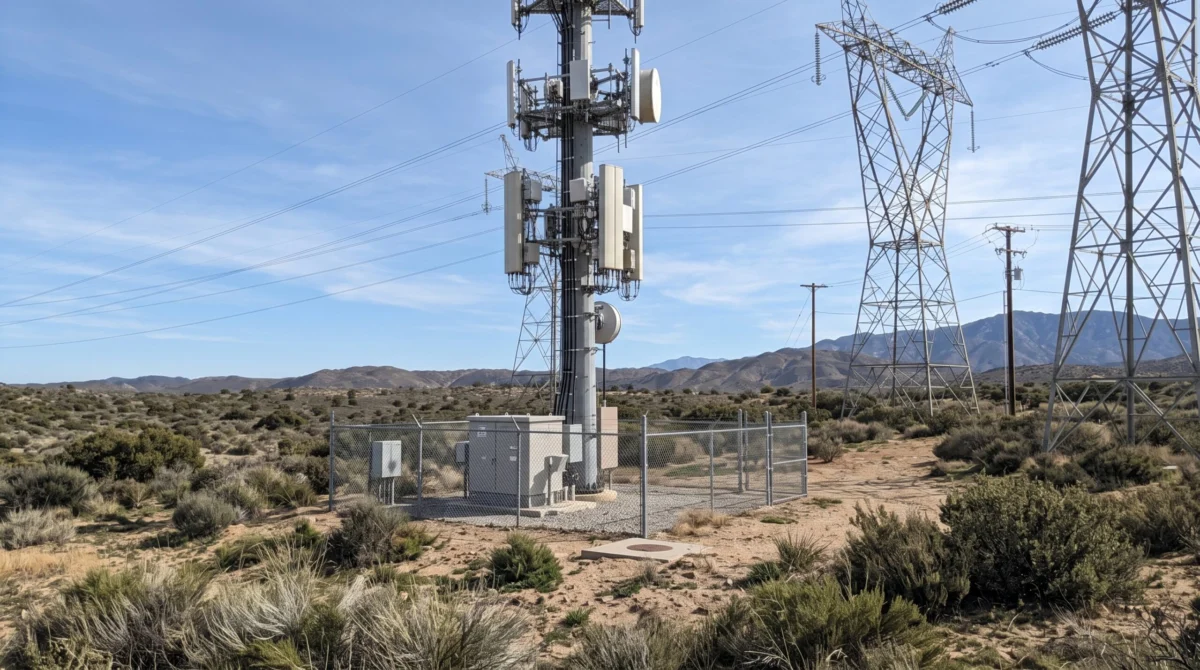
The landscape of American utility infrastructure is undergoing a fundamental shift as energy providers grapple with the dual challenges of aging hardware and an increasingly decentralized energy grid. In early October, news broke that Avista, a major investor-owned utility, has selected Heddian to spearhead its field communications modernization project. This partnership highlights a growing trend among utilities to upgrade connectivity by leveraging a hybrid architecture that blends existing public cellular networks with the control and security of private LTE infrastructure. As energy companies face mounting pressure to optimize grid capacity without the prohibitive costs of entirely new physical builds, the Avista-Heddian collaboration serves as a blueprint for the future of critical infrastructure connectivity.
Serving approximately 34,000 square miles across eastern Washington, northern Idaho, and parts of Oregon, Avista manages a diverse and geographically challenging territory. To provide reliable electric and natural gas services to its customers, the utility required a communication framework that could bridge the gap between urban centers with robust commercial coverage and remote, rural areas where signal reliability is often inconsistent. The selected architecture utilizes a hybrid model, pairing the expansive reach of commercial cellular carriers with the operational sovereignty of private wireless assets. This approach allows Avista to maintain maximum control over high-reliability grid-edge applications while utilizing public networks where they are already performing effectively.
The Strategic Shift Toward Hybrid Wireless Architectures
For decades, utilities relied on narrowband, point-to-point radio systems or simple commercial cellular contracts to manage field assets. However, the rise of the "Smart Grid"—characterized by thousands of sensors, automated switches, and distributed energy resources (DERs) like solar and wind—has rendered these legacy systems insufficient. Modern grid management requires high-bandwidth, low-latency, and ultra-secure data transmission.
Heddian CEO Joe Walsh has emphasized that the choice for utilities is no longer a binary one between public and private networks. Historically, the barrier to entry for private LTE (Long-Term Evolution) was the massive capital expenditure required to purchase spectrum and build out physical towers. By adopting a hybrid model, Avista can bypass the "all-or-nothing" investment strategy. This model utilizes a private core—the "brain" of the network—provided by Druid Software, and specialized SIM cards (UtiliSIM) that allow devices to roam between public and private towers seamlessly.
The advantage of this hybridity is primarily economic. Building towers and backhaul infrastructure across 34,000 square miles of Pacific Northwest terrain is a multi-decade project. By using commercial carriers as the baseline and deploying private LTE assets only where specific operational needs or security requirements dictate, Avista can achieve immediate functionality. Furthermore, this setup preserves the "option to expand," allowing the utility to incrementally add private cell sites as budgets allow, without ever needing to rebuild the underlying network core.
Technical Implementation and Legacy Integration
One of the most significant hurdles in utility modernization is the presence of legacy equipment. Many utilities have thousands of devices already deployed on carrier retail contracts. Replacing these all at once is logistically impossible and financially ruinous. Heddian’s design addresses this by integrating with existing infrastructure through a layered software approach.
By using OneLayer’s security platform, Avista gains immediate visibility and security over devices still operating on standard carrier networks. This allows for a phased migration. The transition begins with the installation of the UtiliSIM. While this requires a physical visit to the device, it is designed to be a one-time event. Once the UtiliSIM is in place, the utility can manage the device’s connectivity over-the-air (OTA). If Avista decides to build a private LTE tower in a specific region three years from now, they can remotely reconfigure those devices to prioritize the private signal without sending a technician back into the field.
In the utility sector, "truck rolls"—sending a technician in a vehicle to a site—are a major operational expense. Minimizing these visits through remote management is a key driver of the business case for hybrid wireless. Moreover, because the authentication and routing occur on Avista’s own private core rather than the carrier’s, the utility maintains absolute control over which devices are allowed on the network and how their traffic is prioritized.

Quantifying the Impact on Grid Capacity and Reliability
While bandwidth is often discussed in terms of speed, for a utility, it translates directly into grid capacity and reliability. A more dependable network reduces "data gaps," ensuring that grid operators have a real-time view of equipment health and load levels. When a utility can monitor its equipment with higher resolution, it can operate closer to the actual physical limits of the hardware with confidence. This reduces the need for "buffer room"—the extra margin of safety utilities must maintain when data is unreliable—effectively unlocking hidden capacity in existing wires and transformers.
This modernization also aligns with tightening regulatory standards. The North American Electric Reliability Corporation (NERC) has introduced requirements such as PRC-028, which mandates the monitoring and reporting of disturbances for inverter-based resources (IBRs). As solar and wind installations proliferate, the grid becomes more complex to manage because these resources behave differently than traditional spinning turbines. High-resolution data collection from remote IBR sites is only possible with the kind of robust field communications Avista is now implementing.
Furthermore, the Federal Energy Regulatory Commission (FERC) and NERC are currently developing new standards to address the massive load demands of data centers and artificial intelligence infrastructure. These large, concentrated loads require precision monitoring to prevent localized grid instability. A hybrid network provides the necessary throughput to carry this high-resolution data over commercial coverage where available and over private infrastructure where mission-critical control is required.
Timeline and Evolution of Field Communications
The move toward hybrid LTE is part of a broader chronology in the utility industry.
- The 1990s-2000s: Reliance on proprietary narrowband radio and early-generation cellular (2G/3G) for simple SCADA (Supervisory Control and Data Acquisition) tasks.
- The 2010s: The "Sunsetting" of 2G and 3G networks by commercial carriers forced utilities to rethink their long-term connectivity strategies. This era saw the first major experiments with private LTE using licensed spectrum.
- 2020-Present: The emergence of CBRS (Citizens Broadband Radio Service) spectrum and advancements in software-defined networking have made hybrid models viable.
- The Future: Integration of 5G capabilities for ultra-low latency applications, such as real-time synchrophasor data and automated "self-healing" grid responses.
Avista’s selection of Heddian marks a pivotal moment in this timeline, signaling that the "as-a-service" and hybrid models have reached a level of maturity suitable for large-scale, critical infrastructure deployment.
Broader Industry Implications and Official Responses
The utility industry is traditionally conservative, often waiting for technologies to be proven by "early adopters" before committing to large-scale changes. However, the Avista deployment is being watched closely by other regional and investor-owned utilities. Industry analysts suggest that the success of this hybrid model could lower the barrier for mid-sized utilities that lack the massive capital of giants like Southern Company or Ameren, both of whom have invested heavily in fully private networks.
While official responses from regulatory bodies have remained neutral regarding specific vendors, there is a clear consensus that communication resilience is a matter of national security. The ability of a utility to maintain a "failover" path—using a commercial network if the private one fails, or vice versa—is a significant advantage in the face of both cyberattacks and natural disasters.
As Joe Walsh noted, the goal is to meet utilities where they are in their digital transformation journey. Not every utility needs a 100% private network today, but every utility needs a path toward more secure, reliable, and scalable communications. The Avista-Heddian partnership demonstrates that by focusing on operational needs rather than just technological ideals, energy companies can build a communication foundation that supports the next generation of the American power grid.
Conclusion: A New Standard for Critical Infrastructure
The modernization of Avista’s field communications represents more than just a technical upgrade; it is a strategic shift in how critical infrastructure is managed. By combining the footprint of public cellular with the security of a private core, Avista is positioning itself to handle the complexities of the 21st-century grid. As the demand for electricity continues to rise—driven by the electrification of transport and the growth of energy-intensive computing—the ability to manage existing grid capacity through superior communication will be the difference between a resilient energy future and a fragile one. The hybrid model offers a pragmatic, cost-effective, and secure path forward, likely setting a new standard for the industry at large.
