

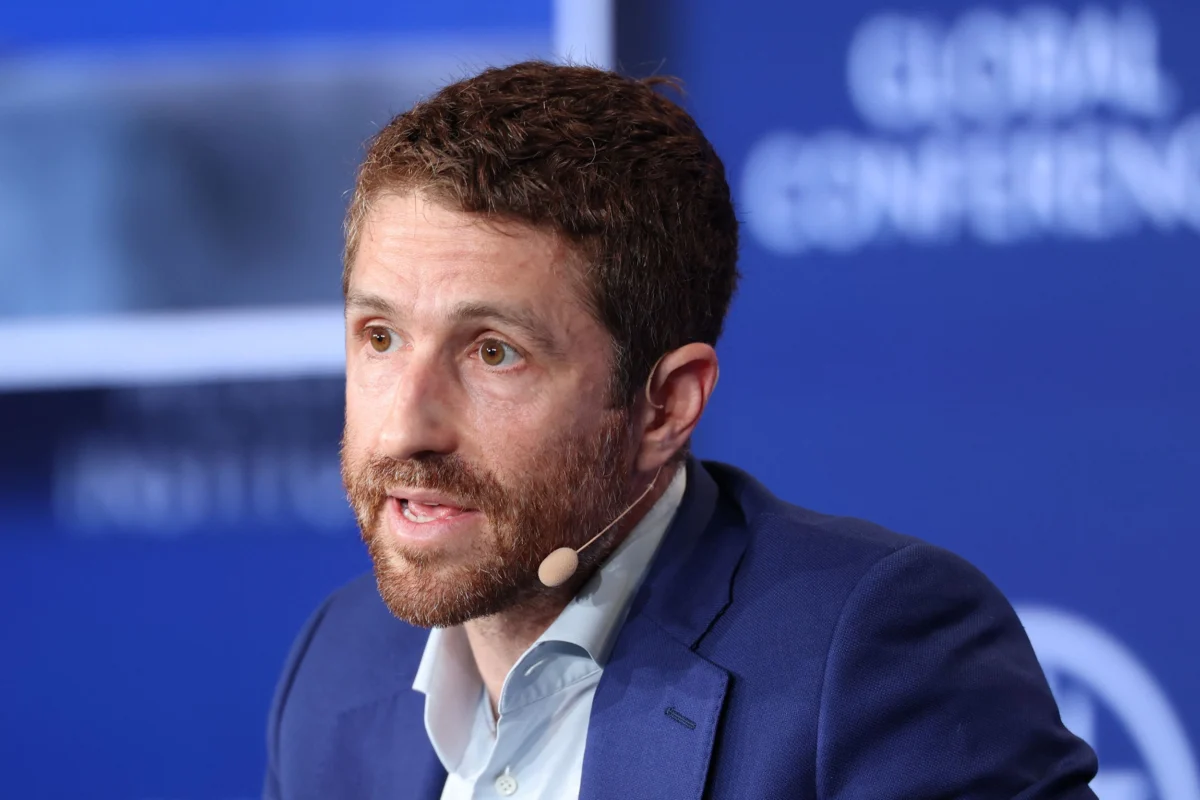
The Center for Humane Technology (CHT), a prominent online safety advocacy group co-founded by former Google product manager Tristan Harris and featured in the documentary The Social Dilemma, is undergoing a substantial organizational shift. Approximately half of its non-founder staff, totaling nine individuals, have been laid off. This restructuring involves the cessation of CHT’s policy research and litigation efforts, with the organization now concentrating on what it describes as "founder-led" projects.
This strategic pivot follows a period of significant legal victories for the organization against major social media companies. CHT’s research, which alleged that platforms were intentionally designed to foster addiction among young users, formed a crucial basis for these successful lawsuits. Notable departures include executive director Julie Guirado and senior director of strategy Camille Carlton, signaling a reorientation of leadership and operational focus.
A Strategic Reassessment Amidst Success
The recent layoffs and strategic redirection come at a time of considerable achievement for the Center for Humane Technology. The organization played a key role in high-profile legal battles that resulted in substantial settlements from social media giants, including Meta. These lawsuits, which centered on the alleged manipulative design of platforms to maximize user engagement, particularly among minors, brought CHT significant public and legal recognition. For instance, Meta agreed to a settlement of up to $167 billion in one prominent case, with further legal ramifications anticipated.
However, behind this public success, internal discussions regarding the organization’s long-term direction had been ongoing for several years. According to accounts from sixteen former employees who spoke to WIRED under the condition of anonymity due to concerns about professional repercussions, these debates centered on CHT’s dual role as both a prominent advocacy fronted by Harris and a think tank producing in-depth policy research.
The organization’s board ultimately concluded that attempting to maintain both operational facets had stretched its resources and impact too thinly. In a statement released last week, the board announced a strategic realignment to concentrate on initiatives where the founders are at the forefront. These initiatives will encompass "public education, targeted briefings, and private coordination," building upon the organization’s established success in "reaching broad audiences and engaging influential decisionmakers." This means that functions such as direct litigation support and the evaluation of artificial intelligence (AI) tools will be phased out.
The Ascendancy of AI and the "Founder-Led" Vision
The decision to shift focus appears heavily influenced by the escalating concerns surrounding artificial intelligence. Board chair Premal Shah articulated this rationale in a statement to WIRED, emphasizing the imperative to "focus on one strategy" in response to "this moment of accelerated AI risk." He added, "we have chosen to focus on what we have always done best so that we can meet the moment."
Tristan Harris, a central figure in the organization, has increasingly amplified warnings about the potential dangers posed by advanced AI. He has joined a growing chorus of experts expressing apprehension about a potential "AI takeover" if the technology evolves beyond human control. Harris has been a vocal advocate for immediate action, stating in a recent NBC News interview, "We have to act right now before it’s too late."
In line with this intensified focus on AI, CHT has actively participated in efforts to raise public and governmental awareness. This has included endorsing a significant petition advocating for a pause in AI development and contributing to the organization of a congressional hearing dedicated to the risks associated with chatbots. CHT has also provided advisory support for lawsuits and investigations targeting AI labs concerning their design choices. One such ongoing case involves parents who filed a lawsuit against OpenAI following the suicide of their teenage child, who had reportedly interacted with ChatGPT. Harris also featured in The AI Doc, a documentary released on Netflix last month, which urges viewers to lobby Congress for legislative intervention to safeguard the public from the potential risks of AI.
Navigating a Crowded Landscape and Funding Dynamics
Founded in 2017, the Center for Humane Technology operates within a competitive environment for funding and influence in shaping AI policy. It competes with established non-profits and a burgeoning number of newer organizations addressing similar concerns. The recent surge in cyberattacks, some attributed to AI agents from entities like OpenAI and Anthropic, has further intensified calls for holding technology developers accountable for design and engineering failures.
CHT has historically operated with an annual budget of approximately $6 million, supplemented by similar reserves, primarily funded by affluent families and philanthropic foundations. However, the organization’s strategic decision to double down on its founder-led approach has raised concerns among former employees. They fear that resources might be diverted from addressing what they perceive as more immediate threats posed by AI to democracy and civil liberties.
Gail Barnes, who previously advised CHT on social media strategy, commented on the board’s decision, suggesting that the organization is relinquishing work that was intended to translate Harris’s public profile into "durable pressure" capable of driving internal corporate change. Barnes posited, "Whether that is wisdom or a retreat depends on whether you think the binding constraint on AI right now is still ‘people haven’t heard the argument’ or ‘the argument has no institutional teeth.’ CHT is picking the first."
Tristan Harris: The "Big Star" of Tech Accountability
Tristan Harris has cultivated a significant public profile, consistently delivering compelling soundbites and establishing himself as a notable presence in media discussions, at conferences, and on Capitol Hill. A former CHT colleague described him as "brilliant" and "articulate," noting his transition from a career in tech to advocating for its ethical development. Harris co-founded CHT with Aza Raskin, recognized for inventing the infinite scroll, and Randy Fernando, formerly of Nvidia. Their initial objective was to compel tech companies to assume greater responsibility for the societal ramifications of their products, including issues such as political radicalization and the detrimental impact on adolescent mental health. The terminology Harris employed to articulate these problems quickly permeated discussions across Silicon Valley.
Internal documents from Meta, revealed in court proceedings this year, indicate that company researchers considered engaging with Harris as early as 2018. This was around the time his assertions that apps were intentionally designed for addictive use began gaining mainstream traction. His national prominence further surged with the 2020 release of The Social Dilemma on Netflix.
A leader at another nonprofit, who requested anonymity to maintain their relationship with CHT, stated that the impact of The Social Dilemma on launching the field of tech accountability "is hard to understate."
However, within CHT itself, former staffers report that Harris sometimes engaged in disagreements with his team regarding the optimal focus of their efforts – whether it should be directed towards consumers, tech companies, or lawmakers. Some colleagues reportedly grew frustrated with what they characterized as Harris’s "frequently shifting whims," describing the organization’s internal culture as unnecessarily "frenetic" and "insanity-inducing." While board chair Premal Shah disputed this characterization, he acknowledged that the center’s culture is indeed fast-paced, reflecting the urgency of its mission.
At one point, CHT developed an online course aimed at tech workers seeking to build more ethical systems. While this initiative attracted thousands of participants, CHT ultimately retired it as Harris’s focus pivoted towards AI concerns, according to individuals familiar with the project. Similarly, an initiative to create educational resources for teachers grappling with screen time issues also reportedly fell by the wayside. One former employee suggested that Harris consistently viewed CHT as "a vehicle for him to speak to the world."
The organization’s podcasts and videos featuring Harris and Raskin have garnered substantial audiences. Harris has also secured private meetings with U.S. lawmakers and executives at leading technology firms. Former employees have characterized CHT’s strategy as prioritizing "grasstops" activism over the more traditional "grassroots" approach, a direction that some viewed with skepticism.
Shah defended CHT’s approach, asserting that "mass communications creates grassroots pressure, which unlocks action from the grasstops." He further highlighted Harris’s unique ability to "communicate effectively to mass media audiences across the political spectrum."
Internal Dynamics and a Shifting Leadership Role
Some former employees have alleged that CHT’s founders were reluctant to heavily criticize companies where they had prior employment or where close personal contacts worked, suggesting a desire to maintain their status as Silicon Valley insiders. Shah has refuted these claims, stating that CHT "has always been tough on companies."
Concerns have also been raised about Harris’s management style, which some ex-employees described as taxing, contributing to high staff turnover. Several former workers reported that following a staff retreat in 2023, employees felt upset after being asked to participate in trust-building exercises perceived as overly personal. According to these former employees, CHT’s independent board members intervened, and Harris subsequently stepped down as executive director, assuming the role of the organization’s president. Shah clarified that employee turnover "stemmed from differences in problem analysis and approaches to achieving the organization’s core mission" and denied any connection between Harris’s role change and the retreat.
Despite any internal turbulence, the broader strategy employed by Harris in challenging tech companies had yielded tangible results. In 2021, state attorneys general across the U.S. initiated investigations into Meta, eventually leading to lawsuits alleging the company misled teenagers and parents. This year, Meta reached settlements in some of these cases for billions of dollars. Furthermore, juries, including one that heard testimony from Aza Raskin, have held the company liable for additional penalties in separate legal actions. Other social media platforms have also agreed to similar litigation settlements this year.
A leader at another tech nonprofit, speaking anonymously to WIRED earlier this year, praised CHT’s less publicized work in statehouses and courtrooms. The same individual expressed disappointment with the current shift away from these efforts, stating, "Change comes from movements and democracy, not celebrities and backrooms."
Some former employees anticipate that CHT will increasingly resemble what they colloquially refer to as the "Center of Helping Tristan." In contrast, Premal Shah maintains that the organization’s singular objective is to ensure "today’s most consequential technologies serve humanity." This restructuring marks a significant juncture for the Center for Humane Technology, signaling a deliberate move towards a more founder-centric and AI-focused operational model.
