

The global franchise industry continues to serve as a cornerstone of the modern economy, offering a standardized yet scalable pathway for entrepreneurs to enter diverse markets ranging from home maintenance to high-end family entertainment. As of 2024, the franchise sector contributes significantly to the national Gross Domestic Product (GDP), with the International Franchise Association (IFA) reporting that the industry employs over 8.7 million people in the United States alone. Within this vast ecosystem, seven specific brands—Mr. Rooter, Dairy Queen, Tropical Smoothie Cafe, Launch Entertainment, Jersey Mike’s Subs, Aroma Joe’s, and Sonny’s BBQ—have emerged as pivotal players, each leveraging unique operational strategies to dominate their respective niches.
The Evolution of Service-Based Franchising: The Mr. Rooter Model
In the realm of home services, Mr. Rooter has established itself as a benchmark for reliability and franchisee support. Founded in 1970, the company became a subsidiary of Neighborly (formerly Dwyer Group) in 1990, benefiting from a massive corporate umbrella that oversees multiple service brands. The plumbing and drain cleaning industry is often categorized by economists as "recession-resistant," as the demand for essential home repairs remains constant regardless of macroeconomic fluctuations.

Mr. Rooter’s success is predicated on a rigorous training system that standardizes technical skills and customer service etiquette. This "Neighborly" approach ensures that whether a client is in Seattle or Savannah, the experience remains uniform. For the franchisee, the value proposition lies in the brand’s sophisticated dispatching technology and marketing reach. Industry analysts note that service-based franchises often require lower initial real estate capital compared to food-based models, making Mr. Rooter an attractive entry point for those focused on operational efficiency over retail presence.
Dairy Queen and the Resilience of Legacy Brands
Dairy Queen, an American icon founded in 1940, demonstrates the power of brand longevity and menu diversification. With more than 4,400 locations in the United States and a presence in over 20 countries, the brand has successfully navigated decades of changing consumer tastes. Owned by Berkshire Hathaway, the franchise has shifted its strategy in recent years toward the "Grill & Chill" concept, which balances its traditional soft-serve treats with a robust hot food menu.
The brand’s resilience is supported by a multi-generational customer base. Data from the quick-service restaurant (QSR) sector suggests that legacy brands like Dairy Queen benefit from "nostalgia marketing" while simultaneously implementing digital loyalty programs to capture younger demographics. The franchise’s ability to maintain high market penetration in small-town America while expanding into international urban centers highlights its versatile business model.

Tropical Smoothie Cafe: Capitalizing on Health and Wellness Trends
Tropical Smoothie Cafe represents the modern shift toward "better-for-you" fast-casual dining. Since its inception in 1997, the brand has expanded to over 1,500 locations, fueled by an increasing consumer demand for nutritious, on-the-go meals. Unlike traditional fast food, which often struggles with health-conscious branding, Tropical Smoothie Cafe has integrated smoothies made with fresh fruit and vegetables alongside a menu of wraps, salads, and flatbreads.
The franchise’s growth trajectory is notable; in 2023, the brand reported its 12th consecutive year of positive same-store sales growth. This performance is attributed to a "daypart" strategy that attracts customers for breakfast, lunch, and late-afternoon snacks. By positioning itself as a healthy alternative to traditional burger chains, the franchise has tapped into a demographic willing to pay a premium for perceived nutritional value.
Redefining Leisure: The Rise of Launch Entertainment
The family entertainment center (FEC) market is undergoing a radical transformation, with Launch Entertainment at the forefront. As consumers increasingly prioritize "experiences" over material goods—a trend accelerated in the post-pandemic era—the demand for multi-attraction venues has surged. The FEC market is projected to reach a valuation of over $40 billion by 2025.

Launch Entertainment differentiates itself by moving beyond the simple trampoline park model. Their facilities often include bowling alleys, ninja courses, laser tag, and sophisticated arcade systems, paired with high-quality food and beverage options. This "all-under-one-roof" strategy increases the "dwell time" of customers, thereby boosting the average revenue per visitor. For investors, the model offers a high-moat business that is difficult for smaller, independent operators to replicate due to the significant capital expenditure and operational complexity involved.
Jersey Mike’s Subs: A Study in Brand Authenticity and Community Impact
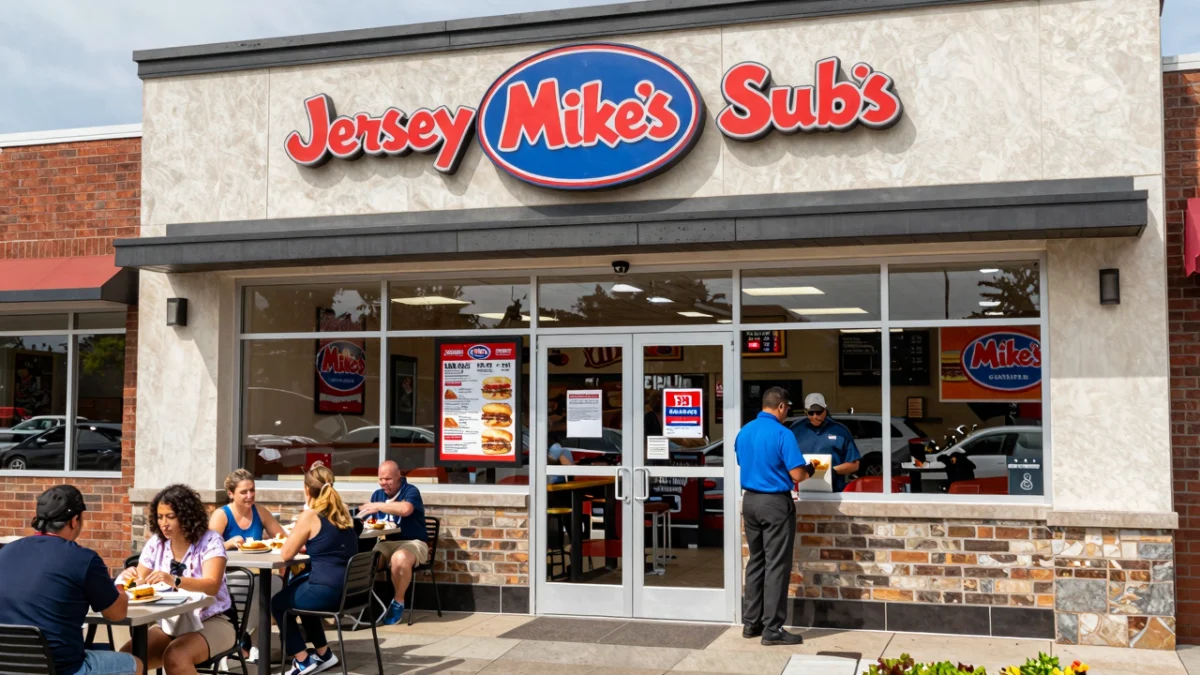
Jersey Mike’s Subs has become one of the fastest-growing franchises in the United States by emphasizing product quality and community engagement. The brand’s "A Sub Above" philosophy involves slicing meats and cheeses in front of the customer and baking bread fresh in-store daily. This commitment to the "theatre of food" provides a sensory experience that distinguishes it from competitors using pre-sliced ingredients.
The chronology of Jersey Mike’s is a testament to steady, principled growth. CEO Peter Cancro purchased the original storefront at age 17 in 1975 and began franchising in 1987. Beyond the product, the brand is widely recognized for its "Month of Giving" every March, which has raised over $88 million for local charities since 2011. This focus on corporate social responsibility (CSR) creates a "halo effect," fostering deep-seated brand loyalty within local communities and making it a preferred choice for franchisees who value social impact alongside profitability.

Aroma Joe’s and the High-Velocity Coffee Market
In the highly competitive specialty coffee sector, Aroma Joe’s has carved out a significant presence, particularly in the Northeast. Founded in Maine in 2000, the brand focuses on drive-thru efficiency and a "no-attitude" service culture. With an initial investment requirement starting around $200,000, it offers a more accessible entry point than many national coffee conglomerates.
Aroma Joe’s leverages the "daily habit" nature of coffee consumption. Their "Coffee with a Cause" program and commitment to small-batch roasting appeal to the ethically-minded consumer. Market data indicates that drive-thru-only or drive-thru-dominant models have seen a 20% increase in efficiency and customer preference since 2020, positioning Aroma Joe’s perfectly to capture the "commuter" market.
Sonny’s BBQ: Heritage and the Fast-Casual Barbecue Niche
Barbecue remains one of the most challenging food categories to franchise due to the long cook times and regional taste preferences. However, Sonny’s BBQ has successfully standardized the "pitmaster" experience for over 50 years. With a focus on slow-smoked meats and a welcoming atmosphere, the franchise has built a fortress of loyalists across the Southeast.

The brand’s success is rooted in its "Kindness Crew" initiative, which empowers local owners to perform acts of service in their neighborhoods. From an investment perspective, a Sonny’s BBQ franchise requires approximately $500,000, reflecting the specialized equipment and larger footprint needed for authentic barbecue operations. As the fast-casual segment continues to eat into the market share of full-service restaurants, Sonny’s occupies a unique middle ground that offers sit-down quality with the speed and price point of casual dining.
Analytical Overview: The Broader Impact of Franchise Diversity
The success of these seven diverse brands illustrates several key trends in the 2024 franchise economy. First, there is a clear move toward specialization. Consumers are no longer satisfied with generalist providers; they seek the "category killer"—the brand that does one thing (like subs, smoothies, or plumbing) exceptionally well.
Second, the "experience economy" is no longer limited to the entertainment sector. Whether it is the fresh slicing at Jersey Mike’s or the community-centric "Coffee with a Cause" at Aroma Joe’s, successful franchises are finding ways to make every transaction feel like an interaction rather than a mere exchange of currency.

Finally, the data suggests that franchisee support systems are the ultimate predictor of brand health. Brands like Mr. Rooter and Dairy Queen, which provide extensive back-end support, technology suites, and supply chain stability, are better equipped to handle the rising costs of labor and raw materials.
Conclusion and Future Outlook
As the franchise landscape continues to evolve, the distinction between "fast food" and "fast casual" or "service" and "experience" will continue to blur. The seven players highlighted—Mr. Rooter, Dairy Queen, Tropical Smoothie Cafe, Launch Entertainment, Jersey Mike’s, Aroma Joe’s, and Sonny’s BBQ—represent the vanguard of this evolution.
For the prospective investor, these brands offer a spectrum of entry points and operational styles. For the consumer, they provide a reliable standard of quality in an increasingly fragmented marketplace. As we move toward 2025, the integration of AI in ordering systems, the continued push for sustainable packaging, and the expansion of multi-unit ownership will likely be the next frontiers for these industry leaders. Their ability to adapt to these technological and social shifts will determine which of these household names will continue to dominate the American entrepreneurial landscape for the next half-century.
