

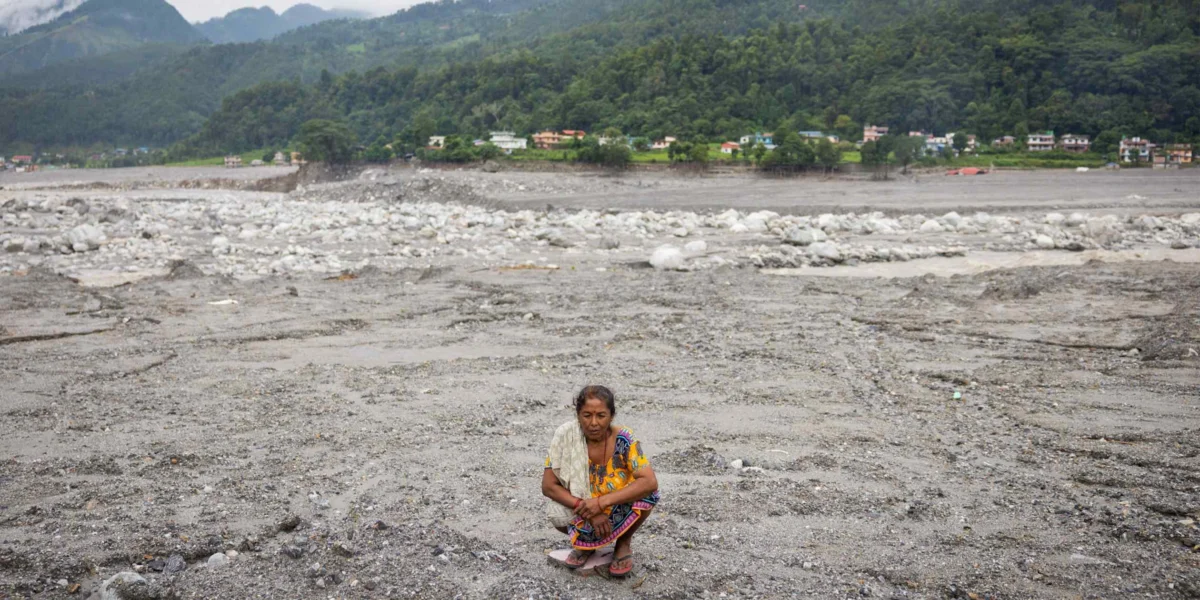
The once-tranquil landscape of Nepal has been violently reshaped by a relentless barrage of flash floods and mudslides, leaving a trail of destruction, displacement, and loss in its wake. The recent monsoon season, amplified by extreme weather patterns, has unleashed a torrent of water and debris across the Himalayan nation, submerging villages, obliterating infrastructure, and claiming precious lives. Shanti Dangol, a resident of Betrawati in the Nuwakot district, stands as a poignant symbol of this devastation, her home buried beneath a thick layer of sludge, a stark reminder of nature’s unforgiving power. The image of her, perched atop the wreckage, encapsulates the profound human cost of these catastrophic events.
The Fury of the Monsoon: A Timeline of Devastation
The current crisis did not erupt overnight. Nepal, nestled in the seismically active and geographically diverse Himalayas, is inherently susceptible to landslides and floods, particularly during the monsoon season which typically runs from June to September. However, the intensity and frequency of the recent events appear to have surpassed historical averages, raising concerns about climate change and its impact on the region.
The monsoon’s onset in early June usually brings much-needed rain to the agricultural heartland. Yet, this year, the precipitation has been characterized by its ferocity. In late August and early September, a series of intense downpours triggered a cascade of landslides in the hilly and mountainous regions. Rivers, swollen by the relentless rain, burst their banks, inundating low-lying areas and agricultural lands.
Specific regions have borne the brunt of this onslaught. The central and western districts of Nepal, including Nuwakot, Sindhupalchok, Gorkha, and Baglung, have reported the highest number of casualties and the most extensive damage. Villages situated in valleys and along riverbanks have been particularly vulnerable, with many residents caught unawares by the sudden and powerful surges of water and mud.
By mid-September, reports of missing persons and destroyed homes began to flood in. Emergency services, often hampered by damaged roads and communication lines, struggled to reach affected areas. The scale of the disaster quickly overwhelmed local response capacities, necessitating a national mobilization of resources. As the waters receded in some areas, the grim reality of the destruction became even more apparent, revealing flattened homes, uprooted trees, and vast swathes of land buried under meters of silt and debris. The image of Shanti Dangol, captured on September 9th, encapsulates the immediate aftermath of this destruction in Betrawati.
Quantifying the Catastrophe: Figures and Statistics
While precise figures are still being compiled and may fluctuate as rescue and recovery efforts continue, preliminary reports paint a grim picture of the human and material cost. As of early October, the National Disaster Risk Reduction and Management Authority (NDRRMA) has reported hundreds of fatalities and an even larger number of individuals displaced from their homes. Thousands of houses have been destroyed or rendered uninhabitable, leaving a significant portion of the affected population without shelter.
Beyond residential properties, the floods have inflicted severe damage on critical infrastructure. Roads and bridges, the lifelines of many remote communities, have been washed away, isolating villages and hindering relief efforts. Agricultural lands, the backbone of Nepal’s economy, have been submerged and damaged, threatening food security for many. Schools, health facilities, and other public buildings have also suffered considerable damage, disrupting essential services and education for thousands of children.
The economic impact is projected to be substantial. The loss of crops, livestock, and damaged infrastructure will necessitate significant investment in reconstruction and rehabilitation. The World Bank and other international organizations have already begun assessing the damage and pledging support, but the long-term economic recovery will be a formidable challenge. The cost of rebuilding homes, restoring infrastructure, and supporting affected communities will run into billions of Nepali Rupees, placing a significant strain on the national budget.
Voices from the Ground: Testimonies of Resilience and Despair
The human stories emerging from the flood-affected regions are a testament to both the fragility of life in the face of natural disasters and the remarkable resilience of the human spirit. Families have lost not only their homes and livelihoods but also their loved ones. The grief and trauma experienced by survivors are profound.
Interviews with those affected reveal harrowing accounts of narrow escapes and the agonizing loss of property and possessions. Many describe being woken by the roar of rushing water or the terrifying sound of landslides, with little time to react. The speed and ferocity of the floods left many with nothing but the clothes on their backs.
"We heard a loud noise, like thunder, but it was much closer," recounted a farmer from a village in Sindhupalchok district. "When we looked outside, the river had already swallowed half of our village. We just grabbed our children and ran. Everything else is gone."
Despite the overwhelming devastation, stories of community solidarity and mutual aid are also emerging. Neighbors have helped each other to safety, shared scarce resources, and offered comfort to those who have lost everything. Local volunteers and community leaders have played a crucial role in organizing rescue efforts and providing immediate assistance to the affected populations.
Official Responses and International Aid
The Nepalese government has declared a state of national emergency in the most severely affected districts and has mobilized the Nepal Army, Nepal Police, and Armed Police Force for rescue and relief operations. The NDRRMA is coordinating the national response, working to provide temporary shelter, food, water, and medical assistance to the displaced.
However, the scale of the disaster presents significant logistical challenges. The remoteness of many affected areas, coupled with the destruction of transportation networks, makes it difficult to deliver aid effectively. Accessing these communities often requires difficult treks or the use of helicopters, which are in high demand.
International partners have responded swiftly to Nepal’s appeal for assistance. The United Nations agencies, including the World Food Programme and UNICEF, are on the ground providing essential supplies and support. Neighboring countries, such as India and China, have also pledged financial and material assistance. Numerous international non-governmental organizations (NGOs) are actively involved in relief efforts, providing medical aid, temporary shelter, and psychosocial support to survivors.
The focus of the immediate response is on saving lives, providing essential humanitarian aid, and restoring basic services. However, as the situation stabilizes, the focus will shift towards long-term rehabilitation and reconstruction. This will involve rebuilding homes, repairing damaged infrastructure, and supporting the recovery of livelihoods.
Broader Implications and Future Preparedness
The recent flash floods and mudslides in Nepal serve as a stark warning of the increasing vulnerability of communities worldwide to the impacts of climate change. While Nepal is not a major contributor to global greenhouse gas emissions, it is disproportionately affected by its consequences. Rising global temperatures are leading to more extreme weather events, including heavier rainfall and glacial melt, which exacerbate the risk of natural disasters in mountainous regions.
The events highlight several critical areas for future action:
- Climate Change Adaptation and Mitigation: While immediate relief is crucial, Nepal needs to invest in long-term strategies for climate change adaptation. This includes early warning systems, resilient infrastructure development, and sustainable land-use practices. International cooperation is vital to support these efforts and to address the root causes of climate change.
- Disaster Risk Reduction (DRR): Enhancing disaster preparedness at the community level is paramount. This involves regular drills, public awareness campaigns, and the establishment of well-equipped local response teams. The government needs to invest in improving its disaster management infrastructure and capacity.
- Infrastructure Resilience: The destruction of roads, bridges, and other critical infrastructure underscores the need for building more resilient structures that can withstand extreme weather events. This requires incorporating climate-resilient design principles in all new construction projects.
- Sustainable Development Practices: The events highlight the link between environmental degradation and disaster vulnerability. Promoting sustainable forestry, responsible land management, and discouraging construction in high-risk zones are crucial for long-term resilience.
- Economic Diversification: Over-reliance on agriculture makes communities highly vulnerable to crop failure and land degradation. Diversifying the economy and promoting alternative livelihoods can help reduce this vulnerability.
The image of Shanti Dangol, standing amidst the ruins of her home, is a powerful reminder of the human cost of these disasters. Nepal’s response to this crisis will not only determine the immediate recovery of the affected populations but also shape its long-term resilience in the face of a changing climate. The nation, with the support of the international community, faces a monumental task of rebuilding, not just homes and infrastructure, but also hope and a sustainable future for its people. The lessons learned from this catastrophe must translate into concrete actions to mitigate future risks and build a more resilient Nepal.
