

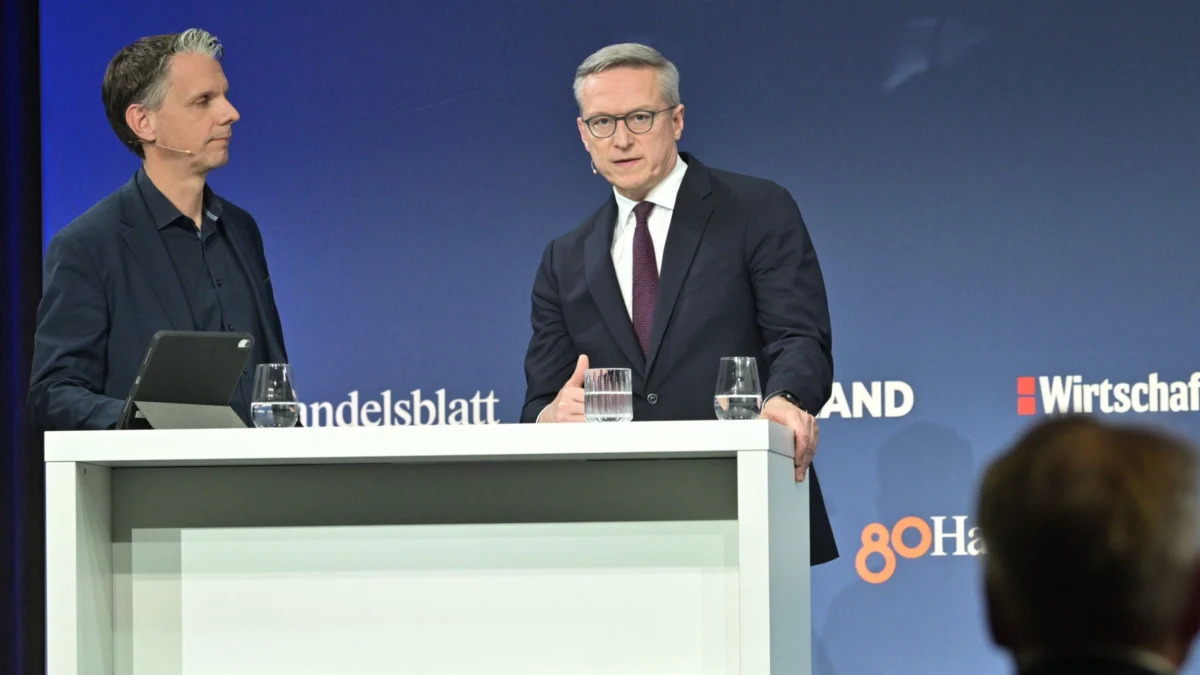
Berlin – At the prestigious Deutschland-Gipfel hosted by Handelsblatt and WirtschaftsWoche in Berlin, Digital Minister Karsten Wildberger of the CDU party directly contested the governing coalition’s prevailing narrative, which largely attributes Germany’s developmental challenges to mere "implementation problems." Wildberger asserted that while implementation hurdles are indeed present, a more significant and "massive" impediment lies in a fundamental "knowledge deficit." This stark assessment suggests a deeper, systemic issue that extends beyond the practical execution of policies.
The summit, a key forum for economic and political discourse in Germany, convened amidst a backdrop of escalating global uncertainties and domestic pressures. The event, held in the German capital, brought together leading figures from business, politics, and academia to discuss the nation’s economic trajectory and the challenges it faces in navigating a complex international landscape. Wildberger’s intervention at this critical juncture aimed to reframe the debate, urging a more profound self-examination of Germany’s strategic understanding and foresight.
Wildberger emphasized that a singular focus on individual measures or reforms is insufficient. "We only talk about measures, about reforms, but what is the context?" he queried, highlighting a perceived lack of holistic understanding within the political sphere. He posited that policymakers are underestimating the sheer magnitude of the compounded crises Germany is currently confronting, encompassing both internally generated challenges and external shocks. This multi-faceted pressure, he argued, requires a more robust and energetic response, driven by a clear vision for the country’s advancement.
The Digital Minister underscored the urgency of addressing this "knowledge deficit" to propel the nation forward. His remarks pointed towards a need for a more comprehensive grasp of the interconnectedness of global trends and their impact on Germany’s economic and social fabric. This includes understanding not just the immediate problems but also the underlying systemic issues and long-term implications of current policies.
Wildberger’s call for a broader perspective comes at a time when Germany, as Europe’s largest economy, is grappling with a confluence of economic slowdown, geopolitical instability, and the accelerating pace of technological transformation. The ongoing war in Ukraine, coupled with persistent supply chain disruptions and rising energy costs, has created a challenging environment for German industry, traditionally reliant on exports and stable global trade relations. Furthermore, the nation is in the midst of a significant digital transition, with the imperative to modernize infrastructure, foster innovation, and adapt its workforce to the demands of the digital age.
The CDU politician stressed the importance of a united front within the current "black-red" coalition government, comprising the CDU/CSU and the SPD. "It would be a catastrophe if we lacked stability now," he stated, expressing confidence that his coalition partners recognize this necessity. He articulated a belief that all members of the government are capable of learning and adapting their approaches, emphasizing the need for collective action in implementing these changes. "And we must also do them differently together," Wildberger added, signaling a commitment to collaborative problem-solving and a willingness to reassess existing strategies.
This call for unity and shared learning is particularly significant given the inherent ideological differences within a grand coalition. Wildberger’s message suggests that overcoming the current challenges requires a supra-partisan effort, transcending typical political divides. The focus, he implies, should be on national progress rather than partisan advantage.
Wildberger Sees Potential in Artificial Intelligence
Beyond his critique of the current policy discourse, Wildberger also highlighted specific areas where Germany can and must strengthen its position. He specifically pointed to the burgeoning field of Artificial Intelligence (AI) as a critical domain where Europe, and by extension Germany, must assert its influence to remain competitive.
"We are fighting to be at the table," Wildberger declared, drawing a powerful analogy from Canadian Prime Minister Mark Carney. Carney had previously warned that middle powers must collaborate effectively, stating, "if we are not at the table, we are on the menu." This stark imagery encapsulates the stakes for European nations in the global AI race, where dominant players are rapidly shaping the technological landscape and its regulatory frameworks.
Wildberger’s reference to Carney’s warning underscores the geopolitical dimensions of technological development. The race for AI supremacy is not merely an economic competition but also a strategic one, with implications for national security, economic sovereignty, and global influence. Nations that fail to develop and deploy AI effectively risk becoming dependent on technologies and standards set by others, potentially limiting their autonomy and economic opportunities.
The Digital Minister’s optimism regarding AI is rooted in the potential of this technology to drive innovation, enhance productivity, and solve complex societal challenges. However, he also acknowledges the significant hurdles that Germany and Europe face in this domain. These include a need for greater investment in research and development, a more agile regulatory environment that fosters innovation while ensuring ethical considerations, and a concerted effort to cultivate a skilled workforce capable of developing and utilizing AI technologies.
The European Context: A Race for Digital Sovereignty
Wildberger’s remarks about AI and Europe’s position at the global table are intrinsically linked to the broader debate surrounding digital sovereignty. As artificial intelligence becomes increasingly integrated into all facets of life and industry, ensuring that European values and interests are reflected in its development and deployment is paramount.
The European Union has been actively pursuing initiatives to bolster its digital capabilities and establish a regulatory framework that promotes innovation while safeguarding fundamental rights. The proposed AI Act, for instance, aims to create a comprehensive legal framework for AI, categorizing AI systems based on their risk level and imposing specific obligations on developers and deployers. While this regulatory approach is intended to build trust and ensure responsible AI development, some critics argue that it could potentially stifle innovation and place European companies at a disadvantage compared to their counterparts in less regulated markets like the United States and China.
Germany, as a leading industrial nation, has a critical role to play in shaping Europe’s digital future. The country’s strong research institutions, its robust industrial base, and its commitment to democratic values provide a solid foundation for developing and deploying AI in a manner that benefits society. However, realizing this potential requires a strategic vision that goes beyond simply implementing existing technologies. It necessitates a proactive approach to innovation, a commitment to fostering a digital-first mindset across all sectors, and a willingness to invest in the infrastructure and talent needed to compete on a global scale.
Data and Evidence: The Underpinning of Policy
To effectively address the "knowledge deficit" and the "implementation problems," a foundation of robust data and evidence is crucial. While Wildberger did not provide specific figures during his address, the context of his remarks implies a need for better data collection and analysis across various sectors.
For instance, in the realm of AI, understanding the current state of research, development, and adoption within Germany and Europe is vital. This would involve tracking:
- R&D Investment: Quantifying public and private investment in AI research and development, comparing it with global leaders. According to some reports, while European AI investment has grown, it still lags behind that of the US and China. For example, in 2022, global AI funding saw a significant increase, with North America and Asia leading the way in venture capital investment.
- Talent Pool: Assessing the availability of skilled AI professionals, including researchers, engineers, and data scientists, and identifying any shortfalls. Germany, like many European nations, faces a shortage of highly specialized AI talent.
- AI Adoption Rates: Measuring the extent to which German businesses, particularly small and medium-sized enterprises (SMEs), are adopting AI technologies and the barriers they face. SMEs often cite a lack of expertise, funding, and clear business cases as significant impediments.
- Economic Impact: Estimating the potential economic benefits of AI adoption, including productivity gains, new market creation, and job displacement, to inform policy decisions.
Similarly, understanding the broader economic context requires data on:
- Global Trade Dynamics: Analyzing current trade flows, identifying vulnerabilities in supply chains, and assessing the impact of geopolitical events on German exports and imports.
- Energy Market Volatility: Tracking energy prices, supply security, and the transition towards renewable energy sources, all of which significantly impact industrial competitiveness.
- Digital Infrastructure: Evaluating the availability and quality of broadband internet, 5G networks, and cloud computing infrastructure across Germany, identifying disparities and areas needing improvement.
The absence of this granular data can indeed lead to a "knowledge deficit," where policy decisions are made based on assumptions rather than concrete evidence. Wildberger’s critique implicitly calls for a more data-driven approach to policymaking, enabling a more accurate diagnosis of problems and the development of more effective solutions.
The Way Forward: A Call for Strategic Foresight and Collective Action
Karsten Wildberger’s address at the Deutschland-Gipfel serves as a critical inflection point in the ongoing national conversation about Germany’s economic future. By challenging the prevailing narrative and highlighting a significant "knowledge deficit," he has urged a deeper, more introspective examination of the nation’s strategic approach.
His emphasis on the interconnectedness of multiple crises – both domestic and international – underscores the need for a holistic and integrated policy response. The call for stability within the governing coalition, coupled with a willingness to learn and adapt collectively, signals a path towards more effective governance.
Furthermore, Wildberger’s focus on critical areas like Artificial Intelligence and his embrace of the "at the table, not on the menu" imperative highlight the urgent need for Germany and Europe to actively shape their digital future. This requires not only technological advancement but also strategic foresight and a commitment to digital sovereignty.
The success of Germany’s future economic trajectory will hinge on its ability to move beyond superficial discussions of implementation and to address the more profound challenges of understanding, knowledge, and strategic direction. By fostering a culture of evidence-based policymaking, encouraging cross-party collaboration, and actively investing in future-oriented technologies, Germany can navigate the current complexities and secure its position as a leading global economy. The path ahead demands not just better execution, but a fundamental reimagining of how challenges are understood and addressed, ensuring that Germany is not merely reacting to change but actively shaping it.
