

The Australian government is locked in a contentious debate with its powerful natural gas producers over a proposed mandate requiring a portion of their output to be reserved for the domestic market. This standoff, which has intensified in recent months, underscores the delicate balancing act the nation faces between meeting its international export commitments and ensuring energy security for its own industries and households. Despite the government’s recent efforts to moderate its proposal, energy companies continue to voice strong objections, arguing that any mandated diversion of supply will inevitably lead to a significant reduction in investment within the sector.
Background: The Growing Domestic Gas Shortage

The roots of this conflict can be traced back to a series of escalating domestic gas shortages experienced across Australia in recent years. As the country transitioned to cleaner energy sources, the reliance on natural gas as a transitional fuel remained critical for many industries, including manufacturing, mining, and power generation. However, a confluence of factors, including increased export demand from Asian markets, underinvestment in new exploration and production, and the decommissioning of older fields, began to strain domestic supply.
By late 2022 and early 2023, the situation had become particularly acute. Reports of potential industrial gas curtailments, soaring domestic gas prices that threatened the viability of energy-intensive businesses, and concerns about energy security for households prompted significant government intervention. The Australian Energy Market Operator (AEMO) repeatedly warned of impending deficits, highlighting the risks to economic stability and the energy transition. This dire outlook created immense pressure on the federal government to act decisively to secure a reliable and affordable domestic gas supply.
Government’s Evolving Proposal: From Strict Mandate to "Heads of Agreement"

In response to the crisis, the Australian government initially signaled its intent to implement a stringent mandatory domestic gas reservation policy. This would have legally compelled gas producers, particularly those operating liquefied natural gas (LNG) export facilities, to allocate a specific percentage of their production for the Australian market. The proposed policy aimed to directly address the supply-demand imbalance by ensuring a baseline volume of gas remained available domestically, irrespective of international market fluctuations.
However, this initial proposal met with fierce resistance from the industry. Major players, including Woodside Energy and Santos, along with industry bodies like the Australian Petroleum Production & Exploration Association (APPEA), argued that such a mandate would undermine their commercial viability and deter future investment. They contended that the unpredictable nature of a mandated reservation, coupled with potential price controls or limitations on export revenue, would significantly increase the risk profile of new projects. This, they claimed, would ultimately lead to a decrease in exploration, development, and ultimately, domestic supply in the long run.
In an attempt to find common ground and avoid a protracted legislative battle, the government engaged in extensive consultations with industry stakeholders. This led to the development of a revised approach, culminating in a "Heads of Agreement" reached in late 2023. This agreement outlined a framework for ensuring domestic gas supply, moving away from a rigid, prescriptive mandate towards a more cooperative, market-based solution. Key elements of this revised approach included:

- Voluntary Commitments: The government sought voluntary commitments from gas producers to supply the domestic market, particularly during periods of projected shortage.
- Conditional Mandatory Mechanism: While the preferred approach was voluntary, the Heads of Agreement included a provision for a conditional mandatory mechanism to be triggered only if voluntary commitments proved insufficient to meet domestic needs. This "reserve powers" approach aimed to provide a backstop without the immediate disruption of a full mandate.
- Enhanced Market Transparency: Measures to improve transparency in the gas market were also discussed, allowing for better monitoring of supply and demand dynamics.
Despite this move towards a more conciliatory stance, the core issue of ensuring sufficient domestic supply remained a point of contention. Energy companies continued to express concerns about the potential for government intervention, even in its softened form, to disrupt market signals and investment decisions.
Industry’s Persistent Concerns: Loss of Export Revenue and Investment Risk
The central argument of the natural gas producers remains rooted in the economics of their operations. Australia is a major global exporter of LNG, a significant source of revenue and employment. Companies have invested billions of dollars in developing world-class LNG export facilities, predicated on access to international markets and competitive pricing.

Their argument is that any mandatory reservation of gas for the domestic market directly reduces the volume available for export. This loss of export volume translates into a direct loss of export revenue. Producers argue that this revenue is crucial for funding ongoing operations, reinvesting in exploration for new gas fields, and developing new production infrastructure. Without the prospect of realizing the full value of their production in the international market, the incentive to undertake these costly and high-risk investments diminishes.
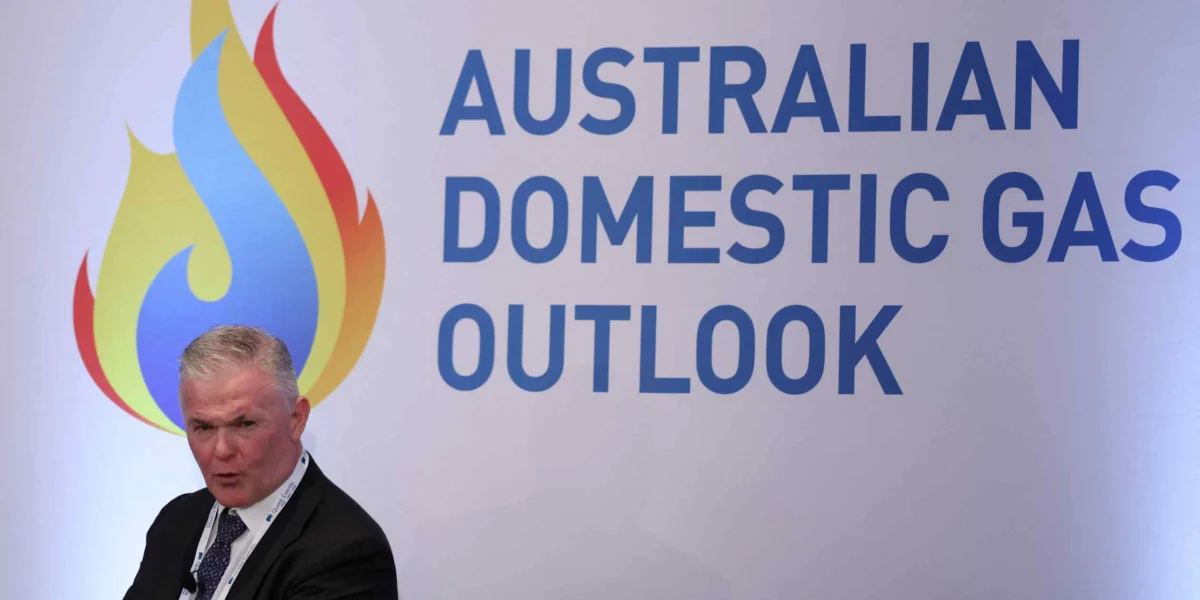
Kevin Gallagher, the CEO of Santos, a prominent Australian gas producer, has been a vocal critic of stricter domestic reservation policies. In March 2026, speaking at a conference in Sydney on Australia’s domestic gas supply, Gallagher emphasized the interconnectedness of export and domestic markets. He argued that the export market provides the economic rationale for investing in large-scale gas projects, which in turn contribute to the overall availability of gas, including for domestic consumers. He has frequently stated that the loss of export revenue would inevitably slow investment in new production, potentially exacerbating future domestic supply challenges.
The companies’ perspective is that a healthy export market underpins their ability to maintain and expand production. If the government imposes a policy that significantly curtails their ability to profit from exports, they are less likely to commit capital to new projects that would ultimately benefit both domestic and international markets. This creates a potential paradox: a policy designed to ensure domestic supply could, in the long term, lead to a reduction in overall supply due to decreased investment.

Supporting Data and Economic Implications
To understand the scale of the issue, it’s important to consider the economic significance of Australia’s gas sector. In the financial year 2023-24, Australia’s LNG exports were valued at approximately AUD $70 billion, making it one of the country’s largest commodity export earners. This sector directly and indirectly supports tens of thousands of jobs across the nation, from exploration and production to transportation and processing.
The domestic gas market, while smaller in value than the export market, is critical for Australian industries. In 2023, domestic gas consumption accounted for approximately 38% of total Australian gas production, with the remainder exported. The price of gas for domestic industrial users had surged by over 400% in the lead-up to the government’s intervention in 2022, pushing many energy-intensive businesses to the brink of closure. For instance, aluminum smelters and fertilizer manufacturers, which rely heavily on gas as a feedstock and energy source, faced significant challenges in maintaining competitiveness.

The implications of the government’s proposed policy, even in its moderated form, are multifaceted:
- Investment Uncertainty: The ongoing debate and the possibility of future interventions create an environment of uncertainty for investors. This can lead to delays in project approvals, reduced capital expenditure, and a preference for less regulated markets.
- Price Volatility: If domestic supply is artificially constrained or investment declines, domestic gas prices could remain volatile or even increase further, impacting household energy bills and industrial competitiveness.
- Energy Transition Impact: Natural gas is seen by many as a crucial transitional fuel in Australia’s move towards a low-carbon economy, bridging the gap between coal and renewable energy. A reduction in gas investment could potentially slow this transition or lead to greater reliance on more carbon-intensive fuels in the interim.
- International Reputation: As a reliable supplier of LNG, Australia has built a strong reputation in international markets. Frequent policy shifts or perceived unreliability could impact its standing as an energy exporter.
Official Responses and Industry Reactions
The Australian government, represented by the Minister for Resources, has maintained that its primary responsibility is to ensure the energy security and economic well-being of its citizens and industries. While acknowledging the importance of the export market, the government has asserted its right and obligation to intervene when domestic supply is threatened.

The revised "Heads of Agreement" was presented as a testament to the government’s willingness to collaborate with industry. However, the underlying tension remains. Industry groups like APPEA have continued to advocate for market-based solutions, emphasizing the role of incentives and regulatory certainty in driving investment. They argue that any policy that distorts market prices or reduces revenue streams will ultimately be counterproductive to achieving long-term energy security.
The timeline of events leading to the current impasse can be summarized as follows:
- 2020-2022: Escalating domestic gas prices and warnings of impending shortages from AEMO.
- Mid-2022: Government intervenes with the Australian Domestic Gas Reservation policy, initially signaling a strong mandatory reservation.
- Late 2022 – Early 2023: Intense lobbying and negotiation between the government and gas producers.
- Late 2023: Government announces a "Heads of Agreement" with industry, moving towards voluntary commitments with a conditional mandatory backstop.
- 2024 – Present: Ongoing discussions and refinement of the policy framework, with continued concerns from producers about the potential impact on investment.
Broader Impact and Future Outlook

The standoff between the Australian government and its natural gas producers is emblematic of a global challenge faced by many energy-exporting nations. As the world navigates the complexities of the energy transition, governments are grappling with how to balance the economic benefits of resource exports with the imperative of ensuring domestic energy security and affordability.
The outcome of this debate in Australia will have significant implications not only for its domestic energy market but also for its standing as a global energy supplier. A resolution that fosters investment, ensures reliable supply, and supports the nation’s climate goals will require a delicate calibration of policy, market forces, and stakeholder cooperation. The industry’s argument that the loss of export revenue will slow investment in production remains a potent concern that the government must address in its pursuit of a sustainable and secure energy future for Australia. The ongoing dialogue, however fractious, suggests a recognition on both sides that a pragmatic and sustainable solution is essential for the long-term health of the nation’s economy and its energy landscape.
