

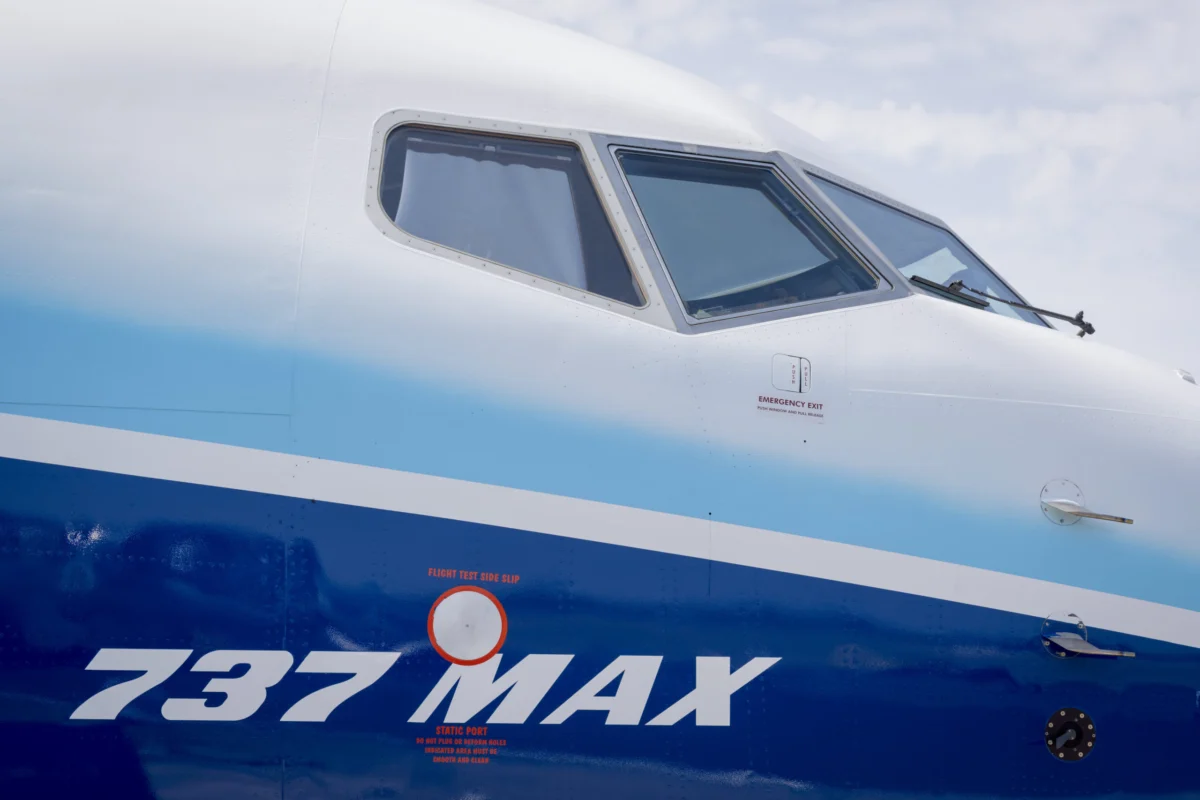
The Federal Aviation Administration (FAA) announced Friday its determination that a newly identified software anomaly within certain Boeing 737 MAX flight computers does not pose a flight-safety issue. This critical decision is expected to clear a significant hurdle in the long-awaited certification process for the 737 MAX 10, the largest variant in Boeing’s best-selling single-aisle aircraft family, as the aerospace giant continues its multi-year effort to stabilize production and restore confidence after a series of profound safety and manufacturing challenges. The resolution arrives as Boeing seeks to accelerate aircraft sales and deliveries, crucial for its financial recovery and market standing.
Understanding the Software Anomaly and Regulatory Assessment
Boeing itself brought the software issue to the FAA’s attention last month, triggering an immediate and comprehensive review by the agency. The anomaly, as described by Boeing, could manifest after a missed approach procedure, specifically when pilots deviate from a preprogrammed flight path. In such instances, pilots would be required to undertake additional manual steps to engage automated tools on subsequent approaches, rather than relying solely on the automated system to seamlessly adjust.
Following a thorough review process, an expert panel convened by the FAA on Friday concluded that the software issue does not compromise flight safety. "The FAA’s Corrective Action Review Board made that determination because pilots retain full control of the aircraft and the indications to the flight crew are clear and unambiguous," the agency stated. This finding underscores the FAA’s focus on maintaining pilot authority and ensuring clear communication within the cockpit, even when automated systems encounter non-standard conditions. The review board comprised a diverse group of FAA specialists, including experts in airframes, flight controls, propulsion systems, and flight testing, reflecting the agency’s commitment to a holistic assessment.
As a proactive measure to address the identified anomaly, the FAA announced that it will issue a special bulletin to airlines. This bulletin will provide detailed guidance on how flight crews can recognize the issue if it arises and the appropriate procedural responses. This instructional approach aims to standardize pilot actions across the global fleet, further mitigating any potential operational confusion. The agency also affirmed its commitment to continuous oversight, stating, "As with any situation, the FAA will consider appropriate action if it receives new information about this issue."
The Certification Path for the 737 MAX 10
The FAA’s recent determination is a pivotal step towards the final certification of the 737 MAX 10, which represents the culmination of Boeing’s efforts to complete its MAX product line. This variant, designed to seat up to 230 passengers, is poised to compete directly with Airbus’s highly successful A321neo. Its certification has been eagerly anticipated by customer airlines, with initial expectations for approval in early fall. However, the discovery of this software glitch had introduced a new layer of uncertainty, potentially delaying the timeline further.
The journey to certification for the MAX 10 has been notably protracted, shadowed by the rigorous scrutiny applied to the entire 737 MAX family following the two fatal crashes in 2018 and 2019. In contrast, the MAX 7, the smallest variant in the family, received its FAA certification in August, providing a glimmer of progress for Boeing’s beleaguered commercial aircraft division. The MAX 7, which typically seats between 138 and 153 passengers, completed its certification process after a lengthy review that also involved extensive software updates and safety enhancements.
Boeing’s Post-Crisis Landscape: A History of Hurdles
The context surrounding the MAX 10’s certification is deeply rooted in Boeing’s most challenging period in its corporate history. The 737 MAX program, initially launched in 2011 as a fuel-efficient successor to the popular 737 Next Generation, quickly became Boeing’s fastest-selling aircraft. By 2018, it had amassed thousands of orders, positioning it as a cornerstone of the company’s future.
However, this trajectory was catastrophically interrupted by two fatal accidents: Lion Air Flight 610 in October 2018 and Ethiopian Airlines Flight 302 in March 2019. These crashes, which together claimed 346 lives, were linked to a faulty Maneuvering Characteristics Augmentation System (MCAS) software, designed to push the aircraft’s nose down under certain conditions. Investigations revealed critical flaws in the software’s design and certification process, leading to a global grounding of the entire 737 MAX fleet in March 2019.
The grounding lasted for 20 months, a period unprecedented in modern aviation history, and had profound consequences for Boeing. The company faced immense financial losses, billions in compensation to airlines, a severely tarnished reputation, and intense regulatory and public scrutiny. The recertification process for the MAX 8 and 9 variants involved extensive software overhauls, new pilot training protocols, and a comprehensive review by aviation authorities worldwide. This period also exposed significant shortcomings in Boeing’s internal safety culture and the FAA’s oversight mechanisms, leading to a series of reforms.
Beyond the software issues, Boeing has also contended with persistent manufacturing quality control problems, particularly within its supply chain and assembly lines. These issues have periodically led to delivery delays and further scrutiny from regulators, compounding the pressures on the company to meet its production targets and restore investor confidence.
Enhanced Regulatory Scrutiny and the Aircraft Certification, Safety, and Accountability Act
The certification of the 737 MAX 10 is occurring under an entirely new paradigm of regulatory oversight. In response to the MAX crashes, the U.S. Congress passed the Aircraft Certification, Safety, and Accountability Act in late 2020. This landmark legislation significantly reformed the FAA’s aircraft certification process, enhancing its oversight capabilities and reducing the reliance on delegated authority to manufacturers. The Act mandates more rigorous review of new aircraft designs, particularly those involving complex software systems, and strengthens whistleblower protections.
Under this heightened scrutiny, every aspect of the MAX 10’s design and operational characteristics has been subjected to meticulous examination. The FAA’s decision on the latest software glitch exemplifies this new era of vigilance. Rather than simply accepting Boeing’s assessment, the agency convened an independent panel of experts to conduct its own "thorough review," underscoring the shift towards a more proactive and hands-on regulatory approach. This meticulousness, while contributing to longer certification timelines, is seen by many as essential for rebuilding public trust in aviation safety.
Airline Perspectives and Market Demand
Despite the protracted certification timeline and the latest software discovery, key customers for the 737 MAX 10 have expressed continued confidence. Earlier this week, chief executives of airlines with significant MAX 10 orders, such as Alaska Airlines and Ryanair, publicly downplayed concerns about potential certification delays.
Alaska Airlines, a prominent U.S. carrier, has a substantial order for the MAX 10, viewing it as a crucial component of its fleet modernization strategy. Their confidence likely stems from several factors: the ability of U.S. airlines to revert to older versions of the software if needed, their long-standing relationship with Boeing, and their trust in the FAA’s rigorous certification process, which they believe ultimately ensures the aircraft’s safety.
Similarly, Ryanair, the largest low-cost carrier in Europe and a major global operator of the 737 MAX, has been an ardent supporter of the MAX program, frequently advocating for faster deliveries. Ryanair’s CEO, known for his outspoken views, has consistently emphasized the MAX’s fuel efficiency and lower operating costs, which are critical for the airline’s business model. Their willingness to brush off concerns highlights the significant economic advantages the MAX 10 offers, particularly in a market grappling with high fuel prices and a strong demand for air travel.
The broader airline industry is currently experiencing a robust recovery from the COVID-19 pandemic, leading to a surge in demand for new, fuel-efficient aircraft to replace aging fleets and expand networks. Boeing’s commercial backlog, including thousands of MAX orders, represents a critical asset in meeting this demand. The MAX 10, with its increased capacity and extended range, is particularly attractive to airlines operating high-density routes or seeking greater operational flexibility.
Broader Implications for Boeing and the Aviation Industry
The FAA’s declaration that the software glitch is not a safety concern is a much-needed boost for Boeing, particularly as it navigates a challenging commercial landscape. This decision is expected to pave the way for the final certification of the MAX 10, allowing Boeing to begin deliveries and recognize revenue from this important variant. Delays in certification not only impact Boeing’s financial performance but also create ripple effects across its supply chain and among its airline customers, who rely on timely deliveries for their operational planning.
From an investor perspective, clearing this hurdle provides greater clarity and reduces uncertainty, potentially stabilizing Boeing’s stock performance. The company has been under intense pressure to demonstrate consistent progress in its commercial aircraft division, which has historically been a major revenue driver. Successfully bringing the MAX 10 to market without further significant delays is vital for restoring investor confidence and meeting long-term financial targets.
More broadly, this episode underscores the delicate balance between regulatory rigor and industry pressure. While airlines are eager for new aircraft, and Boeing is keen to deliver, the FAA’s primary mandate remains public safety. The exhaustive review of this latest software anomaly, even for an issue ultimately deemed non-critical, reflects the lasting impact of the MAX crashes on regulatory philosophy. It signals that even minor software deviations will receive intense scrutiny, ensuring that lessons learned from past tragedies continue to inform present and future certification processes.
Conclusion
The FAA’s recent determination regarding the 737 MAX software anomaly marks a significant turning point for Boeing and its highly anticipated MAX 10 program. By confirming that the issue does not compromise flight safety, the agency has removed a key obstacle, bringing the largest MAX variant closer to its operational debut. This decision, however, is not merely a technical clearance; it represents another step in Boeing’s arduous journey to rebuild trust, address past failures, and navigate an era of unprecedented regulatory oversight. As the aerospace giant prepares to deliver the MAX 10 to its eager customers, the industry will continue to watch closely, underscoring the enduring importance of safety, transparency, and rigorous oversight in modern aviation.
