

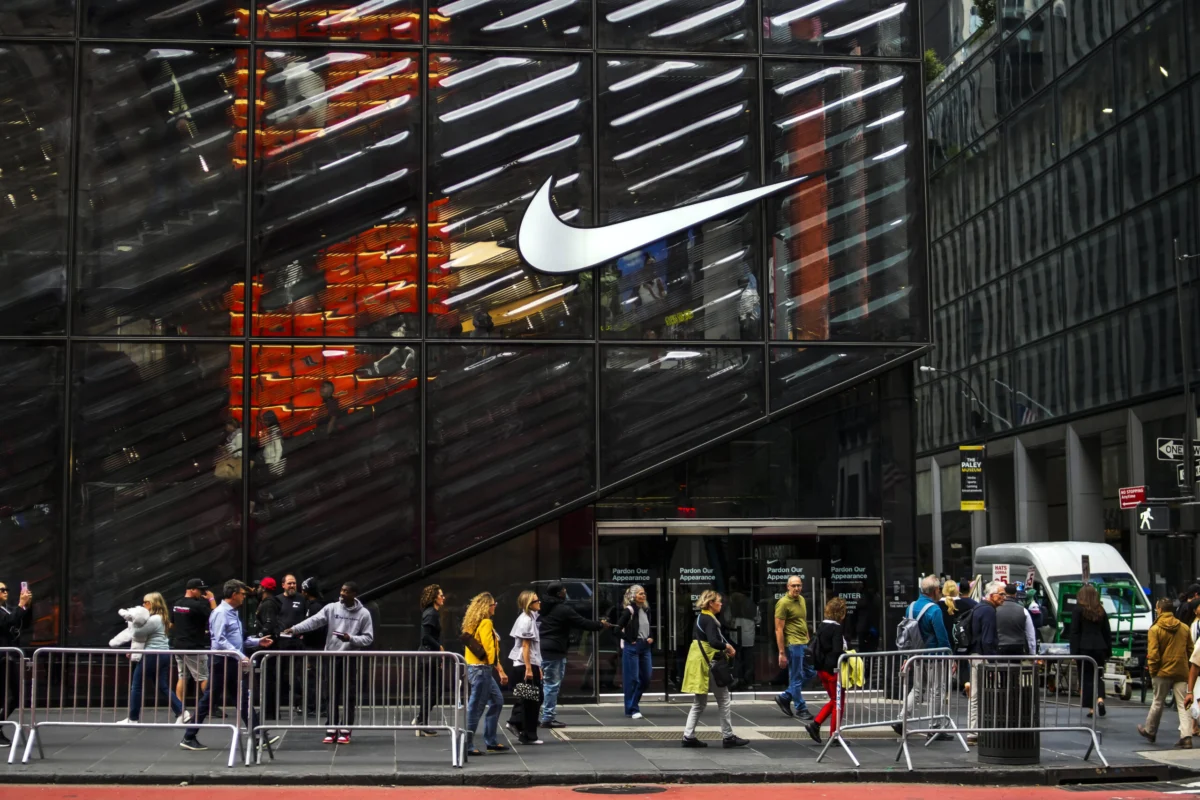
NEW YORK – Nike, the global sportswear giant, announced a comprehensive restructuring plan, dubbed "Pace," that will involve significant layoffs beginning in 2027, following a challenging fiscal first quarter for 2027. The news, delivered on Thursday, September 29, 2026, alongside mixed financial results and a revised full-year outlook, sent shares of the company down approximately 3% in extended trading. The strategic overhaul aims to streamline operations and reignite growth amidst persistent macroeconomic headwinds and evolving consumer preferences.
Fiscal First Quarter Performance Under Scrutiny
For the fiscal first quarter, which concluded recently, Nike reported financial figures that largely fell short of market expectations, painting a picture of a company grappling with several key challenges. The company’s net income stood at $712 million, marking a 2% decline from $727 million reported in the same period last year. Total revenue for the quarter reached $11.21 billion, a 4% decrease year-over-year. This performance was particularly concerning as analysts, according to consensus estimates from LSEG, had anticipated more robust figures, underscoring the severity of the operational pressures.
A significant contributor to the revenue decline was the continued struggle within the Greater China market. Revenue in this crucial region plummeted by a substantial 26%, reflecting a challenging operating environment characterized by heightened local competition, shifting consumer nationalism, and a broader economic slowdown. CEO Elliott Hill acknowledged the gravity of the situation on a call with analysts, stating that the company is "moving with urgency" to address and improve its business in the region. This aggressive decline in what was once a powerhouse growth market for Nike highlights the complexities faced by multinational corporations navigating the Chinese consumer landscape.
Conversely, some segments showed resilience. North America, Nike’s largest market, posted revenue of $5.13 billion, marginally exceeding StreetAccount estimates of $5.11 billion. This slight beat in its home market offered a glimmer of positive performance, suggesting that despite broader consumer caution, certain core elements of Nike’s domestic strategy might be yielding results. Furthermore, the company reported a gross margin of 42.8%, surpassing analyst expectations of 42.4%. While a positive indicator of cost management and pricing power, this was insufficient to offset the overall revenue contraction and net income decline.
Despite the relative strength in North America and gross margin, CEO Hill articulated the ongoing difficulties facing specific brand segments. "Despite that progress, our Nike performance business is not yet large enough to offset the pressure we’re seeing in Nike Sportswear, Jordan Brand, and Greater China," Hill explained to analysts. He emphasized that "realizing the full benefit of those efforts will take time," indicating that a swift turnaround is not anticipated. The Nike Sportswear segment, which historically accounts for a significant portion of the company’s revenue—just under half in the reported quarter—experienced a low-double digit percentage decline. Hill attributed this slump to a broader "lack of energy in the lifestyle space" and cautious consumer spending, asserting that as an industry leader, Nike bears the responsibility to "bring more creativity to sportswear."
The "Pace" Restructuring Initiative Takes Center Stage
In response to these persistent challenges and with an eye towards long-term sustainable growth, Nike unveiled a comprehensive restructuring plan named "Pace." This strategic overhaul is designed to streamline operations, enhance decision-making, and reinvest in core areas of innovation and brand building. The plan, however, comes with the difficult consequence of job reductions, with layoffs expected to commence in 2027. While specific numbers were not disclosed, CEO Hill addressed the workforce directly in a letter, acknowledging that "This work will result in fewer roles across Nike, and I want to acknowledge that news like this creates uncertainty. I don’t take that lightly." This marks the third wave of layoffs Nike has announced within the current calendar year, underscoring a period of significant internal transformation and cost-cutting measures.
The Pace strategy outlines several key pillars for future operations. Central to the plan is the modernization of Nike’s vast global supply chain, aiming for greater efficiency, speed, and responsiveness to market demands. The company also intends to reorganize its operational structure into three distinct geographic regions: the Americas; Asia Pacific and Greater China; and Europe, the Middle East, and Africa (EMEA). This move is expected to decentralize decision-making and allow for more tailored strategies adapted to local market nuances. Additionally, Nike announced plans to establish a new campus in India, signaling a strategic focus on expanding its presence and capabilities within emerging markets. The overarching objective is to adapt its work processes and workforce composition to align with these new strategic imperatives.
From a financial perspective, the Pace initiative is projected to deliver approximately $2.5 billion in savings through fiscal 2031. This substantial figure underscores the company’s commitment to improving its operational efficiency and profitability. However, the restructuring will also incur costs in the near term, with an estimated 15-cent restructuring expense anticipated to impact fiscal 2027 earnings per share. CEO Hill articulated the strategic rationale behind Pace during the conference call, stating, "We expect Pace to streamline decision making, so we can capture demand faster and improve productivity, while also creating greater capacity to invest in what has always set Nike apart: serving athletes, creating industry-leading innovation and building the world’s strongest sports brands." This statement encapsulates the delicate balance Nike seeks to strike between fiscal discipline and maintaining its competitive edge through innovation and brand strength.

Strategic Headwinds and Market Dynamics
Nike’s current struggles are not isolated incidents but rather reflective of broader shifts within the global athletic wear market and challenging macroeconomic conditions. The "lack of energy in the lifestyle space," as noted by Hill, speaks to several converging trends. The athleisure market, which saw explosive growth in previous years, appears to be maturing, leading to increased competition and a saturation of similar products. Consumers are increasingly discerning, seeking novelty and unique propositions, moving away from generic offerings. This trend has created an opening for challenger brands and a resurgence of retro styles from competitors, forcing Nike to innovate more aggressively to maintain its trendsetting position.
The specific challenges in Greater China are multifaceted. Beyond the general economic slowdown impacting consumer spending, Nike and other Western brands face intense competition from sophisticated domestic players who are adept at localizing products and marketing to Chinese tastes. Furthermore, geopolitical tensions and instances of consumer nationalism have at times led to boycotts or preference for local brands, adding another layer of complexity for foreign companies operating in the market. The 26% revenue drop in China is a stark reminder of the volatility and strategic importance of this region.
Globally, consumers are contending with persistent inflation, which erodes purchasing power, and rising interest rates, which make discretionary spending less attractive. Geopolitical uncertainties further contribute to a cautious consumer sentiment, leading individuals to prioritize essential goods over premium sportswear. These macroeconomic pressures have a direct impact on demand for high-priced sneakers and apparel, affecting companies like Nike that thrive on discretionary consumer spending. The performance of the Jordan Brand, a historically strong performer, being under pressure also signals a broader consumer shift or increased competitive intensity even in established sub-brands.
Revised Financial Outlook and Investor Reaction
Following the mixed fiscal first-quarter results and the announcement of the ambitious Pace restructuring, Nike also provided a revised full-year outlook for fiscal 2027. The company now expects revenues to decline by a high-single digit percentage, a significant revision from previous expectations and a clear indication of the anticipated difficulties ahead. Adjusted earnings per share are projected to be in a range of $1.15 to $1.35, reflecting both the operational challenges and the immediate costs associated with the restructuring. This cautious outlook, combined with the news of impending layoffs, contributed to the roughly 3% drop in Nike’s share price during extended trading on Thursday.
The investor reaction underscores the market’s concern regarding Nike’s near-term performance and the execution risks associated with such a large-scale restructuring. The company’s shares have already plummeted more than 40% over the past year, reflecting a sustained period of underperformance relative to broader market indices and some of its peers. This prolonged decline indicates that investors are keenly awaiting tangible signs of a turnaround and successful implementation of the new strategic direction. The anticipated revenue decline in fiscal 2027 suggests that the path to recovery will be gradual and requires significant operational adjustments.
Broader Implications and Future Trajectory
The announcements from Nike represent a critical juncture for the iconic sportswear brand. The Pace restructuring is not merely a cost-cutting exercise but a fundamental re-evaluation of how Nike operates globally. The shift to three distinct geographic regions could enable faster decision-making and more agile responses to localized trends and consumer demands. Modernizing the supply chain is crucial in an era where speed-to-market and inventory efficiency are paramount. However, such large-scale organizational changes carry inherent risks, including potential disruptions to operations, challenges in maintaining employee morale amidst layoffs, and the complexity of integrating new systems and processes across a global enterprise.
For the athletic footwear and apparel industry, Nike’s moves will be closely watched. As the undisputed market leader, its strategies often set benchmarks and influence competitors. The acknowledgment of a "lack of energy in the lifestyle space" by Nike’s CEO resonates across the sector, highlighting a collective need for innovation and differentiation. How Nike navigates the evolving consumer landscape, particularly in crucial markets like China, will offer insights into the broader industry’s future trajectory. The company’s commitment to investing in innovation and serving athletes, even amidst cost-cutting, suggests a dual strategy of streamlining for efficiency while simultaneously reinforcing its core strengths.
Ultimately, Nike’s success will hinge on its ability to effectively execute the Pace strategy, reignite consumer demand, especially in struggling segments like Sportswear and Jordan Brand, and demonstrate sustained growth in key markets. The coming years will be a test of Nike’s resilience, strategic acumen, and capacity to adapt to a rapidly changing global marketplace, proving whether this period of transformation can indeed position it for "long-term growth" and reinforce its legacy as an industry pioneer.
