

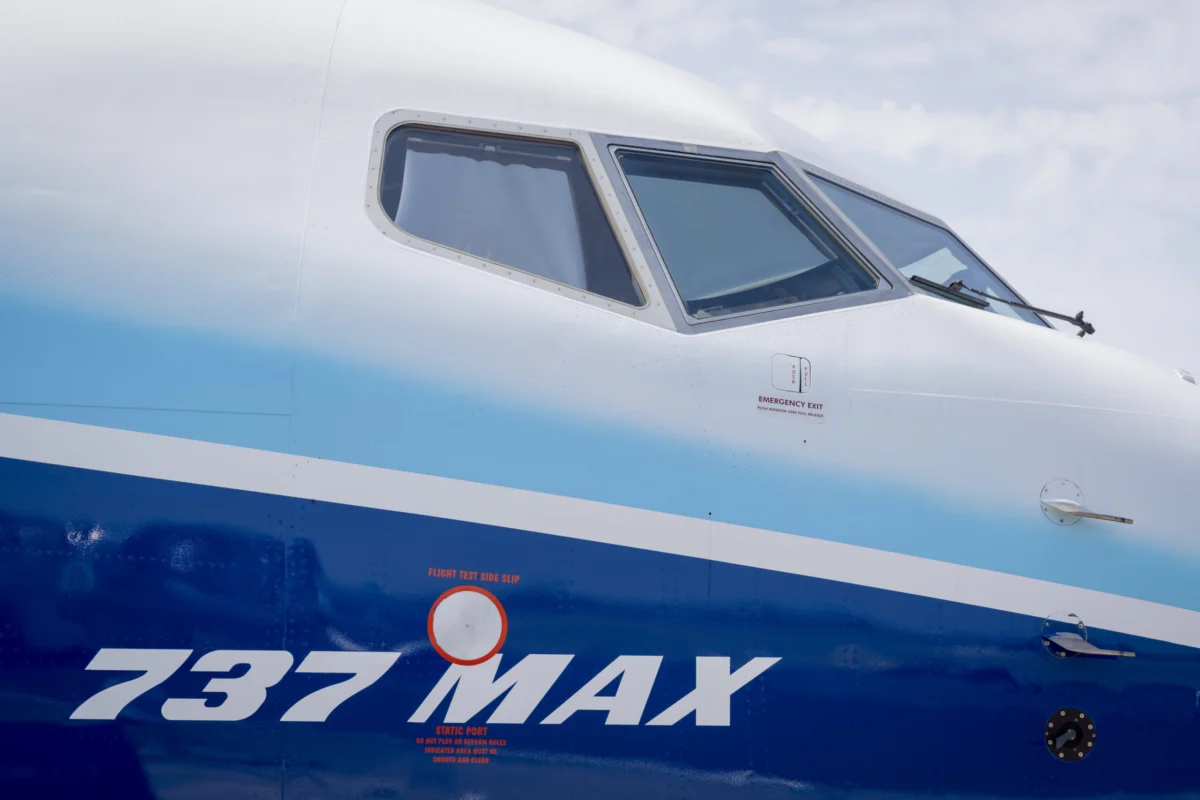
Washington D.C. – The Federal Aviation Administration (FAA) has announced an indefinite delay in the certification of Boeing’s highly anticipated 737 MAX 10, the largest variant of its best-selling single-aisle aircraft family. The decision stems from the discovery of a newly identified software problem that could impact certain critical landing procedures, prompting the agency to thoroughly assess its potential safety implications. This unexpected setback, confirmed by FAA Administrator Bryan Bedford on Monday, October 7, 2026, casts a long shadow over Boeing’s efforts to finalize government approval for its full MAX lineup and move beyond years of safety crises and production challenges. The news sent Boeing shares plummeting by nearly 7% on Monday, reflecting investor apprehension over yet another delay in the long-troubled aircraft program.
A New Hurdle for Boeing’s Flagship Variant
Administrator Bedford, speaking at a press conference focused on air traffic modernization in Washington D.C., was unequivocal in his stance. "We haven’t concluded whether this is a safety-of-flight issue or not, but we will be delaying the 10… until we’re satisfied that we don’t have an issue here," he stated, emphasizing the FAA’s commitment to a rigorous and safety-first certification process. The FAA later reinforced this position in an official statement, asserting that "safety dictates the certification timeline" and that the agency is "following our safety review process to investigate this software glitch and won’t hesitate to take action if needed."
The revelation of the software glitch comes just weeks after Boeing’s CEO, Kelly Ortberg, expressed optimism to investors earlier in October 2026, predicting that the years-delayed MAX 10 would receive a "very soon" green light from its regulator. However, Boeing itself had flagged the software issue to the FAA in late September 2026, acknowledging its potential to affect certain landing procedures on some 737 MAX aircraft. This proactive disclosure, while necessary, has now translated into a significant regulatory hurdle.
The Glitch: Vertical Navigation and Go-Around Procedures
According to Boeing’s weekend statement and subsequent details from Administrator Bedford, the identified software issue specifically involves the vertical navigation system. This system is crucial for guiding an aircraft during various flight phases, including approaches and landings. The glitch, as described, could manifest if an aircraft misses an initial approach and is required to perform a "go-around" maneuver – a procedure where the pilots abort the landing, climb away, and then re-align to attempt another landing. Such scenarios might arise due to various factors, including an obstruction on the runway, sudden adverse weather conditions, or an unstable approach.
While both Boeing and Administrator Bedford stressed that pilots are extensively trained to handle go-around situations and maintain control of the airliner, the FAA’s primary concern revolves around the "workload component" introduced by the glitch. In a high-stress, dynamic environment like a go-around, any unexpected behavior from automated systems that increases pilot workload or provides confusing information could potentially compromise safety. The FAA’s investigation will determine if this increased workload, even if pilots ultimately retain control, constitutes an unacceptable safety risk.
This particular software issue is not the first of its kind. Bedford noted that Boeing had previously fixed a bug in the system but "unexpectedly… introduced a new bug" in the process. This suggests an ongoing challenge in software development and integration for the complex aircraft, raising questions about quality control and the robustness of Boeing’s internal testing protocols.
A History of Scrutiny: The Shadow of Previous MAX Crashes
The FAA’s heightened caution and the immediate market reaction are inextricably linked to the painful history of the 737 MAX program. The aircraft family endured an unprecedented 20-month global grounding following two catastrophic crashes within five months: Lion Air Flight 610 in October 2018 and Ethiopian Airlines Flight 302 in March 2019. These tragedies, which claimed 346 lives, were directly linked to a faulty Maneuvering Characteristics Augmentation System (MCAS) flight control software. Investigations revealed that MCAS repeatedly pushed the aircraft’s nose down based on erroneous sensor data, overriding pilot inputs and ultimately leading to unrecoverable dives.
The recertification of the 737 MAX 8 in November 2020 was a monumental undertaking, involving extensive software updates, revised pilot training, and a fundamental overhaul of the FAA’s certification process, moving away from previous delegated authority to Boeing and towards more direct oversight. This history dictates that any new software anomaly, no matter how seemingly minor, is now viewed through an extremely stringent lens by regulators, airlines, and the public alike.
Administrator Bedford explicitly drew a distinction between the current MAX 10 software issue and the MCAS problem. He emphasized that, unlike MCAS, this new glitch "doesn’t take control away from the pilots." This is a critical differentiation, as the core danger of MCAS was its ability to effectively usurp control from the flight crew. Nevertheless, any system that could create confusion or increase workload during critical flight phases is unacceptable in modern aviation safety standards, especially for an aircraft family still working to fully restore public trust.
Boeing’s Certification Gauntlet: A Chronology of Delays
The journey for the 737 MAX 10 has been fraught with delays since its inception. Boeing initially aimed to begin delivering the MAX 10, designed to seat up to 230 passengers in a typical two-class configuration, in 2020. However, the global grounding of the MAX fleet in 2019, coupled with subsequent production challenges, supply chain disruptions, and the stringent recertification requirements, pushed that timeline back significantly.
- June 2017: Boeing officially launches the 737 MAX 10 at the Paris Air Show.
- 2018-2019: Lion Air and Ethiopian Airlines MAX 8 crashes lead to global grounding of the MAX fleet.
- November 2020: FAA certifies the updated 737 MAX 8, allowing it to return to service.
- 2021-2025: Ongoing delays for MAX 7 and MAX 10 certification due to regulatory scrutiny, design changes, and production issues.
- September 2026: Boeing CEO Kelly Ortberg tells investors that MAX 10 certification is expected "very soon."
- Late September 2026: Boeing notifies FAA of the new software glitch on certain 737 MAX aircraft.
- Early October 2026: FAA Administrator Bryan Bedford publicly announces the indefinite delay in MAX 10 certification due to the software issue.
- August 2026: The FAA certified the MAX 7, the smallest variant in the family, which incorporates the most updated version of the software now under evaluation. The implications for MAX 7 deliveries to customers like Southwest Airlines remain unclear.
The MAX 10 represents the final variant of the MAX family awaiting certification, and its successful introduction is crucial for Boeing’s competitive standing against its primary rival, Airbus, particularly the highly successful A321neo.
Market Reaction and Investor Confidence
The immediate market response to Administrator Bedford’s announcement was sharp and negative. Boeing shares (BA) extended earlier losses, closing down nearly 7% on Monday. This significant dip underscores the fragility of investor confidence in Boeing, which has been battered by repeated setbacks, production glitches, and quality control concerns. Each delay translates into lost revenue, potential penalty clauses from airlines, and increased development costs. Analysts quickly revised their outlooks, with many expressing concern that this latest issue could push the MAX 10’s certification well into 2027 or even later, further eroding Boeing’s market position.
Boeing’s statement following the FAA’s announcement was brief: "We continue to follow the lead of the FAA as we work through the certification process." This highlights the company’s delicate position, needing to show full cooperation with regulators while also reassuring customers and investors.
Airline Implications and Fleet Planning Challenges
For airlines, especially those with substantial orders for the 737 MAX 10, this delay presents significant fleet planning headaches. Major customers such as United Airlines, which has more than 200 MAX 10s on order, and others like Delta Air Lines and Ryanair, rely on these aircraft to modernize their fleets, increase capacity, and open new routes. Delays mean older, less fuel-efficient aircraft must remain in service longer, or airlines may need to seek alternative aircraft, potentially from Airbus, to meet their growth objectives.
U.S. airlines, according to the original article, have stated that they do not currently have any MAX aircraft with this specific software issue. This is partly because they are permitted to revert to older, proven software versions on existing models if necessary, rather than adopting the newer version that potentially harbors the glitch. However, the long-term impact on future deliveries and the consistency of software across the MAX fleet remains a concern. The uncertainty surrounding the MAX 7’s updated software and its potential link to the MAX 10 issue also creates ambiguity for airlines like Southwest, a major MAX operator.
The Regulatory Imperative: FAA’s Unwavering Stance
The FAA’s firm stance on the MAX 10 certification is a testament to its commitment to restoring its reputation as a leading global aviation safety regulator. Following the criticisms leveled against its initial certification of the MAX 8 and its reliance on delegated authority, the FAA has adopted a demonstrably more rigorous and hands-on approach to Boeing’s programs. This includes meticulous review of every system and line of code, independent assessments, and a refusal to be swayed by commercial pressures or timeline demands. The FAA’s assertion that "safety dictates the certification timeline" is not merely rhetoric but a foundational principle guiding its current operations, especially concerning Boeing. This continued vigilance is essential for rebuilding trust with international regulators and the flying public.
The Road Ahead: Regaining Trust and Stabilizing Production
For Boeing, the path forward is complex and arduous. Beyond addressing this specific software glitch, the company faces ongoing pressure to stabilize its production lines, improve quality control, and deliver on its existing commitments. The confluence of supply chain issues, labor shortages, and design challenges has plagued its commercial aircraft division for years. Each new setback chips away at its financial resilience and competitive edge.
The MAX 10 is designed to compete directly with Airbus’s highly successful A321neo, which has captured a significant portion of the narrow-body market. A prolonged delay for the MAX 10 could lead to further order cancellations or conversions to Airbus aircraft, diminishing Boeing’s market share in a critical segment. Regaining the full trust of airlines, regulators, and the traveling public requires not just fixing immediate problems but demonstrating a systemic commitment to engineering excellence, transparent communication, and an unyielding focus on safety above all else. The company’s future success hinges on its ability to navigate these multifaceted challenges with unwavering resolve.
Competitive Landscape: Airbus’s Advantage
While Boeing grapples with its MAX 10 woes, Airbus continues to capitalize on its rival’s difficulties. The A321neo, a direct competitor to the MAX 10 in terms of range and capacity, has seen robust sales and is already a staple in many airline fleets. With no comparable certification issues looming, Airbus is in a strong position to absorb any demand that Boeing cannot meet due to production or certification delays. This competitive imbalance further amplifies the pressure on Boeing to resolve its issues swiftly and definitively. The global aerospace market will be watching closely as Boeing works to overcome this latest hurdle, a crucial test of its renewed commitment to safety and its ability to regain its footing as a dominant force in commercial aviation.
