

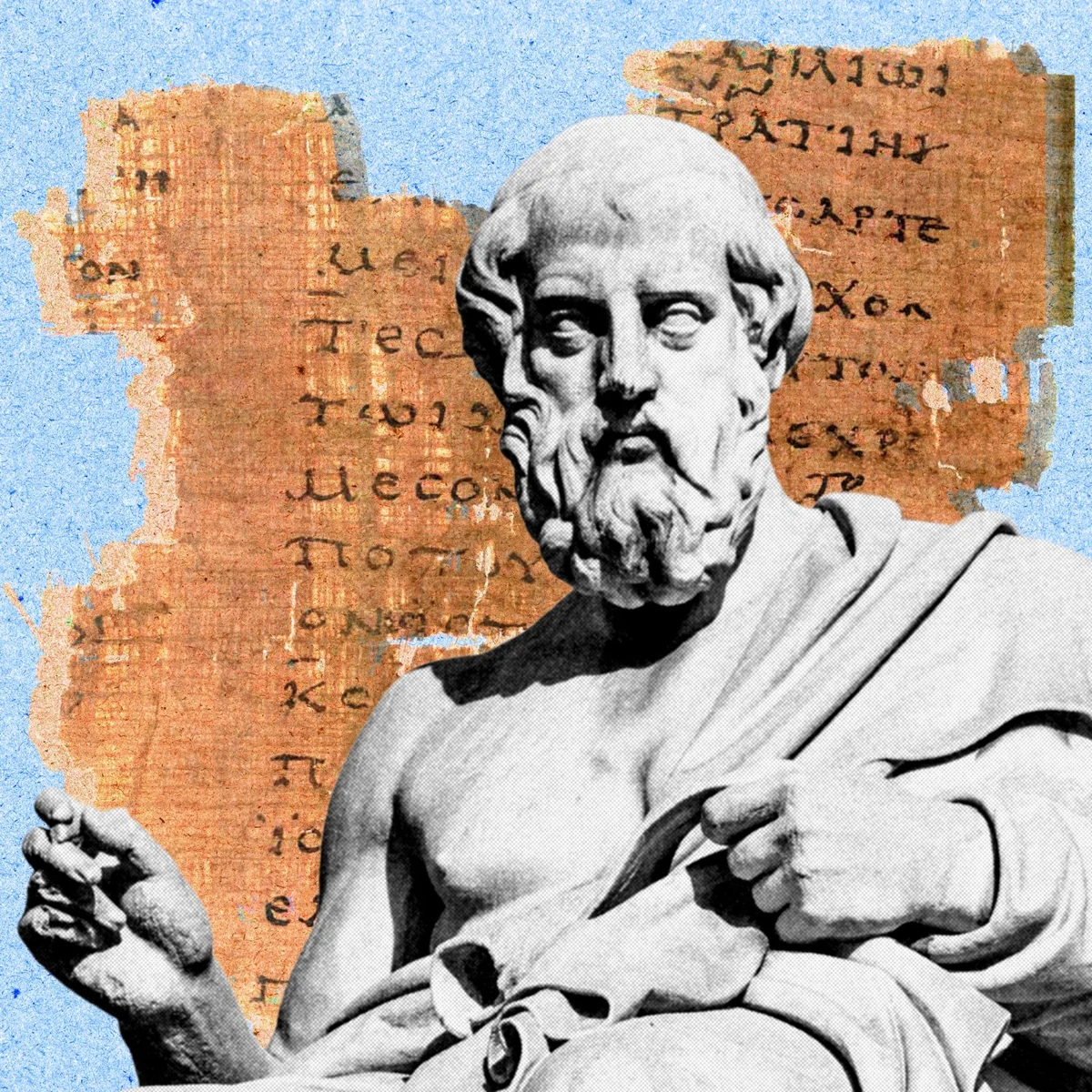
The vast archives of academic libraries worldwide house an immense treasure trove of Ancient Greek papyrus fragments, remnants of a civilization that shaped Western thought. For centuries, scholars have meticulously pieced together these fragile documents, painstakingly filling in missing words and phrases to unlock their secrets. This laborious process, however, has been significantly accelerated by a groundbreaking application of artificial intelligence. On Wednesday, the Austrian Academy of Sciences, in collaboration with the French AI lab Mistral and the technology services firm Sail Reply, unveiled Apollo, the world’s first advanced large language model specifically designed for Ancient Greek. This innovative tool promises to revolutionize the study of classical antiquity by democratizing access to knowledge and expediting scholarly research.
Harnessing the Power of Advanced AI for Historical Restoration
Apollo represents a significant leap forward in digital humanities. The model has been trained on an unprecedented corpus of approximately 600 million historical Greek words, meticulously gathered from manuscripts, papyri, and inscriptions. This extensive dataset allows Apollo to understand the nuances of Ancient Greek language, including variations in dialect, historical context, and literary style. The model will be made freely accessible to academics worldwide through an intuitive chatbot interface, empowering researchers to more efficiently identify papyrus fragments pertinent to their specific fields of study and to discover novel avenues for research.
One of the most profound capabilities of Apollo lies in its ability to reconstruct damaged texts. Ancient Greek writing often lacks spaces between words, making decipherment a formidable challenge. When faced with tattered or incomplete documents, Apollo can statistically infer the most probable missing words or phrases, thereby potentially revealing crucial details about historical events, societal practices, and cultural nuances that might otherwise remain lost to time. Dimitris Vlitas, a partner at Sail Reply, emphasized the transformative nature of this technology, stating that unlocking knowledge in this manner "was unthinkable a year ago."
The Traditional Scholarly Approach: A Monumental Undertaking
Prior to the advent of AI tools like Apollo, the restoration of a damaged papyrus fragment was an intensely specialized and time-consuming endeavor. It required scholars to possess an extraordinary depth of knowledge, encompassing not only linguistic expertise but also a profound understanding of historical context. The process typically involved:
- Word Segmentation: Identifying where one word ends and another begins in continuous Greek script.
- Paleographical Analysis: Dating the document based on the style of handwriting.
- Historical Contextualization: Weighing the socio-political and cultural milieu in which the document was created.
- Lexical Reconstruction: Consulting extensive reference materials and drawing upon their own erudition to propose plausible words or phrases to fill textual gaps.
Stephen Colvin, a professor of classics and historical linguistics at University College London, highlighted the rarity of scholars possessing such a comprehensive skill set. "There are very few people in the world who are that good at Greek history," he noted, underscoring the limitations of the traditional approach in terms of scalability and accessibility.
Apollo’s Integrated Knowledge Base
The power of Apollo lies in its ability to encapsulate this specialized knowledge within its algorithms. Unlike human scholars who must manually access and integrate various sources, Apollo’s training data has effectively "baked in" this expertise. Anna Dolganov, a historian and papyrologist at the Austrian Academy of Sciences, explained the model’s adaptability: "When it sees Homer, it supplements Homeric Greek. When it sees an inscription in Doric dialect, it uses Doric dialect." This inherent understanding of linguistic variations allows Apollo to provide contextually relevant reconstructions, greatly enhancing the accuracy and utility of its suggestions.
The implications for academic research are immense. Scholars who have historically been bogged down by the painstaking work of textual reconstruction can now dedicate more time to analyzing the content and implications of these historical documents. The focus can shift from the "what" to the "so what," allowing for deeper engagement with the historical narratives and insights contained within the papyri.
A New Dawn for Classical Studies: Expert Reactions and Expectations
The academic community has responded with considerable enthusiasm to the announcement of Apollo. Armand D’Angour, a professor of classical languages and literature at the University of Oxford, home to the world’s largest ancient papyrus collection, expressed his excitement. "I think it’s very exciting," he stated. "If I had a machine telling me, ‘Here are the three possible words that could fit into that gap,’ it would speed up matters considerably." This sentiment is echoed by many researchers who envision Apollo as a powerful catalyst for accelerating discovery and deepening our understanding of the ancient world.
While Apollo is unlikely to unearth lost plays by Sophocles or provide entirely new epic poems, its impact on the nuanced understanding of antiquity is expected to be substantial. Many papyri that remain unrestored are often mundane documents such as personal letters, marital contracts, and civil service records. However, it is precisely these "everyday" documents that offer invaluable insights into the lives of ordinary people, social structures, and the administrative workings of ancient societies. As Professor Colvin observed, "If you were a layperson, you might think suddenly we’ll get a few new plays by Sophocles, but that’s not going to happen." Nevertheless, he added, "Every time something is produced, it adds a tiny element of knowledge about the ancient world." Apollo’s ability to efficiently reconstruct these texts can therefore provide a more comprehensive and granular picture of daily life in antiquity, substantiating existing scholarly assumptions and potentially revealing new details.
Expanding Horizons: The Potential for Broader Applications
The success of Apollo in the realm of Ancient Greek studies opens the door to similar applications in other disciplines. Dimitris Vlitas of Sail Reply suggested that the underlying AI techniques could be readily adapted to decipher other ancient languages, such as Latin or Egyptian, or indeed any academic field that deals with large, complex corpora of text. This highlights a broader trend of AI integration into academic research, augmenting human capabilities and accelerating discovery.
This development follows a series of notable AI achievements in other scientific domains. OpenAI recently announced that its AI models had successfully solved a 200-year-old mathematical problem, showcasing AI’s prowess in tackling complex intellectual challenges. Similarly, Google DeepMind released AlphaGenome Atlas, a vast dataset compiled using AI that maps the impact of genetic mutations on molecular biology, further demonstrating AI’s capacity for scientific data generation and analysis.
Addressing Concerns: Maintaining Human Oversight in AI-Assisted Research
A potential concern regarding the use of language models in historical reconstruction is the risk of introducing errors into the historical record. Language models operate on probabilities, and their inferences, while often accurate, are not infallible. To mitigate this risk, Apollo has been designed with a crucial safeguard: it proposes a selection of potential word options for scholars to review and choose from.
Anna Dolganov stressed the importance of human expertise in this collaborative process. "The crucial point is that human competence needs to remain," she asserted. "If we become totally reliant on AI transcriptions and interpretations of historical material, that’s when the problems start." This emphasis on human-AI collaboration ensures that Apollo serves as a powerful assistive tool rather than a complete replacement for scholarly judgment. The final interpretation and validation of the reconstructed text will always rest with the human expert, safeguarding the integrity of historical research.
A Timeline of Innovation: From Concept to Implementation
The development of Apollo represents the culmination of significant research and development efforts over a relatively short period. While the precise start date of the project is not publicly detailed, the rapid advancements in large language models over the past few years, particularly since 2020, have created the technological foundation necessary for such an undertaking.
- Early 2020s: Significant breakthroughs in transformer architectures and the scaling of AI models create the potential for sophisticated natural language processing capabilities applicable to historical texts.
- Mid-2022 – Early 2023: Mistral AI, a prominent French AI lab, emerges and begins developing advanced language models. Simultaneously, Sail Reply, a technology services firm, likely begins exploring applications of AI in cultural heritage and academic research.
- Late 2023 – Early 2024: The Austrian Academy of Sciences, with its extensive expertise in classical studies and access to vast papyrus collections, partners with Mistral and Sail Reply to develop a specialized AI model for Ancient Greek. This period would have involved extensive data curation, model training, and rigorous testing.
- Wednesday, [Insert Date of Release]: The official unveiling and release of Apollo, marking a new era in the decipherment and study of Ancient Greek papyri.
The successful development and deployment of Apollo in such a specialized field underscore the accelerating pace of AI innovation and its growing impact across diverse academic disciplines.
Supporting Data and Future Projections
The sheer volume of unrestored papyri represents a significant bottleneck in classical scholarship. While exact figures vary, estimates suggest that hundreds of thousands, if not millions, of papyrus fragments remain largely uncatalogued and undeciphered in libraries globally. The potential for Apollo to process and assist in the restoration of even a fraction of these fragments is enormous.
For instance, the Oxyrhynchus papyri collection in Egypt, one of the largest, contains over half a million fragments, with a significant portion still awaiting detailed study. Similarly, collections at the Bodleian Library (Oxford), the British Library, and various institutions across Europe and North America hold vast quantities of these ancient texts. Apollo’s ability to rapidly triage these fragments, identify key texts, and offer initial reconstructions could drastically reduce the time required to bring new discoveries to light.
The broader implications extend to pedagogical applications. Students of classics could utilize Apollo to gain hands-on experience with textual reconstruction under expert guidance, fostering a deeper engagement with primary sources. Furthermore, the open-access nature of the model democratizes access to sophisticated research tools, potentially leveling the playing field for scholars at institutions with fewer resources.
The success of Apollo also paves the way for future AI-driven initiatives. One can envision similar models being developed for other ancient languages, or for the analysis of complex scientific data. The underlying principles of training AI on specialized corpora and using it for inference and reconstruction are widely applicable. As AI technology continues to evolve, its role in unlocking historical knowledge and advancing scientific understanding is poised to grow exponentially. The integration of human expertise with the computational power of AI, as exemplified by Apollo, offers a powerful model for future research endeavors, promising to illuminate the past and shape the future of knowledge.
