

The air in the converted San Francisco church buzzed with an almost palpable energy. Amidst the clinking of glasses and the murmur of conversations, a black-tie affair hosted by the Foundation for American Innovation, a center-right think tank, sought to elevate the burgeoning religion of Artificial Intelligence. Carved meats rested on linen-draped tables, and bartenders served a cocktail named "Zero to One," a nod to Peter Thiel’s philosophy. It was within this opulent setting that Mira Murati, the Albanian-born founder and CEO of Thinking Machines Lab, attempted to discuss the historical parallels of technological revolutions. Having previously held prominent roles at OpenAI, including a period as CTO and a brief, unsuccessful attempt to oust Sam Altman, Murati had recently launched her own ambitious AI startup valued at $12 billion. However, her attempts to share her insights were largely drowned out by the cacophony of the event, a situation that echoed a similar experience the author had witnessed earlier that week. The difficulty in capturing the attention of a room filled with industry insiders, even for a figure as significant as Murati, highlighted a broader, persistent challenge: the often-unacknowledged disparity in how power and influence are perceived and wielded by women in Silicon Valley.
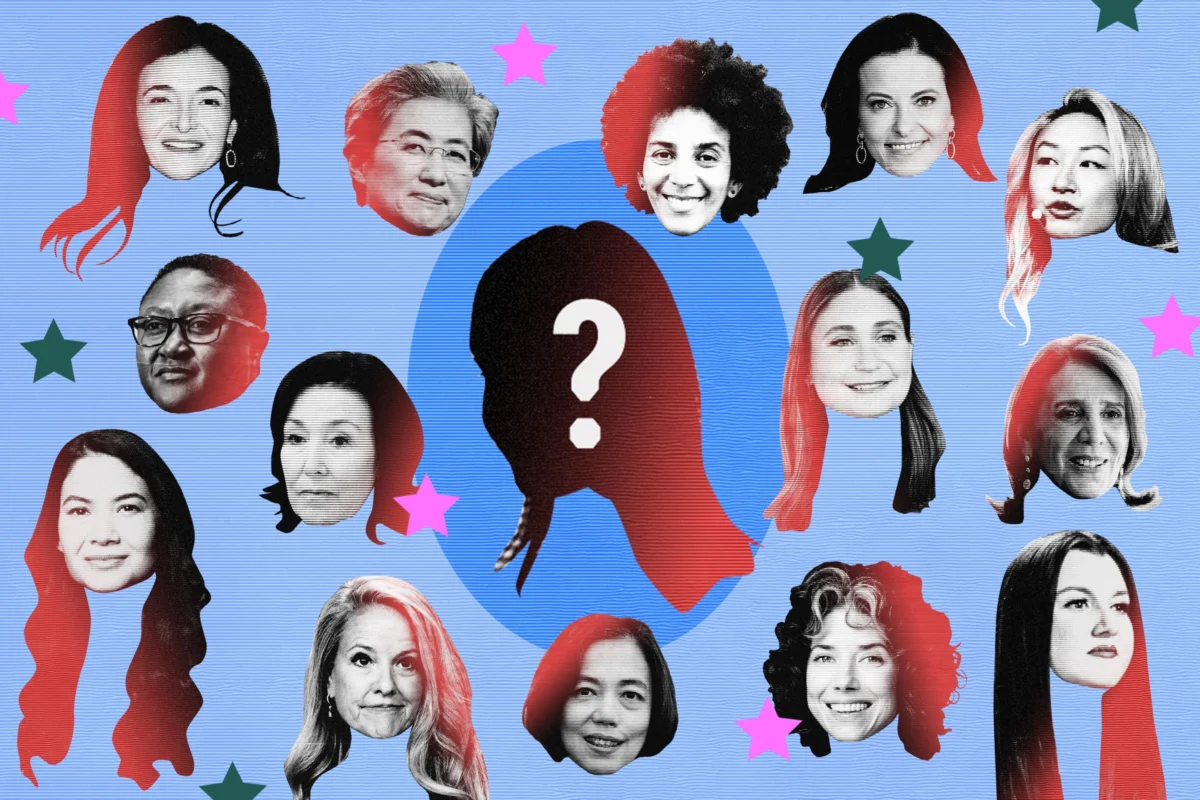
This observation sparked a deeper inquiry into the landscape of power within the tech industry. Over a period of three months, through conversations held in various settings—from hushed phone calls and Zoom meetings to bustling coffee shops and relaxed living rooms—the question of identifying the most powerful women in Silicon Valley repeatedly surfaced. The responses were notably different from those elicited when inquiring about their male counterparts. While names like Elon Musk, Jensen Huang, and Sam Altman were readily offered, along with influential venture capitalists such as Peter Thiel and Marc Andreessen, identifying a singular, universally recognized female figure of equivalent influence proved to be a more complex and protracted exercise. The answers that did emerge, such as Gwynne Shotwell, Lisa Su, or Daniela Amodei, were often followed by pauses, hesitant suggestions, or the acknowledgment that their public profiles, while significant, did not yet command the same immediate recognition as their male peers. This difficulty in pinpointing a definitive answer underscored a fundamental question: why, in the year 2026, does the question of female power in tech remain so challenging to answer, and what factors contribute to this persistent ambiguity?
The Shifting Sands of Tech Influence
The traditional metrics of power in Silicon Valley—financial capital, intellectual prowess, political leverage, and social or cultural capital—have historically been dominated by a cohort of male figures whose influence has demonstrably shaped industries, swayed public opinion, and even impacted elections. These individuals often cultivate a "cult of personality," their pronouncements becoming seminal texts for decades, their social media posts capable of igniting widespread debate, and their public personas amplified through a consistent and often aggressive media presence. The absence of a comparable, widely recognized female figure or a unifying "manifesto" that galvanizes women in the tech sector suggests a structural impediment to achieving similar levels of broad-reaching influence.
The legacy of Sheryl Sandberg’s "Lean In" movement, published in 2013, serves as a poignant reminder of the complexities involved. While the book articulated many prevalent workplace inequities and encouraged women to pursue ambitious careers, its solutions were often criticized for placing the onus on women to adapt rather than fundamentally altering systemic barriers. In a post-pandemic world, the concept of "leaning in" has been re-evaluated, with many women opting to "lean out" of demanding corporate environments that do not adequately support work-life integration.
A Legacy of Reckoning and Resistance
The 2010s marked a period of increased scrutiny and reckoning within Silicon Valley regarding its persistent gender imbalances. Landmark events, such as Ellen Pao’s 2015 gender discrimination lawsuit against Kleiner Perkins and Susan Fowler’s explosive 2017 blog post detailing her experiences of harassment and discrimination at Uber, brought these issues into sharp public focus. These events, coupled with reports of predatory behavior by venture capitalists, compelled tech companies to implement diversity initiatives and crisis management strategies. However, as Timnit Gebru, a leading AI ethicist, notes, this era was characterized by "lip service," with companies highlighting the presence of a few women as evidence of progress.
Gebru’s own experience at Google, where her termination after raising concerns about bias in AI research sparked significant controversy, exemplifies the challenges faced by women who directly confront systemic issues. Despite these setbacks, the period also saw the quiet formation of powerful women’s networks and the successful advocacy for legislative changes, such as Ifeoma Ozoma’s role in cosponsoring California’s Silenced No More Act. However, this progress has been met with a backlash, amplified by shifts in the broader political landscape and the embrace of figures who espouse more traditional, often right-leaning ideologies.
The Multifaceted Nature of Female Power
The concept of power for women in Silicon Valley is not monolithic; it manifests in diverse forms, from operational leadership and venture capital investment to ethical advocacy and entrepreneurial innovation.

Operational Mastery and Entrepreneurial Spirit
Figures like Gwynne Shotwell, President and COO of SpaceX, embody a different model of influence. While less visible in the public sphere than some of her male counterparts, Shotwell has been instrumental in scaling SpaceX into a multi-billion-dollar enterprise. Her focus on execution and steady leadership, rather than constant public pronouncements, has earned her respect among industry insiders. Similarly, Anne Wojcicki, founder and CEO of 23andMe, has navigated the complexities of entrepreneurship, including the bankruptcy and subsequent repurchase of her company, demonstrating resilience and strategic acumen. The Wojcicki family, including the late Susan Wojcicki, former CEO of YouTube, and epidemiologist Janet Wojcicki, represents a unique legacy of female leadership and intellectual capital. Their matriarch, Esther Wojcicki, a respected journalism teacher, instilled in her daughters a drive for achievement and a willingness to confront challenges.
Navigating the Capital Landscape
Venture capital remains a critical artery of power in Silicon Valley, and for women, securing this capital has historically been a significant hurdle. Events like the "Funded Female Founders" soiree, organized by James Gee and Mabel Chan, aim to bridge this gap by creating high-signal environments for women entrepreneurs and investors. While data from PitchBook indicates a record increase in funding for female-founded startups in recent years, the overall deal count has declined, and a substantial portion of the funding has gone to companies with male co-founders or those co-founded by prominent women like those at Anthropic and Scale AI. This suggests that while progress is being made, the landscape remains challenging, with VCs still influenced by "preconceived notions" and a preference for high-risk, high-reward ventures that historically favor male founders.
Sarah Guo, a partner at Conviction, offers a critical perspective on this dynamic. She argues that the media’s focus on the "girlboss era" inadvertently pigeonholed women and led to them being taken less seriously. Guo, who leads a firm with a majority of women and invests in defense tech, believes that traditional power structures can be navigated, and that success is attainable for anyone willing to put in the work. Her firm’s significant fundraising success and investments in leading AI startups like Harvey and Mistral underscore her assertion that women are increasingly "winning" in the venture capital space, even if the narrative around their power remains complex.
The AI Frontier and Ethical Imperatives
The current AI boom presents both unprecedented opportunities and significant challenges for women in tech. Daniela Amodei, co-founder and president of Anthropic, an AI company valued at nearly $1 trillion, is emerging as a key figure. While her brother, Dario Amodei, often garners more public attention for his pronouncements on AI, Daniela is recognized for managing the company’s day-to-day operations and leading its impressive roster of female executives in critical roles such as Chief Product Officer and Head of Public Policy. Amodei’s stated commitment to ensuring AI does not become a "tool that’s just for the guys" reflects a growing awareness of the need for gender-inclusive AI development.
However, not all outlooks are as optimistic. Timnit Gebru contends that the AI industry is currently "worse for women than whatever the tech industry was in the 2010s," citing the continued male dominance in leadership positions and the mainstreaming of potentially harmful concepts like AGI without adequate consideration for societal impact. Catherine Bracy, author of "World Eaters," expresses concern that the venture capital model, with its "alpha male" and "testosterone" culture, may continue to favor overconfident male founders, making it harder for risk-averse founders, including many women, to secure funding.
Cultivating Allies and Navigating Policy
The increasing intersection of technology and government policy has made engagement with Washington D.C. a crucial aspect of power for tech leaders. Executives from major tech companies frequently engage with policymakers, recognizing the need to influence technology policy, particularly in sectors like semiconductors, as highlighted by Lisa Su, CEO of AMD. While some leaders, like Su, choose to focus their engagement on industry-specific issues, others, like Mary Barra, CEO of General Motors, have publicly aligned with political figures, a move seen as strategic for navigating the complex regulatory and economic landscape. The shift away from tech companies taking strong public stances on social issues, as some did in the 2010s, reflects a pragmatic approach to maintaining business operations in diverse political climates.
The Enduring Quest for Recognition
The non-exhaustive list of influential women in tech—ranging from AI leaders like Daniela Amodei and Mira Murati to operational titans like Gwynne Shotwell and venture capitalists like Sarah Guo and Aileen Lee—underscores the diverse ways in which women are shaping the industry. Their influence is wielded through strategic leadership, groundbreaking innovation, ethical advocacy, and the critical allocation of capital. Yet, the question of who holds the ultimate power, and how that power is perceived, remains a subject of ongoing debate and introspection.
The difficulty in definitively answering the question of "the most powerful woman in Silicon Valley" is not a reflection of a lack of capable or influential women. Instead, it points to a complex interplay of societal expectations, historical power imbalances, evolving definitions of influence, and the strategic choices women make about how and where to exert their power. As the tech industry continues its rapid evolution, particularly in the transformative field of AI, the ongoing exploration of female leadership and influence will be crucial in shaping a more equitable and representative future. The women who are not only building groundbreaking technologies but also championing ethical frameworks and challenging existing norms are the true architects of this evolving landscape, their quiet determination often speaking louder than any pronouncements. Their success, and the systemic changes they inspire, will ultimately define the next era of power in Silicon Valley.
