

For American companies, both giants of industry and nimble small enterprises, a confluence of formidable economic headwinds—including lingering tariffs, soaring energy costs exacerbated by geopolitical conflict, and a tightening monetary policy—is forcing difficult strategic decisions, ranging from inventory hoarding to price increases and, in some cases, outright bankruptcy. This complex "three-way squeeze" is reshaping operational strategies across manufacturing, transportation, and retail sectors, challenging executives to navigate a landscape fraught with uncertainty.
The immediate pressures are palpable. Fewer and pricier flights, persistent freight surcharges, manufacturers defensively hoarding inventory, and a palpable anxiety about future stability characterize the current business environment. At the heart of this struggle are the tariffs imposed under former President Donald Trump’s trade policies, which continue to inflate the cost of raw materials and imported components. Simultaneously, surging fuel prices, largely a consequence of the ongoing Iran war, are escalating operational expenses for everything from factory production to logistics. Adding another layer of complexity, the Federal Reserve’s recent decisions to raise interest rates are making it more expensive for businesses to finance essential inventory, invest in growth, and manage existing debt.
The Manufacturing Crucible: A Case Study in Britt, Iowa
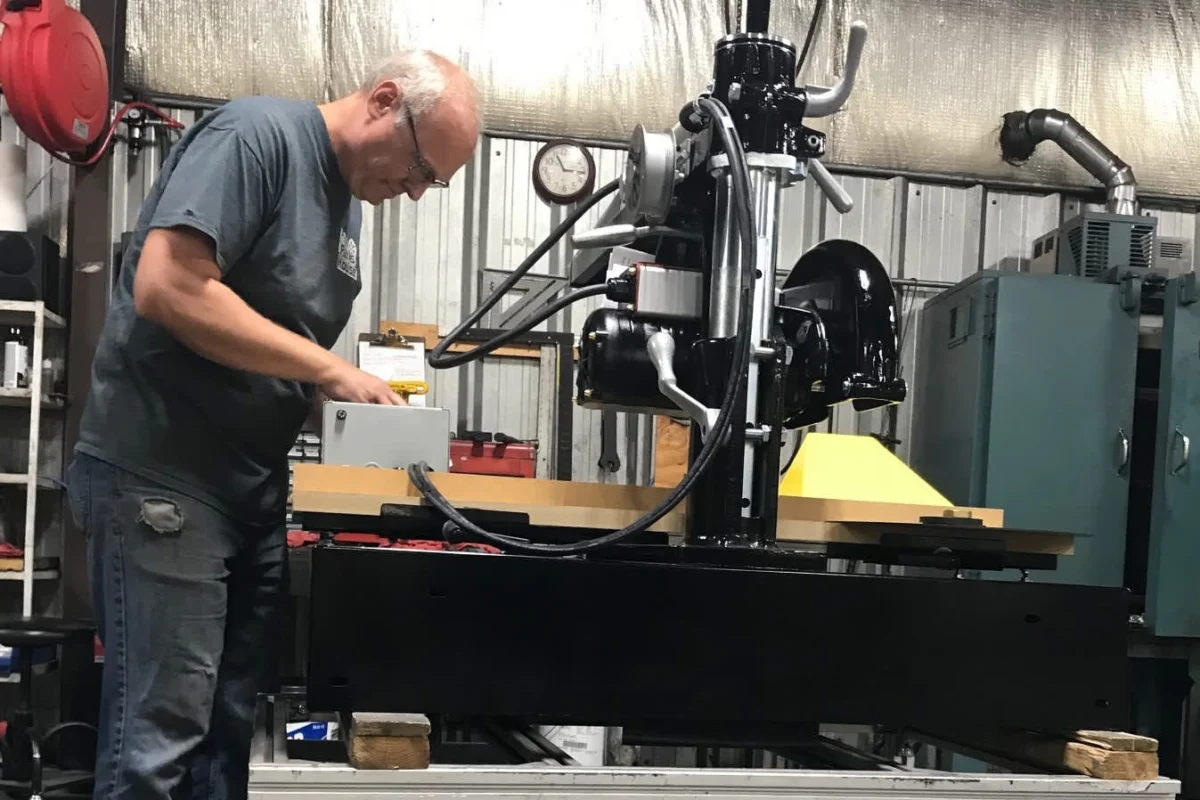
Nowhere is this multifaceted pressure more evident than in the manufacturing sector. Allen Eden, the 56-year-old owner and president of Original Saw Co. in Britt, Iowa, a 25-person business specializing in industrial power saws for wood and metalwork, provides a stark illustration. Eden finds himself wrestling with dramatically spiking prices for fundamental inputs like aluminum, steel, and crucial electronic components. He recounts a specific example: a seemingly minor "little bracket" essential for his saw motors more than doubled in price this summer, surging from $42 to an alarming $87.
"It’s awful," Eden shared with CNBC, conveying the frustration of many business owners. "[I’m] just trying to keep more of the stuff around because I don’t know if we can get it down the road." This defensive strategy of holding onto extra inventory, while financially taxing, is a desperate measure to buffer against supply chain volatility and unpredictable price hikes. The company, which sells its robust saws to both large retailers like Home Depot and directly to small- and medium-sized manufacturers, faces the inevitable prospect of passing these elevated costs onto its customers, leading to higher retail prices.
Understanding the Three-Pronged Economic Attack
The current economic strain is a product of distinct yet interconnected forces:
-
Tariffs: Originating from President Trump’s trade policies, these import duties on goods like steel, aluminum, and various Chinese products were intended to protect domestic industries and encourage local production. However, they have instead translated into higher costs for American manufacturers who rely on these materials, even when sourcing domestically, as global prices are influenced. This has directly impacted the cost of raw materials and finished goods for businesses across the board, from heavy industry to consumer electronics.
-
Fuel Prices: The ongoing Iran war has triggered significant disruptions in global oil markets. Concerns over supply stability in the Middle East, particularly around critical choke points like the Strait of Hormuz, have sent crude oil benchmarks soaring. This directly translates to higher prices for gasoline, jet fuel, and most critically for businesses, diesel. Diesel, the lifeblood of the trucking industry, powers the vast majority of freight transportation in the U.S., making its elevated cost a direct contributor to freight surcharges and overall logistical expenses for every product moved.
-
Rising Interest Rates: In response to persistent and stubborn inflation that has outpaced wage growth for several years, the Federal Reserve, under Chair Kevin Warsh (as per the provided text’s timeline), initiated its first interest rate hike in three years. This move, with signals of further increases, aims to cool down the overheated economy by making borrowing more expensive. For businesses, this means higher costs for financing inventory, purchasing new equipment, and securing working capital, effectively tightening the purse strings at a time when input costs are already elevated.
The Vise on Middle-Market Manufacturers and Capital-Intensive Sectors
While few economic sectors are entirely immune, middle-market manufacturers are particularly vulnerable. They often lack the negotiating power of larger corporations to secure favorable pricing from suppliers and are less insulated from borrowing cost fluctuations than their cash-rich counterparts. The necessity of passing on rising steel and fuel costs through higher prices contributes directly to the inflationary cycle, creating a difficult balancing act. They must raise prices enough to cover costs but not so much as to stifle demand.
Beyond manufacturing, other capital-intensive sectors are feeling the heat intensely. Logistics firms, particularly trucking fleets, face double jeopardy from exorbitant diesel prices and increased financing costs for their expansive vehicle inventories. Commercial real estate, dependent on accessible credit for development and transactions, also suffers in a rising-rate environment. Gregory Daco, chief economist at EY-Parthenon, emphasizes this point: "The combination of higher rates and higher fuel prices means that sectors with heavy exposure to both are first in the line of fire. Any type of manufacturing is going to be disproportionately exposed to higher fuel prices."
The ripple effects extend to material makers and their retail partners. Mark Costa, CEO of industrial giant Eastman Chemical, which produces plastics, additives, and materials for diverse applications from medical devices to car windshields, observed in May that the dual assault of interest rates and inflation had pushed his industry "back against the wall." He noted an unprecedented speed in price increases across the sector, indicating that companies had exhausted their capacity to absorb further cost escalations. On the retail front, Home Depot CFO Richard McPhail highlighted that unexpected increases in energy and raw material costs would "fully offset" a substantial $730 million in tariff refunds, underscoring the pervasive nature of these pressures. McPhail succinctly summarized the prevailing sentiment last week at a conference: "There’s just so much uncertainty right now. You think inflation, interest rates, fuel prices."
Supply Chain Fragility and the Auto Industry’s Plight
The domestic automobile supply chain stands out as one of the hardest-hit segments. The industry, already grappling with post-pandemic disruptions and semiconductor shortages, found itself further destabilized by the "Trump tariffs 2.0" (referring to the continuation or intensification of trade protectionist measures).
Lucerne International, a privately held auto parts maker based in suburban Detroit, has responded drastically to these challenges. The company ceased its U.S. manufacturing operations and canceled plans for a $50 million aluminum forging plant in Michigan last year. Lucerne CEO Mary Buchzeiger cited significantly increased costs for raw materials, including aluminum, and finished parts due to tariffs as primary drivers. Her firm, still manufacturing overseas, has pivoted its U.S. operations to warehousing, distribution, and offering tariff-mitigation solutions for other companies, a strategic shift driven by "much better margins" in these less capital-intensive areas.
Paul McCarthy, CEO of vehicle supplier trade association MEMA, acknowledged the "margin pressure for suppliers." He noted that while some costs are absorbed, a portion "does have to be passed on." This squeeze is reflected in industry performance data. A study by Berylls by AlixPartners revealed that growth, measured by earnings before interest and taxes (EBIT) for the top 100 auto suppliers, declined to 4.2% last year, down from over 6% in 2021. For the top 10 automakers, EBIT fell to 5.2% from nearly 8% in 2022.
The strain has led to severe consequences for some. Spanish auto parts maker Grupo Antolin, a supplier of components to major automakers like Ford, GM, Volkswagen, and Stellantis, filed for Chapter 15 bankruptcy protection in the U.S. in July. The company explicitly attributed its restructuring to the combination of tariffs, escalating raw-material and energy costs, and persistent supply-chain disruptions.
The Corporate Divide: Pricing Power and Resilience
The current economic landscape reveals a stark divide in corporate America. Better positioned are the behemoths of the corporate world, particularly tech and finance companies that populate the S&P 500 index. These firms typically boast substantial cash reserves and often rely on long-term debt, which insulates them considerably from the immediate sting of rising short-term interest rates. JPMorgan’s global strategy head Dubravko Lakos-Bujas suggests that most larger companies possess the resilience to thrive until borrowing costs rise much further, potentially when the yield on the 10-year Treasury bond reaches 6%, up from around 5% currently, citing extensive historical data.
The expectation is that borrowing costs will remain elevated for an extended period. Persistent inflation, which prompted the Fed to raise its benchmark rate, coupled with significant borrowing by the U.S. government, continues to exert upward pressure on rates.
This dynamic boils down to a fundamental question of "pricing power." Some industries have discovered they can readily pass higher costs onto consumers without significantly impacting demand. Others find themselves in a precarious catch-22: raise prices too much, and they risk alienating customers and destroying demand; absorb costs, and they erode already thin margins.
The airline industry provides a prime example of effective pricing power. Despite increased fuel costs, airline executives have recently boasted of higher fares as consumers continue to book trips, particularly international travel. This robust demand has allowed carriers to offset rising fuel expenses. However, even with strong demand, airlines have had to scale back growth plans, cutting less profitable flights, especially after the collapse of Spirit Airlines earlier this year. Fewer flights inevitably lead to pricier tickets, with fares up more than 23% in August from the previous year. United Chief Financial Officer Mike Leskinen, speaking at a Morgan Stanley conference, acknowledged the consumer’s "incredibly, incredibly resilient" behavior but confirmed the strategic decision to cut "marginal routes that don’t make sense in a higher fuel environment."
Broader Implications and Future Risks
Despite these mounting pressures, much of corporate America has demonstrated remarkable resilience. Profit margins for major companies remain near historic highs, bolstered by strong productivity gains, relatively contained labor costs, and surging investments in artificial intelligence. The AI boom itself, however, presents a paradox, as it drives up prices for essential components and resources required to build and operate data centers, from electricity to memory chips, copper, and land, further contributing to inflationary pressures.
The Federal Reserve’s efforts to curb inflation through higher interest rates, while necessary from a monetary policy standpoint, do not directly address the underlying root causes of the current inflationary surge: the geopolitical fallout from the Iran war, the structural impact of Trump-era tariffs, and the burgeoning demand fueled by the AI revolution. EY-Parthenon’s Daco warns that excessively tightening the U.S. economy could inadvertently slow it down too much, potentially triggering a recession or a significant downturn in equity markets.
"The economy is resilient, but it’s exposed to growing pockets of risk," Daco concluded. "A shock could materialize faster than we all think." The delicate balance between managing inflation and sustaining economic growth remains the paramount challenge for policymakers and businesses alike, as they navigate an increasingly complex and interconnected global economic landscape.
