

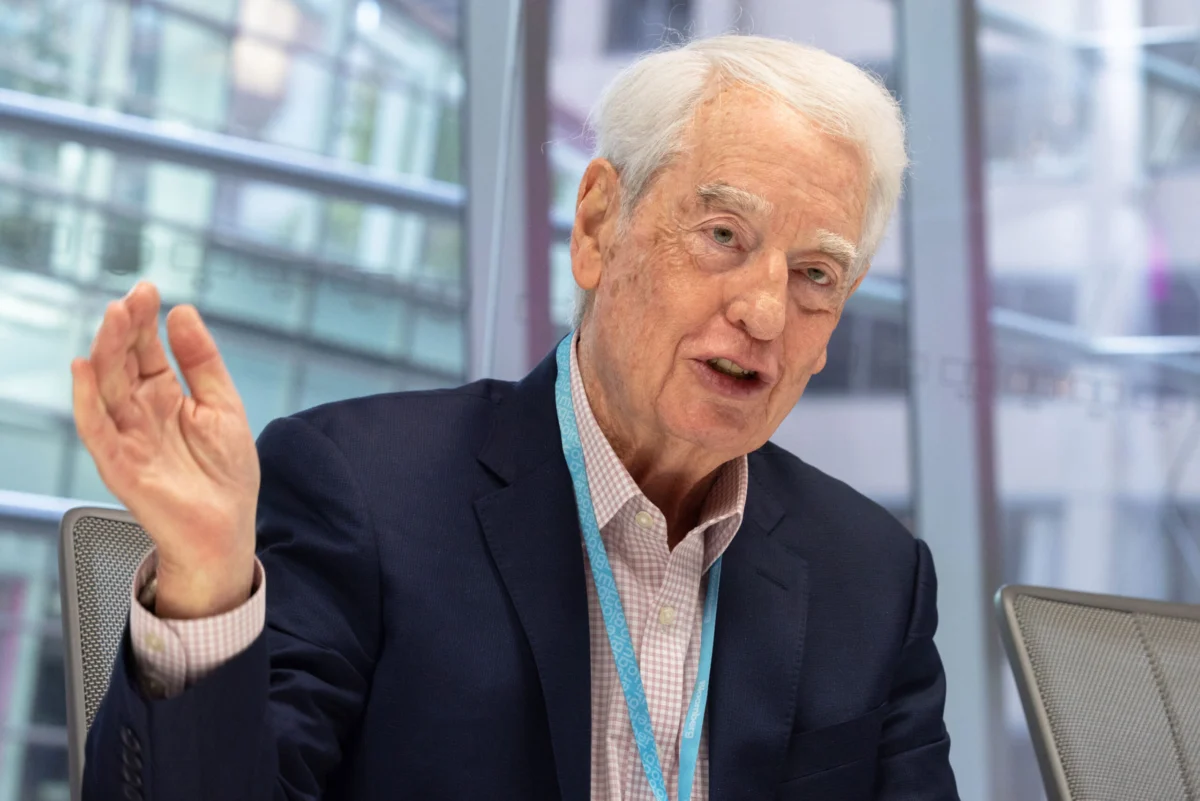
SCOTTSDALE, Ariz. – For decades, William Augustus Franke, the venerable chairman of Frontier Airlines and a serial investor synonymous with the ultra-low-cost carrier (ULCC) model, built an empire on the simple premise of cheap plane tickets and extensive ancillary fees for everything from checked bags to seat selection. Now, at 89, Franke is orchestrating a significant strategic pivot for Frontier Airlines, signaling a departure from his long-held philosophy by introducing first-class seats and in-flight Wi-Fi, at least within the competitive landscape of the United States. This move, announced in late June 2026, marks a pivotal moment for the airline and reflects a broader reckoning within the budget airline sector.
Frontier Airlines is slated to roll out a new first-class cabin on its Airbus fleet beginning in 2027. Concurrently, the airline has joined a growing roster of carriers integrating SpaceX’s Starlink Wi-Fi technology onboard, a clear bid to enhance the passenger experience and differentiate itself in a market increasingly demanding connectivity and comfort. Franke, speaking from the model airplane-filled offices of Indigo Partners, the private equity firm he founded, clarified the ambition behind this shift. "We’re not trying to have a Singapore Airlines first class," he stated, emphasizing a more pragmatic approach. "What we’re trying to do is give the consumer an option," describing the forthcoming offering as "at once upscale and competitive."
The Shifting Sands of the Ultra-Low-Cost Model
The ultra-low-cost airline model, a paradigm largely pioneered and perfected by Bill Franke, has faced unprecedented challenges in recent years. This model, predicated on aggressive cost-cutting, rapid growth, and maximizing revenue from add-ons, has been the bedrock of carriers like Frontier, Spirit (until its recent collapse), and European giants such as Ryanair, in which Franke was an early investor. For years, maintaining robust growth and stringent cost control were sacrosanct tenets within this sector.
Franke’s commitment to this philosophy was famously articulated at the 2017 Dubai Air Show, where he made a record Airbus aircraft order for his portfolio of airlines. He candidly likened some consumers to "teenagers and ‘spoiled brats’," expressing his frustration that they expected low fares alongside amenities without additional payment. "They had been flying with all the amenities for ever and ever and that’s what they think they ought to get," Franke remarked at the time, underscoring his belief that passengers should pay for every comfort.
However, the operating environment has dramatically transformed. A confluence of factors, including a sharp increase in pilot salaries, escalating maintenance costs, and general operating expenses, coupled with a notable boom in premium travel demand, has squeezed the profitability of once rapidly expanding budget carriers. The pandemic further exacerbated these pressures, disrupting growth trajectories and making cost containment significantly more difficult.
Adding to these woes, major legacy carriers like United Airlines and Delta Air Lines have strategically adopted elements of the ULCC model. They began by offering "basic economy" fares that stripped away traditional inclusions like free seat selection and checked baggage, effectively commoditizing the cheapest tickets. More recently, these larger rivals have extended this unbundling strategy into their premium cabins, introducing "basic business" or "basic first class" options that impose restrictions on choice and flexibility, even for high-paying customers. This strategic move by legacy carriers to capture price-sensitive segments while also maximizing revenue from their premium offerings has blurred the lines and intensified competition for budget airlines.
The Demise of Spirit Airlines: A Cautionary Tale
Perhaps the most stark illustration of the ULCC model’s recent struggles is the collapse of Spirit Airlines in May 2026, marking the largest U.S. airline failure in decades. This event left Frontier as the dominant discounter in the country and cast a long shadow over the sustainability of the pure ULCC strategy.
Franke himself was deeply involved in Spirit’s fate. In 2022, he spearheaded an attempted merger between Frontier and Spirit, aiming to create a formidable fifth-largest airline in the U.S. However, Spirit shareholders ultimately voted in favor of an all-cash offer from JetBlue Airways. That JetBlue-Spirit deal, valued at $3.8 billion, was subsequently blocked by a federal court in January 2024 on antitrust grounds, with the Justice Department arguing it would lead to higher fares and reduced competition. The unraveling of this merger left Spirit in a precarious financial position, exacerbated by its inability to maintain the rapid growth and ultra-low costs essential to its business model. Spirit’s CEO, Dave Davis, candidly admitted that the airline "ran out of runway" after facing increasing challenges, including intense competition, rising operating costs, and diminished investor confidence. The airline’s operational struggles, including frequent delays and cancellations, further eroded its market position.
The collapse of Spirit Airlines serves as a potent reminder of the inherent vulnerabilities in the ULCC model when faced with sustained economic headwinds, intense competition from both legacy carriers and other budget airlines, and an inability to adapt to evolving passenger expectations. For Frontier, inheriting the mantle of the largest discounter comes with both opportunity and the imperative to learn from Spirit’s downfall.
Franke’s Enduring Vision and Industry Impact
Despite the significant challenges and the dramatic industry shifts, Bill Franke remains far from disengaged. As a major Frontier shareholder, he continues to exert influence and remains actively engaged in identifying new ventures. "We see startup ideas probably one a month," he revealed, indicating his undiminished entrepreneurial spirit and keen eye for opportunity within the dynamic aviation sector.
Franke also acknowledges a fundamental shift in consumer behavior. "Consumers are much smarter today" than in previous decades, he noted, armed with advanced data analytics and emerging tools like artificial intelligence that enable them to meticulously compare fares and options. The impact of AI on booking decisions is still nascent, he observed, with "none of the airlines quite sure what AI… is going to do to your decision to book."
Yet, despite these technological advancements, Franke maintains that the core drivers of passenger choice remain consistent. "Price and schedule are still at the top," he affirmed. While he concedes that for some travelers, a difference of $75 between a $200 and a $125 ticket might not be decisive, "for a lot of people it is still," particularly for "middle class, younger flyers, they still focus on price." This insight underpins the delicate balance Frontier seeks to strike: offering new amenities without alienating its core price-sensitive demographic.
Frontier’s financial performance underscores the necessity of this strategic adjustment. The airline has been profitable in only one year since 2019, reflecting the industry-wide struggle to recover from the pandemic’s lingering effects and to absorb higher operating costs. JetBlue, another airline that struggled with profitability, has also not been profitable since 2019, highlighting the broader economic pressures on carriers that operate on thin margins. Higher fuel prices, exacerbated by geopolitical events like the ongoing Iran conflict, have presented an additional, persistent challenge to the entire industry.
Frontier CEO Jimmy Dempsey, who took the helm in December 2025, succeeding Barry Biffle, expressed cautious optimism. On a July 29, 2026, earnings call, Dempsey stated, "We’re not forecasting next year, but the airline is certainly on the right trajectory to return to sustainable profitability." This statement, coupled with Franke’s strategic pivot, suggests a concerted effort to adapt Frontier’s business model to the prevailing market realities. Indeed, the broader trend indicates airlines, including Frontier, have been steadily increasing fares to cover their ballooning costs. Federal data released on September 11, 2026, showed August airfares up more than 23% over the previous year, signaling a wider industry adjustment to economic pressures.
Frontier’s decision to add pricier, roomier seats is not an isolated phenomenon. Allegiant Air recently announced plans to add a first-class cabin to its currently single-cabin planes, and JetBlue Airways is also expanding its domestic first-class offerings. Simultaneously, larger competitors continue to grow and refine their premium cabins, signaling a broader industry move towards catering to a more diverse range of passenger preferences and revenue streams.
Franke acknowledges that this strategic evolution may be region-specific. "In the U.S. market where you have mature large airlines — Delta, United, American — who are changing the interior of their aircraft on a regular basis, it could well be that a low-cost or a lower-cost airline, in order to properly compete, needs to make adjustments to its business model," he explained. However, he maintains that this doesn’t necessitate a universal application: "That doesn’t mean you have to do that in an emerging market like Hungary or Peru," where the ultra-low-cost model might still hold significant sway due to different economic conditions and consumer expectations.
A Legacy Forged in Tempe: Mentoring Aviation’s Elite
Franke’s influence extends far beyond the low-cost model itself. His legacy is deeply embedded in the very fabric of the modern U.S. airline industry, with many of its current leaders tracing their professional roots back to him and to Tempe, Arizona, the former base of America West Airlines. It was America West, through a series of mega-mergers, that eventually evolved into today’s American Airlines.
Franke, initially a lawyer, entered the airline business over three decades ago. In the early 1990s, he was instrumental in rescuing America West from bankruptcy, taking on the role of chief executive in 1993 after being tapped by Arizona’s governor. This period became a crucible for a generation of aviation executives.
His proteges include some of the most prominent figures in the industry today: Robert Isom, the current CEO of American Airlines; Doug Parker, Isom’s predecessor and former American Chief Executive; and Scott Kirby, the CEO of United Airlines. Steve Johnson, American Airlines’ vice chair and chief strategy officer, is another America West alum who credits Franke as a profound influence.
These former employees speak of Franke with a mixture of respect, admiration, and candid humor. Isom, in a late June 2026 interview, recalled Franke being "pretty good at giving jabs." He recounted their long-standing tradition of betting on college football games, specifically between Franke’s alma mater, Stanford University, and Isom’s Notre Dame. Isom proudly displayed some of his winnings: Chilean pesos with Franke’s business card attached and euro coins taped to a paper sheet marked "PAID IN FULL" by his former boss, a testament to Franke’s adherence to his own rule: "fast pay makes fast friends."
Scott Kirby shared a recent anecdote from a June 2026 industry conference in Rio de Janeiro. After The Wall Street Journal profiled Kirby, Franke reportedly told him it made him "throw up in his coffee when he opened his newspaper." While Franke offered no direct comment on the specific "throw up" remark, he confirmed recalling the exchange, implying a characteristic bluntness. Despite this, Kirby unequivocally refers to Franke as a mentor, albeit a "hard-ass mentor." "All of us, our formative years were working for Bill, getting screamed at by Bill. … He should take more credit for that," Kirby stated, though Franke playfully denies the yelling: "That’s just not me."
Steve Johnson, who likened Franke to a second father, shared a critical moment from his time as a partner at Indigo, when it owned Spirit from 2003 to 2009. During the summer 2008 fuel spike, which saw crude oil prices soar to over $147 a barrel (equivalent to more than $200 in 2026 dollars), Spirit was on the brink of financial collapse despite holding a portfolio of fuel hedges – contracts designed to lock in future pricing. As Johnson was about to board a flight to California, Franke called him with an urgent directive regarding the fuel hedges: "sell it now." Johnson recalled executing the order immediately, generating approximately $30 million for Spirit. Shortly thereafter, oil prices dramatically crashed. "It turned out to be just exactly what Spirit needed," Johnson affirmed, highlighting Franke’s acute financial acumen and decisive leadership under pressure.
This extensive network of former proteges, now leading some of the world’s largest airlines, speaks volumes about Franke’s ability to identify, cultivate, and challenge talent. His demanding yet ultimately impactful mentorship style has shaped not just individual careers but the strategic direction of the entire industry.
The Future Trajectory of Frontier and the Industry
As Frontier Airlines embarks on this new chapter, guided by Bill Franke’s strategic repositioning, the aviation industry watches closely. The pivot towards first-class offerings and enhanced connectivity signifies a recognition that the rigid adherence to a pure ultra-low-cost model may no longer be sustainable in certain mature markets. The demise of Spirit Airlines serves as a stark warning, while the actions of Allegiant and JetBlue underscore a broader industry trend towards diversification of offerings and catering to a wider spectrum of passenger demands.
The challenge for Frontier will be to seamlessly integrate these new premium options without diluting its core brand identity as a value carrier. It must navigate the complexities of managing different service tiers, pricing strategies, and customer expectations, all while maintaining the operational efficiencies that are paramount to any airline’s success. Franke’s move is not just about adding seats; it’s about re-evaluating the competitive landscape, acknowledging evolving consumer preferences, and securing a trajectory towards "sustainable profitability" in a volatile and increasingly complex global aviation market. His enduring presence and willingness to adapt, even at 89, confirm his status as one of aviation’s most influential and visionary figures.
