

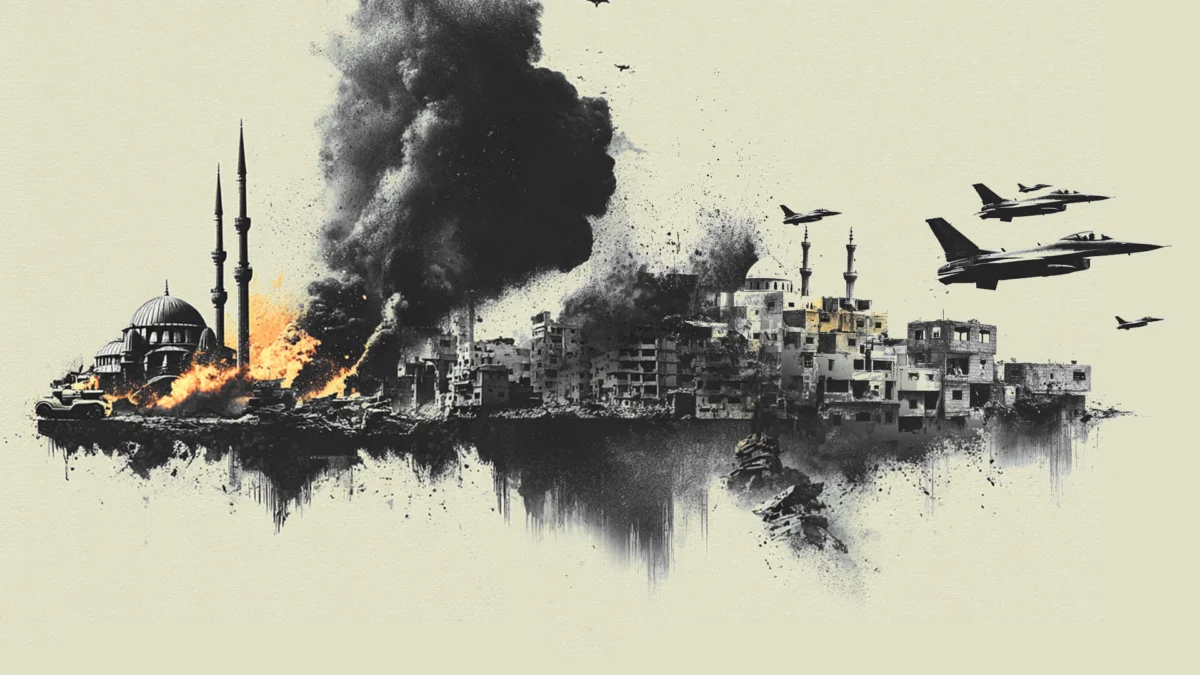
Yemen’s Houthi movement intensified regional security concerns on Wednesday by formally pledging to continue targeting airports and critical oil facilities within Saudi Arabia. This latest declaration follows an alleged drone or missile strike a day earlier that reportedly inflicted significant damage upon the headquarters of the state-owned oil behemoth, Saudi Aramco. The Houthis, an Iran-aligned group, assert that these designated locations constitute legitimate military targets, framing their offensive operations as direct retaliation for ongoing Saudi-led coalition airstrikes against their positions and territories in Yemen.
Concurrently, and further underscoring the volatile geopolitical landscape of the Middle East, Iran’s Islamic Revolutionary Guard Corps (IRGC) issued its own assertive statement. The IRGC declared its engagement in operations targeting vessels deemed to be in violation of its maritime restrictions, presenting these actions as a direct response to what it characterizes as the United States’ repeated failures to uphold its commitments. Brigadier General Hossein Mohebbi, spokesperson for the IRGC, detailed that the United States had allegedly breached its obligations twice during ongoing negotiations and a third time following the signing of a Memorandum of Understanding in June. These twin developments – the explicit Houthi threat against Saudi energy infrastructure and the IRGC’s declaration of maritime enforcement – converge to heighten anxieties regarding regional stability, particularly in the critical Arabian Gulf and its surrounding waterways, with immediate repercussions felt in global energy markets, as evidenced by the West Texas Intermediate (WTI) crude oil benchmark experiencing a dip amidst the uncertainty.
The Escalation of Houthi Operations Against Saudi Arabia
The Houthi movement’s latest threat marks a significant escalation in its long-running campaign against Saudi Arabia, a key player in the military coalition intervening in Yemen. The alleged attack on Saudi Aramco’s headquarters, if confirmed in detail by independent sources or Saudi authorities, would represent a concerning new level of sophistication and targeting precision for the group. While Saudi authorities have not yet publicly confirmed specific damage to Aramco’s headquarters or definitively attributed the attack, the Houthi claim itself carries substantial weight given their history of successful, albeit often less precise, strikes on Saudi infrastructure.
Previous Houthi attacks have targeted a range of critical sites, including international airports in Abha, Jizan, and Najran, as well as oil facilities in various locations across the Kingdom. Perhaps the most impactful of these occurred in September 2019, when a series of drone and missile strikes temporarily knocked out half of Saudi Arabia’s oil production capacity by hitting the Abqaiq oil processing plant and the Khurais oil field. That incident, which cut Saudi output by approximately 5.7 million barrels per day (bpd), sent shockwaves through global energy markets, demonstrating the vulnerability of even highly secured facilities and the potential for regional conflicts to have worldwide economic consequences. While Saudi Arabia swiftly restored production within weeks, the memory of that disruption continues to loom large, influencing market perceptions of risk. The Houthis consistently justify these actions as a necessary response to the Saudi-led coalition’s military campaign, which began in March 2015 with the aim of restoring the internationally recognized government of Yemen after the Houthis seized the capital, Sana’a.
Broader Context of the Yemen Conflict
The conflict in Yemen, now in its eighth year, is widely considered one of the world’s worst humanitarian crises. The United Nations estimates that millions have been displaced, and a significant portion of the population faces severe food insecurity and limited access to healthcare, with famine conditions threatening large swathes of the country. The Saudi-led coalition, comprising several Arab states, has conducted thousands of airstrikes, targeting Houthi military assets but also, according to numerous human rights organizations, causing significant civilian casualties and damage to civilian infrastructure. The Houthis, for their part, have been accused of indiscriminate shelling of populated areas, using child soldiers, and impeding humanitarian aid deliveries.
Iran’s role in the Yemen conflict is a contentious issue. While Tehran denies directly arming the Houthis, Western powers and Saudi Arabia accuse Iran of providing military and financial support, including advanced drone and missile technology that has enabled the Houthis to extend the range and precision of their attacks deep into Saudi territory. This proxy dimension elevates the Yemen conflict beyond a local civil war, embedding it deeply within the broader regional rivalry between Saudi Arabia and Iran. The Houthi vow to continue targeting Saudi airports and oil facilities thus serves as a stark reminder of this enduring proxy struggle and its potential for further escalation. The specific mention of "legitimate military targets" by the Houthis reflects a deliberate framing designed to counter international condemnation and assert a perceived right to retaliate against the coalition’s military operations.
Iran’s Assertive Stance in the Arabian Gulf
Parallel to the Houthi threats, the statement from Iran’s Islamic Revolutionary Guard Corps (IRGC) regarding its maritime operations adds another layer of complexity to the region’s already fraught security environment. The IRGC’s assertion of attacking ships for "violating restrictions" in response to "broken commitments by the US" points to the lingering and unresolved tensions between Tehran and Washington.
The Strait of Hormuz, a narrow chokepoint at the mouth of the Persian Gulf, is strategically vital, with approximately one-fifth of the world’s total oil consumption, and a significant portion of its liquefied natural gas, passing through it daily. Iran has repeatedly threatened to disrupt shipping in the strait in response to perceived threats or economic pressures, particularly US sanctions. Over the years, there have been numerous incidents involving Iranian forces and commercial shipping in the Gulf, including the seizure of tankers and harassment of vessels, often cited by the IRGC as responses to foreign transgressions or to enforce Iranian sovereignty. Notable incidents include the seizure of the British-flagged Stena Impero in 2019 and more recently, several oil tankers in 2023.
Brigadier General Hossein Mohebbi’s specific accusations against the US – alleging two violations during negotiations and a third after a June MoU – are significant, though the details of these alleged breaches remain officially undisclosed by Iran. These could potentially refer to a range of US actions, from continued sanctions enforcement and military exercises in the region to perceived failures in the ongoing, albeit stalled, negotiations aimed at reviving the Joint Comprehensive Plan of Action (JCPOA), commonly known as the Iran nuclear deal. The JCPOA, signed in 2015, placed limits on Iran’s nuclear program in exchange for sanctions relief. However, the US unilaterally withdrew from the agreement in 2018 under the Trump administration and reimposed crippling sanctions, leading Iran to gradually roll back its own commitments. The current Biden administration has sought to revive the deal, but talks in Vienna have repeatedly stalled over various issues, including US sanctions relief, Iranian demands for guarantees, and inspections. The IRGC’s statement underscores Iran’s willingness to leverage its military capabilities in the Gulf as a tool of foreign policy and a means of pressuring the international community, particularly the United States, amidst these protracted diplomatic stalemates.
Chronology of Recent Events and Key Precedents
To understand the current volatile situation, a brief chronology of recent and historically significant events is crucial:
- March 2015: Saudi Arabia forms a coalition and intervenes in Yemen after Houthi rebels seize Sana’a, escalating the civil war into a regional proxy conflict.
- May 2018: The United States unilaterally withdraws from the Joint Comprehensive Plan of Action (JCPOA) and reimposes sanctions on Iran, leading to increased tensions in the Gulf and Iran gradually exceeding nuclear enrichment limits.
- July 2019: Iran seizes the British-flagged oil tanker Stena Impero in the Strait of Hormuz, citing violations of international maritime law, in a tit-for-tat move following the seizure of an Iranian tanker off Gibraltar.
- September 2019: Houthi drones and missiles strike Saudi Aramco’s Abqaiq oil processing plant and Khurais oil field, temporarily halving the kingdom’s crude output. This event significantly raised global awareness of the Houthi threat to Saudi energy infrastructure.
- 2020-2023: Sporadic Houthi drone and missile attacks continue against various Saudi targets, including airports, military bases, and oil installations, with varying degrees of success and damage. Saudi Arabia and the coalition regularly intercept these projectiles, claiming high rates of interdiction.
- April 2021: Indirect talks between the US and Iran begin in Vienna to revive the JCPOA, but progress remains slow and punctuated by setbacks, with several rounds concluding without a definitive agreement.
- May 2023: Iran seizes another oil tanker, the Niovi, in the Strait of Hormuz, further highlighting maritime tensions.
- June [Year not specified in original, assuming recent]: A Memorandum of Understanding (MoU) is reportedly signed, according to IRGC spokesperson Brigadier General Hossein Mohebbi, though its specifics and signatories are not detailed. This MoU forms a basis for Mohebbi’s claim of subsequent US "broken commitments."
- Tuesday [Date not specified]: An attack reportedly causes extensive damage to the headquarters of Saudi Aramco, according to Reuters, citing sources. The Houthis later claim responsibility for an attack on "vital and sensitive targets" in Saudi Arabia.
- Wednesday [Date not specified]: Yemen’s Houthis officially vow to continue targeting Saudi airports and oil facilities, framing them as legitimate military targets in retaliation for Saudi airstrikes. Concurrently, Iran’s IRGC states it attacked ships violating restrictions, citing US broken commitments.
Supporting Data and Economic Implications
Saudi Arabia is the world’s largest oil exporter and a pivotal player in global energy markets. Its ability to maintain stable production and exports is critical for global supply and price stability. With a crude oil production capacity often exceeding 10 million barrels per day (bpd), Saudi Arabia holds significant sway over global supply. The Abqaiq-Khurais attacks in 2019, which initially cut Saudi output by 5.7 million bpd, demonstrated the profound impact such disruptions can have. While production was restored relatively quickly, the incident highlighted a significant vulnerability. Saudi Aramco, the national oil company, operates vast networks of production, processing, and export facilities across the kingdom, many of which are geographically spread and thus present potential targets.
The global oil market remains highly sensitive to geopolitical instability, particularly in the Middle East, home to over half of the world’s proven oil reserves. Any credible threat to Saudi oil production or export routes, such as through attacks on ports or shipping lanes, can trigger immediate price spikes due to increased supply risk premium. West Texas Intermediate (WTI) crude oil, a key benchmark primarily sourced in the United States and traded via the Cushing hub, often reacts sharply to such developments. Its counterpart, Brent crude, an international benchmark for oil from the North Sea, typically follows similar trends. The ongoing conflict in Ukraine has already introduced significant volatility and a higher baseline price for oil, making any additional supply disruptions from the Middle East particularly concerning for global inflation and economic growth prospects.
The original article notes WTI was down 0.33% at $93.55 at the time of writing. This initial dip, despite the negative news, could reflect several factors: pre-existing market sentiment, profit-taking, or an assessment by traders that the immediate physical impact of the alleged Aramco attack was either limited or that Saudi Arabia’s sophisticated air defenses would contain future threats. It could also be influenced by broader market dynamics such as global demand forecasts or inventory reports. However, the threat itself adds a substantial geopolitical risk premium that can manifest in subsequent trading sessions, especially if further attacks occur or if diplomatic efforts fail. The price of WTI, like all commodities, is driven by the interplay of supply and demand, influenced by global economic growth, political instability, and the decisions of major oil-producing groups like OPEC+. A weaker US Dollar can also make oil more affordable for international buyers, but geopolitical risk often overrides such factors. The weekly oil inventory reports published by the American Petroleum Institute (API) and the Energy Information Agency (EIA) also frequently impact WTI prices, reflecting real-time supply and demand changes in the US market.
Official Responses and Broader International Reactions
While specific real-time official responses to these exact statements were not detailed in the original text, based on historical patterns and the nature of these events, we can infer likely reactions from key actors:
- Saudi Arabia: The Kingdom would likely issue strong condemnations of the Houthi threats as acts of terrorism aimed at destabilizing regional and global energy security. It would reiterate its unwavering commitment to defending its territory, citizens, and vital economic infrastructure, emphasizing its right to retaliate against the Houthis within Yemen in accordance with international law. There would likely be renewed calls for international pressure on Iran to cease its alleged support for the Houthi movement and for the international community to take a stronger, unified stance against such aggression.
- United States: Washington would likely condemn the Houthi attacks and threats, reaffirming its commitment to Saudi Arabia’s security and its role in countering regional threats. On the Iranian front, the US would likely dismiss the IRGC’s claims of "broken commitments" as baseless or as an attempt to deflect blame from its own actions, while reiterating calls for Iran to de-escalate tensions in the Gulf and return to serious, constructive negotiations on the nuclear deal. The US would underscore the paramount importance of freedom of navigation in international waterways.
- United Nations: The UN Special Envoy for Yemen would likely express deep concern over the escalation of hostilities, emphasizing the dire humanitarian consequences for the Yemeni people and calling on all parties to exercise maximum restraint and engage in peace talks without preconditions. The UN would also likely reiterate calls for adherence to international maritime law and the peaceful resolution of disputes.
- European Union: The EU would likely express concern over the destabilizing actions in the region, urging de-escalation and a diplomatic resolution to both the Yemen conflict and the nuclear standoff with Iran. It would stress the importance of maintaining global energy supply stability and ensuring the security of international shipping lanes.
- Oil Market Analysts: Experts would closely monitor developments, assessing the potential for actual supply disruptions. Their analyses would focus on Saudi Arabia’s defensive capabilities, the Houthis’ demonstrated reach and precision, and the likelihood of further IRGC actions in the Gulf. They would factor in a higher geopolitical risk premium into their price forecasts, potentially leading to increased volatility.
Broader Impact and Implications
The combined Houthi threats and IRGC’s maritime assertions carry significant broader implications for regional stability, global energy security, and international diplomacy:
- Heightened Regional Instability: The explicit Houthi vow, coupled with the alleged Aramco attack, raises the specter of intensified conflict in Yemen and a potential expansion of hostilities into Saudi territory. This increases the risk of miscalculation and direct confrontation between regional powers, particularly Saudi Arabia and Iran, through their proxies. The Gulf Cooperation Council (GCC) states would be particularly concerned about the security of their own critical infrastructure.
- Global Energy Security Risk: Attacks on Saudi oil facilities or disruptions in the Strait of Hormuz could lead to significant global oil supply shocks, driving up prices and contributing to inflationary pressures worldwide. This directly impacts consumers and businesses globally, potentially hindering post-pandemic economic recovery. The vulnerability of supply chains, already strained by various factors, would be further exposed. Energy security remains a top priority for major economies, and these threats directly challenge that.
- Stalled Diplomacy: The escalating tensions could further complicate efforts to revive the Iran nuclear deal. The IRGC’s defiant stance and claims of US perfidy suggest a hardening of Tehran’s position, potentially making a breakthrough in Vienna even more elusive. Similarly, the Houthi attacks undermine any nascent efforts towards a political settlement in Yemen, as they demonstrate a continued reliance on military pressure rather than negotiation.
- Maritime Security Concerns: The IRGC’s actions raise profound concerns about the safety of international shipping in one of the world’s most critical maritime arteries. Increased risks of ship seizures or attacks would drive up insurance costs for vessels, potentially impacting trade flows and increasing the cost of goods for consumers globally. Naval patrols by international coalitions in the Gulf may need to be strengthened, increasing military presence in an already crowded and sensitive space.
- Humanitarian Crisis in Yemen: Any escalation of the conflict, whether through intensified Houthi attacks or Saudi retaliation, will inevitably worsen the dire humanitarian situation in Yemen, further imperiling millions of civilians already on the brink of famine and disease. Aid operations, already challenging, would face even greater obstacles.
- US Foreign Policy Challenges: The events underscore the complex challenges facing US foreign policy in the Middle East, requiring a delicate balance between supporting allies like Saudi Arabia, deterring
